AI-Agent is like breaking down large models into smaller details, decomposing them into independent agents, similar to how biological organisms are composed of cells, where each cell contains genes. To be more precise: each cell carries the genes of the entire organism, all embedded with holographic images within the agents.
Each AI-Agent based on large models carries the “genes” of the adopted LLM large model, just like LEGO blocks, where each agent is endowed with a structure that is simple, clearly defined, and with a specific functional range of cells or genes. The “large” model exerts its power in the “small” agents, and the “large” must realize its true value within the “small”, reflecting a philosophical flavor of “the reverse is the way of movement”. –EBATOM
# The Rise of General Intelligence Agents: Who Will Define the Next Generation of Development Paradigms – qwen-codeCLI, iFlow, qodeCLI?
## Introduction: Limitations of Traditional AI Programming Assistants
At a developer exchange meeting, I heard an interesting viewpoint: traditional AI programming assistants are facing capability boundaries.
Currently, most AI assistants focus on code generation. Developers provide prompts, and the AI generates corresponding code.
However, real development work is far more complex. It requires understanding requirements, designing architecture, planning processes, and debugging issues.
Existing AI assistants perform limitedly on multi-step complex tasks. They act more like tools rather than collaborative partners.
This made me ponder: what will the next generation of development paradigms look like? Who will lead this change?

## qwen-codeCLI: Technical Strength of Alibaba’s Qwen Series
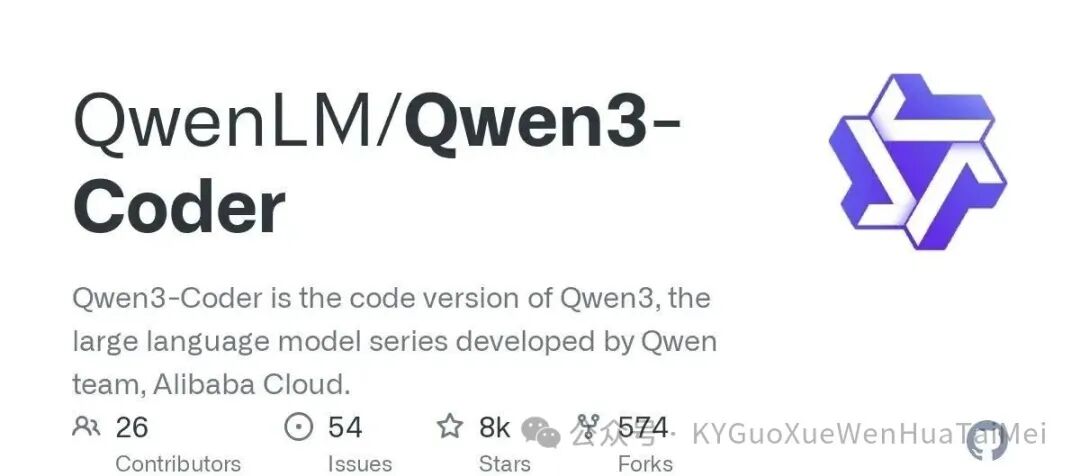
qwen-codeCLI represents Alibaba Cloud’s technical investment in the AI programming field. It is built on the Qwen3-Coder model.
This tool showcases Alibaba’s accumulation in large model technology. Qwen3-Coder possesses strong code understanding capabilities.
qwen-codeCLI focuses on programming automation. It provides code understanding, workflow automation, and enhanced parser support.
Its CLI design allows for good compatibility with existing development processes. Developers do not need to change their work habits.
More importantly, it has context management capabilities. It can handle extremely long code contexts.
This makes it suitable for large project development. It can understand the architecture and dependencies of the entire project.
## iFlow CLI: Advantages of Open Source Community and Natural Language Interaction
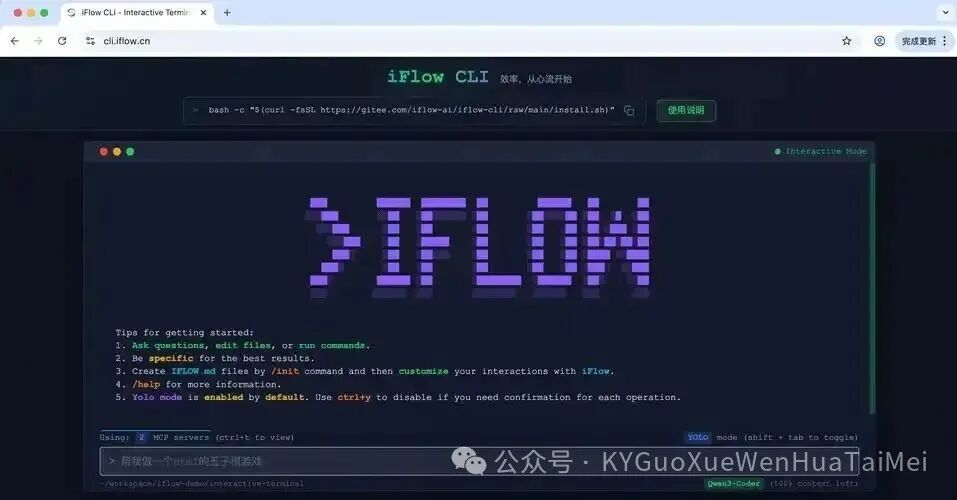
iFlow CLI represents another development path. It emphasizes natural language interaction, lowering the threshold for using AI in programming.
The standout feature of iFlow CLI is its understanding of natural language. Users can describe development requirements in everyday language.
This allows non-professional developers to use AI-assisted programming, expanding the user base of AI programming assistants.
iFlow CLI integrates advanced models like Qwen3-Coder. It can handle diverse tasks such as code analysis and data processing.
Its GitHub integration feature makes the development process smoother. It can directly operate on code repositories.
iFlow CLI also emphasizes multimodal processing capabilities. It can handle not just code, but also documents, charts, and other content.
## qoderCLI/Qoder: Exploration of Native IDE Integration
Qoder showcases the potential for deep integration within IDEs. It is an AI IDE programming platform capable of autonomously completing software development.
Qoder’s advantage lies in its seamless integration with the IDE environment. It provides visual feedback and interactive methods.
It has features for autonomous coding, context memory, and multi-model support. It can automatically complete complex development tasks.
The design philosophy of Qoder is to make AI an embedded assistant in the development process, rather than an external tool.
This integration approach provides a smoother development experience. Developers can use AI capabilities directly within the IDE.
## Comparison of Technical Architectures Behind the Three Platforms
The three platforms each have their own focus in terms of technical architecture.
qwen-codeCLI adopts a distributed architecture. The CLI interface is responsible for task decomposition, while the backend model handles specific tasks.
This architecture allows for good compatibility with various development environments, but there may be some latency in response speed.
iFlow CLI emphasizes natural language processing. Its architecture focuses on dialogue understanding and intent recognition.
This design performs excellently in understanding complex requirements, but may not be as proficient in code generation details as specialized tools.
qodeCLI/Qoder adopts a deeply integrated architecture. AI capabilities are directly embedded in the IDE, resulting in faster response times.
This architecture provides a smoother development experience, but its dependency on specific IDEs may limit its applicability.
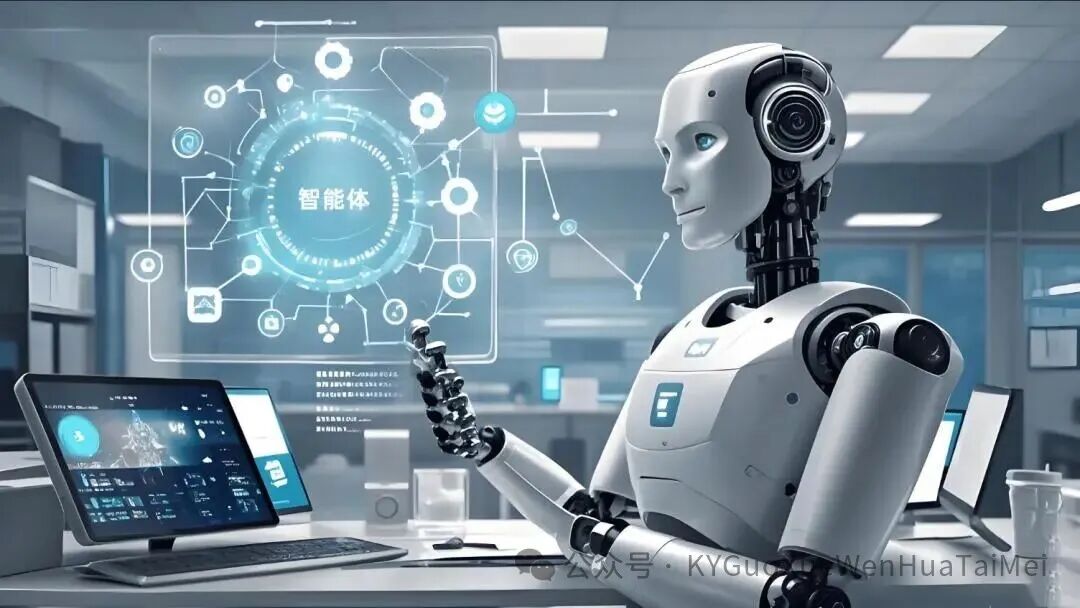
## Directions for Change in the Next Generation of Development Paradigms
The next generation of development paradigms will have several notable features.
First, there will be enhanced autonomy. AI assistants will be able to understand high-level requirements, autonomously decompose tasks, and plan processes.
Second, the collaboration model will change. The relationship between developers and AI assistants will shift from command execution to collaborative co-creation.
Third, there will be context awareness capabilities. AI assistants will remember project history and team decisions, providing continuous support.
Finally, there will be multimodal processing. AI assistants will not only handle code but also documents, charts, requirement specifications, and more.
## Opportunities and Challenges for Developers
The new paradigm brings opportunities and challenges for developers.
The opportunity lies in being able to focus on architectural design and solving complex problems, leaving repetitive tasks to AI assistants.
The challenge is the need to learn to collaborate with AI agents and adapt to new development processes and tools.
Developers need to redefine their value. They will no longer be mere code implementers, but system designers and quality assurance providers.
## Conclusion
qwen-codeCLI, iFlow CLI, and qoderCLI represent different directions in the development of AI programming assistants.
Who will define the next generation of development paradigms? It depends on developer needs and market acceptance.
But one thing is certain: the era of general intelligence agents has arrived. Development work will undergo fundamental changes.