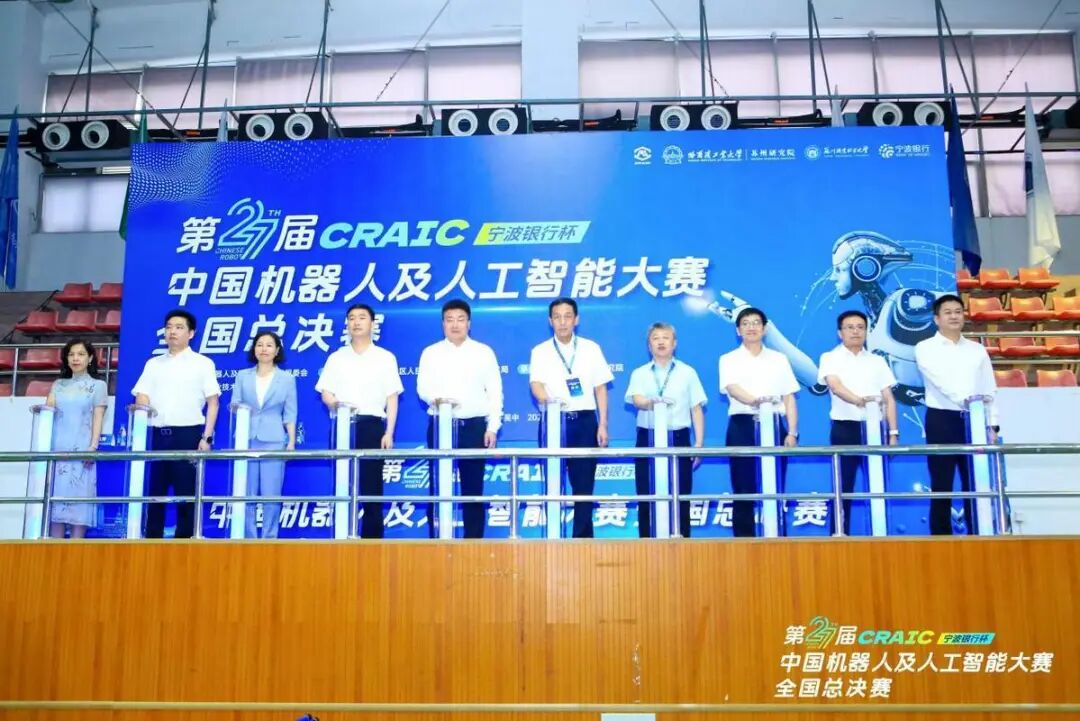
Recently, the 27th National Finals of the China Robotics and Artificial Intelligence Competition was held in Wuzhong District, Suzhou. A total of 1,200 teams and over 3,000 students from major universities across the country competed fiercely. After intense competition, our students performed excellently, winning 1 National First Prize, 1 National Second Prize, and 2 National Third Prizes.
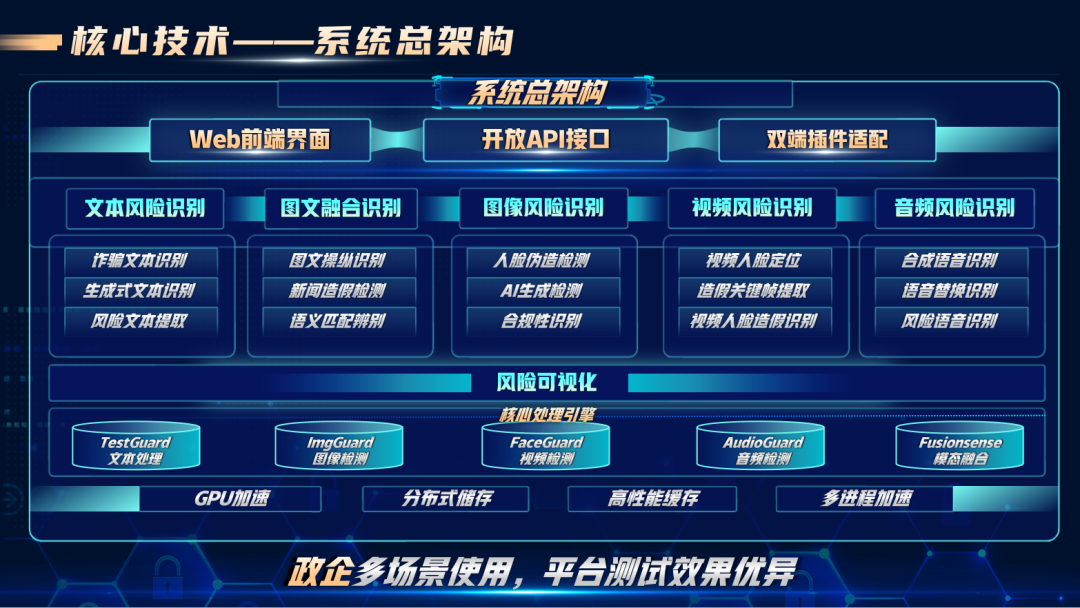
AnDun – Integrated AIGC Fake Content Detection Platform
·Award Status: National First Prize in the Artificial Intelligence Innovation Competition
·Team Members: Dai Rujie, Lin Hao, Guo Jiahe
·Advising Teacher: Li Minghui
Project Overview
In the context of rapid development of AIGC technology, the proliferation of false information generated by this technology poses a serious threat to social order and public perception. This project has built an integrated AIGC fake content detection platform named “AnDun,” which establishes a comprehensive detection system covering text, audio, video, images, and cross-modal detection, capable of risk identification and real-time monitoring throughout the entire chain from content generation to dissemination. The platform employs multi-modal deep fusion technology and an innovative multi-agent model architecture, aiming to efficiently and accurately identify various types of fake content to address the information security challenges posed by AIGC and maintain the authenticity of the online environment and social stability.
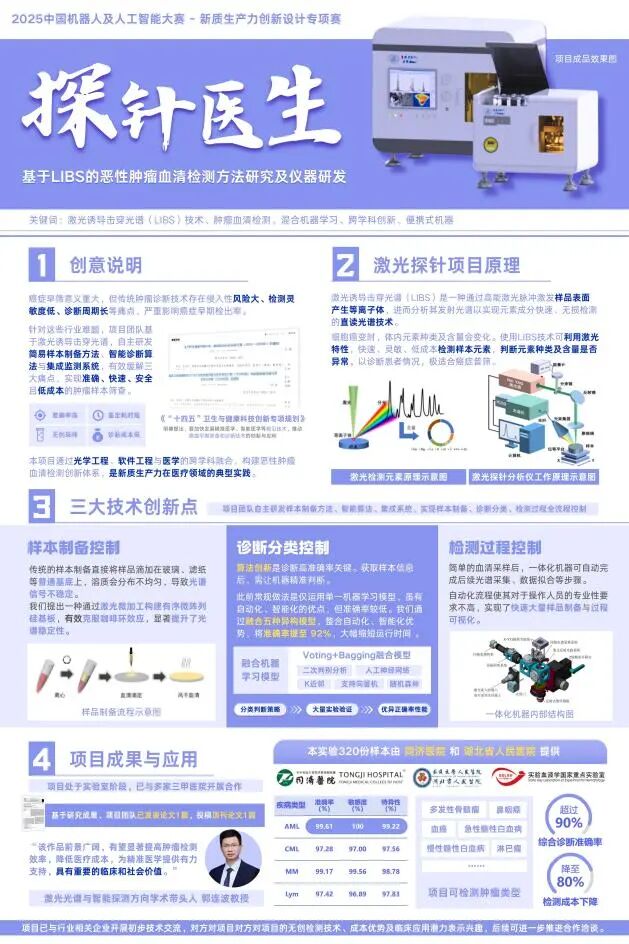
Probe Doctor: Serum Detection of Malignant Tumors Based on LIBS
Method Research and Instrument Development
·Award Status: National Second Prize in the New Quality Product Innovation Design Competition
·Team Members: Yu Liuhuiting, Hu Ziqi (School of Social Sciences), Zhu Zizhuo
·Advising Teacher: Guo Lianbo
Project Overview
The tumor sample screening system based on Laser-Induced Breakdown Spectroscopy (LIBS) is a tumor detection instrument that integrates spectral analysis and machine learning, aiming to solve traditional diagnostic pain points with innovative technology, achieving safe, fast, accurate, and low-cost early tumor screening. It integrates core advantages such as easy sample preparation and intelligent algorithms, using laser irradiation on serum to generate plasma and detect spectra, combined with algorithm analysis, applicable in clinical diagnosis, health check screening, and other scenarios, helping to improve early cancer diagnosis rates.
Medical Intelligence – Multi-Agent Based Multi-Modal AI Medical System
·Award Status: National Third Prize in the Artificial Intelligence Innovation Competition
·Team Members: Lin Hao, Xu Shengjie, Guo Jiahe
·Advising Teachers: Lü Zehua, Tian Chunyu
Project Overview
“Medical Intelligence” is a comprehensive health management application based on artificial intelligence, aiming to optimize medical resource allocation and improve the quality of medical services through advanced AI technology. It integrates various core functions, including AI symptom analysis, preliminary diagnosis, personalized health guidance, medication management, intelligent analysis of medical images, and health report generation. The system supports multiple modal inputs such as text, images, and voice, providing a more comprehensive and accurate health assessment and diagnostic recommendations.

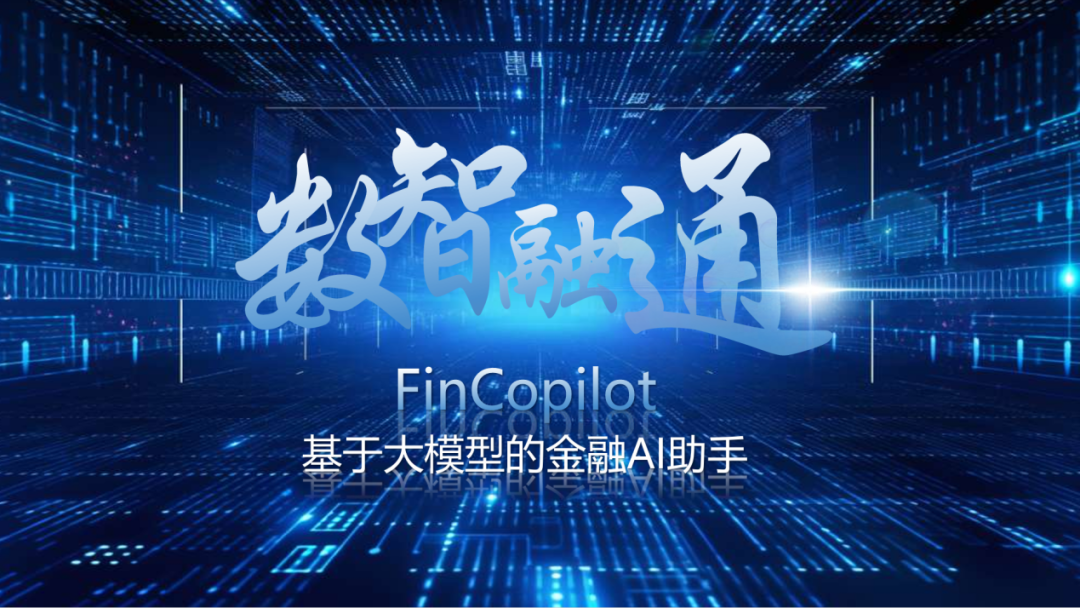
FinCopilot – Financial AI Assistant Based on Large Models
·Award Status: National Third Prize in the Artificial Intelligence Innovation Competition
·Team Members: Huang Siyu, Huang Yangyang, Ren Ziyuan
·Advising Teacher: Wu Tao
Project Overview
FinCopilot is a financial artificial intelligence assistant based on large model technology, aimed at addressing issues such as data complexity, insufficient personalization, and privacy protection in the financial sector. By integrating financial data analysis, large-scale language model technology, and privacy protection solutions, FinCopilot is committed to providing users with intelligent, personalized, and secure financial services. The overall architecture of the project includes data layer, model layer, privacy protection layer, and application layer, achieving the following core goals through organic collaboration: intelligence (relying on large model technology to provide precise text processing, knowledge Q&A, and in-depth financial analysis capabilities), personalization (generating investment strategies and personalized recommendations based on user behavior and preference data), security (applying federated learning and differential privacy technologies to ensure the security and compliance of user data), and visualization (providing an intuitive user interface for efficient data display and interaction).
The China Robotics and Artificial Intelligence Competition has successfully held 26 sessions since its inception in 1999. It is a national discipline competition organized by the China Association for Mechatronics Technology Application and has been included in the national discipline competition ranking published by the China Higher Education Association. It is one of the largest, most influential, and highest professional level robotics competitions in the country.
It is reported that the School of Software has always guided, encouraged, and supported students to actively participate in discipline competitions, enhancing students’ hands-on ability, practical innovation ability, and team collaboration awareness. The award-winning members come from the “Soft Innovation Future” team, which is a demonstration innovation team established by the School of Software. The team adheres to the philosophy of “focusing on AI frontiers, adhering to scientific innovation for the country, promoting interdisciplinary integration, and cultivating outstanding talents,” and has three major studios: Crystal Number Studio, Engine United Studio, and OmniMatrix Studio, covering software development, competition practice, and cutting-edge research.

Text | School of Software
Editor | Wang Hao, Comprehensive Department of News Center
Reviewer | Tian Chunyu