PCB electroplated copper and electrolytic copper foil are both processes of copper electrodeposition, both using acidic copper(copper sulfate + sulfuric acid) for electroplating. However, when compared in more detail, such as application scenarios, production conditions, and performance requirements for titanium anodes, there are significant differences. Below, we will conduct a comparative analysis.
1.Comparison of Application Scenarios
1.PCB Electroplated Copper
(1)Main Purpose: PCB electroplated copper is primarily used for the electroplating of micro-holes such as blind holes and through holes on PCB boards, achieving electrical connectivity between micro-layered structures, which is a key process in PCB electrical interconnection. It focuses on the uniformity of electroplated copper, deep plating capability, and filling capability, to meet the demands of high-end PCB products such as HLC and HDI.
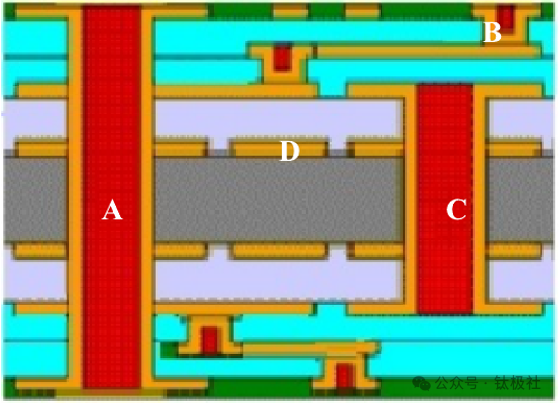
PCB cross-section structure diagram: A through hole; B blind hole; C buried hole; D line
(2)Process Equipment and Types: Mainly includes gantry electroplating equipment, vertical continuous electroplating equipment(VCP), horizontal electroplating equipment, etc.; includes both direct current electroplating and pulse electroplating types.
2.Electrolytic Copper Foil
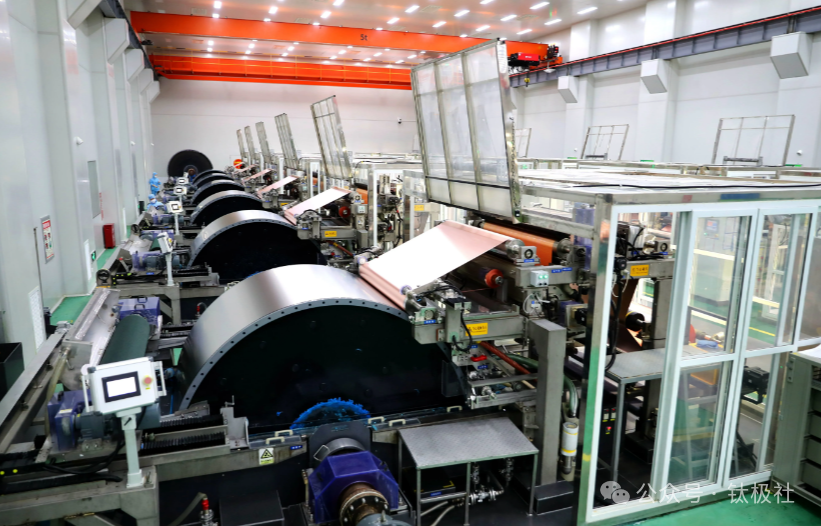
(1)Main Purpose: Through continuous production, copper is deposited on a continuously rotating titanium cathode roller, forming electrolytic copper foil of varying thicknesses(4.5~105 μm. Electrolytic copper foil is an important material used for printed circuit boards (PCB), copper-clad laminates (CCL), and lithium-ion battery negative electrode collectors. It emphasizes the overall uniformity of thicker copper foil and aims to develop ultra-thin copper foil(4.5μm even 3μm), to meet the development needs of the new energy industry.
(2)Process Equipment and Types: The main body of electrolytic copper foil equipment is an arc-shaped anode tank base+ titanium cathode roller model; currently, only direct current electroplating is used.
2.Comparison of Production Condition Requirements
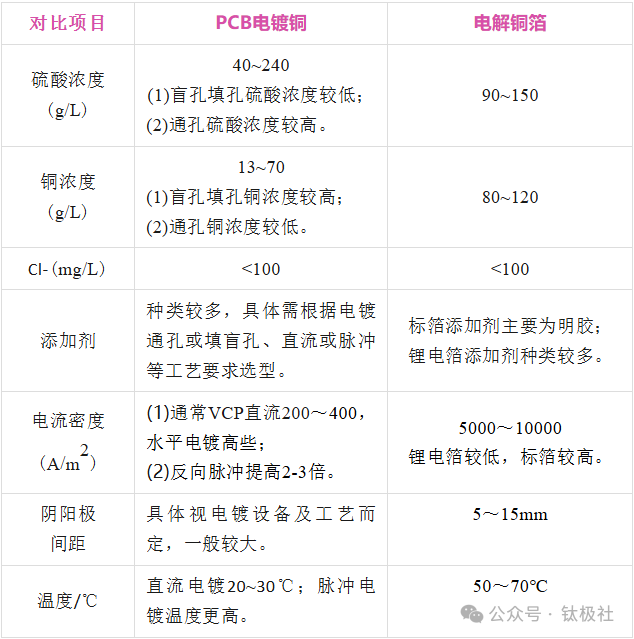
Note: (1) In PCB electroplated copper, the filling of blind holes generally uses a high copper low acid formula, while through holes use a high acid low copper formula, which are quite different.
(2) Additives: PCB electroplated copper and electrolytic copper foil (lithium battery copper foil) organic additives are generally divided into brighteners(accelerators), inhibitors, leveling agents, etc. Due to differences in electroplating conditions and product functional requirements, the additives will also vary, which will be analyzed in detail later.
3.Comparison of Titanium Anode Performance Requirements
The insoluble titanium anodes used for PCB electroplated copper and electrolytic copper foil are both iridium-tantalum coated titanium anodes. However, due to the significant differences in production conditions and performance requirements for electroplated products, there are also considerable differences in the design and performance requirements of titanium anode coatings.
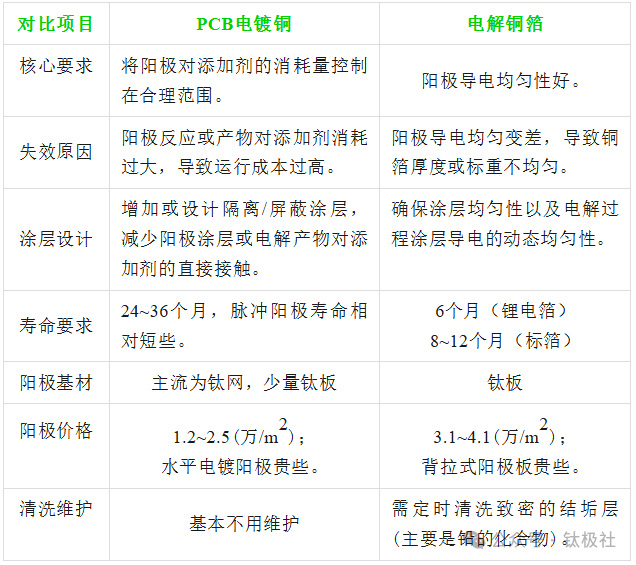
Conclusion
(1) Although PCB electroplated copper and electrolytic copper foil are both acidic copper plating processes and both use iridium-tantalum titanium anodes, there are significant differences in application scenarios, working conditions, and performance requirements.
(2) PCB electroplated copper focuses more on the control of additive consumption and the uniformity of electroplated copper, deep plating capability, and filling capability; while electrolytic copper foil emphasizes coating uniformity and high current density performance, to obtain different thicknesses of overall uniform wide copper foil.
(3) Both are important application fields for iridium-tantalum titanium anode technology, but they have their own technical development directions based on different application needs.
Introduction to Titanium Anode Society: Core members hold master’s degrees in electrochemistry from key national disciplines, with senior engineer titles, and have been dedicated to titanium electrode and applied electrochemical technology research and development testing, production manufacturing, and promotion for 18 years, having served as the head of titanium electrode technology at a research institute, with 5 authorized invention patents and 2 utility model patents.
Copyright Statement: All articles from the “Titanium Anode Society” public account are original. You are welcome to share the original link of the public account. If you need to reprint, quote, or have other intentions, please apply for authorization in advance through the public account backend. Some text and images in original articles are sourced from the internet and literature. If there are any issues, please contact this public account. Thank you.