General Secretary Xi Jinping pointed out: “Traditional Chinese medicine (TCM) is a treasure of ancient Chinese science and a key to unlocking the treasure house of Chinese civilization.” As an outstanding representative of traditional medicine, TCM is a gem of Chinese civilization. We must follow the development laws of TCM, inherit its essence, and innovate while maintaining integrity; we need to deeply explore the essence within the treasure house of TCM, promote the integration of production, education, and research, and advance the industrialization and modernization of TCM; we must inherit, develop, and utilize this valuable heritage left to us by our ancestors, and promote TCM to the world.
Traditional Chinese medicine in our country guides clinical practice with a holistic view and syndrome differentiation, characterized by multi-target, multi-pathway, multi-approach, and integrative effects. Traditional cell models and animal models cannot accurately simulate the complex structures and cellular diversity of human tissues and organs, making it difficult to reflect the true characteristics of diseases, which poses significant limitations in drug development and TCM research. Microfluidic chips, as a typical representative of the new generation of biotechnology, are leading technological innovations in the pharmaceutical industry. For example, organ-on-a-chip technology simulates the structure of real human tissues and organs, providing more precise and efficient research methods, significantly improving the success rate and clinical relevance of drug development while reducing time and financial investment. Microfluidic chip technology can be widely applied in the evaluation of TCM efficacy, high-throughput screening of TCM, safety evaluation of TCM, formulation optimization, molecular pharmacological mechanism research, and precision diagnosis and treatment, providing a theoretical basis for revealing the scientific connotation of TCM efficacy and promoting the modernization and internationalization of TCM.

Maintaining Integrity and Innovation: The Dual Mission of TCM Modernization
Traditional Chinese medicine is not a display item in a museum, but a living, evolving knowledge system. “Maintaining integrity” means adhering to the core theories and traditional essence of TCM, such as syndrome differentiation, holistic view, authenticity of medicinal materials, and processing techniques; “innovation” involves actively applying cutting-edge modern scientific technologies to promote the modernization and transformation of TCM theories and practices.
Professor Han Xin’s research group at Nanjing University of Chinese Medicine focuses on “Frontier Interdisciplinary Technology-Driven Anti-Tumor Research in TCM,” utilizing microfluidic chips, nanomaterials, single-cell omics, and other cutting-edge interdisciplinary technologies to deeply explore the scientific connotation of TCM and classical prescriptions in treating diseases. For example, the research group developed a new label-free tumor stem cell enrichment technology, discovering active components that inhibit tumor stem cell properties through high-throughput microfluidic screening from TCM monomers and natural product libraries, and preparing nano-drug formulations to verify the efficacy and toxicity of TCM active components at both in vivo and in vitro levels. This provides a new technological platform for discovering effective substances in anti-tumor TCM and toxicological research, offering a theoretical basis for revealing the scientific connotation of TCM efficacy and promoting the modernization and internationalization of TCM.
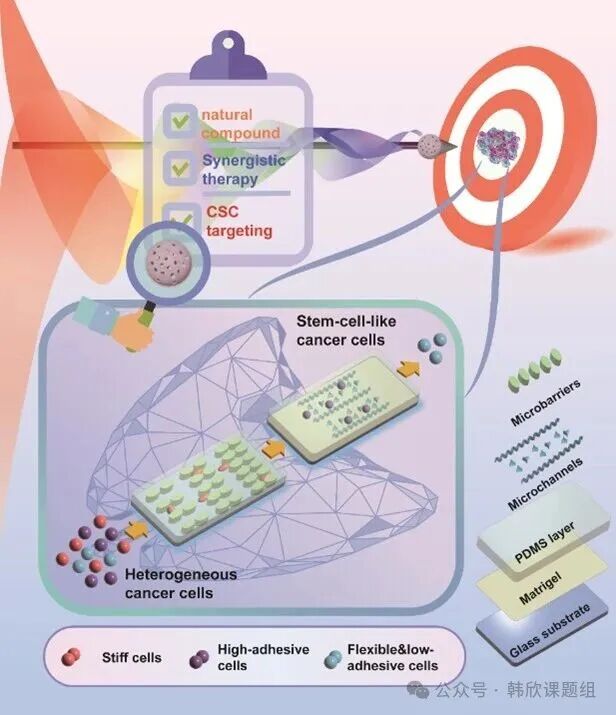
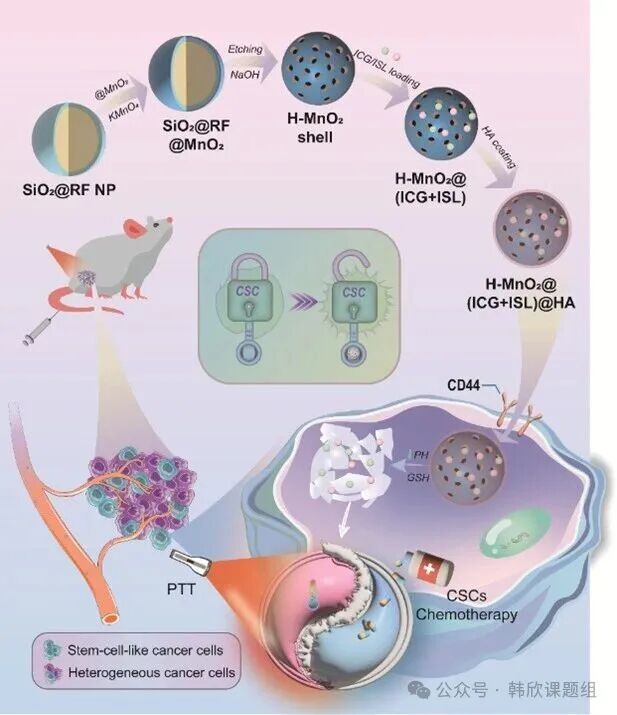
Construction of Innovative Platforms Based on Microfluidic Chip Technology and Discovery of Medicinal Value of TCM
Integration of Industry and Education: From Laboratory to Industrialization
Scientific research should serve the major strategic needs of the country, aiming at the forefront of world technology and key fields, cultivating top innovative talents and future scholars who can undertake the great task of national rejuvenation. This is a key support for the country to implement an innovation-driven development strategy and build a strong education and talent nation. Open integration and multi-dimensional empowerment are important methodologies and paths to improve the high-quality training level of graduate students, breaking down disciplinary barriers, strengthening interdisciplinary research, cross-field project cooperation, promoting deep integration of production, education, research, and application, establishing innovative alliances, and generating new growth points for innovation.
The joint application project of the Yangtze River Delta Technology Innovation Community, titled “Discovery of New Targets for Lung Cancer Based on Functional Proteomics and AI Drug Design and Innovative Drug Development,” submitted by Professor Han Xin’s research group, West Lake Laboratory, Shanghai Chest Hospital, and High Dimension Pharmaceutical (Hangzhou) Co., Ltd., has been approved for execution. This lung cancer new drug innovation joint community in the Yangtze River Delta is one of the first 12 cross-regional innovation communities, established to tackle major scientific and technological challenges, collaboratively conducting joint research on key core technologies in the industry, strengthening the deep integration of technological innovation and industrial innovation, and jointly cultivating new productive forces. The joint research team focuses on creating a full-chain technology transfer innovation model of “basic research + concept verification + entrepreneurial incubation + industrial transformation,” achieving integrated driving of production, education, research, and medicine, and exploring the acceleration of the transformation from original innovation to application results.
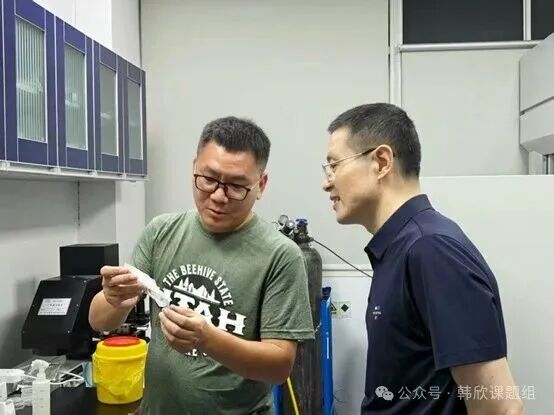
Professor Han Xin reports on the progress of organ-on-a-chip and TCM interdisciplinary research to Qiao Xuebin, Secretary of the Party Committee of Nanjing University of Chinese Medicine
Nurturing People and Hearts: Cultivating Interdisciplinary TCM Talents
To build a high-level team of TCM talents, we must first cultivate the roots and forge the soul, strengthening the ideological and cultural foundation, enhancing value shaping, cultural confidence, and spiritual cohesion, prioritizing the cultivation of morality, quality, and social responsibility, and shaping TCM inheritance and innovation talents with both virtue and talent. We must abandon homogeneity, pursue uniqueness, acknowledge and encourage diversity, and guide graduate students to achieve excellence in different tracks and fields.
The research group encourages students to step out of their comfort zones and study advanced technologies at top universities, such as sending graduate students to the Department of Mechanical Engineering at Tsinghua University to learn micro-nano manufacturing technology, exploring how to use cutting-edge micro-nano technology to decode the secrets of TCM in anti-tumor treatment. Professor Han Xin’s group has guided graduate students to obtain 24 key projects and general projects under the Jiangsu Provincial Graduate Research Innovation and Practice Innovation Program, with 2 students winning Jiangsu Provincial Excellent Master’s Thesis Awards, 4 receiving National Scholarships, 1 winning the Tianjiang Scholarship, 1 receiving the Jiang Yuren Graduate Scholarship, and 2 obtaining the Yingdike Scholarship. The undergraduate team guided by the group won the second prize in the National College Student Medical Innovation Competition and the “Belt and Road” International Competition interdisciplinary track, and the silver award in the “Challenge Cup” Jiangsu Provincial College Student Entrepreneurship Plan Competition.
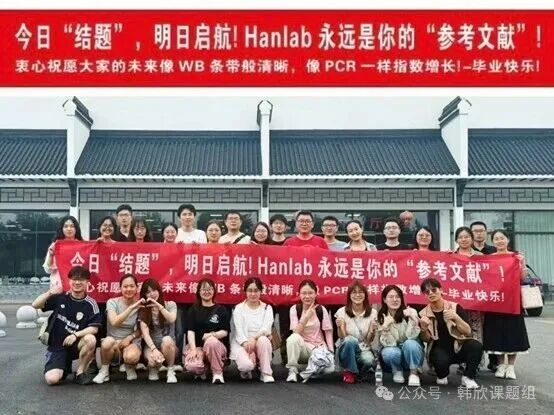
The Han Lab team learns from each other, being both teachers and friends
Inheritance and Outlook: The Future of TCM Lies in Innovation
The inheritance of TCM is like a relay race, where the older generation passes on their experience, and the younger generation brings back innovation. The future of TCM lies in innovation, which must be rooted in inheritance. The wisdom of thousands of years and clinical experience is a valuable asset for the development of TCM. Only by deeply understanding the essence of its holistic view and syndrome differentiation can we achieve true breakthroughs. With the rapid development of new technologies such as AI, big data processing and analysis, and organ-on-a-chip technology, TCM research will usher in new opportunities for intelligence and precision. Integrating traditional wisdom with modern technology can not only enhance the scientific and standardized level of TCM but also expand its service scope and international influence. Looking to the future, TCM needs to open up broader development space through maintaining integrity and innovation, contributing unique strength to human health. As General Secretary Xi Jinping emphasized: “We must fully leverage the unique advantages and roles of TCM in disease prevention and treatment, contributing to the construction of a healthy China and the realization of the Chinese Dream of the great rejuvenation of the Chinese nation.”
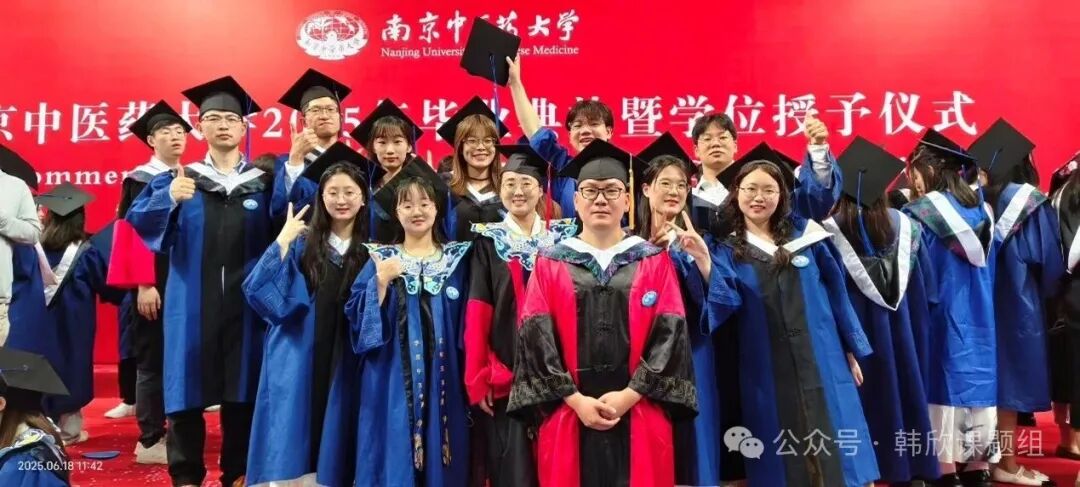
Group photo of the 2025 graduates of Professor Han Xin’s research group