Recently, our company has been preparing for the FPGA localization plan and conducting market research. We have also arranged discussions with market engineers from several domestic FPGA manufacturers.Regarding FPGA, I consider myself a latecomer. After graduating, I worked on MCU development for about a year, and later, due to project needs, I started to engage in FPGA development. I have been working in the FPGA field for about four years now.This article discusses the current level of development of domestic FPGAs, which companies are performing well, and what factors need to be considered for FPGA localization.
Some content and data are referenced from the internet and official websites. If there are inaccuracies, I hope to discuss and learn together with experts.
FPGA, the universal chip! With its powerful parallel computing capabilities and flexible customizable functions, it is widely used in communication, medical, power, and military fields with high speed and large data volumes, as well as in the early prototype verification systems of IC and ASIC design.Since its invention by one of the founders of Xilinx, Ross Freeman, in 1985, the global 90% of the FPGA market has been dominated by foreign manufacturers.The market prospects for FPGAs are extremely enticing, yet the barriers to entry in the chip industry are unparalleled. Since the invention of FPGAs, over 60 companies worldwide have invested billions of dollars in attempts to capture this high ground, including industry giants like Intel, IBM, TI, Motorola, Philips, TOSHIBA, and SAMSUNG. However, only four companies based in Silicon Valley, USA—Xilinx, Altera, Lattice, and Microsemi—have successfully reached the summit. The first two companies hold nearly 90% of the global market share and possess most of the patents in the FPGA field, creating an insurmountable technical barrier.Due to the global pandemic, the upstream and downstream enterprises of FPGA chip production have been affected, leading to a significant increase in FPGA chip prices. Some mid-to-low-end FPGA products with high usage have seen prices skyrocket to dozens of times their original cost, and they are now in a state of being overpriced and unavailable! Conversely, some high-end, high-performance FPGA chips are not as expensive, proving that the market ultimately determines prices!
What Domestic FPGA Manufacturers Are There?
Although there are extremely high technical barriers in the FPGA chip industry, our country has not stopped exploring FPGA technology, progressing from reverse engineering to independent research and development, covering military applications to the broad industrial and civilian markets.Currently, the mainstream FPGA manufacturers include the following companies, whose products are mainly applied in communication, industrial, military, and consumer electronics fields.
1. Unisoc (Shenzhen)
https://www.pangomicro.com/Unisoc’s FPGA products are divided into three major series: Titan, Logos, and Compa series.
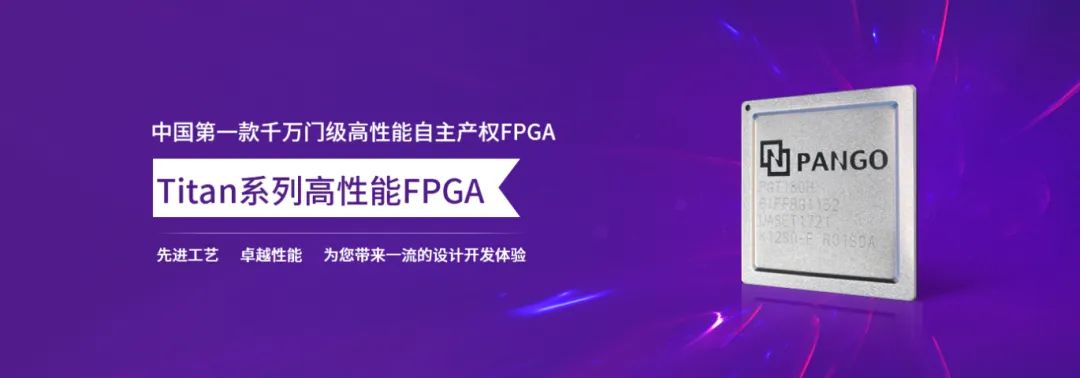
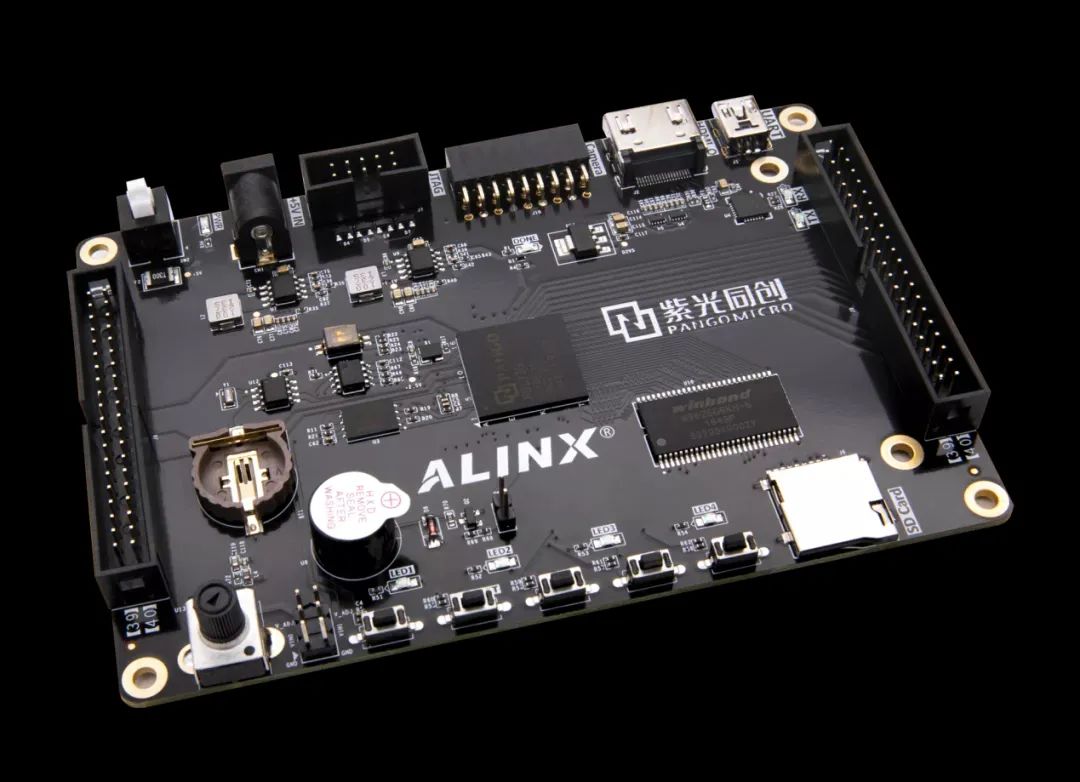
The Titan series is China’s first domestically produced high-performance FPGA product with independent intellectual property rights, featuring 174K equivalent LUT4 units, a maximum frequency of 500MHz, 5.0Gbps SERDES interface, 800Mbps DDR3, and LVDS, PCIe Gen2x4, suitable for communication networks, information security, data centers, and industrial control.The Logos series offers high cost-performance, with a brand new LUT5 structure, integrating RAM, DSP, ADC, SERDES, DDR3, and other rich on-chip resources, supporting various standard IOs, LVDS, MIPI interfaces, and widely applied in industrial control, communication, consumer fields, making it an ideal choice for large volume, cost-sensitive projects.The Compa series CPLD products are low power consumption, low cost, and small size, supporting MIPI, LVDS, I2C, SPI, OSC, RAM, PLL, etc., with user IOs up to 383, supporting 3.3/2.5V core, or 1.2V low voltage core, suitable for system configuration, interface expansion and bridging, board-level power management, power-up sequencing, sensor fusion, and other application needs.Unisoc’s FPGA products have a good software and hardware ecosystem, with excellent chip documentation, evaluation boards and downloaders, EDA software and licenses, IP core resources, offline training, university programs, competition sponsorships, and more.The following image shows a development board co-produced by Unisoc and Black Gold Power Community:
2. Anlogic (Shanghai)
http://www.anlogic.com/FPGA has two major series: SALEAGLE and SALELF series
- SALEAGLE series
Divided into two product models: EG4 and AL3.
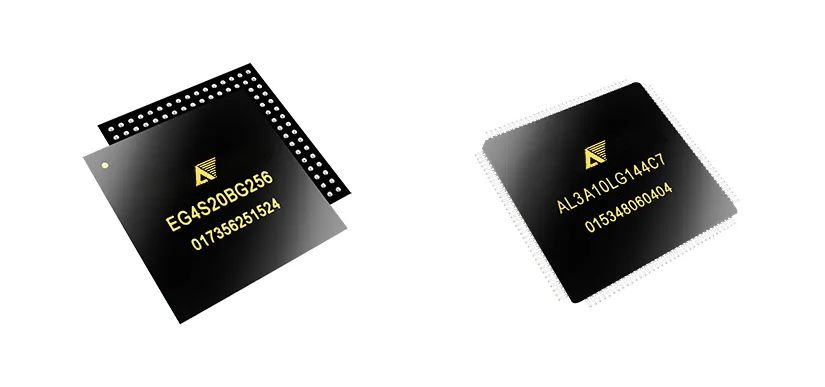
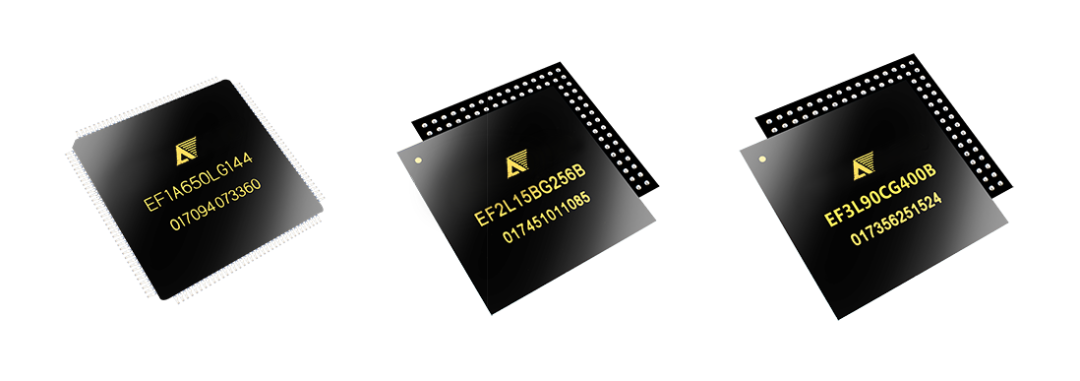
EG4: 19,600 LUTs, 55nm process, minimum static power consumption of 5.5mA, DSP, BRAM, high-speed differential IO, user IOs ranging from 71 to 193, on-chip 8-bit ADC, 1M sampling rate, 8-channel input.AL3: 8,640 LUTs, 65nm process, minimum static power consumption of 4mA, user IOs ranging from 60 to 184, rich DSP, BRAM, high-speed differential IO resources, and strong pin compatibility performance.
- SALELF series
Small sprite series FPGA, with three generations of products, single-chip solutions, instant startup without external Flash, supports OTP mode, 55nm process, and some product models embed hard-core MCU.
Anlogic has also independently developed an FPGA integrated development environment—TangDynasty (TD), supporting standard design input methods, a complete circuit optimization process, and a rich set of analysis and debugging tools, while providing good third-party design verification tool interfaces to support all application designs based on Anlogic FPGA products.
3. Gowin Semiconductor (Guangzhou)
http://www.gowinsemi.com.cn/FPGA products mainly have two series: Dawn series and Little Bee series.

- Dawn series
55nm SRAM process, with high-performance DSP resources, high-speed LVDS interfaces, and rich B-SRAM storage resources, suitable for high-speed low-cost application scenarios.
- Little Bee family
Low power consumption, low cost, instant startup, and high security non-volatile editable logic devices. Including SoC products and non-SoC products, SoC products embed ARM Cortex-M3 hard-core processors, GW1NS series products embed USB2.0 PHY, user flash memory, and ADC converters.SoC products achieve seamless connection between programmable logic devices and embedded processors, compatible with various peripheral device standards, significantly reducing user costs, and can be widely applied in industrial control, communication, IoT, servo drives, consumer electronics, and many other fields.GW1NRF series Bluetooth FPGA devices, with a 32-bit hard-core microprocessor at the core, support Bluetooth 5.0 low-power RF functions, with rich logic units, embedded B-SRAM, and DSP resources, abundant IO resources, and internal power management and security encryption modules.
4. Fudan Microelectronics (Shanghai)
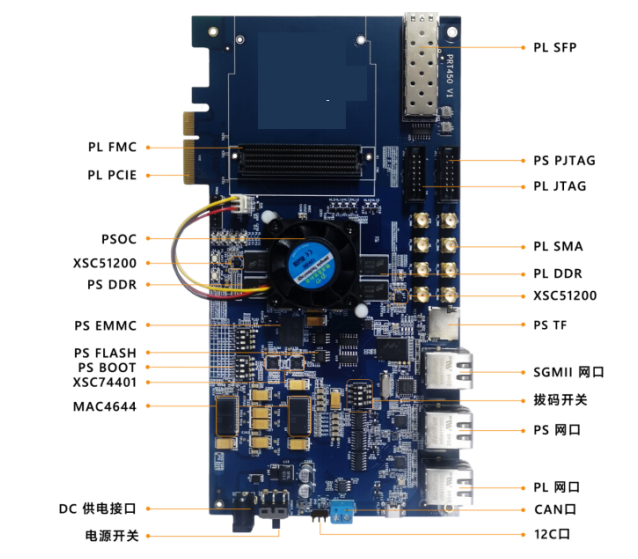
http://www.fmsh.comFudan Microelectronics is one of the leading companies in the domestic FPGA field, currently providing products in three series: tens of millions of gate-level FPGA chips, hundreds of millions of gate-level FPGA chips, and embedded programmable devices (PSoC).Fudan Micro’s hundreds of millions of gate-level FPGA chips, based on 28nm process technology, use industry-leading CMOS technology and are among the first domestically developed hundreds of millions of gate-level FPGA chips, which have already achieved mass production and sales.In 2019, Fudan Micro launched its independently developed comprehensive programmable device development process tool software Procise, the first large-scale full-process EDA design tool in the domestic FPGA field, featuring a user-friendly interface, powerful functionality, and ease of use. However, since it was launched later than Xilinx’s Vivado, the version iteration count is relatively low, and the functionalities of the development tool and the available IP library still need further improvement.The company is also actively developing the next generation of 10 billion gate-level products based on 14/16nm process technology, while integrating CPU and AI technologies, being the first in the country to develop PSoC chips, expanding into new fields, and maintaining the company’s leading position in domestic FPGA technology.However, compared to industry leader Xilinx’s revenue of $3.148 billion as of April 2021, the company’s revenue in 2020 was only $153 million, indicating a significant gap in operational scale.The following image shows a development board based on the Fudan Micro FMQL45T900 chip, which can replace the Xilinx ZYNQ FPGA 7045, integrating FPGA and a quad-core ARM Cortex-A7.
5. Silicon Valley (Xi’an)
http://www.isilicontech.com/Divided into three series: Seagull 1000, Seagull 2000, and Seagull 5000 series.
- Seagull 1000 series
64, 128, 256 logic units available, 0.162um technology, maximum frequency Fmax=322MHz.
- Seagull 2000 series
5K, 12K, 25K logic units available, low-power 55nm technology, embedded hard-core DSP, embedded Flash, LVDS maximum transmission rate up to 840Mbps, reception rate up to 875Mbps, supports 400Mbps DDR2 SDRAM interface, supports MIPI, interface rates up to 1.2Gbps, supports common LVDS, LVCMOS, LVTTL, and other IO standards.
- Seagull 5000 series
Devices with 30K to 325K logic units, up to 500 user IOs, LUT6 structure, advanced 28nm copper CMOS technology, maximum frequency 500MHz, hardware multipliers, LVDS interfaces up to 1.6Gbps, embedded hard-core ARM, ADC, DDR2/3 controllers.
6. Beijing Micro (Beijing)
http://hercules-micro.com/Divided into: HME-R (River), HME-M (Mount Hua), HME-P (Pegasus), and HME-H (Hercules) four series. Currently, mass production has been fully achieved for 65/55/40nm, with 22nm mass production starting in 2022.
- HME-R series
Low power consumption, high cost-performance, 40nm technology, LUT4 structure, logic capacity of 1-3K, mainly aimed at low power applications, with embedded memory, minimum support for 1.5mmx1.5mm packaging.
- HME-H series
Integrates ARM Cortex-M3 hard-core controllers and high-performance FPGAs, with a maximum clock of 300MHz for the ARM core, maximum logic performance of 200MHz, and hard-core forms integrating Ethernet, USB, CAN, DMA controllers, and DDR controllers to meet various application scenarios’ “customizable, reconfigurable, and programmable” design needs, achieving SoC integration of FPGA.
- HME-P series
TSMC 40nm CMOS technology, new LUT6 structure, 6.5Gbps Serdes high-speed I/O, 1333Mbps hard-core DDR2/3 control and PHY, high-speed AXI, PCIe, DDR2/3 hard-core IP, aimed at the FPGA market requiring high-speed, high-performance, and large capacity.
- HME-H series
Integrates high-performance FPGA, enhanced MCU, and MIPI interface intelligent video bridging devices, enhanced 8051 MCU, with embedded DSP units, mainly aimed at video processing fields, and can be widely applied in mobile phones, tablets, wearables, VR, AR, drones, and smart home markets.FX-Vulcan software is an EDA software independently developed by Beijing Micro, capable of FPGA and SoC application design, and can also support other commonly used third-party design tools for collaborative design. It features a friendly graphical user interface, rich IP support, command line operations, remote download programming, bit rate encryption, and on-chip debugging, etc.Domestic FPGA manufacturers are still in the development phase, with limited market share and revenue scale, but they can be seen as the hope and future of the country.
Factors to Consider for Domestic Substitution
For such a large FPGA market in the country, if we are to carry out FPGA localization substitution plans, the following factors need to be considered:
1. Process Technology, Gate Scale, SerDes Rate
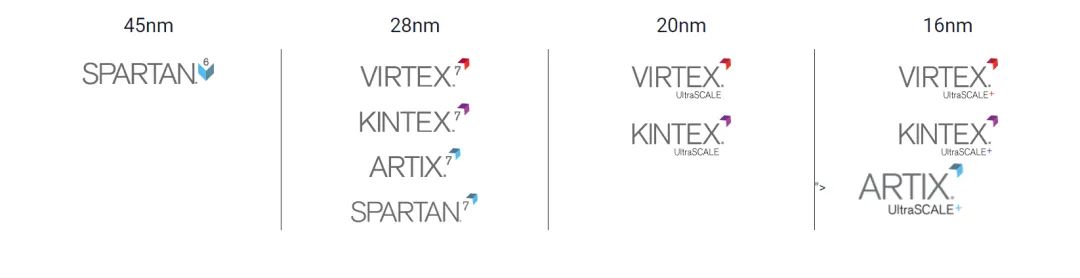
These three parameters are also important indicators for measuring FPGA basic performance. The process technology directly affects the chip’s power consumption, performance, and cost. If the power consumption is too high, then the power and heat dissipation issues need to be considered during hardware design. The process also affects the gate scale; the higher the process technology, the larger the scale of gate-level circuits that can be made on the same wafer area, thus providing greater design space. The transmission rate of SerDes affects the performance of the FPGA during high-speed data transmission and processing.Taking the market-leading Xilinx as an example, the latest UltraSCALE+ series FPGA chips have reached a process technology of 16nm, while most products from domestic FPGA manufacturers are still at 28nm technology.
2. Reliability, Stability, and Consistency
FPGAs are typically applied in scenarios requiring high-speed, real-time processing, where reliability and stability are extremely important. How does the chip perform under different temperatures, humidity, vibrations, and salt mist? How long can the chip last? Do the performance parameters of each chip remain consistent within a certain range? These are all issues that need to be considered when carrying out localization substitution.
3. Compatibility of Chips and Intellectual Property Issues
Domestic FPGAs have transitioned from reverse engineering to independent R&D. Some domestic FPGA manufacturers provide fully compatible FPGA chips with certain models from Xilinx and Altera. For these products, the compatibility of FPGA hardware and software needs to be considered.On the hardware side, is it Pin-to-Pin compatible, allowing direct replacement without circuit modifications, or does it require some adjustments, such as impedance matching for high-speed interfaces, trace lengths, etc.?On the software side, compatibility of development tools needs to be considered, such as FPGA development, debugging, downloading tools, MCU development tools, IP cores, RTL-level code, and primitives compatibility, etc. Whether additional patches need to be installed in the original development environment to adapt.Furthermore, if your product needs to be exported for sale in foreign regions, using compatible FPGA chips may involve intellectual property issues, which requires communication with the chip manufacturers to confirm.
4. Ecosystem of Self-Developed Chips
If it is a completely independently developed FPGA chip, the ecosystem of the chip needs to be considered, including the use of graphical EDA development tools, support for third-party tools like Modelsim, whether it supports mixed programming in Verilog/VHDL, the richness of provided IP cores, development boards, chip manuals/application documents, etc.
5. Cost-Effectiveness and Supply Sources
The cost-effectiveness of the chip is an extremely important factor. Compared to Xilinx and Altera, if domestic FPGA chips have a price advantage with equivalent performance, I believe many users will choose to proceed with domestic substitution.From a design perspective, it is also necessary to consider the power requirements, peripheral circuits, impedance traces, packaging, etc., of this chip, whether they meet common design requirements.From a supply chain perspective, the stability of supply, supply cycles, and other factors need to be considered.
Conclusion
Compared to FPGA giants like Xilinx and Altera, domestic FPGA R&D started later, but the gap is gradually narrowing, with the difference between leading manufacturers reduced from three generations to two. With the current strong support from the country for the chip industry, and the widespread application of FPGAs in 5G and AI fields, these circumstances present a rare opportunity for domestic FPGA manufacturers.Domestic FPGA has a long way to go, and every person working hard for this cause deserves respect!
More
- Step-by-step guide to building an ARM Cortex-M3 soft core on FPGA
- FPGA is said to be high-end; what can it really do?
- How to create a highly efficient Verilog editor
- How to write maintainable Verilog code?
- This Verilog syntax you definitely don’t know
- Using my free time, I created a fish-catching tool!