
The warping or bending of PCB boards is usually caused by one or several of the following reasons:
1. Temperature changes: Variations in temperature can cause thermal expansion or contraction of the PCB board. If the two sides of the board are not subjected to the same thermal influence, it can lead to warping or bending.
2. Uneven plating: Uneven plating may result in a thicker copper layer on one side of the board and a thinner layer on the other side. This can cause deformation of the board.
3. Uneven PCB thickness: If the thickness of the PCB board is inconsistent, it may lead to warping or bending. This could be due to material variations during production or pressure changes on the board.
4. Improper board dimensions: If the dimensions of the PCB board are incorrect, it may cause warping or bending. This could be due to design errors or manufacturing process deviations.
5. Uneven soldering: If the components on the board are soldered unevenly, it may lead to warping or bending. This could be due to errors in manufacturing or issues during the assembly process.
6. Poor quality materials: Low-quality materials may lead to warping or bending of the board. This could be due to material defects or quality issues during the production process.
7. Improper PCB processing: If there are significant errors during the processing of the board, it may lead to warping or bending. This could be due to processing errors or machine malfunctions.
8. Material issues with the PCB: The materials used for the PCB may not meet manufacturing requirements, which can lead to warping or bending.
9. Design issues with the PCB: Problems in the design may lead to warping or bending. This could be due to the designer not considering certain factors or errors during the design process.
10. Mechanical stress: Mechanical stress during transportation, installation, or use may cause warping or bending of the PCB board.
To avoid warping or bending of PCB boards, the following measures should be taken:
1. Choose appropriate board thickness and dimensions: When designing the PCB, select the appropriate thickness and dimensions based on actual needs to ensure the board can withstand the expected load without excessive warping or bending.
2. Ensure plating uniformity: During the manufacturing process of the PCB board, ensure uniform plating to avoid issues where one side has excessively thick copper and the other side is too thin, which can lead to warping or bending.
3. Control processing errors: During the processing of the PCB board, strictly control errors to ensure that the dimensions and shapes meet design requirements, avoiding excessive warping or bending.
4. Arrange components reasonably: During the design and assembly of the PCB board, arrange the positions and spacing of components reasonably to avoid uneven distribution on the board, which can lead to warping or bending.
5. Control soldering temperature and time: During the soldering process of the PCB board, control the soldering temperature and time to avoid overheating or prolonged heating, which can lead to warping or bending.
6. Monitor temperature changes: During the use and storage of the PCB board, pay attention to temperature changes to avoid thermal influences from different sides leading to warping or bending.
7. Increase support structures: In the design and assembly of the PCB board, additional support structures can be added to enhance the rigidity of the board, preventing warping or bending.
8. Add frames or borders: In the design and assembly of the PCB board, frames or borders can be added to enhance the stability and rigidity of the board, preventing warping or bending.
In summary, the warping or bending of PCB boards is caused by multiple factors. To avoid this issue, corresponding measures should be taken in the design, manufacturing, assembly, and use of PCB boards, and strict control of quality and errors at each stage is necessary to ensure the quality and stability of the boards.


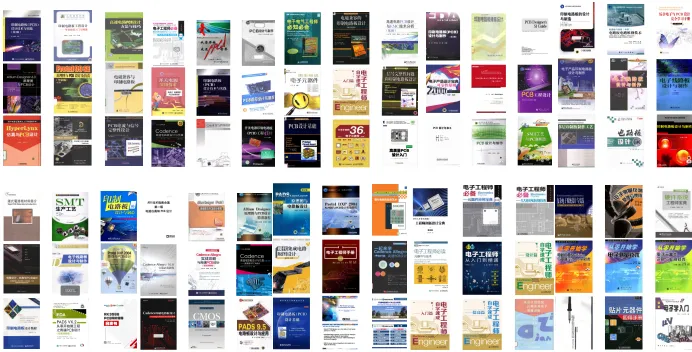
Screenshots from some electronic books
【Complete Set of Hardware Learning Materials】