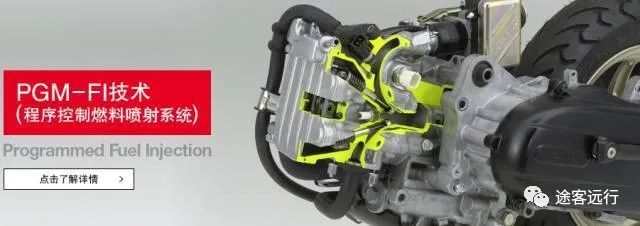
PGM-FI
Fuel Injection Concept
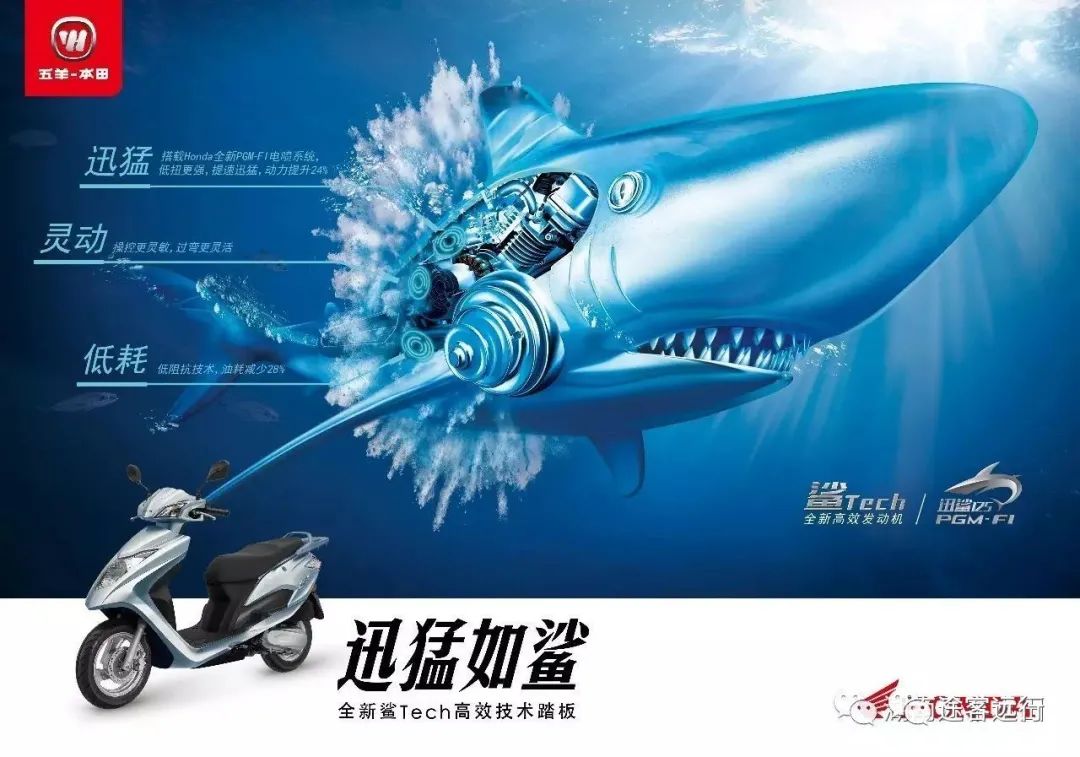
PGM-FI (Programmed Fuel Injection) is a high-precision program-controlled fuel injection system developed by Honda. PGM-FI can atomize the fuel delivered by the electronic pump in the fuel tank into the optimal state based on specific exhaust conditions, engine RPM, and oil temperature inside the engine, adjusting the air-fuel ratio before injecting it into the cylinder to achieve optimal combustion. PGM-FI improves the fuel economy of the engine by about 15% compared to conventional carbureted models of the same displacement, while also enhancing power performance.
Working Principle
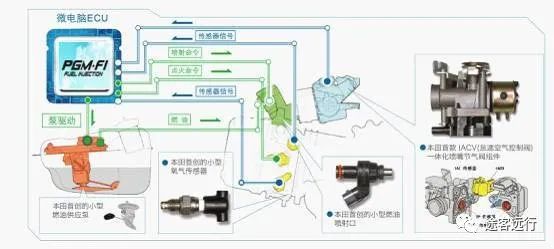
The PGM-FI intelligent fuel injection system consists of sensors, a control system, and actuators. Its working principle is that the ECU collects feedback signals from various sensors, and the actuators accurately inject fuel and ignite it according to commands, ensuring optimal fuel economy, reducing component wear, and providing efficient and ample power.
Advantages
1. High adaptability: performs better than carbureted models in high cold, high heat, and high altitude areas.
The fuel injection system can meet the starting and operational requirements in environments from -15°C to 45°C. It can also satisfy the requirements for altitudes up to 3500 meters.
2. Good fuel economy
Various control sensors programmatically control fuel injection based on engine status data, ensuring efficient operation of the engine under different working conditions and effectively avoiding improper driver operation. While ensuring sufficient power, it saves every drop of fuel.
Fuel cut-off (FUEL CUT) is implemented during high-speed throttle release to save fuel.
In the process of driving, when the driver suddenly releases the throttle (closing the throttle completely), the engine does not need to output torque, but is instead dragged by the motorcycle’s kinetic energy. This condition is referred to as the coasting condition.
To reduce waste emissions, lower fuel consumption, and improve driving characteristics in coasting conditions, the ECU identifies that the engine is in coasting mode, first delaying the ignition angle and then completely cutting off fuel injection to the engine, allowing for a smoother transition.
When the engine speed exceeds the specified speed limit (speed limit 1) and the throttle is closed, the nozzle will stop injecting fuel, cutting off the fuel supply to the engine; when the engine speed drops below the next speed limit (speed limit 2), the nozzle will start injecting fuel again to prevent the engine from stalling completely.
3. Low emissions (green environmental concept)
Using various control sensors, while ensuring power performance, the air-fuel ratio is controlled within a reasonable range, maximizing the catalytic conversion rate. This creates a greener world for us.
4. Good starting performance
Using air temperature sensors, engine temperature sensors, and pressure sensors, it senses the environment at the moment of starting. Whether in high or low temperatures, or on plateaus or flat land, the ECU can issue the best command for a one-button start.
5. Ample power.
It can sense the engine speed and throttle position, allowing developers to directly set the best MBT, ensuring the ECU issues the optimal ignition advance angle and fuel injection amount under various conditions, providing the most perfect driving experience for passengers.
6. Fault diagnosis function
It can directly locate faults through the fault indicator light or diagnostic equipment.
Historical Development
Honda began focusing on the research of PGM-FI fuel injection technology in the 1980s and put it into practical use by continuously providing the engine with the most suitable fuel and air using electronic control technology.
In 1982, Honda launched the CX500TURBO, the world’s first mass-produced model equipped with PGM-FI fuel injection technology. This model’s acceleration performance not only surpassed that of the high-displacement model CB900F but was also superior to the base model CX500.
In 1993, the Honda GP500 equipped with PGM-FI fuel injection technology participated in off-road races that demanded higher motorcycle performance, achieving remarkable results. Since then, Honda has continuously innovated its technology.
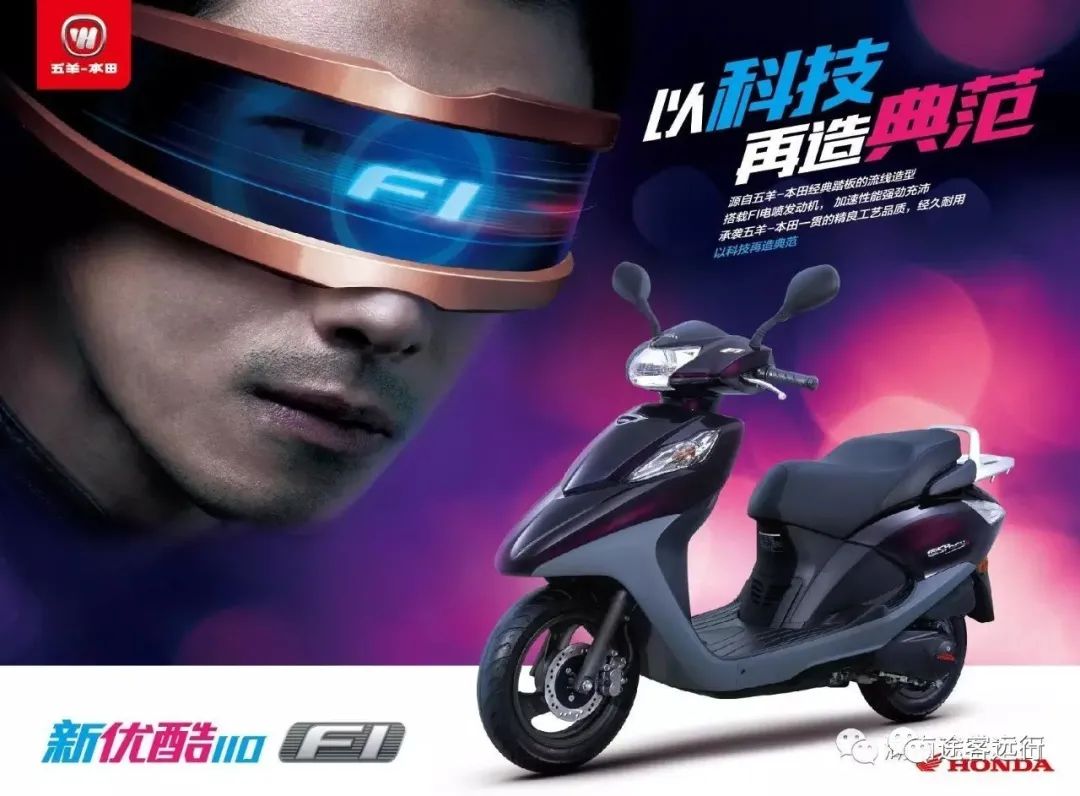
In 2003, Honda and other companies began researching the application of the FI system to small motorcycles. By replacing, modularizing, and integrating some sensor functions, the number of main components was reduced from 15 to 9, achieving compactness and cost reduction of the FI system.
In 2004, Honda developed a PGM-FI fuel injection engine specifically for 50mL four-stroke scooters, which, according to authoritative tests, had CO and HC emissions below 50% of Euro II standards, an 8.3% increase in combustion efficiency, a 7% decrease in constant-speed fuel consumption, and a 10% reduction in actual fuel consumption, with significant improvements in starting and acceleration performance. After a small batch of this fuel injection system was launched in 2005, it was well received by users.
In 2006, Honda was the first to launch a model equipped with PGM-FI fuel injection technology in the domestic market, with a measured fuel consumption of only 1.89L per 100km, significantly lower than the fuel consumption levels of models without this technology. Models equipped with PGM-FI fuel injection technology greatly reduced exhaust emissions and purified the air through electronic ignition control of combustion and its coordination with the exhaust system. Meanwhile, models equipped with PGM-FI fuel injection technology retained Honda’s unique strong power and driving pleasure. Additionally, the PGM-FI fuel injection system is not limited by climate, allowing the engine to start based on weather conditions, maintaining stable starting performance and idle fuel-saving performance.