The significance of impedance for PCB circuit boards is crucial. Why is impedance necessary for PCB circuit boards? This article first introduces what impedance is and its types, then explains why PCB circuit boards need impedance, and finally elaborates on the importance of impedance for PCB circuit boards. Let’s follow along to learn more.01
What is Impedance
In circuits with resistance, inductance, and capacitance, the opposition to alternating current is called impedance. Impedance is commonly represented by Z and is a complex number, with the real part referred to as resistance and the imaginary part as reactance. The opposition caused by capacitance in the circuit to alternating current is called capacitive reactance, while the opposition caused by inductance is called inductive reactance. The total opposition caused by both capacitance and inductance in the circuit to alternating current is collectively referred to as reactance. The unit of impedance is ohms.02
Types of Impedance
(1) Characteristic ImpedanceIn electronic information products such as computers and wireless communications, the energy transmitted in PCB circuits is a type of square wave signal (known as pulse), which encounters resistance known as characteristic impedance.(2) Differential ImpedanceTwo identical signal waveforms with opposite polarities are transmitted via two differential lines, and at the receiving end, these two differential signals are subtracted. Differential impedance is the impedance Zdiff between the two lines.(3) Odd-mode ImpedanceThe impedance Zoo of one line to ground among the two lines, where the impedance values of both lines are the same.(4) Even-mode ImpedanceThe impedance Zcom when the two lines are connected together with the same polarities of the two identical signal waveforms at the driving end.(5) Common-mode ImpedanceThe impedance Zoe of one line to ground among the two lines, where the impedance values of both lines are the same and is usually greater than odd-mode impedance. 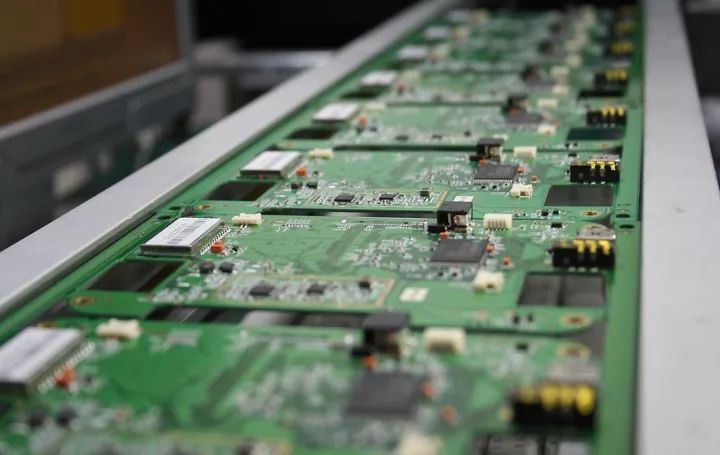
03
Why Do PCB Circuit Boards Need Impedance
The impedance of PCB circuit boards refers to the parameters of resistance and reactance that oppose alternating current. Impedance treatment is essential during PCB circuit board production for the following reasons:1. The PCB circuit (board bottom) must consider the installation of electronic components. After installation, factors such as conductivity and signal transmission performance must be considered, which requires the impedance to be as low as possible, with a resistivity of less than 1×10⁻⁶ ohm per square centimeter.2. During the production of PCB circuit boards, processes such as copper plating, tin plating (or chemical plating, or hot spray tin), and soldering of connectors must ensure that the materials used guarantee low resistivity to maintain overall low impedance and meet product quality requirements for normal operation.3. The tin plating on PCB circuit boards is the most problematic area during the production of the entire circuit board and is a key factor affecting impedance. The biggest defect of the chemical tin plating layer is its tendency to discolor (i.e., it is prone to oxidation or deliquescence) and poor solderability, which can lead to difficulties in soldering, high impedance causing poor conductivity, or instability in the overall performance of the circuit board.4. Various signals are transmitted through conductors in PCB circuit boards. To increase transmission speed, the frequency must be increased. If the circuit itself varies due to factors such as etching, layer thickness, and wire width, it can cause changes in impedance values, leading to signal distortion and decreased performance of the circuit board. Therefore, it is necessary to control the impedance value within a certain range.04
The Significance of Impedance for PCB Circuit Boards
For the electronics industry, industry surveys indicate that the most fatal weakness of the chemical tin plating layer is its tendency to discolor (i.e., it is prone to oxidation or deliquescence), poor solderability leading to difficulties in soldering, high impedance causing poor conductivity or instability in the overall performance of the board, and the tendency to grow tin whiskers leading to PCB circuit shorts or even fire incidents.
It is reported that the first research on chemical tin plating in China was conducted by Kunming University of Science and Technology in the early 1990s, followed by Guangzhou Tongqian Chemical in the late 1990s. For the past decade, these two institutions have been recognized as the best in the industry. Based on our interactions, surveys, experimental observations, and long-term endurance tests with numerous enterprises, it has been confirmed that Tongqian Chemical’s tin plating layer is a low-resistivity pure tin layer, ensuring high-quality conductivity and solderability, which is why they can guarantee that their plating remains unchanged for a year without any discoloration, bubbling, peeling, or whisker growth without any protective agents.Later, as the entire social production industry developed to a certain extent, many later participants often copied each other. In fact, a considerable number of enterprises lack their own research and development or pioneering capabilities, resulting in poor performance of many products and their users’ electronic products (circuit board bottoms or entire electronic products). The main reason for this poor performance is impedance issues. When substandard chemical tin plating technology is used, the tin plated on PCB circuit boards is often not true pure tin (or pure metallic element) but rather a compound of tin (which is not a metallic element at all but a metallic compound, oxide, or halide, to put it directly, a non-metallic substance) or a mixture of tin compounds and metallic tin, which is very difficult to detect with the naked eye…Because the main circuit of PCB circuit boards consists of copper foil, and the solder points on the copper foil are the tin plating layer, electronic components are soldered to the tin plating layer using solder paste (or solder wire). In fact, the solder paste that melts during soldering is metallic tin (a good conductor of electricity), so it can be simply stated that electronic components are connected to the copper foil of the PCB board through the tin plating layer. Therefore, the purity and impedance of the tin plating layer are critical; however, before electronic components are connected, when we directly use instruments to measure impedance, the instrument probes (or test leads) also connect through the tin plating layer on the copper foil surface of the PCB board to the copper foil of the PCB board to conduct current. Thus, the tin plating layer is key, influencing impedance and the overall performance of the PCB board, and is also a critical yet easily overlooked factor.As is well known, except for metallic elements, all compounds are poor conductors of electricity or even non-conductive (this is also a key reason for the existence of distributed capacitance or transmission capacitance in circuits). Therefore, when there are such conductive yet non-conductive tin compounds or mixtures in the tin plating layer, their present resistivity or the future resistivity after oxidation and deliquescence due to electrolysis is quite high (sufficient to affect the levels or signal transmission in digital circuits), and their characteristic impedances are also inconsistent. This can affect the performance of the circuit board and the entire machine.Thus, in the current social production phenomenon, the material and performance of the plating layer on the PCB board bottom are the main and direct reasons affecting the characteristic impedance of the entire PCB board. However, due to the variability of the plating layer with aging and deliquescence, the adverse effects of impedance become more hidden and variable. The main reasons for this concealment are: first, they cannot be seen with the naked eye (including their changes), and second, they cannot be constantly measured because they change with time and environmental humidity, making them easy to overlook.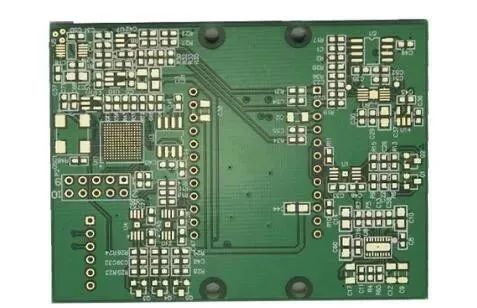
Disclaimer: This article is published to convey more information. If there are errors in source attribution or infringement of your legal rights, please contact the author with proof of ownership, and we will correct or delete it promptly. Thank you.