Introduction
In recent years, two major breakthroughs in cancer treatment—Antibody-Drug Conjugates (ADC) and Bispecific Antibodies (referred to as “bispecifics”)—have demonstrated remarkable efficacy. So, if these two “star drugs” are used in combination, will they produce a stronger anti-cancer effect? Will the toxicity be compounded and difficult to control?
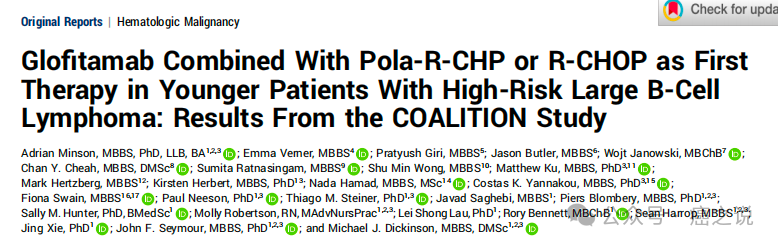
A recent clinical study published in the Journal of Clinical Oncology—the COALITION trial—provides us with exciting answers.
Understanding the Two “Protagonists”
ADC and Bispecifics
-
🌟 ADC: Like a “precision missile,” it is composed of an antibody and a potent chemotherapy drug linked by a linker. The antibody is responsible for recognizing specific proteins on the surface of tumor cells, delivering the chemotherapy drug precisely into the cancer cells for a “targeted explosion.”
-
🌟 Bispecifics: Like an “intelligent bridge,” its two “arms” can simultaneously bind to antigens on the surface of cancer cells and CD3 proteins on T cells, pulling T cells close to the cancer cells and activating their killing function.
-
👉Theoretically, ADC kills tumor cells while releasing tumor antigens, effectively “exposing” the cancer cells; meanwhile, bispecifics can quickly mobilize T cells to eliminate these “exposed” cancer cells. The combination is expected to form a synergistic combat mode of “first blast, then clear.”
COALITION Study
First Verification of ADC + Bispecific + Chemotherapy Feasibility
This study targeted young high-risk patients with large B-cell lymphoma—this group has less than a 50% chance of cure with the standard R-CHOP chemotherapy regimen. The study design is very sophisticated:
-
Bispecific: Glofitamab (a bispecific targeting CD20×CD3)
-
ADC: Polatuzumab Vedotin (an ADC targeting CD79b)
-
Chemotherapy: R-CHOP or Pola-R-CHP regimen
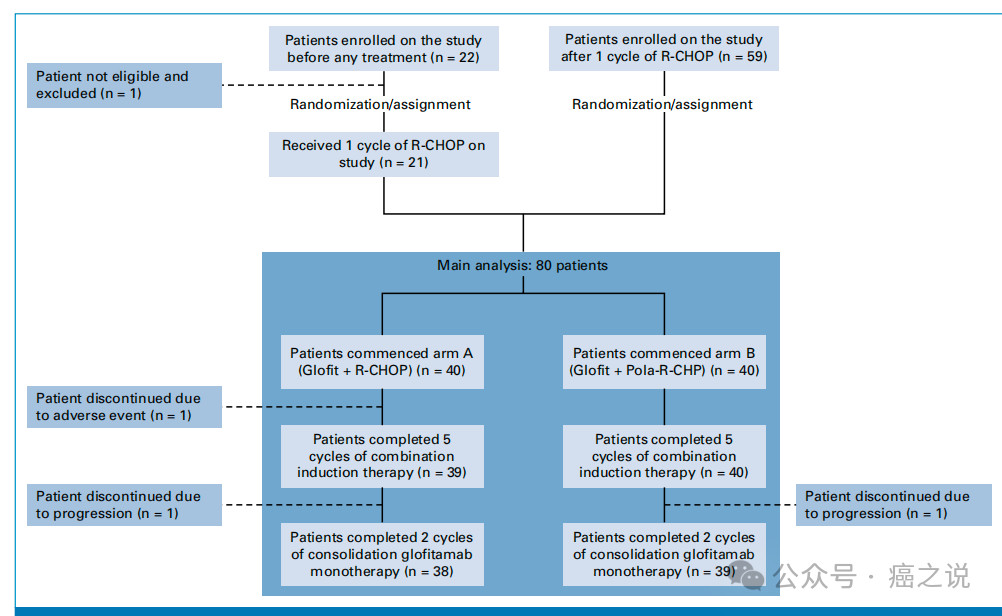
80 patients were divided into two groups, both receiving Glofitamab combined with chemotherapy, with one group using R-CHOP and the other using Pola-R-CHP containing Polatuzumab Vedotin.
Surprising Results
Outstanding Efficacy, Safe and Controllable
-
🌟 Efficacy:
· Overall response rate 100%: All patients had tumor shrinkage
· Complete remission rate 98%: Nearly all patients had complete disappearance of tumors on imaging
· 2-year progression-free survival rate 86%: Far exceeds historical controls (traditional chemotherapy about 50-60%)
· 2-year overall survival rate 92%: Indicates that the vast majority of patients achieved long-term survival
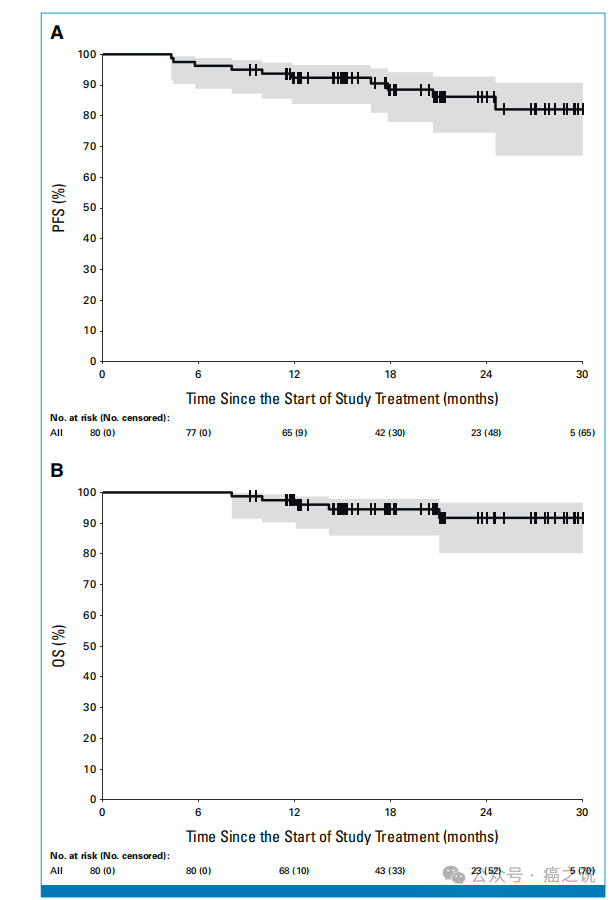
These numbers are unprecedented in the treatment of high-grade lymphomas, especially considering that the enrolled patients are traditionally considered “hard-to-treat types.”
-
🌟 Safety (This is Key!):
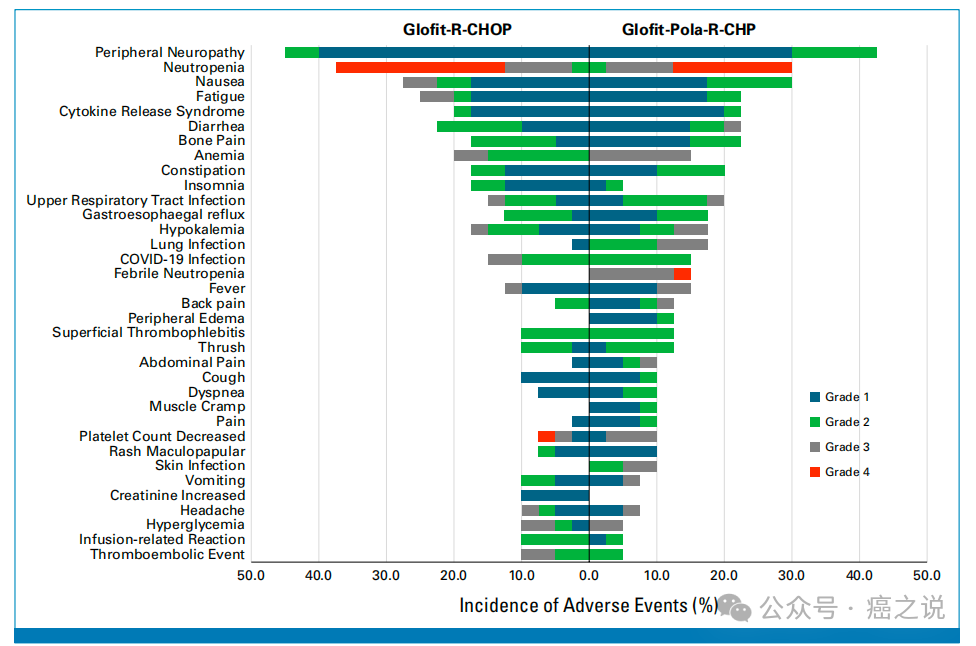
· Low incidence of cytokine release syndrome (CRS): Only 21%, and all were mild to moderate (grade 1-2), with no severe cases
· High treatment completion rate: 96% of patients completed all treatment cycles
· Good dose intensity maintenance: Relative dose intensity >94%, indicating that toxicity is controllable, with no need for frequent dose reductions
· No new safety issues: Toxicity profile similar to known chemotherapy + immunotherapy
Notably, the chemotherapy regimen combining bispecifics with ADC did not exhibit the anticipated compounded toxicity, and the incidence of CRS was even lower than that of bispecific monotherapy in relapsed patients.
Tracing Back
Why Did This Combination Strategy Succeed?
-
Complementary Mechanisms: ADC directly kills tumor cells and releases antigens; bispecifics recruit T cells to enhance immune clearance. Together, they form a perfect loop of “chemical killing” and “immune clearance.”
-
Optimized Administration Sequence: The study employed a “step-up” strategy, initially administering a low dose of bispecifics to “activate” the immune system, then gradually increasing the dose, effectively avoiding severe CRS.
-
Precise Patient Selection: Targeting high-risk populations with poor outcomes from traditional treatments allows them to benefit maximally from the therapy.
-
Feasibility of Outpatient Treatment: Most patients can complete treatment on an outpatient basis, greatly improving their quality of life.
Significant Implications
What Does This Mean for Cancer Treatment?
First, it proves the feasibility of “strong combinations.” In the past, doctors were concerned that the toxicity of ADC (such as peripheral neuropathy) and the immune toxicity of bispecifics (such as CRS) would compound, but this study demonstrates that with proper design and management, this combination is safe and feasible.
Second, it provides new hope for high-risk patients. For young high-risk lymphoma patients with poor outcomes from traditional chemotherapy, this combination may become a new standard treatment option.
More importantly, it opens up new treatment ideas. Since the combination of ADC and bispecifics has been so successful in lymphoma, can this success be replicated in other solid tumors (such as breast cancer, lung cancer, gastric cancer)? This points to new directions for future cancer treatment research.
Looking Ahead
Opportunities and Challenges Coexist
Although the results of the COALITION study are encouraging, there are still questions to explore:
-
Who are the best partners: How to pair different ADCs with different bispecifics?
-
Can chemotherapy be reduced: Is it possible in the future to completely replace traditional chemotherapy with ADC + bispecifics?
-
Biomarkers: Which patients are most suitable for this combination therapy?
Currently, a global phase III clinical trial, SKYGLO, has been initiated to further validate the efficacy of this combination.
Conclusion
The COALITION study powerfully answers the question of whether ADC can be combined with bispecifics— not only can it, but it can produce an outstanding effect of “1+1>2.” This combination represents a new paradigm in cancer treatment: organically combining precision targeting, immune activation, and traditional chemotherapy, bringing unprecedented survival hope to the most difficult-to-treat patients.
As more research results are published, we have reason to believe that the “golden combination” of ADC and bispecifics will play an increasingly important role in future cancer treatment, allowing more patients to achieve long-term survival and even cure.
References
[1] Dong Y, Zhang Z, Luan S, Zheng M, Wang Z, Chen Y, Chen X, Tong A and Yang H. Novel bispecific antibody-drug conjugate targeting PD-L1 and B7-H3 enhances antitumor efficacy and promotes immune-mediated antitumor responses. J Immunother Cancer 2024; 12:
[2] Hong Y, Nam SM and Moon A. Antibody-drug conjugates and bispecific antibodies targeting cancers: applications of click chemistry. Arch Pharm Res 2023; 46: 131-148.
[3] Meric-Bernstam F, Beeram M, Hamilton E, Oh DY, Hanna DL, Kang YK, Elimova E, Chaves J, Goodwin R, Lee J, Nabell L, Rha SY, Mayordomo J, El-Khoueiry A, Pant S, Raghav K, Kim JW, Patnaik A, Gray T, Davies R, Ozog MA, Woolery J and Lee KW. Zanidatamab, a novel bispecific antibody, for the treatment of locally advanced or metastatic HER2-expressing or HER2-amplified cancers: a phase 1, dose-escalation and expansion study. Lancet Oncol 2022; 23: 1558-1570.
[4] Rodriguez-Otero P, Usmani S, Cohen AD, van de Donk N, Leleu X, Gállego Pérez-Larraya J, Manier S, Nooka AK, Mateos MV, Einsele H, Minnema M, Cavo M, Derman BA, Puig N, Gay F, Ho PJ, Chng WJ, Kastritis E, Gahrton G, Weisel K, Nagarajan C, Schjesvold F, Mikhael J, Costa L, Raje NS, Zamagni E, Hájek R, Weinhold N, Yong K, Ye JC, Sidhana S, Merlini G, Martin T, Lin Y, Chari A, Popat R and Kaufman JL. International Myeloma Working Group immunotherapy committee consensus guidelines and recommendations for optimal use of T-cell-engaging bispecific antibodies in multiple myeloma. Lancet Oncol 2024; 25: e205-e216.
[5] Wang Z, Zheng M, Li M, Lu H, Liu N, Chen Y, Yang N, Zeng W, Dong Y, Li J, Zhu Z, Yang C, Zhang Z, Lu Q, Li H, Zhou L, Yang H and Tong A. Development and Characterization of a Lysosome-Targeting SLC3A2/PD-L1 Bispecific Antibody-Drug Conjugate for Enhanced Antitumor Efficacy in Solid Tumors. Mol Cancer Ther 2025; 24: 261-274.
Author Biography

Li Xiaobing
Hubei Cancer Hospital
Doctor of Oncology
-
Associate Chief Physician
-
Outstanding Doctor of Hubei Cancer Hospital
-
Member of the Difficult Tumor Committee of the Chinese Medical Education Association
-
Standing Committee Member of the Oncology Prevention and Treatment Committee of the Hubei Provincial Association of Science and Technology
-
Standing Committee Member of the Youth Expert Committee of the Hubei Clinical Oncology Society
-
Member of the Immunotherapy Expert Committee of the Hubei Clinical Oncology Society
-
Member of the Biological Therapy Committee of the Hubei Immunology Society
-
Founder of the oncology public account “Cancer Talk”
Contact Information
🛄 Outpatient Address:
Third Floor, Outpatient Department, Hubei Cancer Hospital
Immunotherapy Outpatient
🕒 Outpatient Hours:
Every Thursday afternoon14:00-17:00

More Information Scan to Follow