BYD Han’s pricing truly caught me off guard when I heard the sales representative at the dealership mention it. Starting at 105,800 Yuan? For a C-Class car? At that moment, a gentleman next to me directly asked, “Is this a typo?” It turns out it wasn’t a mistake; just over 100,000 Yuan, the Han has effectively slashed the entry point for C-Class sedans.
What struck me the most was that a few years ago, if you wanted a spacious, long-range family C-Class, you basically had to start at around 300,000 Yuan. The Audi A6L had become a status symbol for the middle class. Now, with BYD Han’s statement of “just over 100,000 Yuan,” I couldn’t help but think: the pressure on joint venture cars must be measured in tons.
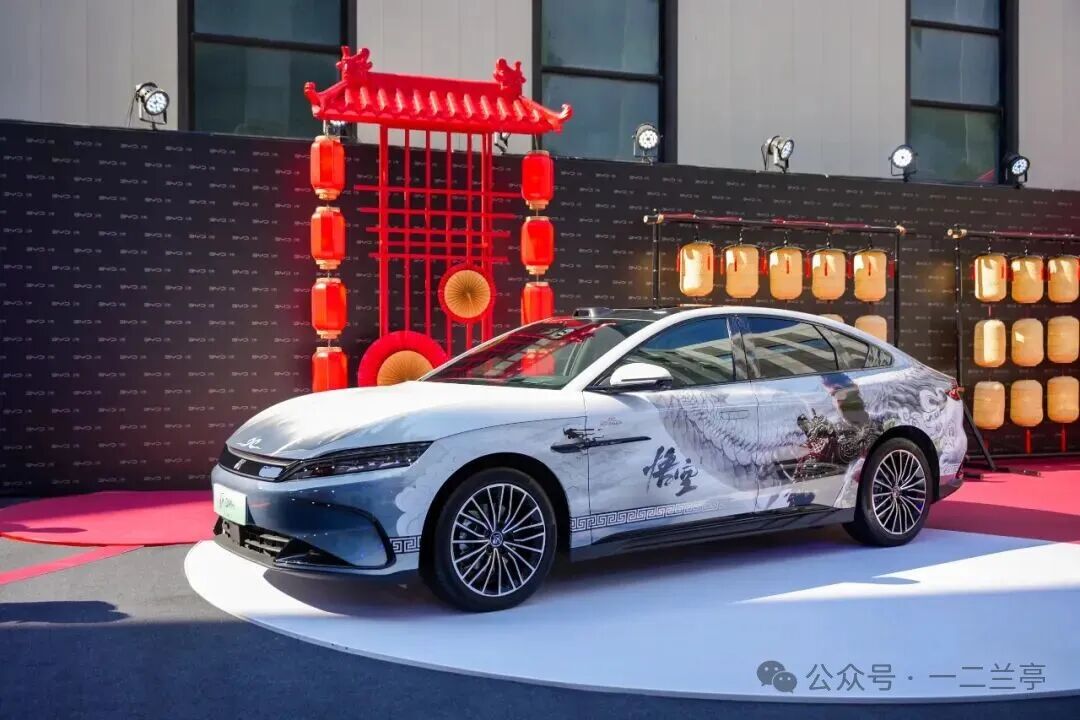
However, car buyers don’t just look at the price. Regarding space, during my test ride, after adjusting the front seats, I found that even someone over 1.8 meters tall like me could stretch their legs comfortably in the back. The dimensions of 4995/1910/1495 mm and a wheelbase of 2920 mm are figures that would have been reserved for executive-level cars in the past.
Three people can sit in the back without feeling cramped, especially since the middle floor is almost completely flat. If you have elderly or children in the family, or if three generations occasionally travel together, you won’t have to worry about “legroom” issues. The trunk has a capacity of 480L, which can be expanded to 1500L by folding down the rear seats, easily accommodating golf bags, strollers, and more.
If I were to nitpick, the pure electric version’s trunk doesn’t sink much, making it a bit challenging to load larger items.
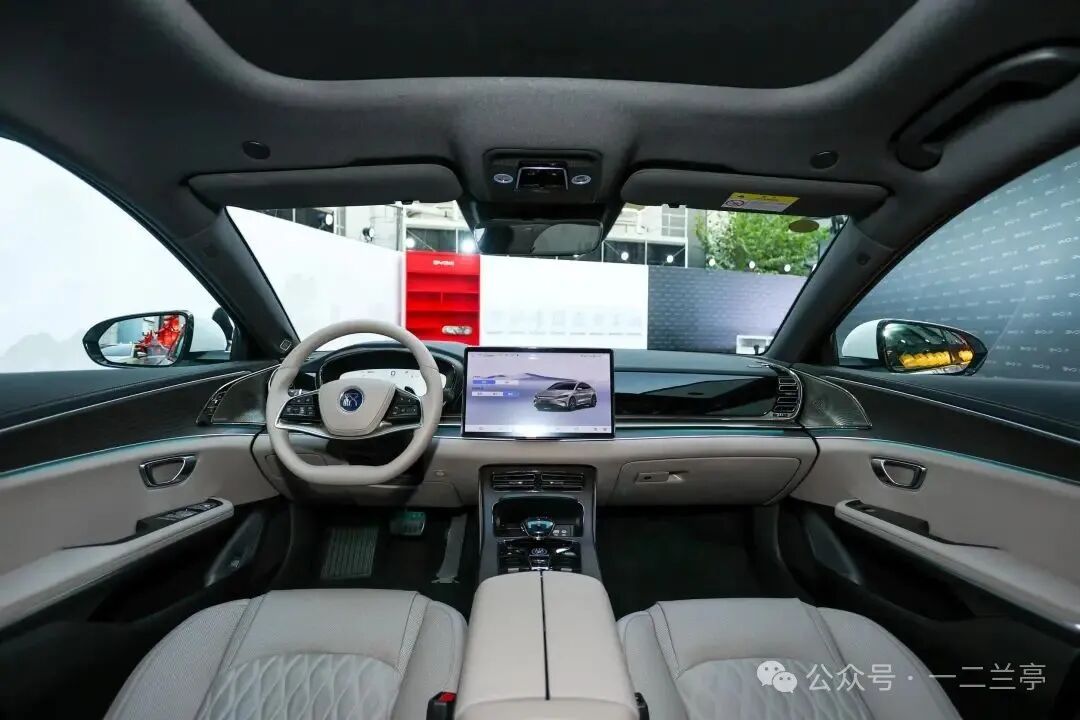
Speaking of the interior, to be honest, in previous years, domestic cars were often perceived as “looking good but feeling cheap.” However, with this generation of the Han, I actually touched the center console, which features soft-touch plastics and real wood trim, and I couldn’t find any major flaws in terms of feel or appearance.
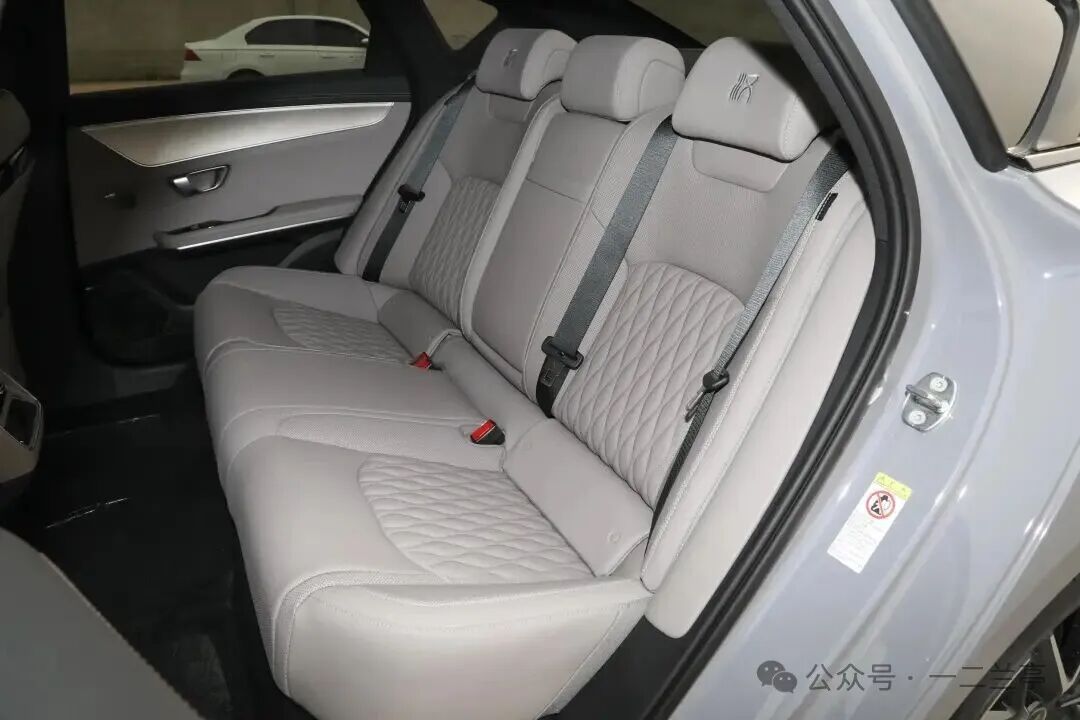
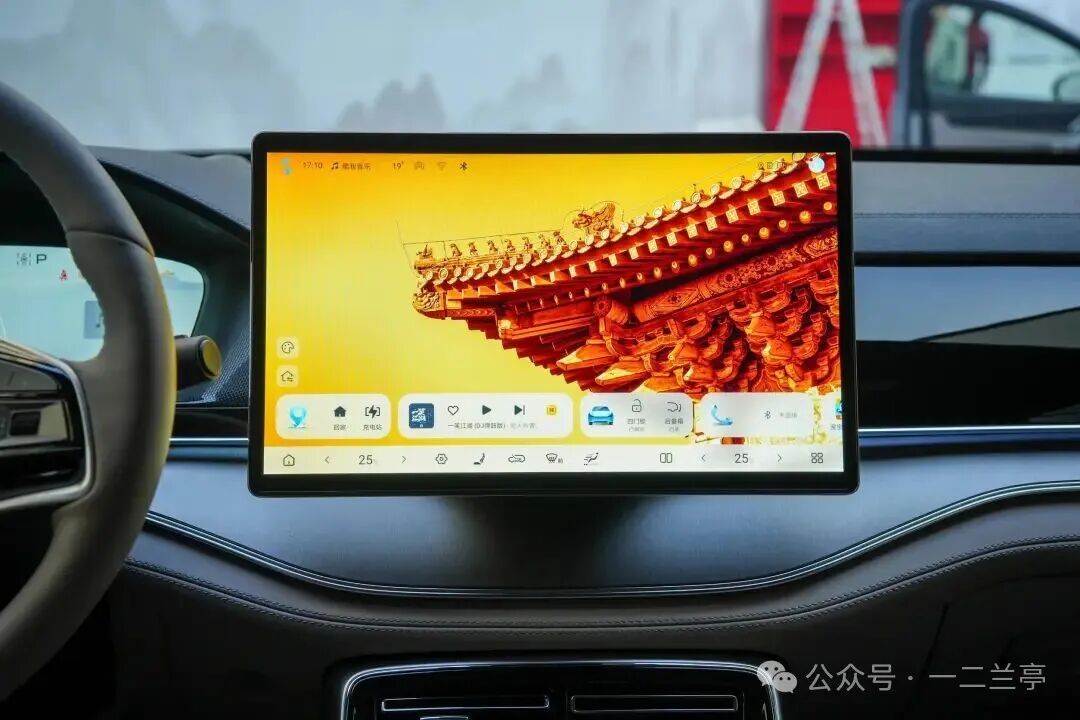
The 15.6-inch large screen has narrow bezels and operates smoothly. The DiLink 5.0 system supports continuous dialogue for voice control, and the navigation response is about two seconds faster than the previous generation. The seats are made of Nappa leather, with the front seats having 12-way electric adjustment and three levels of heating and ventilation, while the rear seatbacks can be adjusted by 35 degrees, making long trips very comfortable.
The only downside? The mid-range and lower versions of the rear seats lack massage functions, which are only available in the top version, and I suspect very few people actually use them.
When it comes to features, BYD has always been known for its “feature-rich” offerings. The Han comes standard with wireless charging, active noise cancellation, and a 12-speaker sound system (the high-end version features a Dynaudio system), along with Type-C ports and independent air vents for the rear seats.
The intelligent driving system has two tiers: the cheaper version can be used on highways, while the more expensive one can automatically follow in urban areas. The laser radar and the full suite of L2+ features are available only in the high-end version, but for most families, the standard features are sufficient. If you are pursuing cutting-edge technology, the Han L’s fast charging and urban NOA might be more appealing.
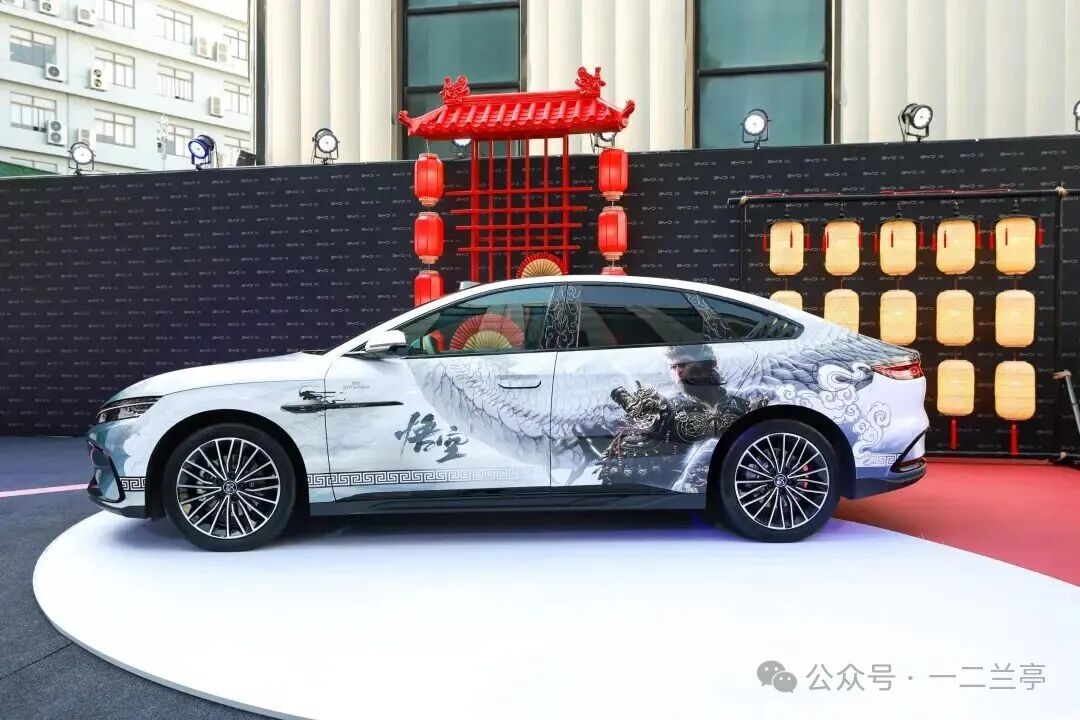
Ultimately, for just over 100,000 Yuan, you get a lot, but it’s not without its trade-offs; after all, you get what you pay for.
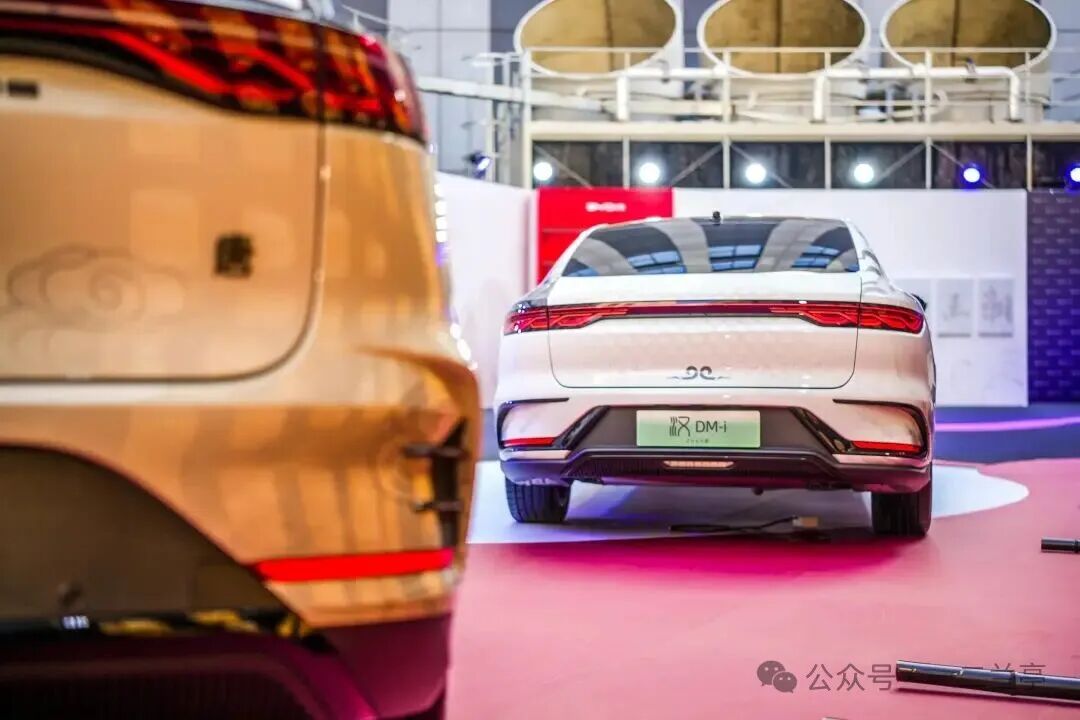
As for performance, this is what I care about the most. The plug-in hybrid version (DM-i) features a 1.5T Xiaoyun engine paired with an electric motor, delivering a system power of 308 horsepower and a 0-100 km/h acceleration time of 7.9 seconds. The fuel consumption when the battery is depleted is 4.2L/100km, and the range with a full tank and full charge is 1354 km (CLTC).
I tested it on the highway, and I found that with a full tank of gas and a full charge, I could easily exceed 1000 km, alleviating any anxiety for family trips. The pure electric version also offers two options: 605 km and 715 km, with fast charging capable of reaching 50% in just 12 minutes, although the availability of fast charging stations depends on your local infrastructure.
The chassis features a front MacPherson strut and a rear multi-link setup, making it very comfortable to drive in the city. It doesn’t feel as “heavy” over speed bumps as the Audi A6L, but its comfort level is certainly competitive. While it may not be as stable as the Han L during aggressive driving, this isn’t a major issue for family use.
Now, let’s talk about the market and brand. In May, over 10,000 units of the Han were sold, while the Han L only sold 4,800. With the price slashed to the 100,000 Yuan level, those who previously considered B-Class or even A-Class joint venture cars are starting to contemplate whether to jump straight to a C-Class.
Comparing it to the Audi A6L, the money spent on one A6L could buy three Han models, and there would still be enough left over for ten years’ worth of fuel. While Audi’s four rings do carry some brand prestige, today’s younger consumers are more concerned with features, space, and cost-effectiveness.
The reputation for safety of the blade battery is well-established, and its fast charging speed is also commendable, leading many to calculate the costs clearly.
However, low prices do come with some trade-offs. The sound quality and quietness of the cheaper Han model fall short compared to the Han L; the fast charging speed and driver assistance features are not fully available even in the top version.
The battery warranty of 8 years is generous, but the rapid depreciation of used cars is a well-known secret. Additionally, the Han L’s fast charging, chassis, materials, and technology surpass those of the Han, making the 200,000 Yuan price point for a “full package” experience appealing to a certain audience.
Actual sales feedback indicates that buyers of the cheaper Han are mostly families and ride-hailing drivers, while the Han L is more favored by young tech enthusiasts.
Buying a Han now feels like stepping into another parallel universe. To be able to purchase a spacious, comfortable, and long-range C-Class family sedan for just over 100,000 Yuan is something no one would have dared to imagine five years ago. While brand recognition may not catch up to established names like Audi in the short term, the gap in price and experience has already prompted many to reconsider their priorities between image and substance.
To be honest, this isn’t just a case of “new energy vehicles disrupting the market”; it feels more like a significant breakthrough that has shattered the ceiling of the automotive market.