
Scan the QR code on the left
Enter the “Ruichao Dingke” brand area
Introduction
Ruichao Dingke Group is a leading medical technology group in Asia, dedicated to providing cutting-edge, high-quality, and affordable medical technologies to global customers. The neurology business line of Ruichao Dingke includes three member companies: Puwisen Medical, Pugao Medical, and Niuno Yinte, focusing on developing innovative medical devices that are more suitable for patients. As an academic exchange column of Ruichao Dingke, the “Weimiao Tongyuan” case series focuses on sharing clinical experiences of the neurology business line products in interventional treatments for acute arterial ischemia, atherosclerosis, intracranial artery stenosis, arteriovenous malformations, and aneurysms, listening to voices from the clinic.
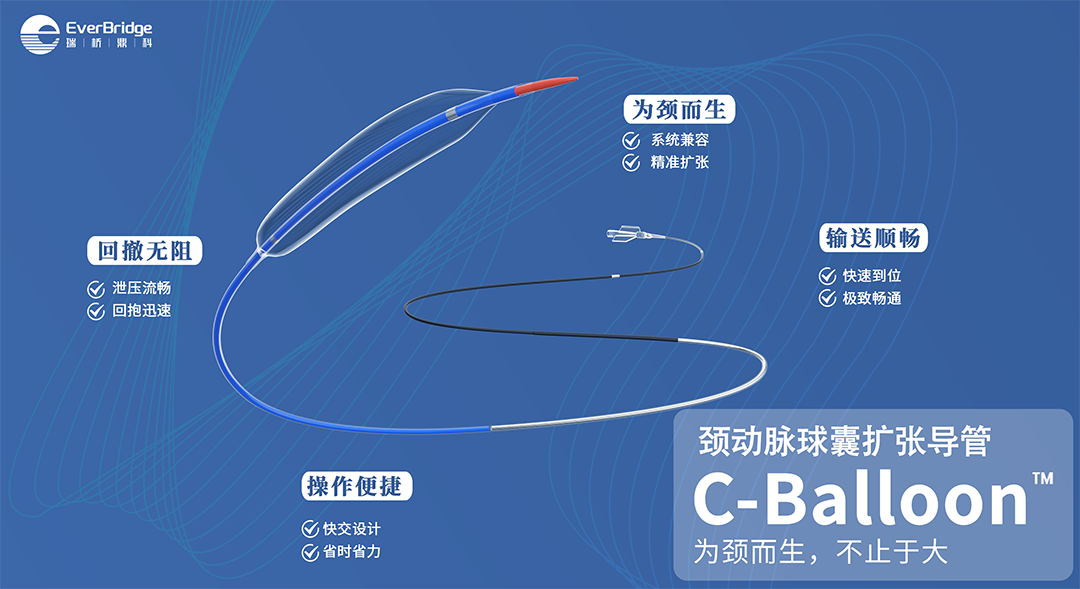
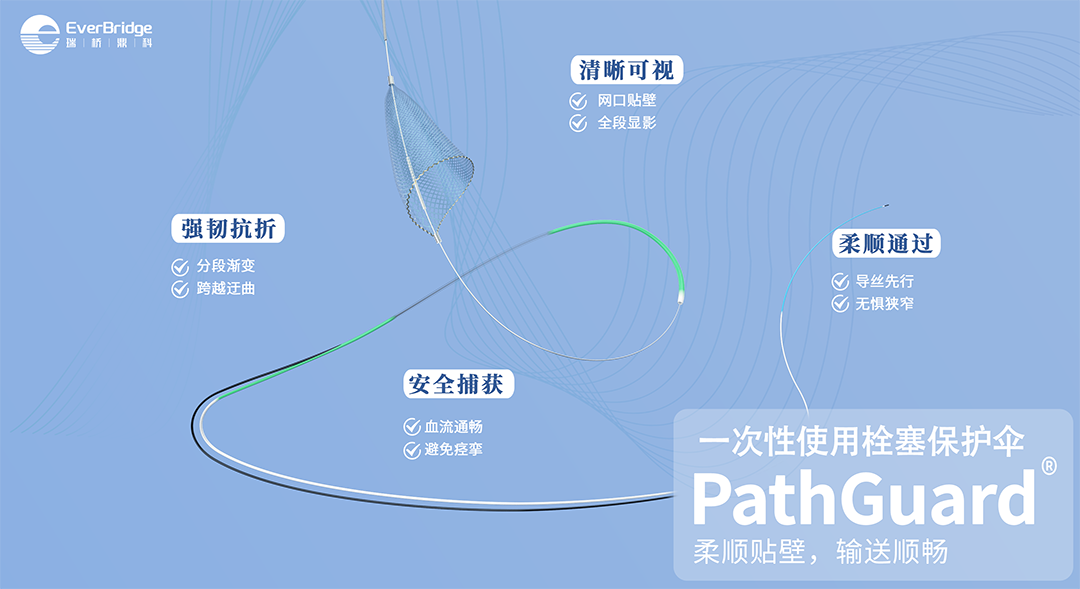
This issue presents an exciting case of the Pugao C-Balloon® catheter combined with the PathGuard® umbrella applied to the endovascular treatment of a floating thrombus at the carotid artery bifurcation. Below is the exciting presentation for you.
This Issue’s Case
01
Patient Basic Information
Patient: Male, 63 years old.
Chief Complaint: Admitted to the emergency department due to “sudden left limb weakness for 1 day”.
Brief Medical History: Sudden left limb weakness without obvious cause 1 day ago, manifested as dragging of the left lower limb while walking, difficulty holding objects with the left upper limb, accompanied by slurred speech, without dizziness, nausea, vomiting, or loss of consciousness. Admitted to our hospital’s emergency department and diagnosed with “acute cerebral infarction”.
Past Medical History: History of cerebral infarction, no significant sequelae. Denies history of hypertension, coronary heart disease, diabetes, or atrial fibrillation.
Personal History: Denies smoking or drinking history.
Admission Examination: Conscious, speech unclear. Bilateral pupils equal and round, 3.0mm in diameter, responsive to light, with full eye movement in all directions. Symmetrical nasolabial folds, tongue protruding in the center. Left limb muscle strength 5/5, right limb muscle strength 5/5, bilateral Babinski sign (-). NIHSS score 2.
02
Imaging Information
Head DWI: Early infarction in the watershed area of the right cerebral hemisphere; Head MRA: No significant intracranial large vessel occlusion.
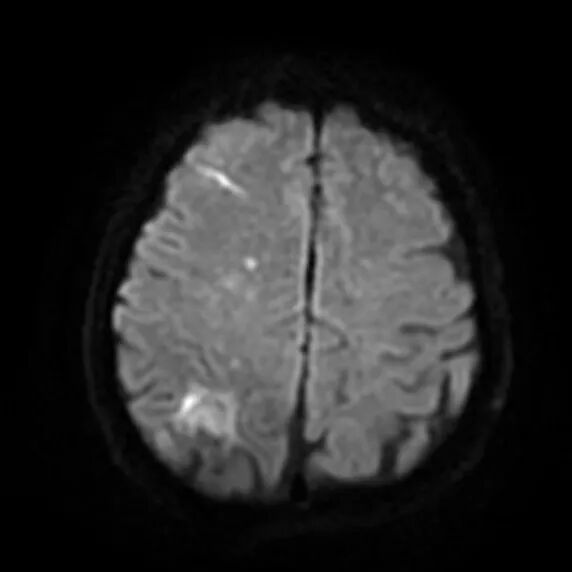
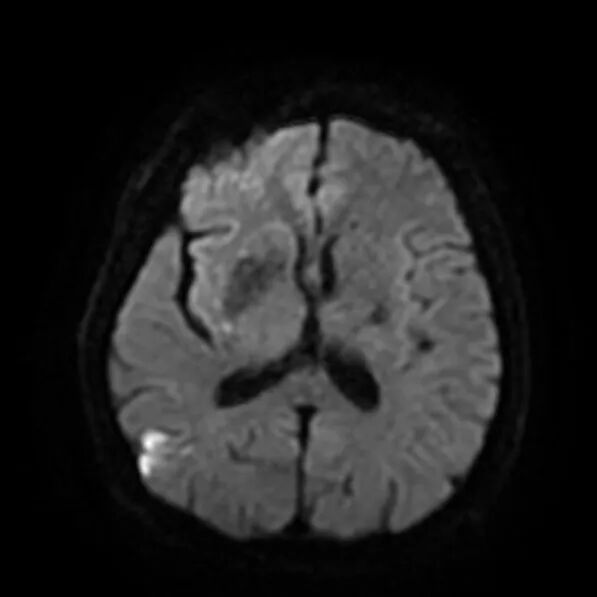
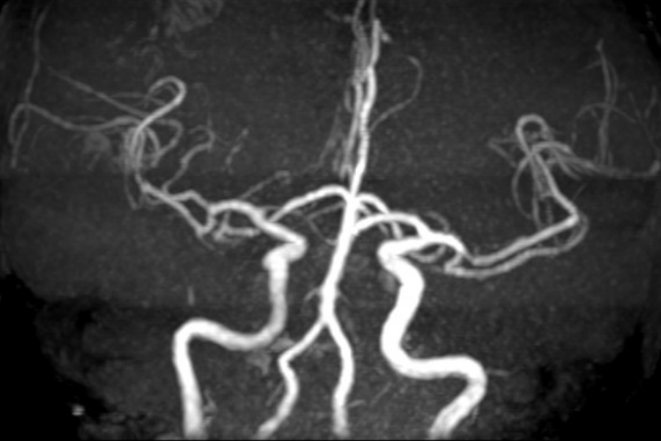
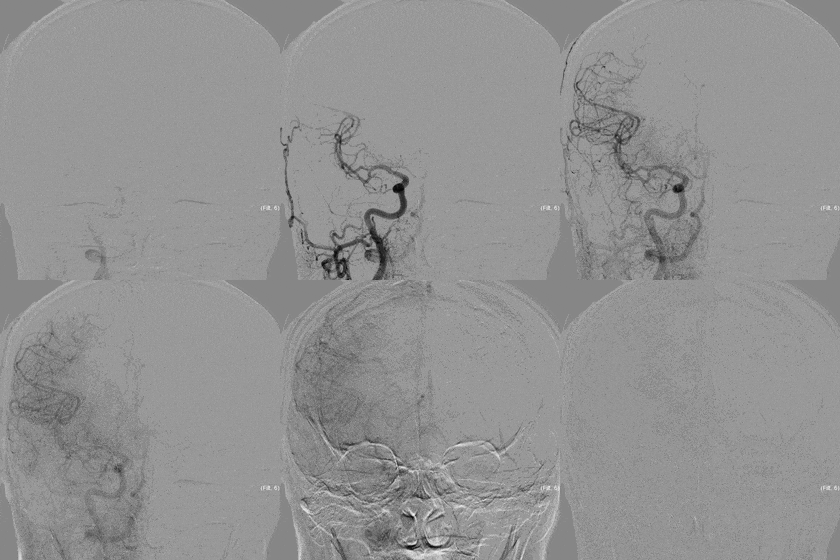
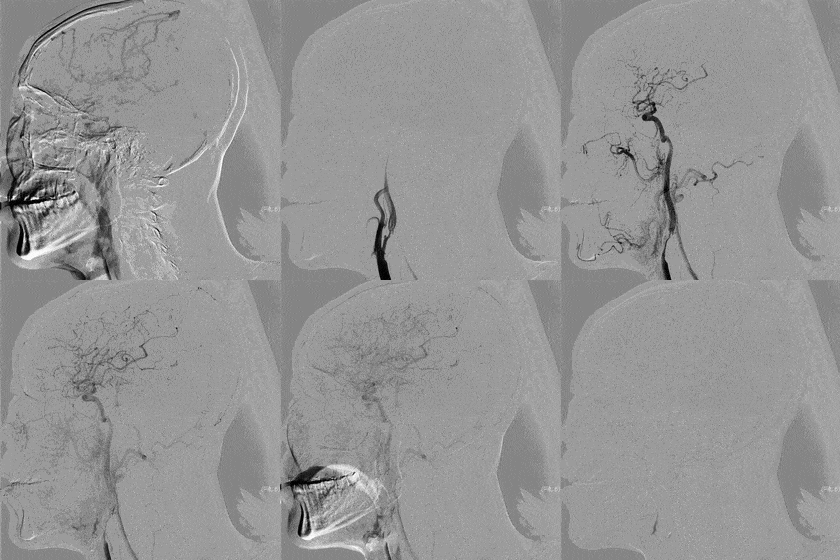
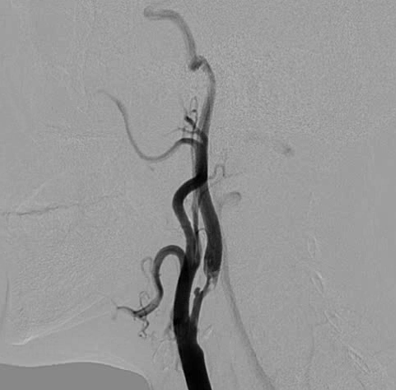
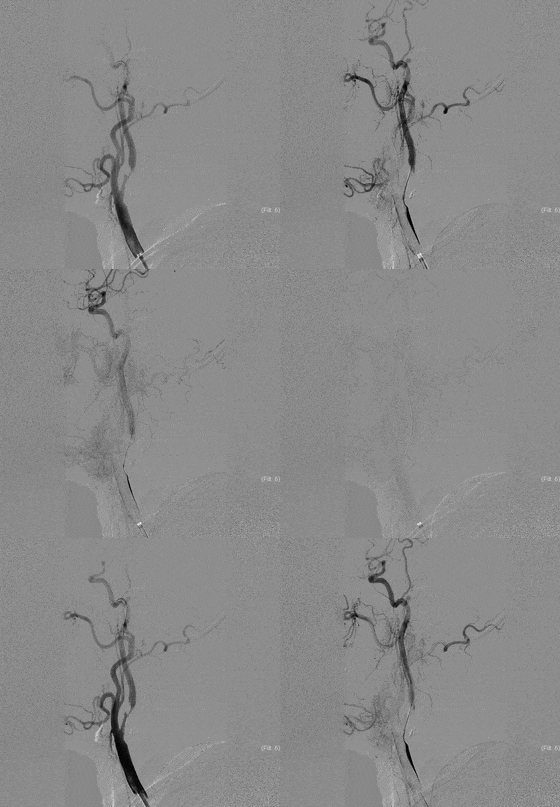
Radial artery DSA results: Slow antegrade flow in the right middle cerebral artery; severe atherosclerotic changes at the origin of the right internal carotid artery, with local severe stenosis and thrombus formation.
03
Changes in Condition
During carotid ultrasound, sudden worsening of left limb weakness occurred.
Neurological examination: Drowsy, mixed aphasia. Bilateral pupils equal and round, 3.0mm in diameter, responsive to light, with full eye movement in all directions. Symmetrical nasolabial folds, tongue protruding in the center. Left limb muscle strength 3/5, right limb muscle strength 5/5, bilateral Babinski sign (left +, right -). NIHSS score 6.
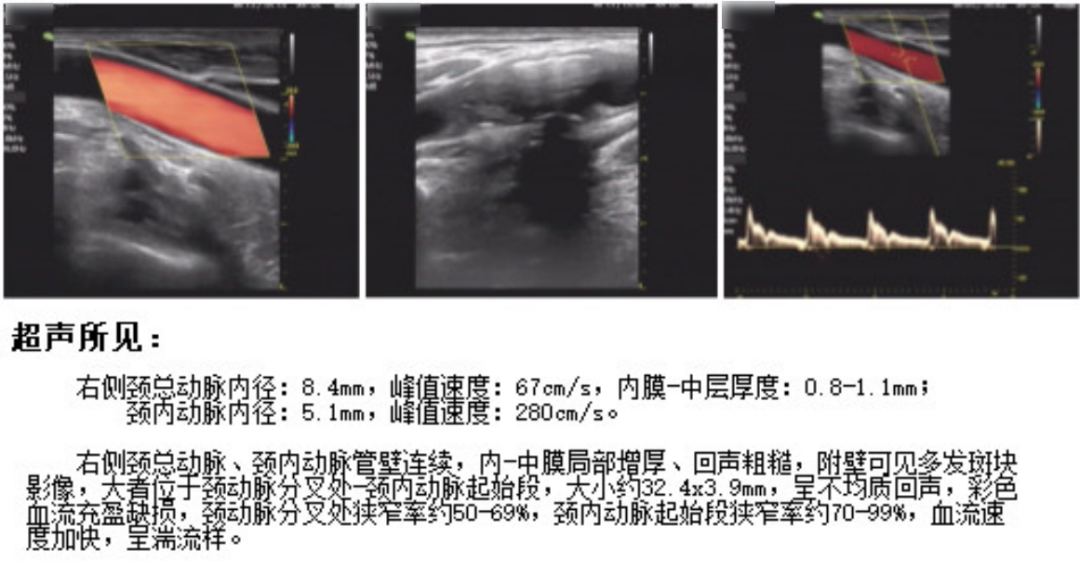
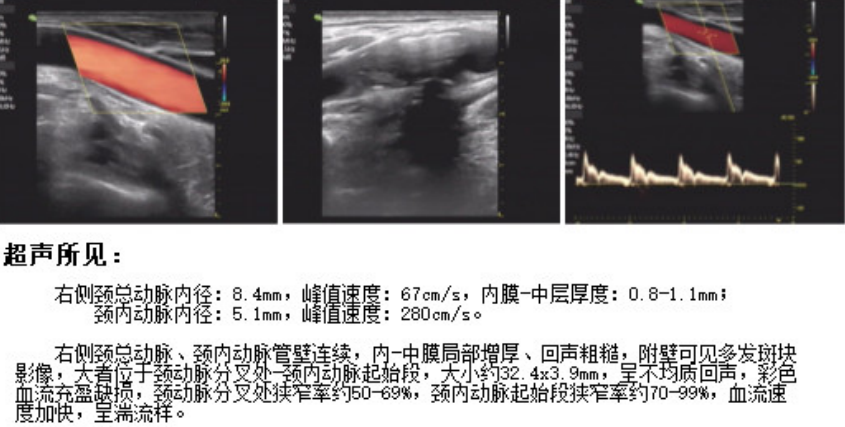
Carotid ultrasound indicated severe stenosis at the origin of the right internal carotid artery, with significantly increased blood flow velocity.
04
Preoperative Discussion
Admission Diagnosis
-
Acute cerebral infarction
-
Severe stenosis (with floating thrombus) at the origin of the right internal carotid artery
Surgical Strategy
-
The patient has acute cerebral infarction caused by severe stenosis at the origin of the right internal carotid artery. After admission, head DWI indicated right cortical watershed infarction, and head MRA showed no large vessel occlusion. During carotid ultrasound, the patient’s condition worsened, and radial artery cerebral angiography indicated severe stenosis at the origin of the right internal carotid artery, with slow antegrade flow and floating thrombus, suggesting the possibility of embolus detachment at the origin of the right internal carotid artery, which could lead to early neurological deterioration due to embolus detachment, and there is a possibility of acute occlusion of the carotid artery.
-
Surgical difficulties: ① The patient has severe stenosis at the origin of the right internal carotid artery with embolus formation, which may lead to embolus escape during the passage of the microguidewire through the lesion; ② The patient has severe stenosis at the origin of the right internal carotid artery with unstable plaque, which may lead to unstable plaque escape during balloon dilation.
-
After discussing the benefits and risks of the surgery with the family, the surgical plan is proposed: balloon dilation + stenting of the severe stenosis at the origin of the right internal carotid artery (local anesthesia, via femoral artery).
05
Intraoperative Instruments
-
Pugao 5.0*30mm C-Balloon® carotid balloon dilation catheter
-
Pugao 5mm PathGuard® umbrella
-
9.0*40mm Wallstent carotid stent
06
Surgical Procedure
Access established, type III aortic arch, under the guidance of a long guidewire and MPA1 catheter, 8F catheter positioned appropriately.
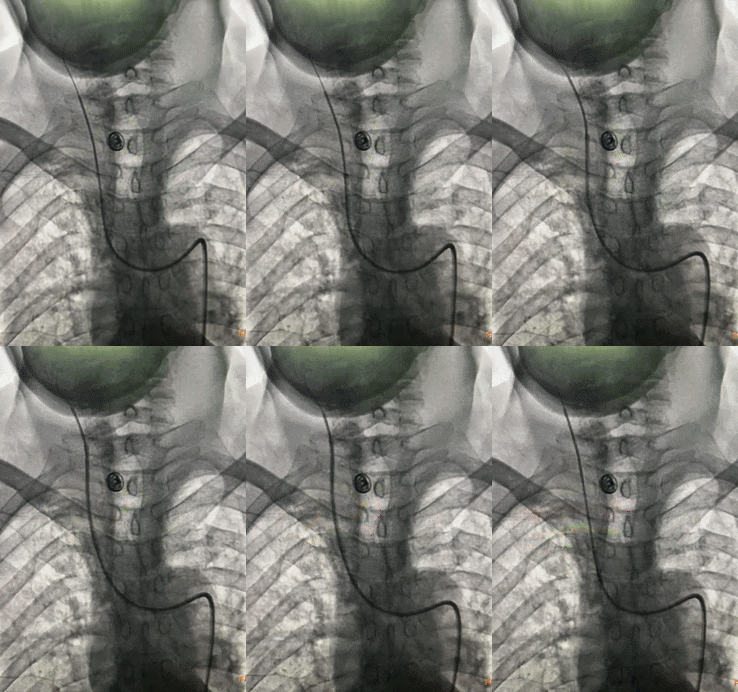
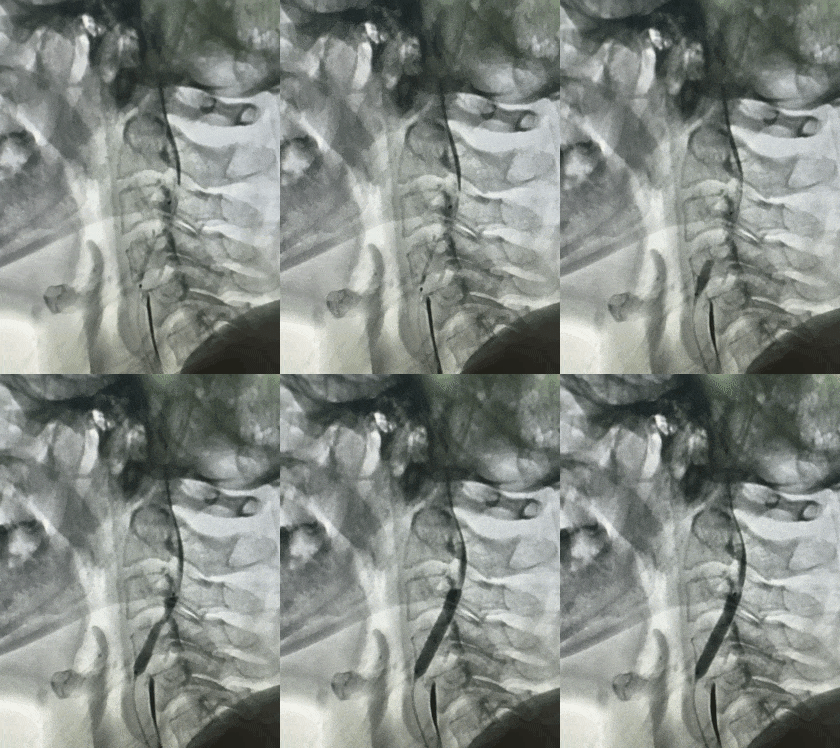
The microguidewire safely passed through the lesion, and the 5mm PathGuard® umbrella was placed in the C2 segment of the right internal carotid artery.
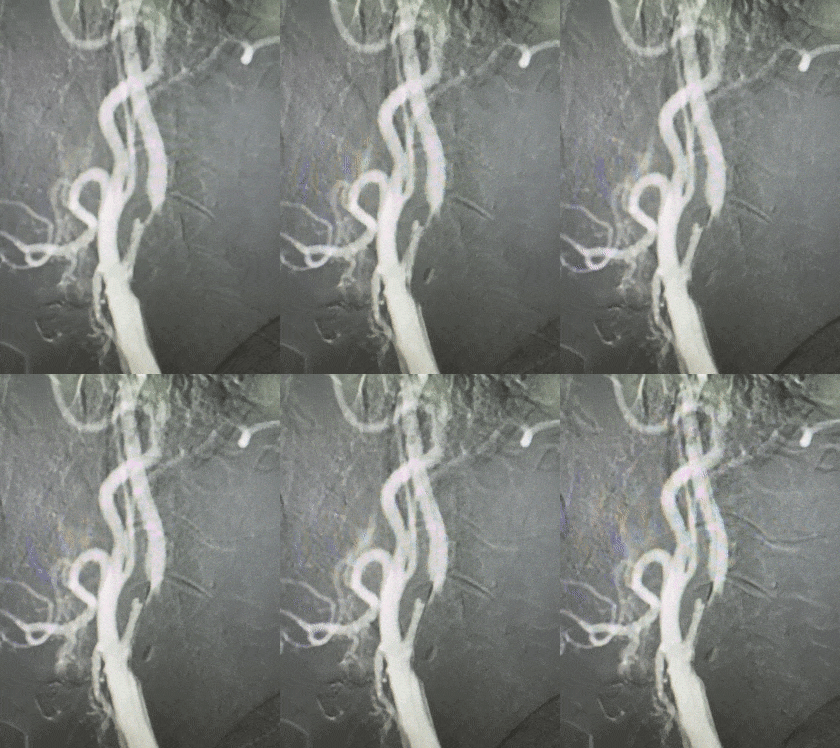
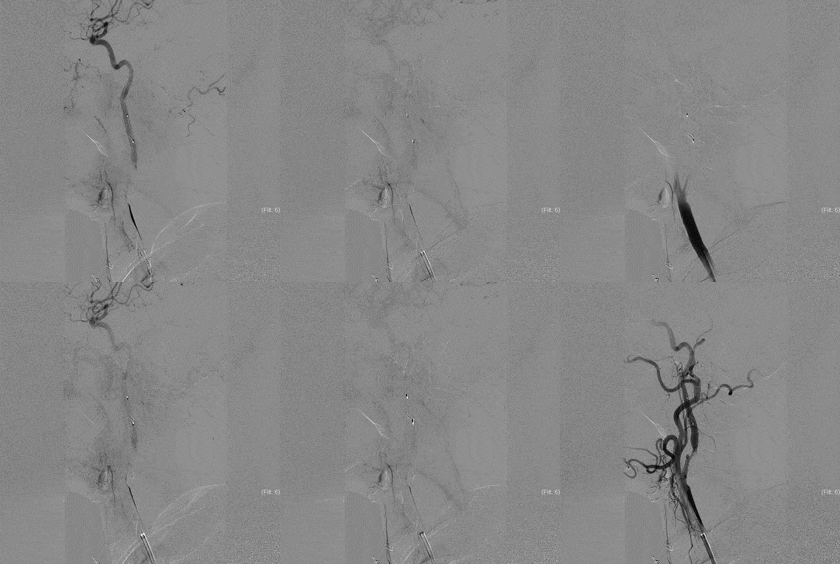
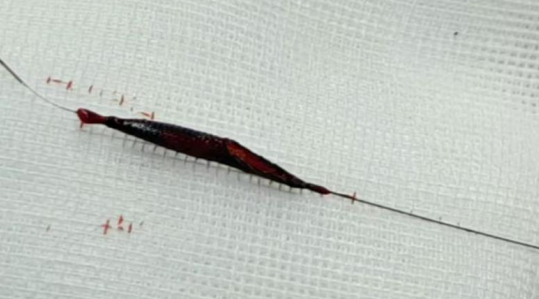
5.0*30mm C-Balloon® carotid balloon dilation catheter dilated the lesion, and a closed-loop stent was placed to fully cover the plaque and thrombus at the lesion site. The 5mm PathGuard® umbrella was retrieved, revealing a significant amount of thrombus inside the umbrella.
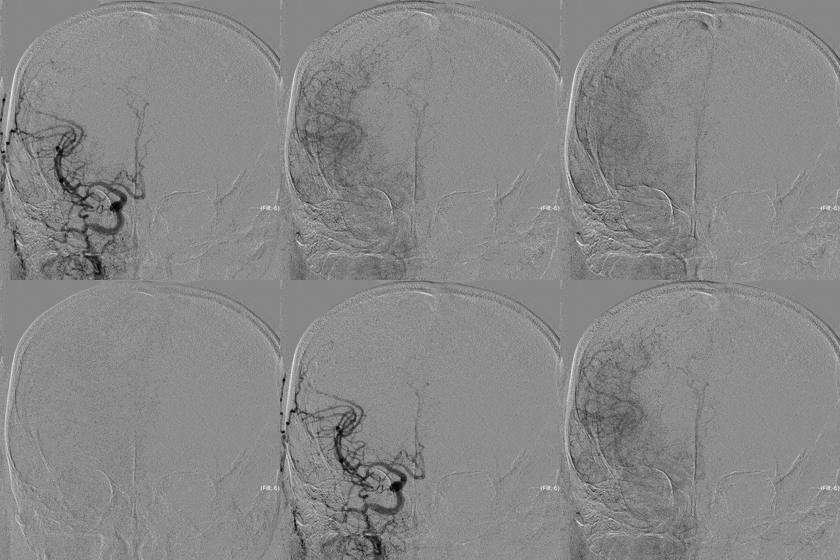
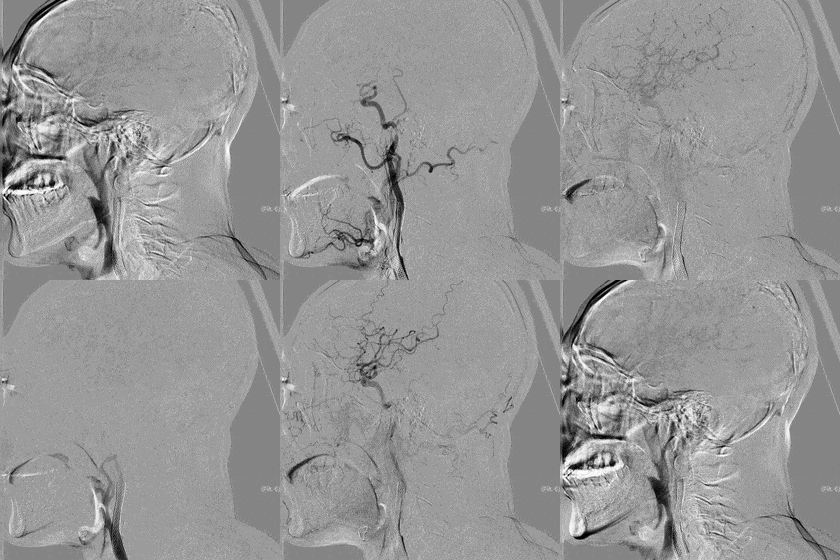
Angiography confirmed significant improvement in stenosis and thrombus at the origin of the right internal carotid artery, with markedly improved antegrade flow in the right internal carotid artery.
07
Postoperative Condition
Postoperative neurological examination showed significant improvement compared to preoperative (conscious, speech unclear. Bilateral pupils equal and round, 3.0mm in diameter, responsive to light, with full eye movement in all directions. Symmetrical nasolabial folds, tongue protruding in the center. Left limb muscle strength 5/5, right limb muscle strength 5/5, bilateral Babinski sign (-). NIHSS score 2).
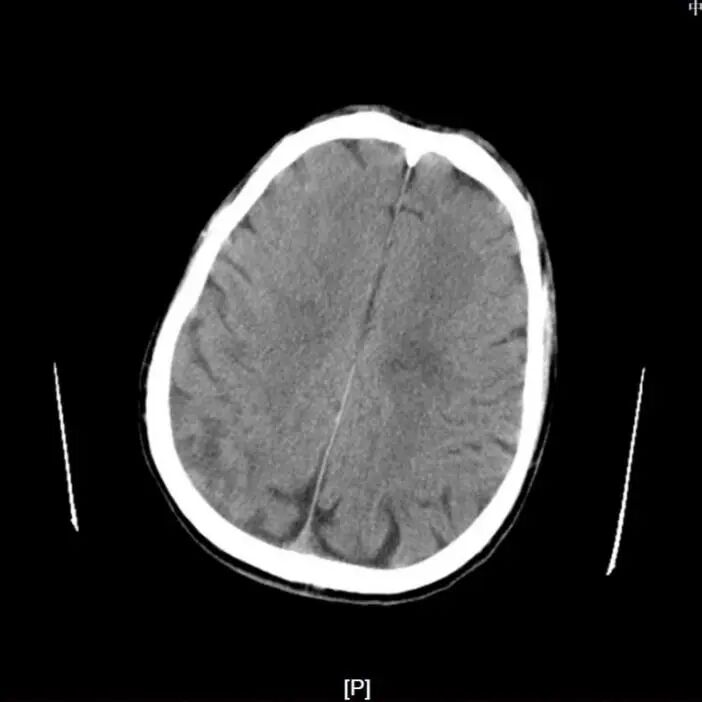
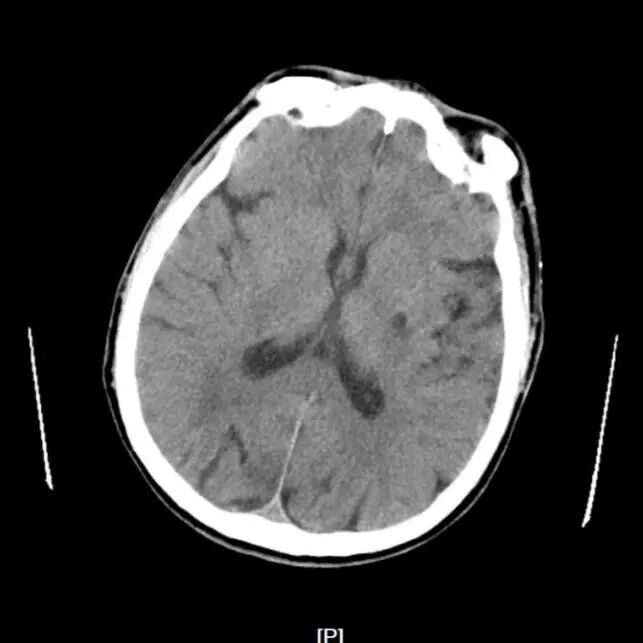
Postoperative CT showed no significant cerebral hemorrhage or edema.
08
Regular Follow-up Postoperatively
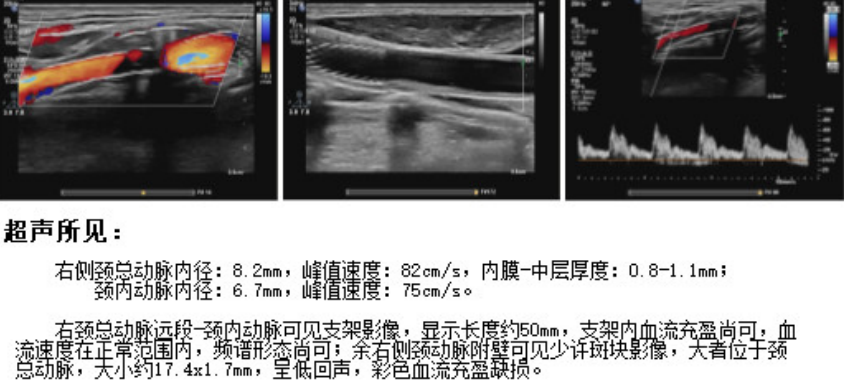
Postoperative carotid ultrasound indicated significant improvement in blood flow velocity in the right internal carotid artery.
Preoperative Carotid Ultrasound
Postoperative Carotid Ultrasound
 Surgeon’s Comments
Pugao PathGuard® umbrella can effectively intercept emboli at the origin of the carotid artery, preventing emboli escape and recurrent cerebral infarction.
Pugao C-Balloon® carotid balloon dilation catheter is rapidly exchanged through the microguidewire, has good passability, strong dilation capability, and sufficient retraction, making it less likely to cause prolonged blood flow obstruction.
 Surgeon Profile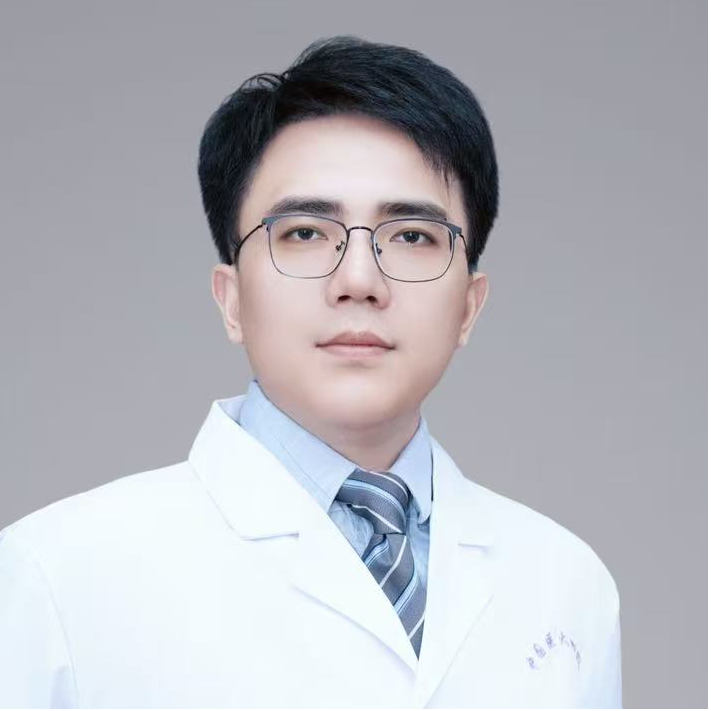
Li Xingqiang
Fourth Hospital of China Medical University
-
MD, Attending Physician, Lecturer
-
Graduated with a bachelor’s and master’s degree from China Medical University (seven-year program), has been working in the neurology department of the Fourth Hospital of China Medical University since graduation; PhD in neurology from China Medical University
-
Engaged in frontline treatment of cerebrovascular diseases for over ten years. Specializes in assessment and treatment of acute cerebrovascular diseases and standardized drug management during the perioperative period; skilled in radial and femoral artery cerebral angiography, emergency mechanical thrombectomy, carotid stenting, and vertebral artery stenting, performing over 500 surgeries annually.
-
Member of the Youth Committee of the Neurological Critical Care and Interventional Subcommittee of the Liaoning Provincial Life Science Society; Member of the Dementia Subcommittee of the Liaoning Provincial Cell Biology Society
-
Research focus: Clinical and basic research on cerebrovascular diseases, emergency rescue of neurological critical illnesses, and neurovascular interventional diagnosis and treatment
-
Participated in research: Involved in multiple studies including Bridge-DAPT, NOVA II, etc.
-
Published several articles in the field of neurointervention
Commenting Expert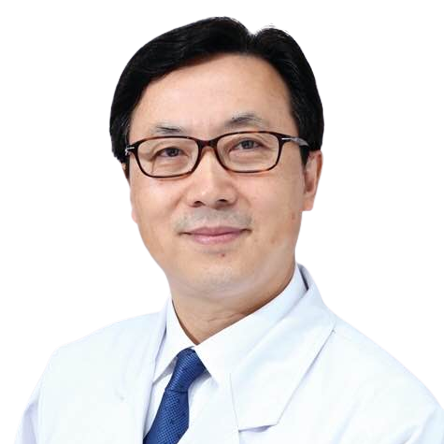
Gao Lianbo
Fourth Hospital of China Medical University
-
Professor, Chief Physician, Master’s Supervisor, Director of the Neurology Department, Director of the Neurology Teaching and Research Office, Director of the Cerebrovascular Disease Treatment Center
-
Specialty: Basic and clinical research on cerebrovascular diseases; emergency rescue of neurological critical illnesses; neurovascular interventional treatment
-
Director of the Stroke Society of China; Vice Chairman of the Cerebral Blood Flow and Metabolism Subcommittee of the Stroke Society of China; Executive Committee Member of the Neurointervention Subcommittee of the Stroke Society of China; Executive Committee Member of the Stroke Prevention and Control Professional Committee of the Chinese Preventive Medicine Association; Executive Committee Member of the Neurology Professional Committee of the Chinese Geriatric Society; Member of the Ischemic Stroke Professional Committee of the National Health and Family Planning Commission; Member of the Ischemic Cerebrovascular Disease Professional Committee of the Chinese Physician Association; Vice President of the Stroke Society of Liaoning Province; Executive Committee Member of the Neurology Subcommittee of Liaoning Province; Vice Chairman of the Neurology Subcommittee of Shenyang City; Executive Director of the Epilepsy Society of Liaoning Province; Vice Chairman of the Cerebrovascular Disease Subcommittee of the Liaoning Provincial Cell Biology Society; Member of the Technical Appraisal Expert Group for Medical Accidents in Liaoning Province
-
Mainly engaged in basic and clinical research on cerebrovascular diseases and emergency rescue of neurological critical illnesses, performed Liaoning Province’s first rt-PA intravenous thrombolysis for acute cerebral infarction, super-selective arterial thrombolysis, mechanical thrombectomy, and interventional embolization for intracranial aneurysms, with leading levels in the country, completing 250-300 surgeries annually.
-
First to carry out national continuing education projects at the Fourth Hospital of Medical University, the annual advanced research conference on standardized diagnosis and treatment of cerebrovascular diseases and interventional treatment of ischemic stroke has become an academic brand in the province. First to promote new advances and concepts in stroke diagnosis and treatment in the province. Recognized and loved by many young doctors in the “Ivy Stroke Project”, “Neurology Difficult Case Discussion”, and “County Hospital Stroke Standardized Diagnosis and Treatment Promotion Project” tours.
-
Responsible for national “11th Five-Year”, “12th Five-Year”, and “13th Five-Year” sub-center projects, one major national science and technology cooperation project, and three projects from the Liaoning Provincial Science and Technology Department and Liaoning Provincial Natural Science Foundation. Published over 20 papers in international and domestic core journals. Participated in the formulation of 7 guidelines and consensus related to cerebrovascular diseases in China.
 Disclaimer: The intellectual property of the content published by the Neurosurgery Information and Neurointervention Information under Brain Medical Exchange belongs to Brain Medical Exchange and the organizers, original authors, and other related rights holders. Unauthorized reproduction, excerpting, copying, cutting, recording, etc. is prohibited. Authorized use must also indicate the source. Forwarding and sharing are welcome.For submissions/conference releases, please contact 400-888-2526 ext. 3
Brain Medical Exchange App New feature “AI Q&A” officially launched, your reliable assistant in clinical practice! Long press to scan the QR code to experience it first!
Please click “Read the original text” to enter the Ruichao Dingke brand area.
Share

Like

Look