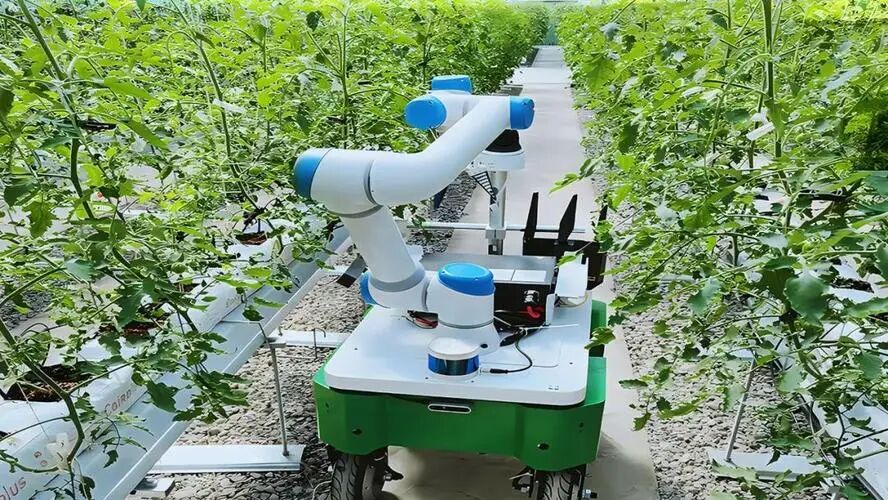
Agricultural robots refer to autonomous equipment engaged in tasks such as crop phenotyping, agricultural condition inspection, soil moisture detection, weed removal, land leveling, and selective harvesting of specialty crops in field environments. Key technologies include precise navigation, machine vision, intelligent decision-making, autonomous movement, and smart operation control.
# 01

Information Acquisition Robots

Field information acquisition robots primarily collect data on crop development phenotypes, crop growth, pests and diseases, and soil physicochemical properties. They can be used for variety breeding, field management, and timely harvesting decision-making. The main technical challenges lie in the development of a wide variety of cost-effective onboard sensors and the design of adaptive, fast, and stable walking platforms for efficient field inspection.
Companies such as Phenospex from the Netherlands, LemnaTec from Germany, and RoboPec from France have developed gantry and cantilever plant phenotyping robots that accurately measure morphological parameters such as maximum plant height, 3D leaf area, leaf angle, and light penetration depth by overlaying 3D and multispectral information. These robots offer high precision, full automation, are unaffected by lighting conditions, and can achieve high-throughput analysis of 10,000 square meters per day (Figure 1a–1c). Researchers SHAFIEKHANI, MUELLER-SIM, and BAO have developed mobile crop phenotyping analysis robots that achieve high-throughput measurement of crop stem strength and geometric morphology (Figure 1d, 1e). Zhang Weijun and others from Shanghai Jiao Tong University developed an all-terrain adaptive field crop inspection robot that employs an 8-wheel staggered configuration and a main-passive composite flexible drive control algorithm to ensure the stability of onboard laser sensor and fisheye camera image acquisition during movement (Figure 1f).
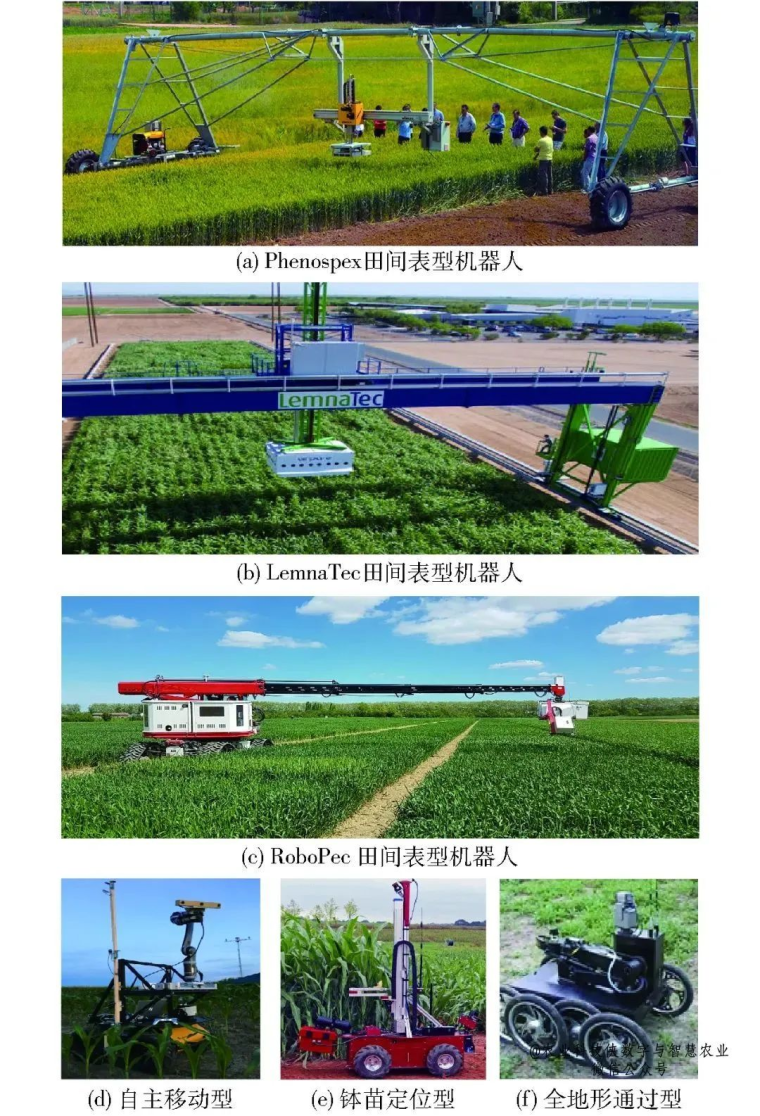
Figure 1 High-throughput phenotyping detection robots
Researchers BAYAI from the University of Saskatchewan in Canada developed a high-throughput canola plant phenotyping monitoring and analysis mobile robot platform (Figure 2). This platform features GIS labeling capabilities, enabling high-throughput, large-area precise image acquisition and phenotypic analysis. Researchers KAYACAN from Carnegie Mellon University in the USA proposed a high-speed phenotyping analysis robot developed using laser panoramic scanning, real-time target positioning, and scene reconstruction methods, capable of measuring plant stem strength, leaf uprightness, leaf disease incidence, and vegetation index (GRVI) under the canopy of inter-row crops such as sorghum or corn.
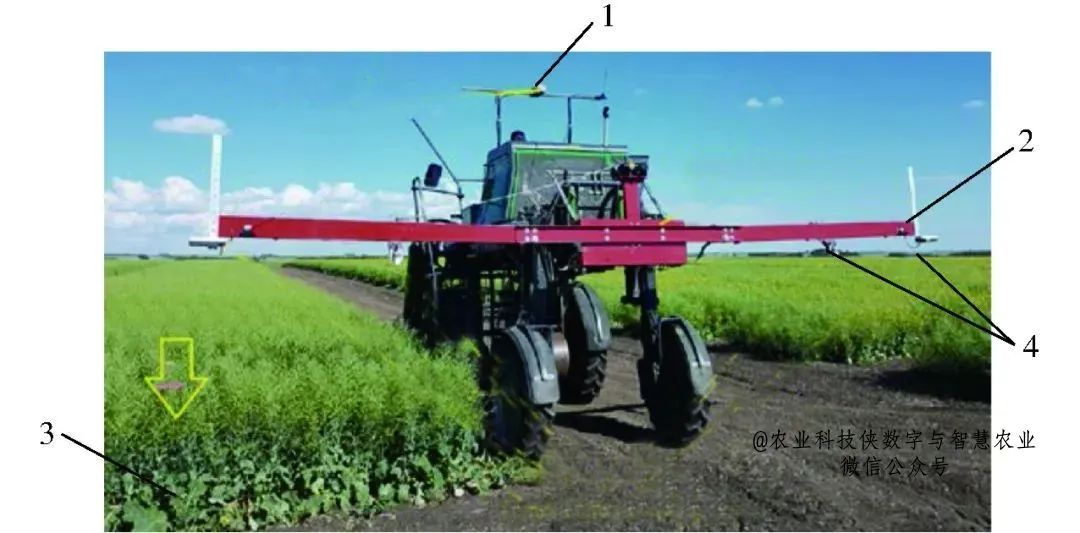
Figure 2 High-throughput canola phenotyping monitoring and analysis platform
1. GPS antenna 2. Mechanical arm 3. Canola bed 4. Detection equipment
Researchers KAYACAN from the University of Illinois in the USA developed a lightweight robot called TerraSentia for use in corn fields (Figure 3). This robot uses machine vision algorithms for autonomous navigation through fields to collect crop data. It can also monitor early plant growth vigor, identify diseases, and estimate crop yield using deep learning algorithms.
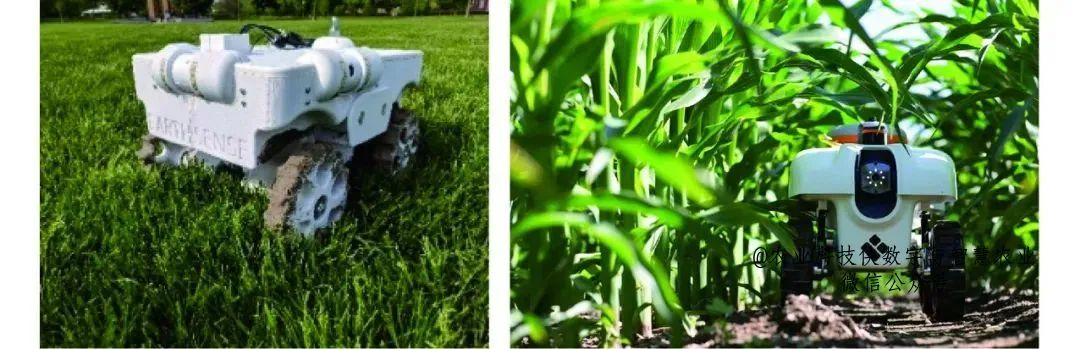
Figure 3 TerraSentia crop inspection robot
In terms of agricultural condition inspection, the team of Luo Xiwen and He Yong utilized drones, structured light technology, and ground wireless sensor networks to collect agricultural field information and obtain three-dimensional plant morphological structures, meeting the requirements for long lifecycle data collection and monitoring, reliable data transmission, and wide coverage.
# 02

Field Cultivation Robots

Field cultivation robots refer to robots that achieve consistency in land preparation, precision seeding, and intelligent transplanting through autonomous navigation, intelligent decision-making, and precise operation servo control technology. They ensure the levelness of the seedbed, reduce seeding and transplanting costs, and improve crop yield and quality. Compared to other agricultural robots, seeding/fertilizing/transplanting robots are relatively mature. The main technical challenges include real-time generation of high-precision elevation maps, precise seeding of special-shaped seeds, monitoring and re-seeding of missed sowing, and high-speed seedling identification and picking during transplanting.
Leveling the working area is the foundation of fully autonomous operation. The autonomous leveling robot developed by LianShi Navigation Company measures the elevation information of the leveling equipment at operation trajectory points in real-time using onboard high-precision BeiDou satellites and generates elevation maps. It then compares these with target elevations in the plan, autonomously adjusting the leveling shovel height during operation to achieve precise leveling (Figure 4).ZHOU and others researched key technologies such as three-dimensional terrain mapping of farmland, feedforward compensation control for leveling uneven paddy fields, and leveling path planning, achieving intelligent and precise leveling operations based on BeiDou.John Deere developed a driverless laser leveling machine that enables collaborative operation of laser leveling machine groups, enhancing operational efficiency.
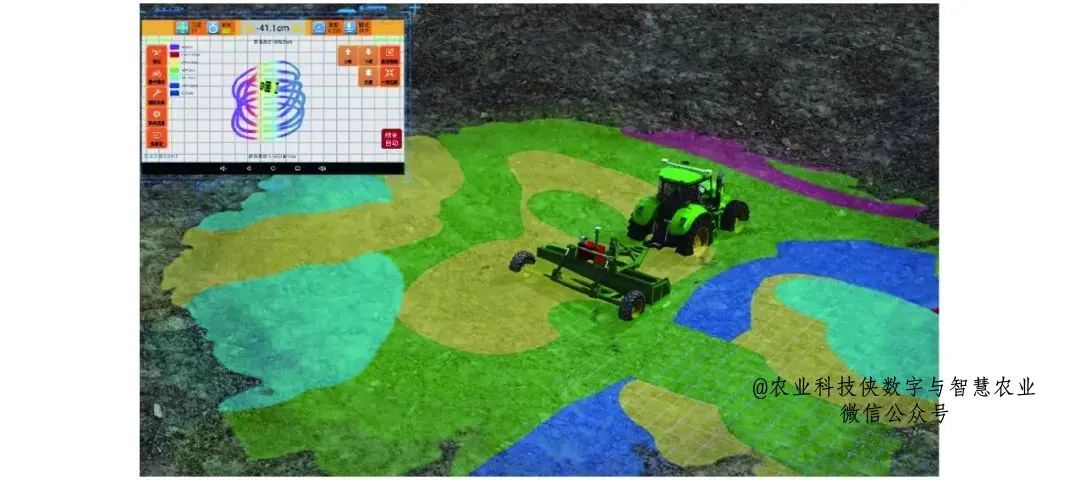
Figure 4 Laser leveling robot operation scheme based on elevation maps
Researchers BLENDER and others from the University of Applied Sciences Ulm in Germany developed the OptiVisor cloud control system for managing cluster seeding robots, which can coordinate the seeding mode, seeding density, path planning, re-seeding, and collision avoidance for multiple robots. Wei Xinhua and others designed a fully automated transplanting coordination control system for plug seedlings, achieving electric and pneumatic composite servo control for lateral feeding motion, vertical picking and placing, and feeding actions, ensuring the timing coordination of wheel travel speed and transplanting actions, with a success rate of 96.9% for plug seedling transplanting.
# 03

Field Management Robots

Field management robots are robots that complete functions such as weeding, spraying, and fertilizing through autonomous navigation, visual recognition and positioning, and precise operation control technology. They aim to achieve precise target spraying for pests and diseases and variable fertilization based on crop physiological needs, improving the utilization of pesticides and fertilizers, enhancing product quality, reducing production costs, and improving the ecological environment. The main technical challenges include high-precision real-time identification of crops and weeds and precise target operations. Researchers MCCOOL and others from Queensland University of Technology in Australia developed the next-generation crop and weed management robot AgBot II (Figure 5), which autonomously navigates, fertilizes, and weeds in the field through a collaborative robot team, achieving over 90% success in weed detection and classification.
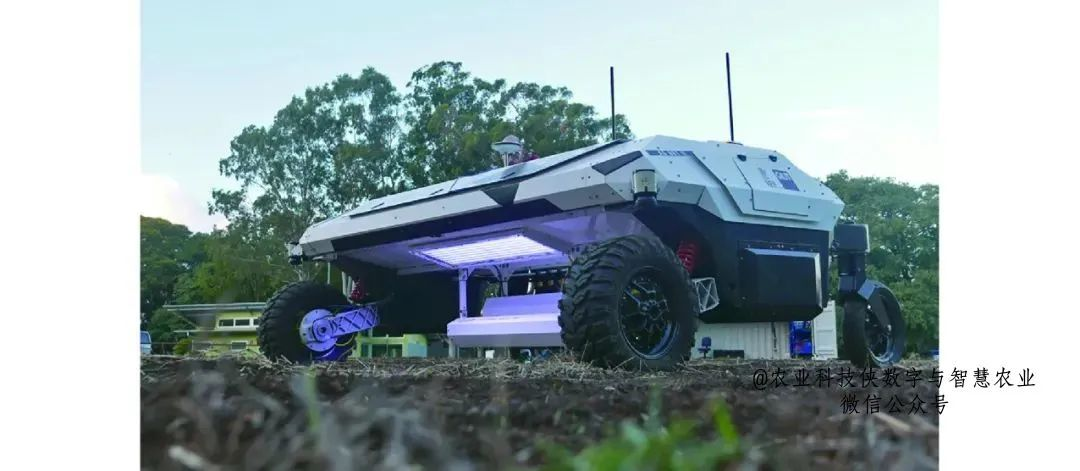
Figure 5 AgBot II robot
Intelligent weeding robots developed by John Deere and BlueRiver utilize the next-generation See&Spray chemical weed control technology, employing high-resolution cameras for real-time weed identification, achieving personalized spraying for individual weeds and significantly reducing pesticide usage (Figure 6a). Swiss company EcoRobotix developed a solar-powered weeding robot that uses machine vision, GPS, and other sensors to autonomously track crop rows and detect and locate weeds with 95% accuracy, then uses a parallel robotic arm to quickly spray small doses of herbicide directly onto the weeds, reducing pesticide usage by 20 times (Figure 6b). The American company Carbon Robotics (CR) developed a field weeding robot that uses artificial intelligence and laser modules for field weeding, with a carbon dioxide laser module array firing every 50 ms, achieving precision control within 3 mm and capable of simultaneously targeting 8 locations (Figure 6c). French company Naio Technologies developed a series of fully electric agricultural robots of different scales, utilizing four-wheel drive and four-wheel steering for U-shaped inter-row turning in the field, capable of performing weed control, tillage, and data collection for crop yield management (Figure 6d).
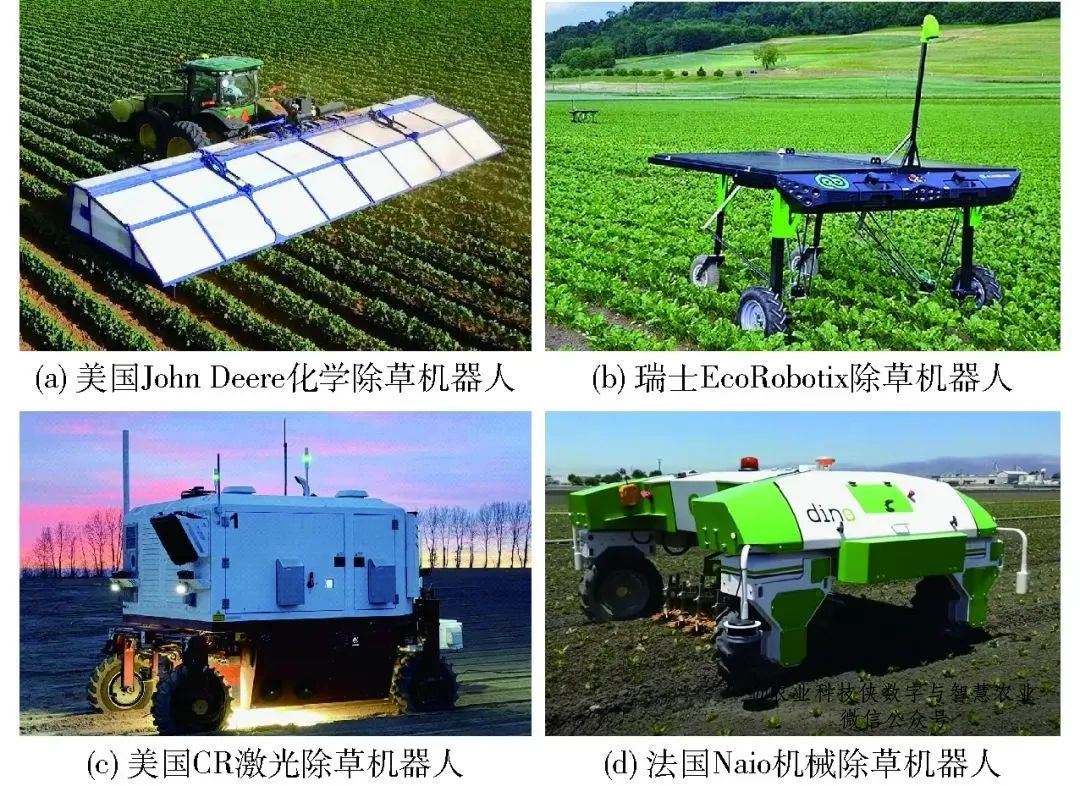
Figure 6 Typical field weeding robots
Li Nan and others designed an electric-driven field weeding robot that uses a small to medium power tractor as the supporting power. The machine vision system identifies and locates crops and weeds in real-time, with a servo motor driving a crescent-shaped weeding blade to weed while protecting seedlings, achieving a seedling damage rate of less than 10% and a weed removal rate of about 90%.
# 04

Field Harvesting Robots

Field harvesting robots are robots that identify and locate objects for harvesting through technologies such as machine vision, and achieve differentiated and precise harvesting control based on object characteristics. They focus on objects that cannot be harvested automatically on a large scale, while emphasizing the efficiency and adaptability of harvesting operations, compensating for the shortcomings of agricultural machinery in precision selective harvesting operations. The main technical challenge is the design and control of efficient, low-loss harvesting end-effectors.
Researchers Zhai Changyuan and others combined driverless technology, machine vision, and cabbage harvesting technology to develop an autonomous cabbage harvesting robot (Figure 7a), which aligns the harvesting arm with the cabbage after locating the planting row using the BeiDou system, completing the row harvesting operation after fine-tuning with machine vision, and transporting the cabbage to a cooperating autonomous vehicle through a transmission channel. American company CROO Robotics developed a high ridge strawberry harvesting robot (Figure 7b), which utilizes the positional differences between strawberries and stems/leaves to design a flexible end-effector for separating stems/leaves from strawberries and a clamping harvesting wheel, achieving rapid harvesting, transportation, and collection.
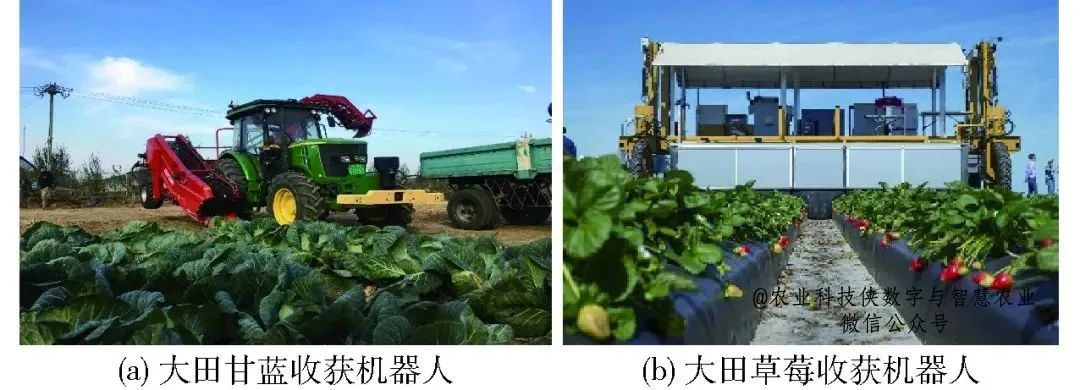
Figure 7 Cabbage and strawberry harvesting robots
Companies Cerescon and AvL Motion from the Netherlands developed a productized selective harvesting robot for white asparagus. The former employs dielectric property-based detection of asparagus below the soil surface, while the latter uses optical vision to detect emerging asparagus shoots, designing a multi-end effector based on a rotary chain cycle to achieve the processes of entering the soil, cutting, flexible clamping, and emerging collection for multiple white asparagus, with an average harvesting time of 1.3 seconds per plant (Figure 8).
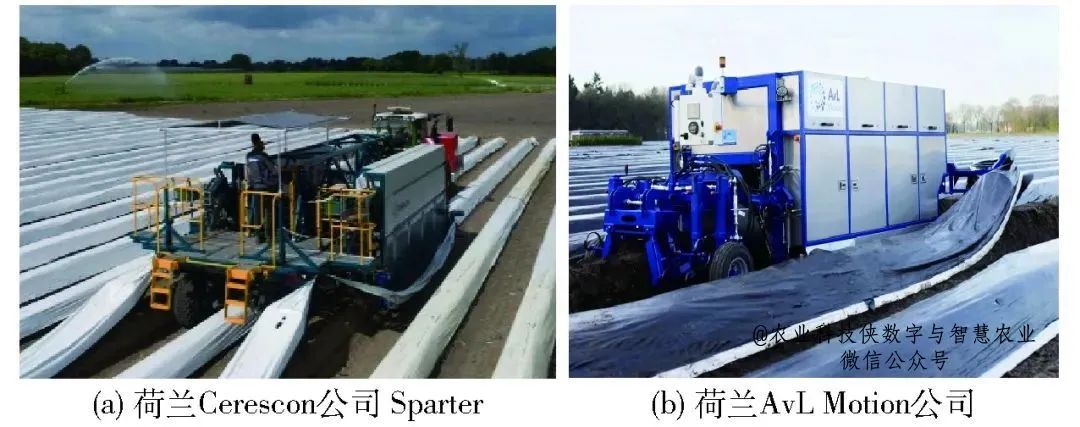
Figure 8 White asparagus harvesting robot
Source: Agricultural Industry Observation Network