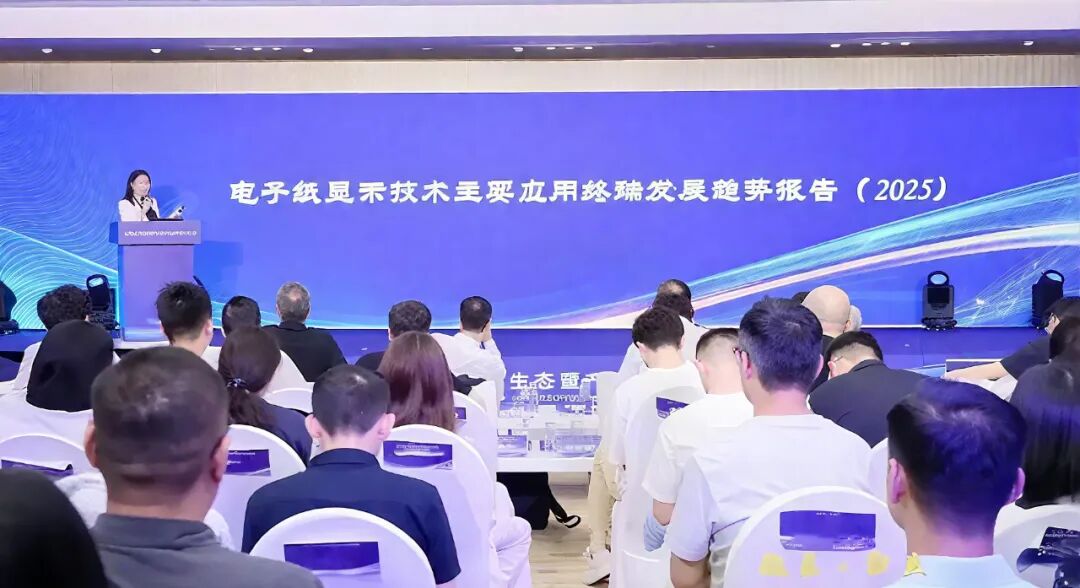
At the “2025 China Electronic Paper Ecological and Industrial Integration Innovation Development Forum”, Ms. Wang Yuhong, Chief Operating Officer, representing the organizers, released the conference report titled “Report on the Development Trends of Major Application Terminals for Electronic Paper Display Technology”.
The Chinese display industry, leveraging cluster effects, demonstrates vigorous vitality. With the transformation of the global display industry, electronic paper technology, after more than 60 years of development, is entering a golden growth phase.
Electronic paper displays present clear visuals, showcasing a paper-like visual effect that is both environmentally friendly and efficient, becoming one of the key technologies driving global carbon peak and carbon neutrality goals.
Since 2022, the application terminals of electronic paper have shown explosive growth, covering multiple scenarios such as retail, education, office, and healthcare, with over 35 forms, demonstrating enormous commercial potential. Unlike traditional home appliances that undergo slow iterations, electronic paper, as an IoT product, is accumulating explosive growth momentum, becoming a new species in the display industry.
By 2024, the electronic paper display industry is expected to rank among the forefront of global new display technologies, with a production value of $14.2 billion, alongside Micro LED, OLED, and projection display technologies, each serving different principles. The annual compound growth rate of electronic paper is as high as 29%, showcasing significant market potential.
It is predicted that by 2025, the global shipment of electronic paper application terminals will reach 397 million units, a year-on-year increase of 23.4%, setting a new market peak.
In the global display industry landscape, the Chinese display industry, through cluster effects, exhibits robust vitality, and as an important member, electronic paper technology, after more than 60 years of development, is entering a golden growth phase. According to data from Runto Technology, by 2024, the electronic paper display industry will reach a scale of $14.2 billion, ranking among the forefront of global new display technologies, with Micro LED, OLED, and projection display technologies serving different principles; and with a 29% increase, it ranks among various display technology routes.
This achievement is backed by the contributions of the Chinese industrial chain. Currently, 96% of the world’s electronic paper modules are manufactured in China, forming a complete industrial cluster from substrates, modules to complete machines and brands, making China the “innovation source” of the electronic paper industry.
On this basis, a supply chain ecosystem centered in China, actively expanding globally, is accelerating formation. From the application landscape, electronic paper has constructed a “2+1+N” segmented terminal system: “2” refers to the two core terminals – electronic paper price tags and electronic paper readers; “1” is the AI-driven innovative electronic paper notebook; and “N” encompasses various scenarios such as digital signage, learning machines, displays, and medical terminals. This layout not only consolidates core market advantages but also reserves space for cross-industry penetration.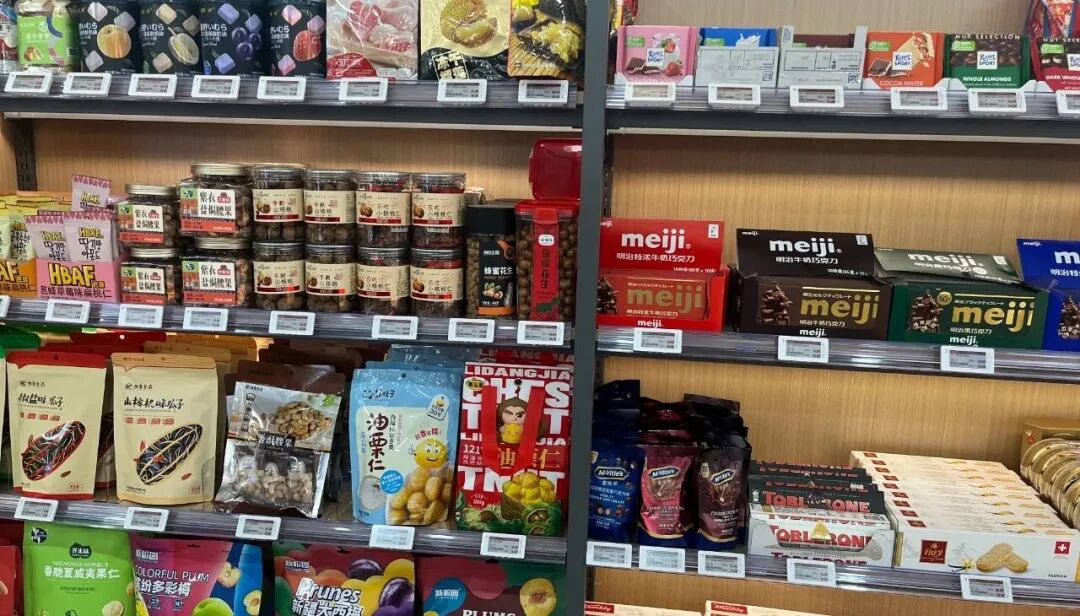 Looking ahead to 2025, the growth momentum of the electronic paper industry will continue to be released. In the smart retail sector, the shipment of electronic paper price tags (retail shelf type) is expected to exceed 360 million units. With the acceleration of digital transformation among global retail enterprises, electronic paper price tags, with their ability to update prices in real-time, save labor costs, and be environmentally friendly, are becoming standard equipment for major supermarkets and convenience stores. For example, in the European and American markets, large chain supermarkets like Walmart and Carrefour are massively replacing traditional paper price tags, and retail enterprises in the Asia-Pacific region are also actively following suit, driving a steady increase in the shipment of electronic paper price tags.