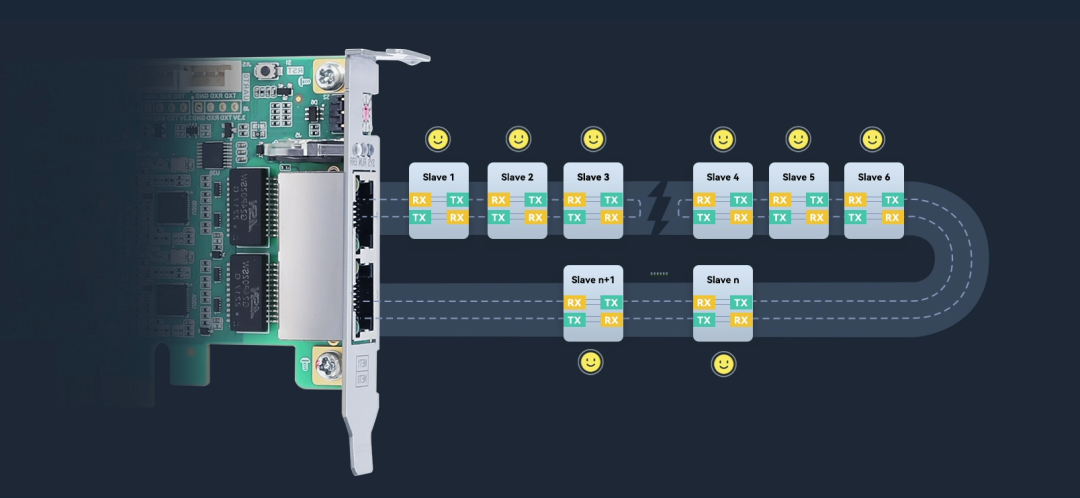
In the current wave of rapid development in industrial automation and intelligent equipment, EtherCAT technology has quickly extended from being the “standard configuration” in the field of industrial servo drives to the cutting-edge domain of humanoid robots, becoming a key link between technological innovation and industrial expansion. Its open technical architecture, excellent cost-performance ratio, and powerful performance make it highly favored in the field of humanoid robotics. As the market scale for humanoid robots expands dramatically, EtherCAT communication technology, with its core advantages of high speed, flexibility, and reliability, has become an important engine driving breakthroughs in the industry.
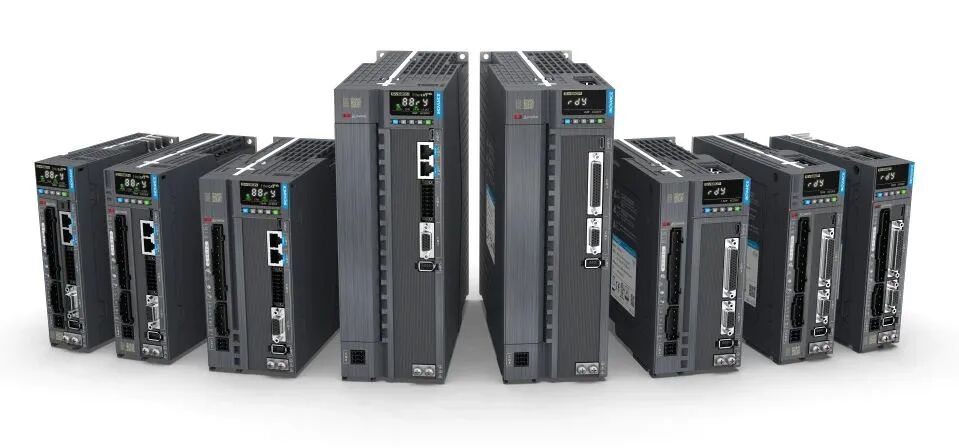
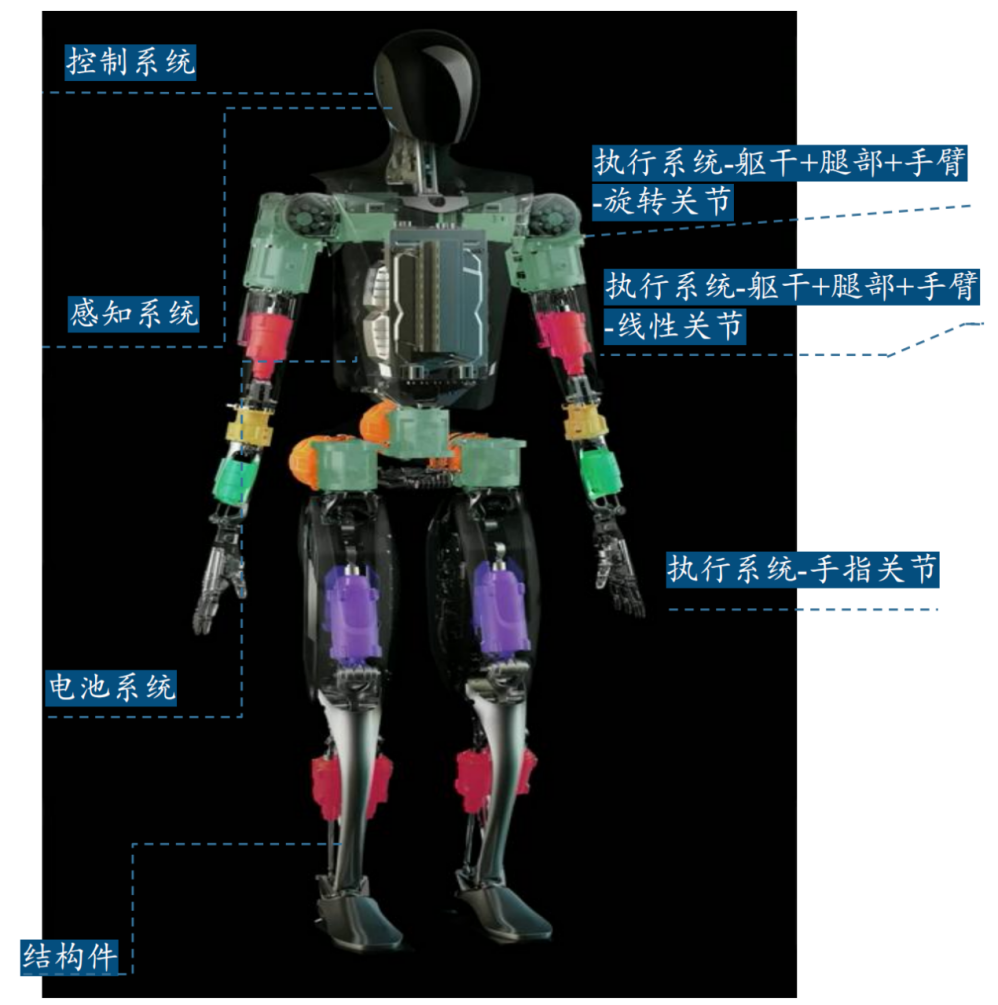
As the “nerve center” connecting various subsystems and functional modules of humanoid robots, the performance of the communication bus directly determines the overall response speed, control accuracy, and operational stability of the robot. Humanoid robots often integrate dozens or even hundreds of servo motors, sensors, and actuators. From joint drives to posture perception, from motion control to environmental interaction, the precise execution of each action relies on the real-time transmission of massive data and the efficient issuance of commands. Among various bus technologies, EtherCAT perfectly meets the stringent requirements for real-time performance, determinism, and scalability in humanoid robots with its microsecond-level synchronization accuracy, transmission rates of up to 100 Mbps, and flexible adaptation to complex topologies, making it the industry-recognized preferred communication solution.
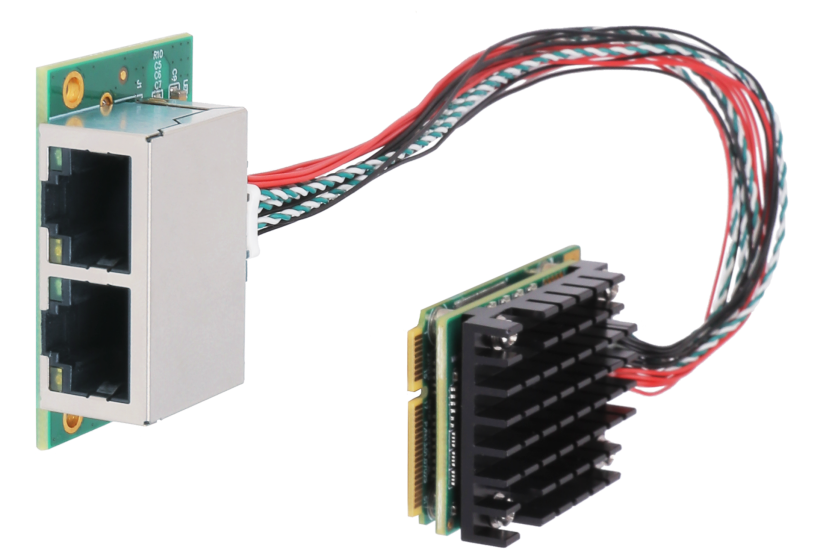
The MiniPCIe-2E EtherCAT master communication card launched by Zhiyuan Electronics inherits the core advantages of EtherCAT technology while achieving multiple technological breakthroughs. In terms of design, the use of a MiniPCIe interface allows it to be easily embedded into the robot’s main control unit, significantly saving valuable internal space, which is crucial for humanoid robots that pursue compact structures. On the performance side, this communication card supports dual-port redundancy design, which not only enhances the reliability of data transmission but also allows for flexible construction of ring or linear network topologies to meet the complex internal wiring needs of robots. In terms of usability, it is compatible with mainstream industrial control software and development environments, reducing integration difficulty for engineers and accelerating the research and development cycle of robotic systems.
Currently, humanoid robots are moving from laboratory settings to commercial applications, with scenarios such as home services, industrial collaboration, and medical assistance placing higher demands on their performance. The application development of EtherCAT technology not only provides robots with a stable and efficient “information highway” but also lowers the industry entry barriers through technological innovation, promoting humanoid robots to develop in a direction that is smarter, more reliable, and more cost-effective.