Logistics Dilemma, Urgent Need for Breakthrough
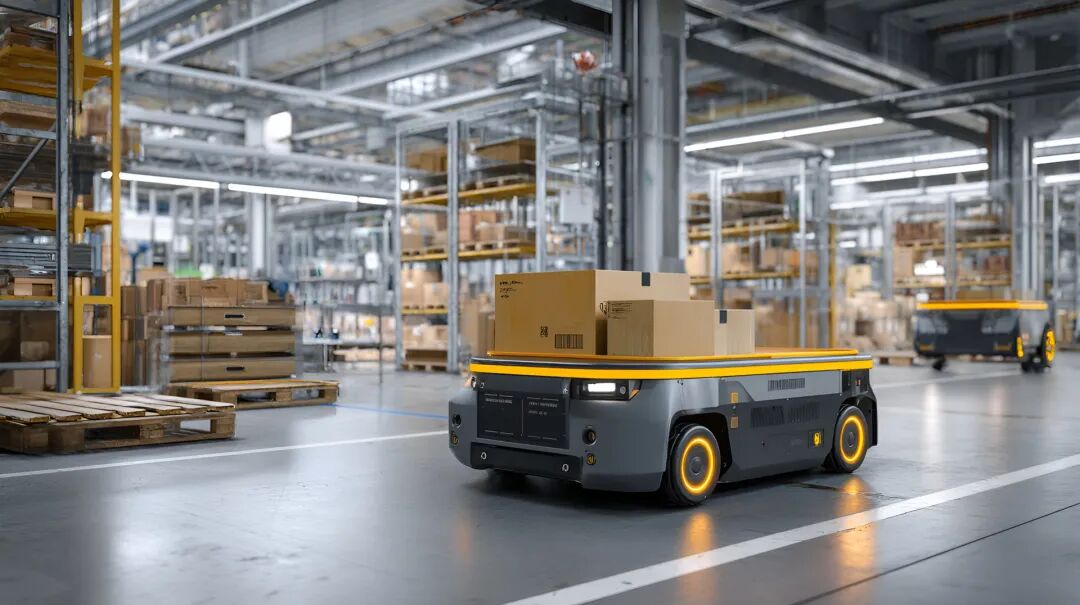 In today’s booming e-commerce environment, the logistics industry is experiencing explosive growth in order volume. For instance, during the recent “618” and “Double 11” shopping festivals, major e-commerce platforms set new records for order volume, with massive packages flooding into logistics warehouses. Data shows that during “Double 11”, postal and express companies across the country collected over billions of express packages, marking a significant year-on-year increase.
Faced with such a large order volume, traditional manual sorting and handling methods are increasingly inadequate. Manual sorting is inefficient; a skilled worker can only sort a few thousand packages in a day, and under prolonged high-intensity work, the error rate in sorting continues to rise, with frequent instances of missed or incorrect sorting. This not only affects the timeliness of goods delivery but may also lead to customer complaints, reducing customer satisfaction with e-commerce platforms and logistics companies. Additionally, labor costs are rising year by year, as hiring, training, and managing a large number of sorting workers imposes a heavy economic burden on companies. According to relevant statistics, labor costs account for as much as 40% – 50% of total costs for logistics companies, becoming a significant bottleneck for enterprise development.
Clearly, the traditional logistics model is struggling to keep pace with the rapid development of modern e-commerce, making intelligent transformation imperative. In this context, 3D vision sensors, serving as the “eyes” of industrial robots, bring new hope for the intelligent transformation of the logistics industry.
3D Vision, Emerging Prominently
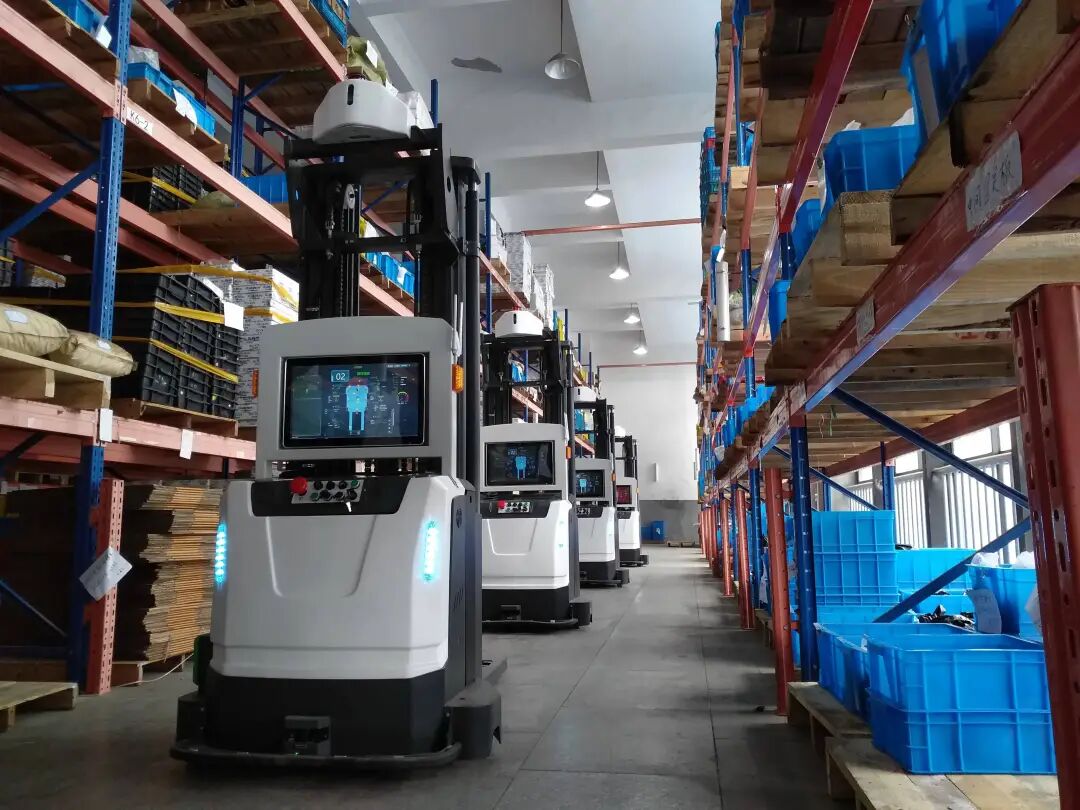 3D vision sensors, akin to the “smart eyes” of industrial robots, are gradually becoming the core technology in the intelligent transformation of modern logistics. Their working principle is intricate and complex, simulating the way human eyes perceive three-dimensional space, utilizing various advanced technologies to acquire depth and shape information of objects, thereby providing robots with rich and accurate environmental perception capabilities.
Currently, common 3D vision technologies mainly include structured light, time-of-flight (ToF), laser triangulation, and stereo vision methods. For example, the structured light method projects specific patterns (such as stripes or grids) onto the surface of an object. Due to the differences in object shapes, the patterns deform, and when the camera captures these deformed patterns, complex algorithms can calculate the depth information of the object. Apple’s Face ID technology employs the principles of structured light to achieve fast and accurate facial recognition unlocking. The time-of-flight (ToF) method emits infrared light pulses, measuring the time it takes for light to travel from the emitter to the reflector and back to the sensor, calculating distance based on the speed of light, commonly used in drone obstacle avoidance and mobile AR distance measurement.
In the application scenarios of industrial robots, 3D vision sensors play a crucial role as “eyes.” Traditionally, 2D vision sensors could only capture planar information of objects, making it difficult to accurately grasp depth, spatial position, and posture information, significantly limiting the operational capabilities of robots in complex environments. The advent of 3D vision sensors breaks this limitation. They enable robots to “see” the three-dimensional shape of objects, accurately perceive their position and posture in space, thus achieving more complex and precise operations. In logistics warehouses, faced with mountains of goods arranged chaotically, robots equipped with 3D vision sensors can quickly identify the shape, size, and position of each package, accurately grasping and handling them, greatly improving the efficiency and accuracy of handling and sorting.
Unlocking Intelligent Handling, Efficient Collaboration
In industrial production and logistics warehousing, intelligent handling is a key link to achieving automation and efficient operations. The integration of 3D vision sensors has led to a qualitative leap in the performance of industrial robots in the field of intelligent handling.
During the intelligent handling process, 3D vision sensors first need to accurately locate materials. They can quickly capture the three-dimensional outline and positional information of materials, even when the materials are placed at various angles and in complex, changing environments. In automotive manufacturing plants, the handling tasks of engine blocks, gearboxes, and other components are heavy and require high precision. 3D vision sensors can perform precise three-dimensional modeling of these complex and heavy components, identifying their specific positions and postures on shelves or transport vehicles. This information is then transmitted to the robot control system, allowing the robot to accurately grasp the components based on the instructions, avoiding failures or collisions due to inaccurate positioning, significantly improving handling accuracy and stability.
In addition to precise positioning, 3D vision sensors also assist robots in achieving intelligent path planning. During handling, robots need to plan the optimal walking path based on real-time changes in the surrounding environment, avoiding obstacles and efficiently reaching the target location. When there are other robots, workers, or temporarily stacked goods in the logistics warehouse, robots equipped with 3D vision sensors can obtain three-dimensional information about the surrounding environment through the sensors, construct a real-time map, and use advanced algorithms to plan a safe and efficient path. They can flexibly adjust their direction and speed, navigating smoothly in complex environments, ensuring that materials are transported to designated locations in a timely and accurate manner.
Numerous practical application cases across various industries fully demonstrate the significant advantages of 3D vision sensors in intelligent handling. In the automotive manufacturing industry, Tesla’s factories extensively utilize industrial robots equipped with 3D vision sensors for component handling and vehicle assembly. These robots can quickly and accurately grasp various components, achieving a highly automated production process, significantly improving production efficiency and product quality, while also reducing labor costs and intensity. In the logistics warehousing sector, JD.com’s smart warehouses also employ handling robots utilizing 3D vision technology. These robots can autonomously navigate within large warehouses, quickly locating the goods to be handled and accurately delivering them to sorting or loading areas, greatly enhancing the operational efficiency of warehousing logistics and significantly speeding up the inbound and outbound processes of goods.
Disordered Sorting, Precise Classification
In the logistics industry, disordered sorting has always been a challenging problem. Traditional sorting methods often struggle with the diverse and irregularly placed materials. With the rapid development of e-commerce, the variety of products is increasing, and consumer orders are becoming more diverse, making the materials in logistics warehouses more complex. From various sizes of electronic products to differently shaped household items and a wide range of industrial components, each sorting task feels like a daunting challenge. Manual sorting is not only inefficient but also prone to errors, making it difficult to meet the fast and accurate demands of modern logistics.
The emergence of 3D vision sensors has brought new opportunities for disordered sorting. Combined with advanced algorithms, they empower industrial robots with a “powerful brain,” enabling them to accurately identify and sort different materials in complex environments. When materials enter the sorting area, 3D vision sensors quickly capture the three-dimensional information of the materials, constructing precise three-dimensional models. By comparing with a vast database of pre-stored material models and utilizing deep learning algorithms for analysis and judgment, robots can quickly identify the type, specifications, and characteristics of the materials. Even for materials with very similar appearances, 3D vision sensors can distinguish them by accurately capturing detailed features.
For example, in a well-known logistics company’s aluminum alloy material sorting project, the sorting line needs to handle over 20 different specifications of aluminum alloy materials, which are small in size, weighing no more than 1kg, and are chaotically placed on the conveyor belt. Previously, manual sorting was not only inefficient but also had a high error rate. After introducing an automated disordered sorting system based on 3D vision sensors, the situation improved significantly. High-definition three-dimensional vision sensors quickly collected three-dimensional data information of the materials, and visual recognition algorithms accurately identified different specifications of materials, outputting corresponding grasping point coordinates. Robots can stably grasp the materials based on these coordinates and classify them into corresponding bins.
The application of this system has significantly improved sorting efficiency and reduced error rates. Previously, manual sorting required a large amount of labor and time, while now robots can work continuously 24 hours a day, sorting speed has increased several times compared to manual efforts. Additionally, due to the high-precision recognition of 3D vision sensors and the precise operation of robots, the sorting error rate has decreased from the original 5% – 10% to below 1%. Moreover, labor costs have also significantly decreased; sorting tasks that previously required dozens of workers can now be managed by just a few operators responsible for monitoring and maintaining the equipment.
Future Prospects, Infinite Possibilities
Although 3D vision sensors have achieved significant results in intelligent handling and disordered sorting, their development journey is far from over, and they still face a series of challenges. Currently, the cost of 3D vision sensors is relatively high, especially for high-precision and high-performance products, which somewhat limits their widespread application. For many small and medium-sized enterprises, the high procurement and maintenance costs of equipment make them hesitant to adopt 3D vision technology. Additionally, compatibility issues between different brands and models of 3D vision sensors, as well as with other devices and systems, need to be addressed urgently. In complex industrial environments, multiple devices often need to work together; if these devices cannot achieve good compatibility and communication, it will affect the overall system’s operational efficiency and stability. Furthermore, as data volumes continue to grow, how to quickly and accurately process and analyze this data is also a significant challenge faced by 3D vision sensors.
However, challenges and opportunities coexist, and the future development trends of 3D vision sensors are equally promising. With continuous technological advancements, it is believed that in the near future, the costs of 3D vision sensors will gradually decrease, and their performance will further improve. Researchers will continue to explore new materials and manufacturing processes, optimizing the structure and algorithms of sensors to make them more compact and lightweight while maintaining high precision, facilitating integration into various devices. At the same time, the rapid development of artificial intelligence and machine learning technologies will inject new vitality into 3D vision sensors. Through continuous optimization of deep learning algorithms, 3D vision sensors will possess stronger intelligent analysis capabilities, enabling them to make accurate decisions quickly in more complex environments.
In the future, 3D vision sensors are expected to achieve breakthroughs and innovations in more fields. In the medical field, they can assist doctors in more precise surgical planning and remote surgical operations; in the education sector, they can create more immersive learning environments, enhancing students’ learning experiences; in the smart home sector, they can make home devices smarter, achieving intelligent perception and response to the behaviors and needs of family members.
Disclaimer: Images and materials are sourced from publicly available resources on the internet, and this writing is intended to convey industry information. If there are any inaccuracies, please feel free to correct them. If there is any infringement, please contact the author via WeChat to delete the article.