Dandy aims to bring a transformation to dental laboratories akin to what modern factories have done for smartphones: achieving high-quality, rapid, and large-scale production without sacrificing the personalized fit required by patients. In an interview with 3DPrint.com, Dandy’s Vice President of Robotics and Advanced Manufacturing, Sriny Sundararajan, explained how the company combines “3D printing, AI, and robotics to provide mass customization services for dental crowns, bridges, dentures, night guards, implants, and aligners.”
Founded in 2020 and headquartered in New York City, Dandy has raised over $170 million from top investors to revolutionize the $30 billion dental laboratory industry. The company surpassed $100 million in revenue within its first two years and has established digital factories in Utah and Texas, now collaborating with over 6,000 dentists across the United States. Its fully integrated model covers everything from intraoral scanning to AI-assisted design, 3D printed restorations, and robotic finishing.
“Dandy controls the entire workflow, making it one of the few vertically integrated players in this multi-billion dollar dental laboratory industry,” Sundararajan emphasized. “Today, we are in a transformative phase, using both AI and robotics—AI for the design side and robotics for the manufacturing side. More importantly, we are applying additive manufacturing at scale.”
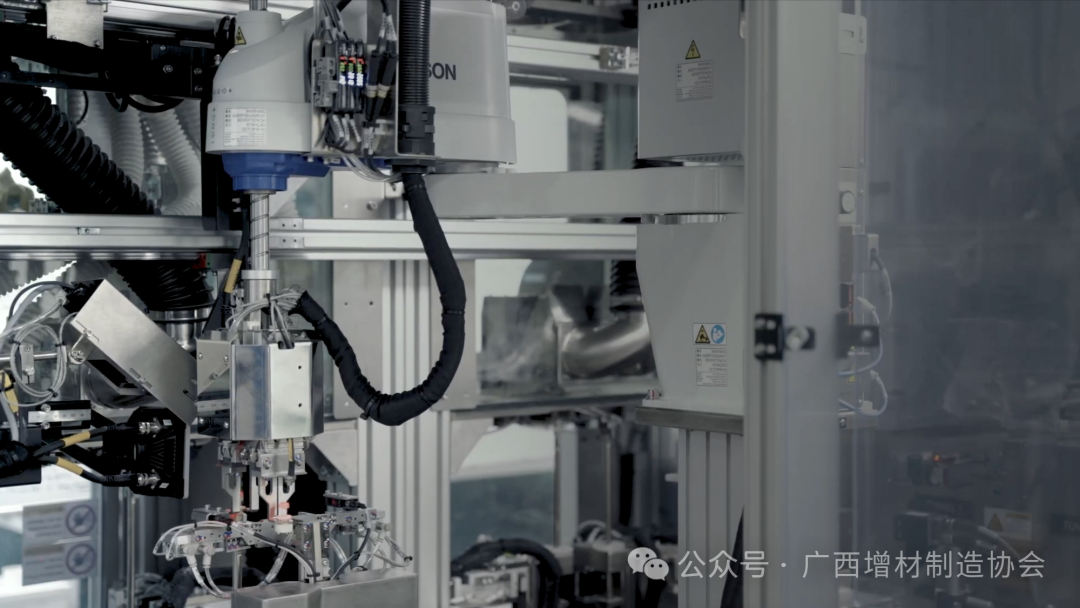
Vertical Integration (with 3D Printing at its Core)
In short, Dandy does not sell manufacturing automation equipment, at least not at this time. Instead, it operates a vertically integrated laboratory: dentists scan patients in their offices, while Dandy handles design and manufacturing in its factories in Utah and Texas.
Sundararajan compared this model to Tesla: “Just as Tesla controls all aspects from design to production in its factories, Dandy is also vertically integrated. It starts with the equipment that scans the patient’s mouth, then we handle the digital design of dental restorations and produce them directly in our own factories. The only part we do not manage directly is the final delivery, which is done through UPS or FedEx.”
3D printing is at the core of this process, especially for removable dentures (such as full or partial dentures) and night guards, which are now commonly produced using printing techniques. Fixed restorations like crowns and bridges are typically milled, but whether printed or milled, fine finishing is still required to match each patient’s unique oral structure. This is also an area where Dandy is striving for automation.
Although Dandy has not disclosed the specific brands of printers it uses, the broader dental industry is gradually shifting towards large resin printing systems designed for high throughput. For years, 3DPrint.com has been following how laboratories rely on devices such as Carbon L1, EnvisionTEC Xtreme 8K, Stratasys J5 DentaJet, and 3D Systems Figure 4 Modular. These platforms can produce thousands of crowns, dentures, or models daily, making them ideal for companies like Dandy that pursue scalability.
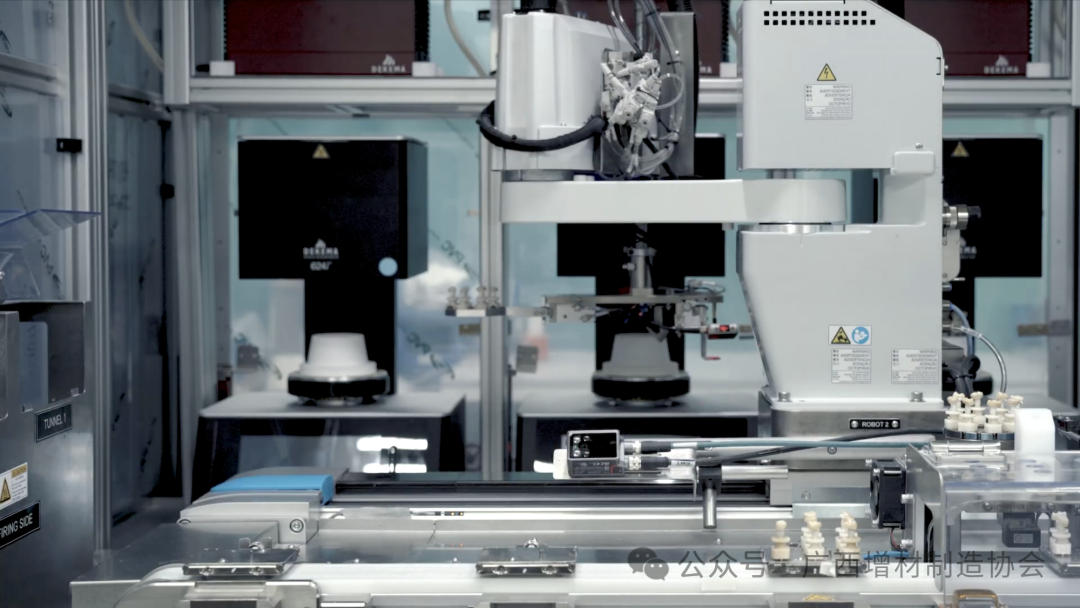
Mass Customization (The Challenge of a “Single SKU”)
Sundararajan’s approach with Dandy is closely related to his previous experience. He was responsible for Apple’s automation scaling during the explosive growth of the iPhone and later developed digital twin software. The reason he was drawn to dentistry was the opportunity to apply this scale to a field where every product is unique.
“At Apple, we produced large batches of the same SKU (stock-keeping unit) every time. Here, every product is unique,” Sundararajan said—he refers to this as a “single SKU”. In other words, each restoration is a unique product customized for an individual patient. “If I could achieve scalable production like making smartphones, that would be remarkable, and robotics is key to achieving that goal.”
This is also why Dandy does not manufacture every component from scratch. The team does not “reinvent the wheel” but integrates mature modules, including industrial robots, printers, and other hardware, and develops dedicated software and processes around them.
“We do not build our own printers; instead, we use commercially available printers and integrate them into systems customized for our applications. You can think of it this way: we do not build the steering wheel, but we are building our own car. We procure robots, assemble systems, and collaborate with third parties to create equipment. Our focus is on the application itself: understanding the specific problems in dental manufacturing and tailoring technology to solve them.” In the past six months, his team has expanded to 30 engineers to drive this integration.
AI for Inspection and Design (Turning Defects into Data)
“If robots are the precise hands, then AI is an extra pair of eyes. We are using computer vision and machine learning to capture defects that previously relied on the subjective visual inspection of technicians. We have developed what we call AOI (Automated Optical Inspection). We use AI models to learn defects in manual processes, then take dozens of images of crowns with a camera and apply that AI model to detect defects. This typically relies on visual color matching, but we have automated it through cameras and AI.”
On the front end, Dandy’s digital workflow is also changing how dentists work. According to Sundararajan, the company is the first to offer real-time design reviews during the scanning process, allowing Dandy’s experts to communicate with dentists in real-time, providing immediate feedback to help avoid errors that could lead to re-scanning or additional visits.
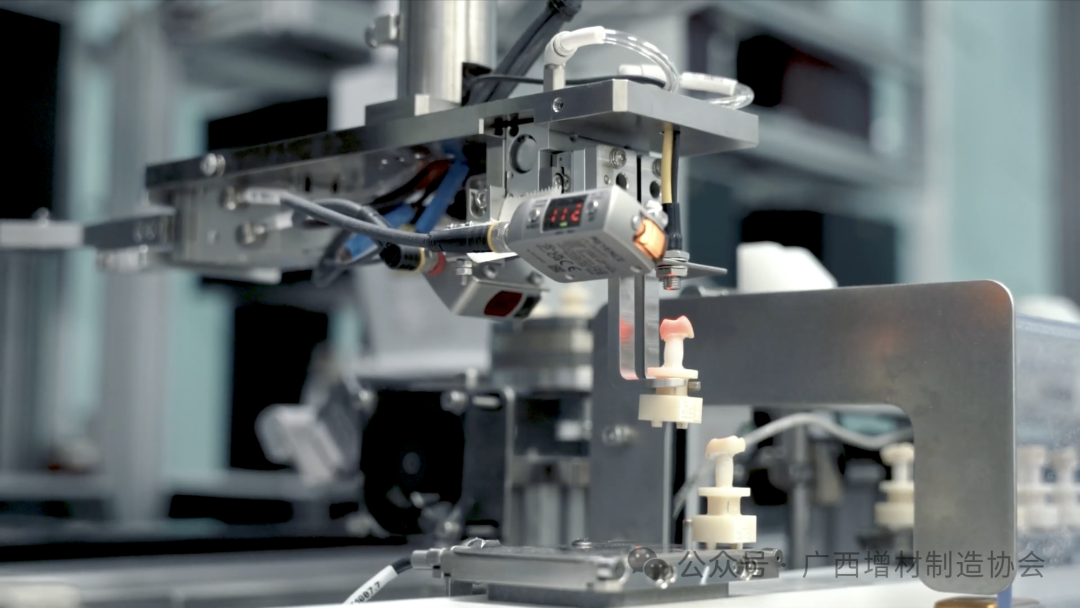
In terms of production, Sundararajan did not disclose exact output figures but noted that Dandy’s daily output has reached thousands of pieces, a significant leap compared to the average of 50 cases per day in traditional dental laboratories.
In terms of materials, zirconia dominates fixed restorations (such as crowns and bridges) due to its strength and durability. For removable devices like dentures and night guards, Dandy uses resin materials, including some proprietary formulations. Veneers are also part of its product lineup, typically made from e.max, a ceramic material that combines strength and a natural appearance.
Why Scale Matters for Patients (and Dentists)
If you have ever waited days to receive an ill-fitting crown, you understand the pain. Sundararajan hopes to change that experience. “The biggest challenge of the traditional process is that restorations often do not fit properly. They need to be adjusted locally, sometimes requiring patients to go home and return another day. I believe the future of dentistry is a more seamless experience—you should only need to visit the clinic once, and everything can be completed before you leave. This user experience is the ideal state.”
Under scalable conditions, this is also economically important for both patients and clinics. Faster, more reliable turnaround means dentists can plan treatments with greater confidence, and patients avoid repeat visits. “Through automation, we can produce higher quality products and deliver them within the promised time,” he said. “There will be no delays because someone didn’t show up for work. Additionally, producing domestically in the U.S. and serving the U.S. market will become a key differentiating advantage.”
The Most Challenging Aspect of Automation (and Dandy’s Focus)
For any dental technician, the finishing of restorations is a blend of art and science. Matching the shade, translucency, and surface texture to the patient’s mouth is an individualized process, which Sundararajan likens to a fingerprint. Due to individual habits, the color and hue of teeth vary widely. Because of its artistry, no one has yet been able to scale this aspect. However, Sundararajan stated that Dandy is introducing robotics into the finishing process to tackle this challenge.
This is also why additive manufacturing is valuable not just for printing shells or models. Layered control combined with visual systems, AOI, and precision motion opens an ideal path for repeatable personalization.
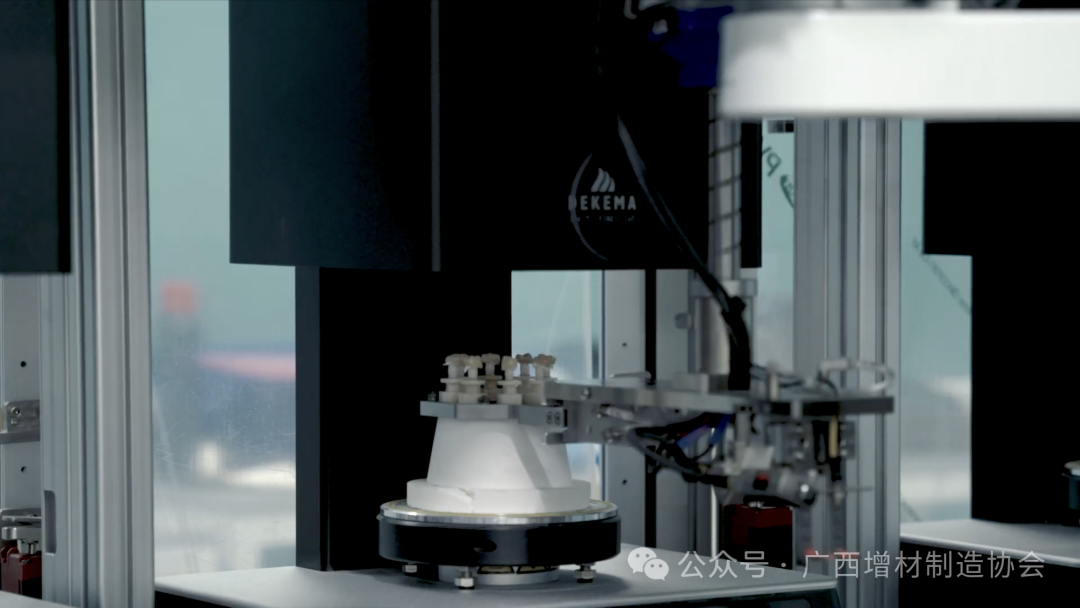
Sundararajan believes that the dental laboratory industry is at a turning point from craftsmanship to digital scalability: “Dentistry is at a tipping point. With the achievements of the Dandy platform, automation will become key.”
Recent company developments confirm this. In April of this year, Dandy appointed former Google research scientist and Celonis engineering vice president Cong Yu as head of engineering and announced plans to triple engineering and R&D investments by 2025. The company also reported that it surpassed $100 million in revenue within its first two years and plans to hire over 50 more engineers this year in areas such as advanced geometry, CAD, and smart manufacturing systems.
Sundararajan’s goals are very ambitious: “Our goal is to achieve scalability within the next 12 months, if possible.” Currently, Dandy is 100% focused on dentistry. The growth potential remains significant, with tens of millions of patients in the U.S. relying on crowns, dentures, or orthodontics (with each case being unique).
“If only small batches of personalized medical devices are needed, manual labor is the best choice. But if we want to make custom manufacturing affordable, scale is crucial. And the only way to achieve this at scale is through the use of AI and robotics—robots for precision, AI for design.”
He witnessed this process at Apple and believes that dentistry will follow the same path, “moving from craftsmanship bottlenecks to digital, automated, patient-centered workflows.” “For the past hundred years, dentistry has been driven by handcraft and artistry,” he concluded. “We are indeed working to disrupt this industry and improve the end-user experience.”