 Search on WeChat
 Advanced Optical Semiconductors# Advanced Optical Semiconductors #
Programmable Logic Controllers (PLCs) are a crucial component of modern industrial automation, widely used in manufacturing, processing, construction, and various other industries. The core function of a PLC is to process various input signals and control the operation of output devices based on preset logic. To ensure the efficient and safe operation of PLC control modules, optocouplers (optical isolators) play an indispensable role as an important electronic component. This article will explore the application, working principle, advantages, challenges, and future development trends of optocouplers in PLC control modules.
01
An optocoupler is a device that achieves electrical isolation and signal transmission through light signals, typically consisting of a light-emitting diode (LED) and a light-sensitive receiver (such as a phototransistor or photodiode). Its working principle is as follows:
Signal Input: When current flows through the LED at the input terminal, the LED emits a light signal.
Light Signal Transmission: The light signal is transmitted to the light-sensitive receiver through the isolation medium inside the optocoupler (such as plastic or glass).
Signal Output: After the light-sensitive receiver receives the light signal, it converts it into an electrical signal output, thus achieving electrical isolation between input and output.
Electrical Isolation Characteristics: Optocouplers can provide electrical isolation of up to several thousand volts, preventing high voltage from affecting low voltage circuits, ensuring the safety and reliability of the PLC control system.
The application of optocouplers in PLC control modules is significant in several aspects, mainly reflected in the following areas:
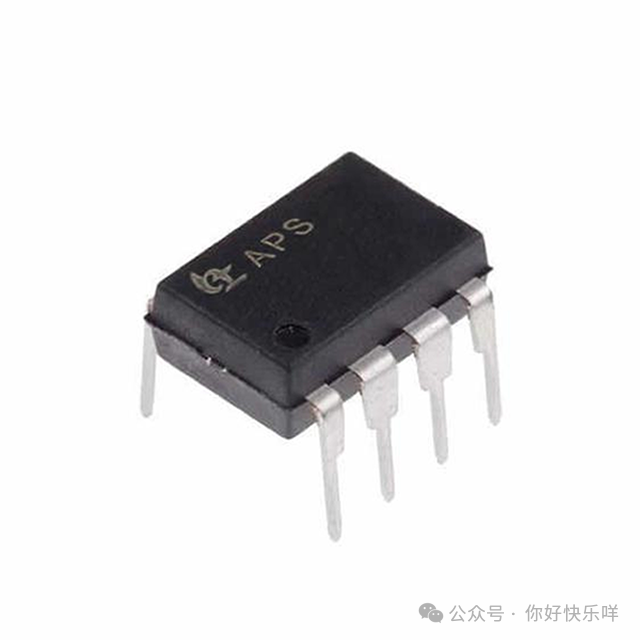
Electrical Isolation
PLC systems often need to connect with various high-voltage and low-voltage devices. The electrical isolation provided by optocouplers effectively protects the control circuit, preventing high voltage from interfering with the low voltage part, ensuring safe operation of the system.
Signal Transmission Stability
In industrial environments, noise and interference are major factors affecting signal transmission quality. Optocouplers can reduce the impact of electromagnetic interference by transmitting signals through light, improving the stability of signal transmission and ensuring that the PLC can accurately read input signals.
Improving System Reliability
Since optocouplers achieve electrical isolation, they reduce the failure rate in the system, enhancing the reliability of the PLC control module. In industrial automation, system reliability is crucial, and the advantages of optocouplers make them an ideal choice for PLC modules.
Simplifying Circuit Design
The use of optocouplers can simplify the circuit design of PLC control modules, reducing the number of components and lowering design complexity. This feature is particularly important for controlling space and costs in industrial applications.
Protection Function
In PLC control modules, optocouplers are not only used for signal transmission but can also implement protection functions. When the system detects an abnormal situation, the optocoupler can promptly transmit a signal to trigger a protection mechanism, preventing equipment damage.
02
The specific applications of optocouplers in PLC control modules mainly include the following aspects:
Input Signal Isolation
In PLC control modules, optocouplers are commonly used for input signal isolation. By transmitting signals from sensors or switches to the PLC, optocouplers ensure the safety of the PLC control system, preventing high voltage signals from affecting the control circuit.
Output Signal Control
Optocouplers are also used for output signal control in PLCs. When controlling loads such as motors and relays, optocouplers can convert the low voltage signals output by the PLC into high voltage signals to control the actual operation of devices, achieving electrical isolation.
Fault Detection and Protection
In PLC modules, optocouplers are used in fault detection circuits. By monitoring the system status in real-time, optocouplers can promptly transmit fault signals to trigger protection mechanisms, preventing equipment damage.
Communication Isolation
In some PLC control systems, communication with external devices is required. Optocouplers can provide electrical isolation to ensure safe and reliable signal transmission between the PLC and external devices.
PWM Signal Transmission
Optocouplers can also be used for the transmission of Pulse Width Modulation (PWM) signals. By transmitting PWM signals from the PLC to the control circuit, optocouplers can achieve precise control of motor speed and direction.
The advantages of optocouplers in PLC control modules are mainly reflected in the following aspects:
High Electrical Isolation Level
Optocouplers can provide electrical isolation of up to several thousand volts, ensuring safe isolation between the PLC and external high-voltage devices, protecting both equipment and operators.
Superior Anti-Interference Performance
Optocouplers utilize light signal transmission, effectively resisting electromagnetic interference and noise, ensuring signal stability in harsh environments, allowing the PLC control system to operate reliably.
Simplified Design and Integration
Optocouplers have a simple structure and small size, making them easy to integrate into PLC control modules, reducing the complexity of circuit design and improving system maintainability.
High Reliability and Long Lifespan
Optocouplers have no moving parts, offering a long lifespan and high reliability, suitable for long-term operation in factory and industrial environments.
Low Power Consumption
Optocouplers typically have low power consumption, allowing for high performance while reducing energy consumption, enhancing the overall energy efficiency of the PLC control system.
03
Despite the many advantages of optocouplers in PLC control modules, they also face some challenges:
Frequency Response Limitations
The switching speed and frequency response of optocouplers may limit their performance in certain high-frequency applications, especially in scenarios requiring high-speed signal processing.
Temperature Stability Issues
The operational stability of optocouplers in high-temperature environments may be affected, necessitating consideration of heat dissipation and temperature compensation in design to ensure reliability under harsh conditions.
Market Competition
With the continuous development of new technologies such as digital isolators, optocouplers face competitive pressure in the market and need to continuously improve and innovate to maintain competitiveness in the field of industrial automation.
Cost Control
The manufacturing cost of optocouplers may impact the overall cost of PLC control modules, requiring designers to find a balance between performance and cost.
Research and Development of High-Speed Optocouplers
To meet the demand for high-frequency signals in PLC control modules, future research and development of optocouplers will focus more on improving switching speed and bandwidth to address the complexities of modern industrial automation.
Application of New Materials
New semiconductor materials such as Gallium Nitride (GaN) and Silicon Carbide (SiC) will be widely used in the manufacturing of optocouplers to enhance their performance and voltage resistance.
Integrated Design
Future optocouplers will trend towards integration, combining with other electronic components to form more efficient and compact PLC control module designs, enhancing overall system performance.
Intelligent Design
The application of optocouplers will integrate with intelligent control technologies to achieve higher levels of intelligent PLC management. Through real-time monitoring and adaptive adjustments, optocouplers can enhance the adaptability and intelligence of control systems.
Environmental Sustainability
With the increasing global demand for environmental protection, future designs and production of optocouplers will focus more on environmentally friendly materials and sustainability to promote green development in industrial automation.
Conclusion
The application of optocouplers in PLC control modules is crucial, as their electrical isolation, anti-interference capabilities, and signal transmission characteristics provide assurance for the efficient and safe operation of PLC systems. With the continuous development of industrial automation technology, the application of optocouplers will become increasingly widespread, and their key role in PLC control modules will be further highlighted. Through continuous technological innovation and optimization, optocouplers will play an important role in advancing the upgrade and development of industrial automation technology, contributing to the goals of intelligent manufacturing and sustainable development.
 Share
Share Collect
 View
View Like
Like