Source | Global Look (ID: GLK_NEWS)
Editor | Leo
Recently, I noticed an interesting phenomenon: my friends in the tech industry are no longer discussing advanced processes like “3nm” and “5nm” that sound impressive, but instead are talking about 28nm and 40nm, which seem outdated as mature chips.
What exactly is happening behind this shift?
Dr. Ni Wenhai, an expert in RF chips, provided some enlightening insights. In an interview with Observer Network, he candidly stated that China’s current advantage lies precisely in those “unremarkable” mature process nodes—niche markets above 7nm that international giants tend to overlook. This may sound a bit “counter-mainstream,” but upon reflection, it seems to be true.
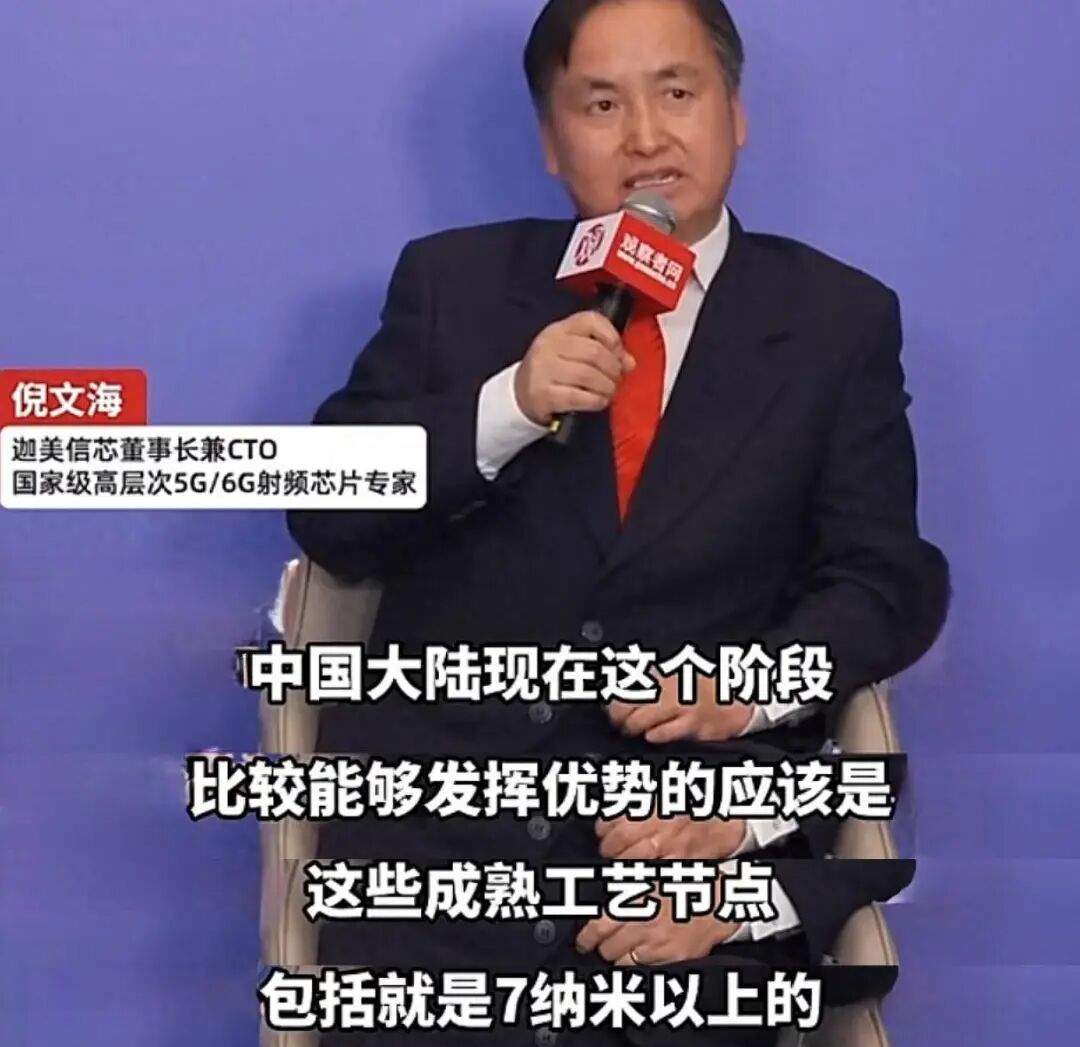
Dr. Ni’s proposed “Tian Ji’s horse racing” strategy is particularly interesting. He suggests dedicating 80% of efforts to mature chips and the remaining 20% to developing advanced chips. In other words, it’s about establishing a foothold in areas that others do not prioritize, and then using the profits to support higher-end R&D.
This logic may seem simple, but it is indeed quite reasonable.
Of course, having a strategy is not enough; actual results matter. According to data from the National Development and Reform Commission, China’s integrated circuit production is expected to grow by 28% year-on-year in 2024, with product exports reaching 1.1 trillion yuan, a historic high.
This growth rate is quite astonishing, especially considering that the overall global semiconductor market is not experiencing rapid growth. More importantly, China’s integrated circuit sales have reached 5.3 trillion yuan, a year-on-year increase of 21%, with the global market share surpassing 10% for the first time.

Additionally, according to data from the China Semiconductor Industry Association, mature chips account for about 75% of the global market share and are the preferred chips for home products and industrial controllers. What does this number indicate? It shows that the market space for mature chips is actually much larger than we might think.
However, some may ask: what is the use of mature chips? The answer might surprise you.
Firstly, apart from consumer electronics and the AI industry, other sectors do not have a strong demand for advanced chips. In contrast, mature chips perform significantly better in industrial control, automotive sensors, and other technical fields. This may sound counterintuitive, but it is indeed the case.
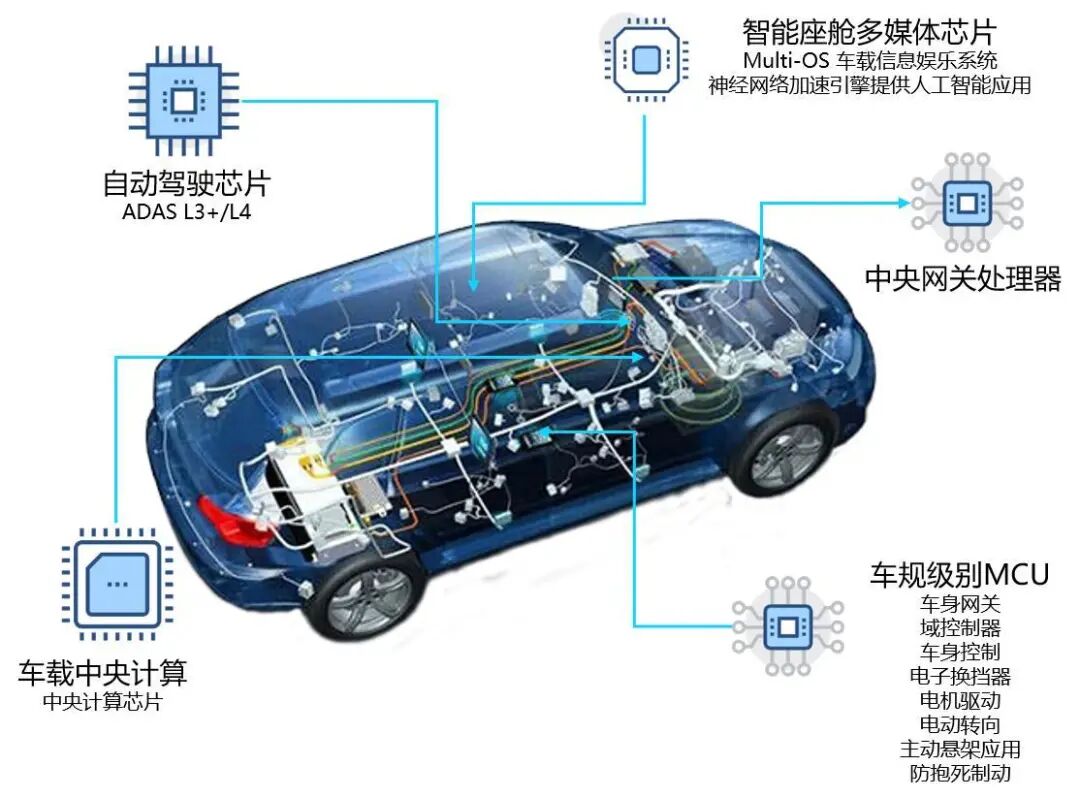
In my view, the automotive sector is the most typical application scenario for mature chips. Consider that automotive products are not fast-moving consumer goods; although various brands and models are updated quickly, most family cars are intended to last for ten years or more.
During such a long usage cycle, the stability of chips becomes particularly important. Mature chips have undergone long-term market validation, demonstrating advantages in stability and durability, and they are also relatively low in manufacturing costs, making subsequent repairs cheaper.

What is most exciting is the strength demonstrated by Chinese companies in this field. According to a technical report from the American Semiconductor Association, mainland China has led this expansion, with production capacity increasing by 12% in 2023, reaching 7.6 million wafers per month. It is expected that 18 new wafer fabs will be put into production in 2024, increasing the growth rate to 13% and capacity to 8.6 million wafers per month.
Thus, we observe an interesting phenomenon: although TSMC, Samsung, and other manufacturers hold absolute market dominance in the advanced chip sector, mainland Chinese companies rank first globally in the mature chip market, and the trend indicates that their performance in this sector continues to improve.
For instance, Huahong Semiconductor and SMIC, the two largest logic chip manufacturers in mainland China, have been continuously tackling technical challenges in the field of chips at 28nm and below, and they have already achieved large-scale commercial production capabilities. What does this indicate? It shows that Chinese companies not only possess technical strength but also industrialization capabilities.

Overall, what is most gratifying is the improvement in the localization rate of equipment. The localization rate of mature process equipment in China has reached 50%, a significant increase of 29% compared to 2021 when the U.S. imposed a comprehensive supply ban. The significance of this number is self-evident—China’s self-controllable capabilities are rapidly improving.
I have seen many discussions online about this. Some netizens expressed on social media: “Finally, we don’t have to keep an eye on those unattainable advanced processes every day; we can focus on doing mature chips well, and the market is still vast.” Others joked, “This is the so-called ‘rural encirclement of cities’ strategy, first occupying the vast mature chip market, and then advancing to high-end markets.”
Let me share another piece of data: according to industry agency IHS Markit, it is predicted that by 2025, the market share of chips with process nodes of 28nm and above will be 48%. This means that nearly half of the chip market still belongs to mature processes, providing ample space for Chinese companies to “show their skills”.
Of course, we must also recognize that while the market for mature chips is large, the technical barriers are relatively low, and competition will become increasingly fierce. The future will require serious consideration of how to maintain an advantage in intense competition and how to transition smoothly from mature chips to advanced chips.
Nevertheless, China’s semiconductor industry has chosen a development path that may not seem as “glamorous” but is more pragmatic. On this path, we see tangible progress and more possibilities for the future.Perhaps this is the unique charm of Chinese-style innovation—pursuing practicality and sustainable development rather than superficial brilliance.
That’s all for today’s content. If you have any thoughts or questions, feel free to discuss them in the comments section, and let’s exchange ideas together!

GLK Editorial TeamSelected Recommendations
India confronts the U.S. with a 50% tariff war! Modi ignores Trump’s calls, aiming to use China as a backup? Wake up, this calculation is wrong.Seventy years of transformation: Chinese manufacturing has evolved from OEM to leading the way, breaking through blockades and gaining initiative in the global supply chain.Alibaba’s new AI chip is compatible with NVIDIA and achieves domestic production, with Beijing and Shanghai setting a 2027 goal for chip localization, vowing to eliminate external dependencies.The U.S. Secretary of Commerce complains about China’s rare earth price suppression, but the actual advantage comes from long-term technological accumulation; America’s shortsighted mistakes have made the situation passive.China’s sixth-generation fighter jet’s maiden flight shakes the world; could the F-35 era end prematurely? U.S. military giants are getting anxious?The list of China’s top 500 private enterprises for 2025 is revealed, with JD.com topping the revenue list for four consecutive years, followed by Alibaba and Hengli Group in second and third place.On the 80th anniversary of the victory in the World Anti-Fascist War, Japan obstructs other countries from participating in China’s commemorative activities, once again drawing attention to its historical stance.