

Think Tank Highlights #Global Defense Dynamics #US Military Dynamics #Russian Military Dynamics #Taiwan News #Weidian Products Available
#South Korea #Raytheon #Japan #Electronic Warfare #Northeast Asia Military Dynamics #Drones
The following article is sourced from the Russian journal “Aerospace” and reprinted from “Unmanned Competition”.
In the composition of aerospace attack weapons, the proportion of drones is increasing, and their importance is becoming more pronounced, with micro drones becoming increasingly noteworthy. It is evident that there is a need for systematic organization and summarization of existing information on the combat applications of these drones, analysis of their development trends, and assessment of micro drones as future aerial attack weapons and anti-air interception targets. At the same time, it is necessary to evaluate the existing equipment’s capabilities to counter drones—especially micro drones—and to formulate scientific recommendations based on this capability for effective countermeasures.
1 Combat Applications and Development Trends of Drones

Analysis of the development of aerial attack weapons in the last 10 to 15 years shows that drones, previously defined as “remotely piloted vehicles,” have taken the lead. They are now naturally categorized as robotic equipment. Drones have dual functions: on the battlefield, they are used as aerial attack weapons; in industrial production and daily life, they are used as aircraft capable of executing numerous application tasks. This fact has facilitated the rapid development of drones, including a surge in combat drones.
1.1 Current Development Status and Combat Applications of Drones
One reason for the surge in the number of unmanned equipment and their increased usage on the battlefield is that such equipment can significantly reduce the loss of valuable manned aviation in combat conflicts, enhance the secrecy and precision of combat missions, and reduce the correlation between combat missions and external factors, as well as the technological advancement of the country and its military.
Drones represent a true military revolution; they are genuine combat equipment. Currently, approximately 30 countries are developing and manufacturing over 150 types of drones. About 80 types of drones are already in service with more than 50 militaries worldwide, performing their roles. Israel and the United States are the leaders in this field, and in recent years, China has also entered the fray. For instance, in the U.S., up to 90% of the budget allocated for the development of robotic systems (including drones) is spent on the procurement and research of various types and levels of drones. Drones have indeed become a strategic trend.
In military conflicts in Syria, Iraq, Saudi Arabia, and Libya, the use of combat drones has increased significantly. Typical examples of drone combat include the relentless attacks on the Russian military base in Khmeimim, the December 2018 paralysis of Gatwick Airport in the UK, attacks on Saudi oil and gas facilities, and the targeted elimination of Iranian Revolutionary Guard Corps commander Qassem Soleimani and his seven companions in Syria in early 2020.
During the military conflict in Nagorno-Karabakh in September to October 2020, the Azerbaijani military extensively used combat drones. A representative example is the Turkish-produced medium-altitude long-endurance drone Bayraktar TB2 (“Chess Player”), which faced no air defense systems in the NKA region, rendering it unable to counter its attacks.
1.2 The Role and Status of Drones in Aerial Attack Weapon Systems
As the role of drones in modern warfare becomes increasingly prominent, many countries have begun to develop light (micro) drones as a supplement to medium drones. Among them, “loitering munitions” (“kamikaze drones”) are beginning to occupy an important position. Unlike traditional drones that carry lethal weapons, loitering munitions are simpler and cheaper combat equipment. They can integrate reconnaissance, observation, and lethal functions, efficiently executing combat tasks in rapidly changing battlefield environments.
2.1 Overview of Micro Drones (Loitering Munitions) Development
Israeli drones used to attack enemy air defense systems are among the earliest loitering munitions systems, with flight durations (loiter times) reaching up to 3 hours. The Israeli IAI Group has developed a complete series of terminal and short-range light loitering munitions (with ranges of up to 40 km and flight durations of up to 60 minutes). These systems can be used against enemy personnel, attack transport vehicles, lightly armored equipment, and various structures and fortifications on the battlefield. All these loitering munitions have very low acoustic and infrared exposure characteristics. Israeli loitering munitions have been adopted by several countries. The U.S. has also deployed several types of loitering munitions, mainly light loitering munitions, using advanced multi-channel observation and guidance systems, including various warheads such as thermobaric warheads.
2.2 Analysis of Swarm Drone Combat Styles
As the number and types of drones grow in military forces across multiple countries, the frequency of their operational use in military conflicts has significantly increased, and the course and outcome of military conflicts and armed confrontations have begun to heavily rely on the operational efficiency of drones. Therefore, researchers are exploring new combat styles to expand their mission boundaries. A widely discussed topic in recent years is how to integrate the onboard electronic equipment of drones and loitering munitions with artificial intelligence, enabling drones (especially micro drones and loitering munitions) to achieve adaptive intelligent swarm combat.
Developers believe that after micro drones and loitering munitions are equipped with artificial intelligence components, they will be capable of conducting combat in an adaptive swarm and aerial cluster mode. It is precisely based on artificial intelligence that the aerial cluster of micro drones can achieve self-regulation when attacking designated targets, shifting from a dispersed action mode to a self-organizing (self-regulating) mode. In simple terms, this should help drone swarms (flocks) achieve natural clustering behaviors (like birds, fish, insects, etc.). The latter utilizes swarm intelligence to complete common tasks through information exchange.
Currently, micro drones and loitering munitions equipped with artificial intelligence components hold a special position in the drone domain, with various countries researching methods for their operation in adaptive swarm formations. For example, under the Skyborg project framework, the Pentagon has been actively developing the XQ-58A Valkyrie jet drone for several years. This drone, equipped with artificial intelligence components, can accompany fighter jets to perform dangerous missions, ensuring that expensive manned equipment is protected from attacks. The first batch of these intelligent combat drones, expected to work alongside fifth-generation fighter jets like the F-22 and F-35, is projected to emerge in three years, which experts believe could change U.S. military strategy. Figure 2 illustrates the potential combat scenarios of micro drones equipped with artificial intelligence components and those developed under other schemes.
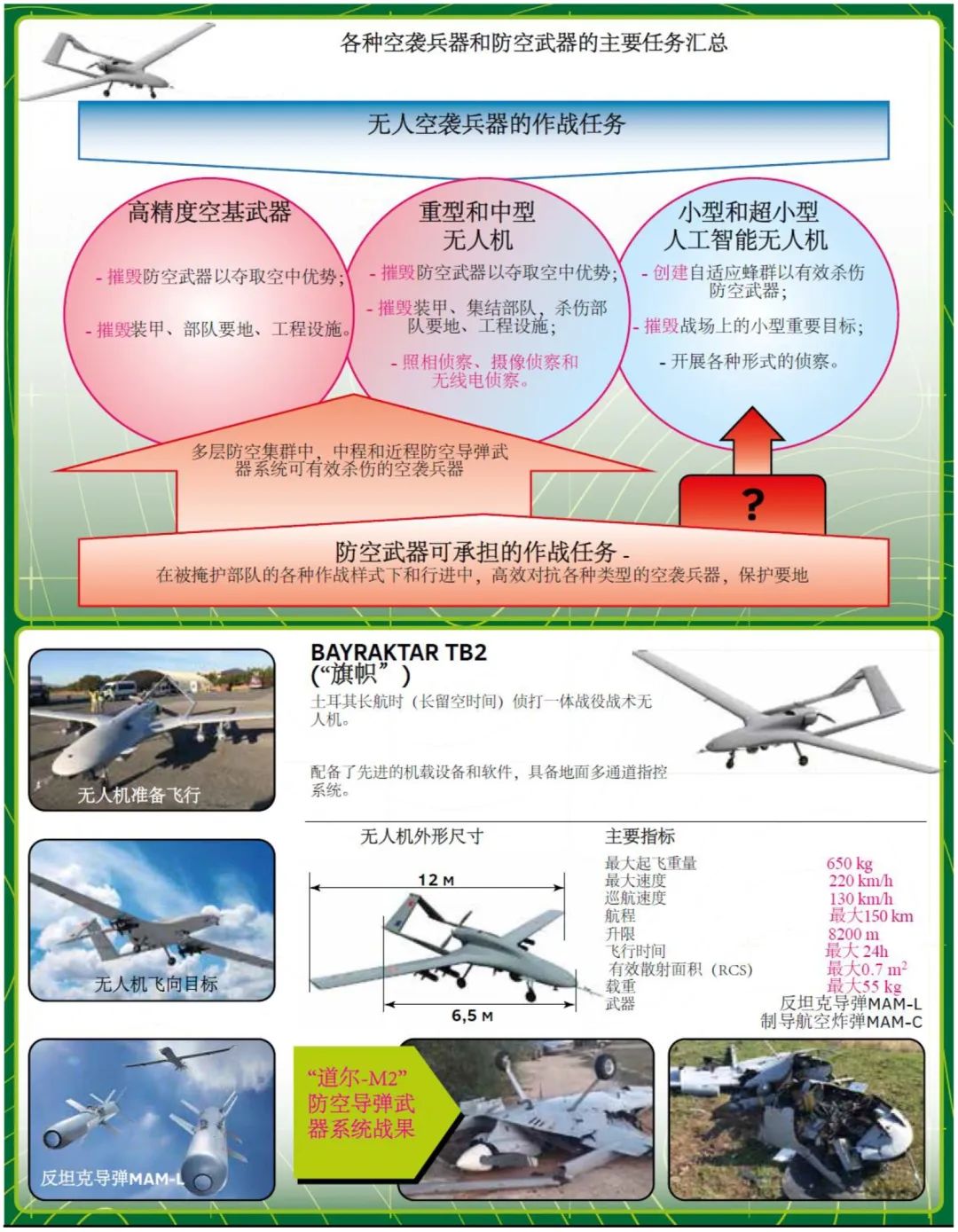
Figure 2 Possible combat scenarios for micro drones equipped with artificial intelligence components, developed under different schemes
Developers of swarm intelligence systems and schemes believe that tasks such as constructing combat processes based on the situation and internal maneuvering within the swarm will ultimately be solved through swarm intelligence, without the need for operator involvement. One operator can control a swarm of drones and coordinate their actions.
3 Analysis of Current Anti-Drone Capabilities of Air Defense Weapons

In recent conflicts and wars in the Middle East and Africa, the most frequently used drones are the Turkish Bayraktar TB2 and several models manufactured by Israel. Russian-made air defense weapons have been employed in anti-drone operations and have gradually gained necessary capabilities to counter drones (including combinations of various aerial attack weapons that include drones).
War has its victories and defeats, as always, but these situations have become reasons for some domestic and foreign media to slander Russian-made air defense weapons. The media has begun to baselessly claim that Turkish drones defeated the Russian “Pantsir” systems in Syria and Libya, and that the Bayraktar drones conducted a “real massacre” against the highly praised Russian “Pantsir” missile and gun system, which even showed its incompetence in the NKA region. Additionally, the media asserts that recent conflicts have tarnished the reputation of the S-300 “pride” air defense missile system (which actually has nothing to do with the “pride”; drones are not its primary targets, yet the media did not clarify this point).
It is difficult and unnecessary to respond to the media’s attacks and slanders one by one, especially since many authoritative authors have already done so. Here, I will provide one example to illustrate the absurdity of media information. In the spring of 2020, during Turkey’s “Spring Shield” campaign in Idlib Province, the Turkish Anadolu Agency claimed that Turkish drones destroyed 8 sets of “Pantsir” missile and gun air defense systems equipped by the Syrian army, and many media outlets accepted this statement. However, according to the statement from the Russian Ministry of Defense’s news center, only 4 “Pantsir” systems were deployed in the Idlib region. After being attacked by Turkish drones, two of them were damaged but were repaired within a few days. The Russian Ministry of Defense’s news center also reported that during the armed conflict, 12 Turkish drones (5 Anka-S and 7 Bayraktar TB2) were shot down. However, the Turkish agency remained silent on this point. So, who actually won? Furthermore, there were no “Pantsir-S1” missile and gun air defense systems deployed in the NKA region and throughout Armenia.
Fortunately, the latest generation of Russian “Tor-M2” multi-channel short-range air defense missile systems was not included in the list of air defense missile systems criticized by the media. This system has shown far superior performance in combat against drones compared to the “Pantsir.” For example, during a saturation attack by drones on the Khmeimim base, the “Tor-M2U” system fired 5 missiles and shot down 4 drones. According to the data obtained, including combat with drones, the operational effectiveness of the “Tor-M2U” in Syria is no less than 80%, demonstrating its high combat potential. Although the “Tor-M2U” uses artificial intelligence components, the realization of its potential largely depends on the professional skills of the combat personnel, that is, the human factor. Delivering modern air defense weapons to unskilled operators (like those given to Libya’s “Pantsir”) has no future and will inevitably lead to criticism of the weapons.
In summary, objectively speaking, Russian-made air defense weapons have caused irreparable losses to Turkish Bayraktar TB2 drones overall. The Syrian “Buk-M2E” air defense missile system and the “Pantsir-S1E” missile and gun air defense system have destroyed over 100 drones worth approximately $1 billion within a year. It is important to emphasize again that these Russian-made air defense weapons were operated by Syrian combat personnel, which is especially significant. This indicates that Syrian professionals have mastered these air defense weapons and can use them proficiently. Furthermore, during the U.S. and its allies’ attack on Syria in 2017, Syrian combat personnel operating the “Buk-M2E” air defense missile system destroyed up to 70% of the cruise missiles. In stark contrast, in late 2019, when drones and cruise missiles attacked Saudi oil and gas facilities, even the “Patriot” air defense missile system, equipped with U.S. professionals, failed to intercept a single incoming target.
At the same time, it should be noted that in the face of advanced threats such as aerospace attack weapons (including various drones) in saturated attacks, traditional air defense weapons find it difficult to cope and can only be integrated into corresponding defense clusters. To effectively counter drones, especially micro drones, it is necessary to research and develop entirely new (including those based on new physical principles) countermeasures, methods, and means.
4 Recommendations for Improving the Combat Performance of Air Defense Weapons

Since World War II, the nature, combat styles, and methods of wars and military conflicts have undergone significant changes. New wars and military conflicts increasingly depend on the technological systems of the participating countries and the new technologies and equipment currently mastered by the opposing parties. The involvement of various new aerospace attack weapons, including drones, has made the air defense situation more complex, placing unprecedented operational pressure on air defense weapons.
4.1 Intelligent Development of Aerospace Attack and Defense Weapons
The rapid development of technology has changed the nature of military struggle. Since the end of the 20th century, the concept of “high-tech warfare” has become deeply ingrained. As noted by the Chief of the General Staff of the Russian Armed Forces, V.V. Gerasimov: “Using high-precision and long-range lethal weapons to conduct remote non-contact strikes against the enemy from the air, sea, and space will become the main method to achieve (armed conflict) objectives… (The U.S.) plans to implement an advanced military operation style—global integrated operations. This operational style requires the creation of combined arms force groups in any area within the shortest time frame, which can defeat the enemy through joint actions in different operational environments.”
The term “long-range cyber-intelligent weapons” has recently begun to be used in practice, essentially referring to high-precision multifunctional weapons. “Intelligent” weapons are based on the extensive use of robots, artificial intelligence components, and various physical properties of information devices, and their combat load can adapt to various platforms. Undoubtedly, modern aerial attack weapons and aerospace attack weapons belong to this category, including various types of drones and various air defense and missile defense equipment currently in service and under development.
Current research results indicate that the latest generation of Russian air defense systems in service and being deployed has the necessary potential to use various combat combinations to counter modern aerial attack weapons and aerospace attack weapons. The only exception is micro drones equipped with artificial intelligence components that operate in adaptive swarm formations, which will be discussed later regarding how to counter them.
4.2 Recommendations for Using Multi-Layer Air Defense Systems Against Aerospace Attack Weapons
With the emergence of new types of threats, it is essential to develop operational responses to gain air superiority. One of the main measures should be to avoid using air defense weapons or spontaneous similar clusters to duel against manned or unmanned aerial attack weapons, as happened in Libya, but rather to create specialized multi-layer reconnaissance-fire clusters. Such clusters should adapt to the battlefield requirements, as well as the composition and configuration (formation) of the protected forces and critical areas, and, more importantly, adapt to the composition and capabilities of enemy aerial attack weapons. A multi-layered mobile automated air defense cluster (MAROG) should be established to operate in real-time within a unified information-command space. Calculations, simulations, and target tests indicate that the operational efficiency of such clusters can be increased by more than two times compared to the autonomous behavior of air defense weapons within the cluster, while the stability against aerial attack weapon strikes can increase by 8 to 9 times. Combat results have also confirmed these indicators. The air defense clusters in Khmeimim and Tartus consist of various reconnaissance-fire equipment, and their composition and architecture depend on the tasks being executed, resulting in observable combat outcomes.
Undoubtedly, if the “Vikhr-AKM” and “Arrow-10M3” air defense missile systems deployed in the NKA region had been integrated into the corresponding cluster and a reconnaissance domain established with combat command equipment, the outcomes of Azerbaijan’s use of Turkish Bayraktar drones would have been entirely different. I personally led the improvements and target tests for the “Vikhr-AKM” air defense missile system to enhance its kill rate against small targets (the target drone was RUM-2B, one-fourth the size of Turkish drones), thus understanding its capabilities—100% kill rate against target drones.
4.3 Research on Advanced Combat Styles for Countering Swarm Micro Drones
Regarding micro drones, it should be noted that if they are fully equipped with artificial intelligence components and utilize a swarm composed of a large number of such drones, air defense weapons cannot effectively combat them using traditional methods of killing aerial targets; new countermeasures need to be developed.
4.3.1 Deficiencies of Traditional Air Defense Interception Methods
Some experts believe that since air defense missiles are far more expensive than micro drones, using air defense missiles to intercept micro drones is not cost-effective, but the issue is not there. The problem is that drone swarms are essentially spatially distributed munitions, which are group targets that air defense weapons need to deal with. To protect critical areas, it is necessary to destroy the entire group target, not just individual elements (single drones). Killing individual elements may reduce damage to the protected object but cannot avoid it entirely. Existing and under-development air defense systems that use traditional methods (fragmentation explosions) to intercept targets lack weapons that can be used to destroy spatially dispersed group targets (except for certain air defense missiles with nuclear warheads, which will not be used in peacetime), and therefore cannot be used to intercept micro drone swarms. According to media reports, under the framework of expanding the operational capabilities of the “Tor-M2” air defense missile system and the “Pantsir-S1” missile and gun air defense system, micro air defense missiles designed to counter micro drones are being developed, but such missiles cannot solve the aforementioned problem either.
Other experts believe that lasers can solve the problem of countering micro drone swarms. However, firstly, lasers are coherent energy sources with narrow beams, which can only act on point targets (single targets); secondly, the efficiency of laser beams largely depends on atmospheric conditions; thirdly, under a single power supply and good weather conditions, the kill distance of laser beams against targets does not exceed 2 to 3 km, which is far from sufficient.
4.3.2 Using High-Power Electromagnetic Pulses to Destroy Micro Drones
In light of this, the most promising approach is to functionally destroy (disable) the onboard electronic equipment of drones. The primary goal is to destroy the onboard electronic equipment of micro drones (including those equipped with artificial intelligence components that operate in adaptive swarm formations) and to use nanosecond high-power electromagnetic pulses to disable certain high-precision weapons (Figure 3).
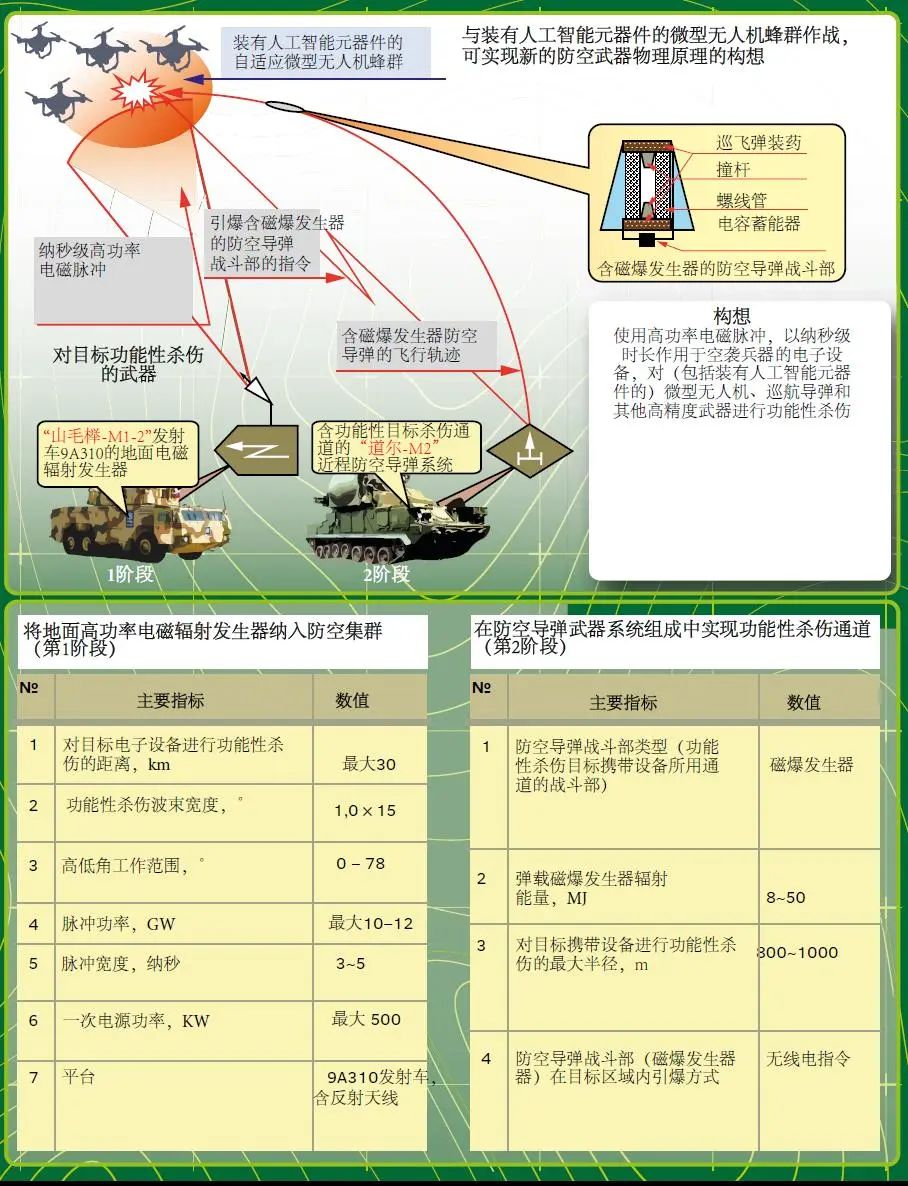
Figure 3 Concept for implementing a counter-micro drone operational mode based on new physical principles in the composition of army air defense weapons
Research shows that the electronic equipment carried by modern aerial attack weapons commonly uses solid-state components and widely employs antennas (including phased array antennas), making them highly susceptible to high-power electromagnetic pulses. Therefore, the latter can be used to functionally destroy these electronic devices, developing weapons based on new physical principles or incorporating them into existing weapons.
In such a system designed to functionally destroy the electronic equipment carried by aerial attack weapons, in the first phase, ground electromagnetic radiation generators can serve as the basis. However, a more effective approach would be to install magnetic pulse generators as warheads in air defense missiles, which could serve as the primary destructive weapon in the second phase.
The media has previously reported that “Russian defense researchers have found a way to counter swarm intelligence. Experts from the United Industrial Corporation under Rostec state that Russia has developed weapons to counter swarms.” This news refers to ground electromagnetic pulse generators. The Moscow Institute of Radio Engineering, part of the Russian Academy of Sciences, developed such generators as early as the late 1990s, but later wasted a lot of time on bureaucratic delays instead of focusing on development.
Now a paradox has emerged. The Ministry of Defense does not want to use the developed weapons to counter drone swarms as originally intended, but rather to counter ground-to-ground missiles, guided artillery shells, and other incoming weapons that carry electronic equipment. In other words, this weapon will not be used by army air defense forces but rather by army missile and artillery forces. The army air defense command believes: “Countering such aerial targets is not the exclusive domain of air defense; it should involve cooperation with electronic warfare, engineering troops, and other forces to comprehensively address this task.” Meanwhile, the world is primarily using air defense weapons to counter drones. This is the task of air defense weapons, although it is indeed a comprehensive task.
However, using ground electromagnetic pulse generators to counter drones also faces some challenges. Ground electromagnetic pulse generators may cause the electronic equipment of nearby friendly combat equipment to become disabled when functionally destroying the electronic devices of drones, which creates electromagnetic compatibility issues for friendly electronic equipment that are difficult to resolve.
In light of this, replacing traditional warheads with magnetic pulse generators in air defense missile systems should be seen as a more promising method for functionally destroying the electronic equipment of micro drones. Magnetic pulse generators can directly convert the explosive energy of mixed component warheads into electromagnetic pulse energy. If the maximum weight of the magnetic pulse generator is suitable for the “Tor-M2” air defense missile at 12 to 15 kg, then for drone swarms at distances of 800 to 1000 m or more from the explosion point, the energy radiated by UHF munitions is sufficient to cause functional damage to their onboard electronic devices, meaning it can inflict necessary functional damage on group targets. If air defense missiles equipped with magnetic pulse generators are used in the “Tor-M2” air defense missile system, there will be no need to separately address the electromagnetic compatibility issues of friendly electronic equipment, and it can be achieved with minimal cost in the shortest time frame.
4.3.3 Using Electronic Warfare Equipment to Interfere with Drones
Experience from operations in Syria, completed research, and other data indicate that the performance of electronic warfare equipment is sufficiently effective in countering drones, including micro drones. This is because all types of drones inevitably use radio channels, including navigation, control, information gathering, and other channels. Electronic warfare equipment can significantly reduce the operational efficiency of drones by interfering with these channels. Therefore, as reported by the media, at least one “Krasukha-4” electronic warfare system was deployed in Khmeimim, which is not baseless. There are reports indicating that U.S. forces have complained that their aircraft and drones are often subjected to electronic warfare system interference in Syria. Experts both domestically and internationally highly praise the capabilities of these systems. These systems need to be studied as advanced combat equipment (including for combat against micro drone swarms).
In the first 10 years after the emergence of army air defense forces, electronic warfare units equipped to interfere with aerial attack weapons were part of the army air defense forces. Later, an unsubstantiated and hasty decision was made to remove these electronic warfare units from the army air defense force structure and reassign them to other branches. This has proven to be inefficient and low-cost effectiveness for air defense weapons and electronic warfare equipment to operate separately against aerial attack weapons. At the Khmeimim airbase, this oversight was corrected, yielding better results.
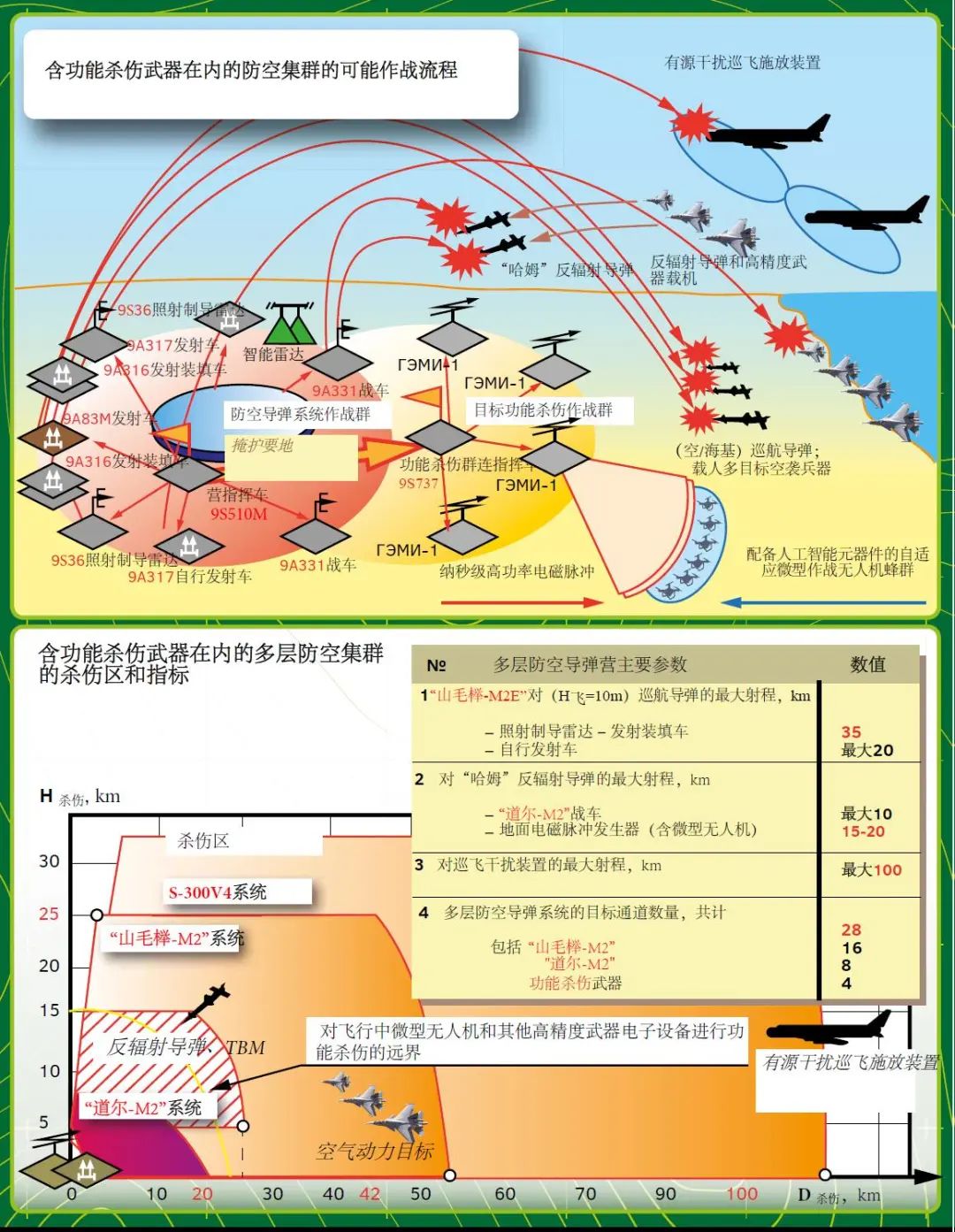
A reasonable approach would be to return electronic warfare units equipped with counter-aerospace attack weaponry to the army air defense forces, building a combination that has both functional destruction capabilities and electronic warfare capabilities, integrated structurally within mobile reconnaissance-fire clusters of air defense forces, operating in a unified information-command space under unified command alongside air defense missile weapons (Figure 4). This helps concentrate the strength of all army air defense weapons to conduct multi-layered operations against aerospace attack weapons.
5 Conclusion
After analyzing the combat experience mentioned in Syria, the Chief of Staff pointed out: “Hybrid warfare requires high-tech weapons… The development trends of traditional and hybrid warfare indicate that changes must be made to the organization of defense. New strategies should consider and systematically utilize all existing national potentials.” I completely agree with this; it is a demand of the times. I believe the recommendations in this article will also be regarded as a requirement of the times, and Russian weapons will maintain their advantage in the air domain for a long time.
Reprint Statement
This article is sourced from publicly available online materials or has been authorized for reprint by original public accounts on a whitelist basis, with copyright belonging to the original author. The content of the article does not represent the views of this platform or its responsibility for authenticity. The purpose of reprinting is to convey information and for online sharing. If there are copyright issues, please contact us promptly, and we will delete it as soon as possible.


Beijing High-End Gift Center, targeting high-end clients for gift-giving, rare product supply, resource sharing. Interested friends can add ttkkx0113, or scan the QR code.