Antibody-drug conjugates (ADCs) are a class of biotherapeutic drugs targeting cancer, combining the targeting capability of monoclonal antibodies (mAbs) with the anticancer efficacy of cytotoxic drugs (Payload). The antibody and payload are linked by a linker, allowing specific drugs to be delivered to cancer cells targeted by the antibody. Once inside the cell, the linked payload is released to kill the cell (Figure 1)[1]. Although ADCs aim to target and kill tumor cells while sparing healthy cells, first-generation ADC platforms have some limitations that lead to a narrow therapeutic window and unacceptable toxicity to patients.
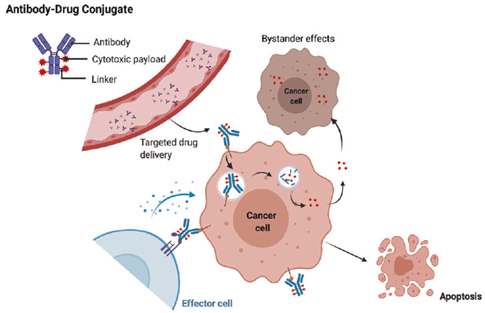
Figure 1. Overview of ADC mechanisms for killing cancer cells
To address the above issues, this series will summarize and categorize the ADC technology platforms applied by well-known domestic and international companies.
The previous issues mainly introduced Synaffix, Mersana, Thiologics, Concortis, MediLink, KELUN, DualityBio and Rongchang Bio as well as Yilian/Ying’en/Kelun Botai ADC technology platforms. Today, we will continue to introduce ADC technologies from some other companies:
Making a Meaningful Difference
Zymeworks Inc. is a publicly traded biotechnology company based in Vancouver, founded in 2003, integrating industry-leading expertise in protein engineering and medicinal chemistry into its proprietary multispecific antibodies and ADC therapeutic modalities, combined with disease biology to develop next-generation antibody therapies primarily for the treatment of cancer, autoimmune diseases, and inflammatory diseases. After 20 years of continuous development, the company currently owns four patented technology platforms: Azymetric™[2], ZymeLink™[3], EFECT™[4], and ProTECT™[5] (Figure 1); additionally, the original AlbuCORE[6] technology platform has disappeared from the company’s official website and is not applied in relevant projects.
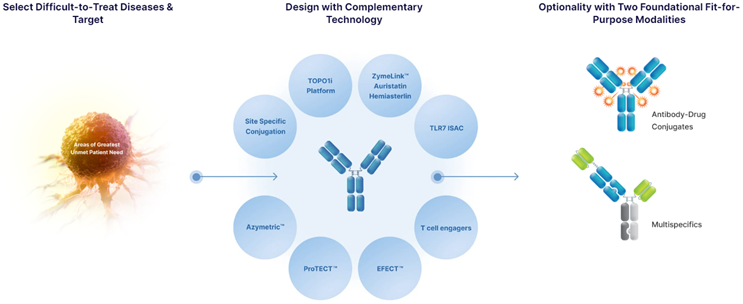
Figure 1. Overview of Zymeworks technology platforms[7]
Zymeworks integrates its four technology platforms based on its own or partners’ needs, designing novel multifunctional antibody therapies and developing ADCs and multispecific antibodies with different functionalities. Among the four technology platforms, Azymetric™ and ProTECT™ (PROgrammed Tumor Engagement & Checkpoint/Co-stimulation Targeting) technologies are mainly used for constructing multispecific antibodies, and Azymetric™ technology has been clinically validated[8, 9]; EFECT™ (Effector Function Enhancement and Control Technology) technology mainly engineers the antibody Fc (amino acid mutation) to modulate the function of immune cells.
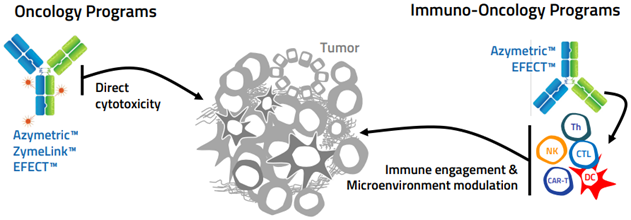
Figure 2. Zymeworks R&D pipeline and its related tumor immune mechanisms
ZymeLink™ technology is Zymeworks’ ADC technology platform, which has patented cytotoxic drugs and two categories of linkers (cleavable/non-cleavable), dedicated to developing highly differentiated ADC therapies.The ZymeLink™ platform can be combined with the multispecific antibody platform Azymetric™ to develop next-generation ADC bispecific antibodies with higher efficacy (Figure 2)[10, 11]. The ZymeLink™ technology platform[12] mainly covers five aspects: ZymeLink™ Auristatin, TOPO1i ADC platform, ZymeLink™ Hemiasterlin, Cysteine-Insertion Conjugation (site-specific conjugation), and TLR7 ISAC (Figure 3).
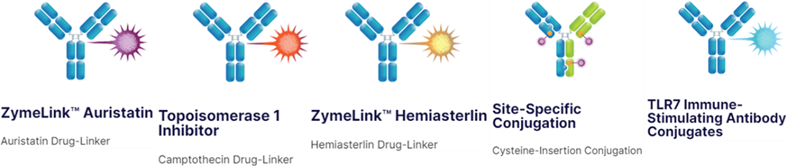
Figure 3. ZymeLink™ technology platform
01
ZymeLink™ Auristatin technology platformZymeLink™ Auristatin is a Drug Linker based on Auristatin, which connects Auristatin with a protease-sensitive dipeptide linker using N-acyl sulfonamide (Spacer)[13], allowing selective conjugation with cysteine (Cys) or lysine (Lys). ZymeLink™ Auristatin ADC is very similar to natural antibodies, demonstrating good pharmacokinetics, tolerability, and stability, reducing the premature release of the payload in the bloodstream to maximize the exposure of the effective payload at the action site (ZD02044)[14].Zymeworks won the 2019 World ADC Best Platform Technology Award with this technology[15].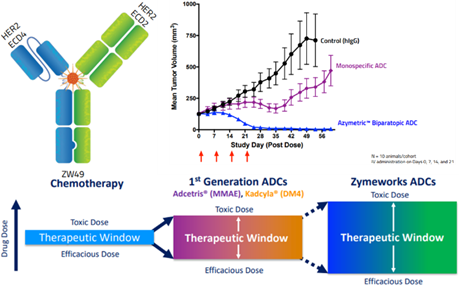 Figure 4. Bispecific ADC for HER2 (+) can enhance efficacy and therapeutic window[11]Zymeworks leverages its technological advantages to construct a bispecific ADC (ZW49, Zanidatamab Zovodotin, Figure 4 top left)[19] based on its existing bispecific antibody ZW25 (Zanidatamab, phase Ⅲ)[16-18], targeting two non-overlapping receptor epitopes (HER2 ECD 2/4), resulting in increased binding density and inducing receptor clustering, leading to complete tumor regression in high/low HER2-expressing tumors and improved therapeutic activity (Figure 4 top right); its toxicology studies show that ZW49 has no impact on liver function and blood cell counts; moreover, ZW49 exhibits superior preclinical efficacy compared to T-DM1 and T-Exatecan. Compared to first-generation ADCs, its therapeutic window is significantly improved (Figure 4 bottom)[11, 20, 21]. Zymeworks is collaborating with BeiGene to develop ZW49, which is currently recruiting patients for a phase I clinical trial (NCT03821233) to evaluate its efficacy in patients with locally advanced or metastatic HER2-expressing cancers[22].
02
TOPO1i ADC technology platform
Zymeworks TOPO1i(Topoisomerase 1 Inhibitor) ADC technology platform uses the company’s optimized synthetic camptothecin payloads to conjugate with Trastuzumab (trastuzumab) as the model antibody via its interchain disulfide bonds (Figure 5 left[23]), then it binds to the target, internalizes, and is transported to lysosomes where it decomposes and releases ZD06519[24] (TOPO1i).This technology platform has the following advantages[25, 26]: 1) TOPO1i ADC does not aggregate even at a DAR value of 8, solving the aggregation problem common to TOPO1i class ADCs; 2) TOPO1i ADC has good hydrophilicity, strong freeze-thaw stability, and photostability; 3) TOPO1i ADC exhibits similar efficacy across different targets compared to the industry-leading DXd platform (Figure 5 middle); 4) TOPO1i ADC has a strong bystander effect (Figure 5 right).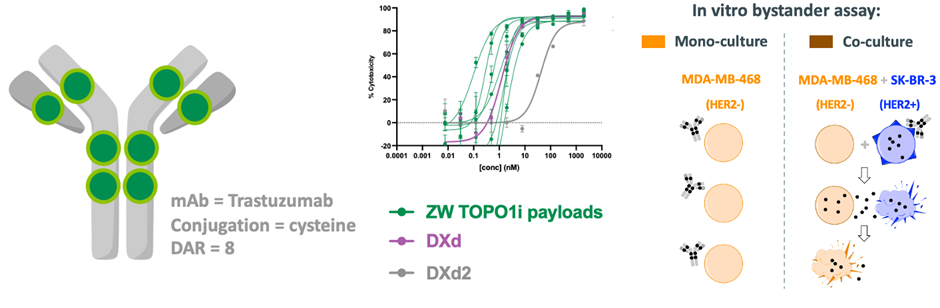 Figure 5. TOPO1i-class ADCs exhibit good activity and bystander effectsCurrently, Zymeworkshas developed three ADC drugs using the TOPO1i ADC technology platform – ZW191, ZW251, and ZW220, all constructed from monospecific antibodies. I will introduce these three ADC candidate drugs in a table format (Table 1)[18, 23].Table 1. Overview of ADC drugs constructed based on the TOPO1i ADC technology platform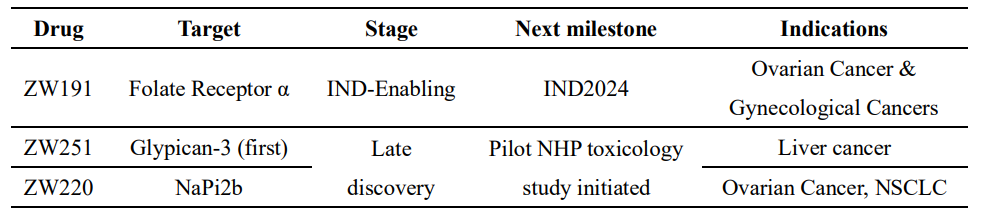
03
ZymeLink™ Hemiasterlin technology platform
ZymeLink™ Hemiasterlin is similar to ZymeLink™ Auristatin, both using N-acyl sulfonamide spacers and cleavable dipeptide linkers to conjugate antibodies with payloads, resulting in ADCs with sufficient hydrophilicity and a DAR value of 8, which release the bystander effect microtubule inhibitor ZD01886 after internalization and decomposition. The ADCs constructed using this method exhibit good pharmacokinetics and stability, avoiding premature release of the payload in the bloodstream to maximize exposure of the effective payload at the target site.Using this technology platform, Zymeworks has collaborated with Exelixis to develop ADC-XB002, targeting tissue factor (TF) for the treatment of solid tumors, which is currently in phase I clinical trials (NCT04925284)[27]; additionally, it is collaborating with Atreca to develop ATRC-301, targeting EphA2, which is currently in the IND authorization research stage[28, 29].
04
TLR7 ISAC technology platformISAC (Immune-Stimulating Antibody Conjugates) is structurally similar to ADCs, coupling immune stimulants to the Fc of antibodies via linkers, currently using mostly TLR7/8 agonists[30, 31] or Sting agonists[32, 33], but systemic toxicity and limited efficacy have hindered recent clinical development of ISACs.Zymeworks has replaced the purine scaffold as a lead compound for TLR7 agonists, designing and synthesizing 220 structurally diverse small molecule purine derivatives, utilizing human and mouse immune cells for activity testing, selecting the most promising small molecules to introduce cleavable linkers to construct MTvkPABC-P5 small molecules, which react with the endogenous interchain disulfide bonds on Trastuzumab via maleimide groups, yielding ISACs with a DAR of 4 (Figure 6 top), which exhibit lower aggregation and hydrophobicity compared to Trastuzumab-MCvcPABC-MMAE conjugates (DAR4). Co-culturing this type of Trastuzumab-MTvkPABC-Pn (n is the number) with tumor cells and primary immune cells can induce high levels of IL-6 expression; in the N87 xenograft model, some Trastuzumab-MTvkPABC-Pn exhibited tumor inhibitory activity comparable to the clinically evaluated Trastuzumab-NJH395 (NCT03696771)[34], with Trastuzumab-MTvkPABC-P5 and Trastuzumab-ME2-P1 showing superior anticancer activity (Figure 6 bottom left); at the same time, tolerance experiments in Balb/c mice indicated that Trastuzumab-MTvkPABC-P5 has a significant tolerance advantage (Figure 6 bottom right)[35].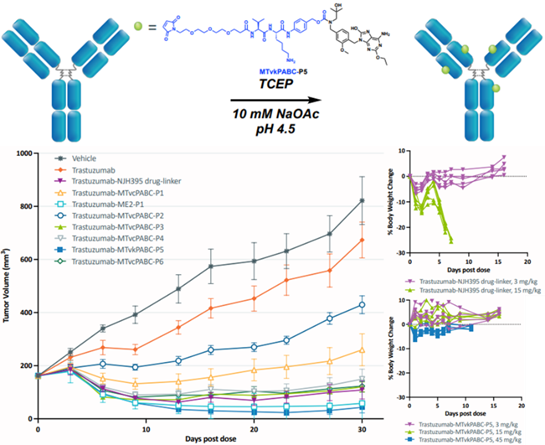 Figure 6. Research on purine scaffold-based TLR7 agonists as ISAC payloads
05
Cysteine-Insertion Conjugation technology platform
Zymeworks evaluates the impact of different cysteine (Cys) insertion sites on IgG structure and function through computer modeling, determining the optimal Cys insertion sites, selectively conjugating with any thiol-reactive drugs, and constructing homogeneous ADCs through simple chemical reactions (Figure 7 top). When used in conjunction with the company’s patented Azymetric™ technology[2], it allows precise control of the DAR value based on the number of Cys insertions (1, 3, 4, and 6, Figure 7 bottom); compared to ADCs constructed via random Cys conjugation, ADCs constructed using this technology platform exhibit superior biophysical properties[36, 37]. This Cys site-specific conjugation technology developed by Zymeworks has some similarities with the ThioMab technology developed by Genentech[38],thanks to the integration of its own platform technologies, it has a greater application space.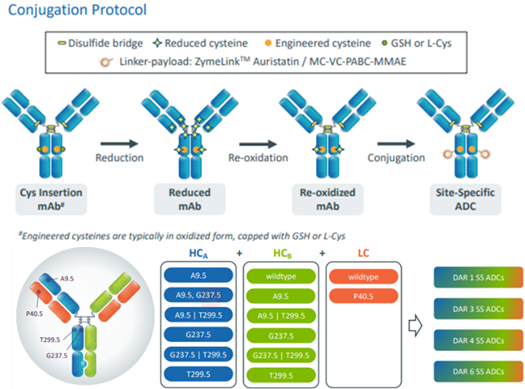 Figure 7. Cysteine-Insertion Conjugation technology platformThe above content outlines the ADC technology platforms that occupy a significant portion of Zymeworks’ offerings. In addition to the previously mentioned BeiGene, Exelixis, and Atreca, the company is currently collaborating with Jazz Pharmaceuticals, Bristol Myers Squibb, Johnson & Johnson, Merck, Daiichi-Sankyo, GSK, and LEO Pharma to develop multispecific antibodies and ADC drugs[18].
 Main References
1. Fu, Z., et al., Antibody drug conjugate: the “biological missile” for targeted cancer therapy. Signal Transduct Target Ther, 2022. 7(1): p. 93.
2. https://www.zymeworks.com/technologies/azymetric/.
3. https://www.zymeworks.com/technologies/zymelink-auristatin/.
4. https://www.zymeworks.com/technologies/efect/.
5. https://www.zymeworks.com/technologies/protect/.
6. Sanches, M., et al., AlbuCORE: an albumin-based molecular scaffold for multivalent biologics design. MAbs, 2020. 12(1): p. 1802188.
7. https://www.zymeworks.com/technology/.
8. Bedard, P.L., et al., Zanidatamab (ZW25), a HER2-targeted bispecific antibody, in combination with chemotherapy (chemo) for HER2-positive breast cancer (BC): Results from a phase 1 study. CANCER RESEARCH, 2022. 82(4).
9. Pant, S., et al., A phase IIb, open-label, single-arm study of zanidatamab (ZW25) monotherapy in subjects with advanced or metastatic HER2-amplified biliary tract cancers. JOURNAL OF CLINICAL ONCOLOGY, 2021. 39(3).
10. Hamblett, K.J., et al., ZW49, a HER2-targeted biparatopic antibody-drug conjugate for the treatment of HER2-expressing cancers. Cancer Research, 2018. 78(13_Supplement): p. 3914-3914.
11. Tehrani, A., et al., Zymeworks’ 2018 R&D Briefing. 2018. p. 132.
12. Barnscher, S., et al., Zymelink drug conjugate platform: redefining the therapeutic window for ADCs. Cancer Research, 2017. 77(13_Supplement): p. 61-61.
13. Winters, G.C., et al., Preparation of cytotoxic and antimitotic peptide-based compounds conjugated to antibodies for treating cancers. 2016, Centre for Drug Research and Development, Can.; Zymeworks Inc. . p. 122 pp.
14. Tolcher, A., et al., A dose-escalation and expansion study of the safety and pharmacokinetics of XB002 in subjects with inoperable locally advanced or metastatic solid tumors (301). Gynecologic Oncology, 2022. 166: p. S158.
15.https://www.adcreview.com/news/zymeworks-wins-best-adc-platform-technology-award-for-zymelink/.
16. Bedard, P.L., et al., Abstract P2-13-07: Zanidatamab (ZW25), a HER2-targeted bispecific antibody, in combination with chemotherapy (chemo) for HER2-positive breast cancer (BC): Results from a phase 1 study. Cancer Research, 2022. 82(4_Supplement): p. P2-13-07-P2-13-07.
17. https://www.clinicaltrials.gov/ct2/results?cond=zw25&term=&cntry=&state=&city=&dist=.
18. https://www.zymeworks.com/pipeline/.
19. Jhaveri, K., et al., 460MO Preliminary results from a phase I study using the bispecific, human epidermal growth factor 2 (HER2)-targeting antibody-drug conjugate (ADC) zanidatamab zovodotin (ZW49) in solid cancers. Annals of Oncology, 2022. 33: p. S749-S750.
20. Colombo, R. and J.R. Rich, The therapeutic window of antibody drug conjugates: A dogma in need of revision. Cancer Cell, 2022. 40(11): p. 1255-1263.
21. https://seekingalpha.com/article/4227658-zymeworks-inc-blockbuster-in-making.
22. Barnscher, S., Design and Functional Characterization of Zanidatamab Zovodotin (ZW49), a HER2-targeting Biparatopic Antibody Drug Conjugate in Clinical Development. February 23, 2023: European Bispecific & Multispecific Antibody Congress.
23. Lawn, S., ZW191 – A FRa-Targeted ADC Employing Zymework’s TOPO1-Inhibitor Platform. March 16, 2023: World ADC London 2023.
24. https://www.zymeworks.com/technologies/topo1i-platform/.
25. TOPO1i ADC Platform: From Concept to Pipeline. March 2022: World ADC London 2022.
26. Petersen, M., et al., Zymeworks Topoisomerase 1 Inhibitor ADC Platform: From Concept to Pipeline. September 9, 2022: World ADC San Diego.
27. Johnson, M., et al., Abstract CT254: A first-in-human phase 1 study of the safety and pharmacokinetics of XB002 in patients with inoperable locally advanced or metastatic solid tumors. Cancer Research, 2022. 82(12_Supplement): p. CT254-CT254.
28. DeVorkin, L., et al., 1196 Streamlining T cell engager development with a diverse panel of fully human CD3-binding antibodies, bispecific engineering technology, and an integrated discovery engine. 2022, BMJ Specialist Journals.
29. Marguet, P., et al., ATRC-301: a novel EphA2-targeting ADC binding a unique epitope. 2022: World ADC Conference 2022.
30. Ackerman, S.E., et al., TLR7/8 immune-stimulating antibody conjugates elicit robust myeloid activation leading to enhanced effector function and anti-tumor immunity in pre-clinical models. Cancer Research, 2019. 79(13_Supplement): p. 1559-1559.
31. He, L., et al., Immune Modulating Antibody-Drug Conjugate (IM-ADC) for Cancer Immunotherapy. J Med Chem, 2021. 64(21): p. 15716-15726.
32. Diamond, J.R., et al., Abstract CT249: First-in-human study of TAK-500, a novel STING agonist immune stimulating antibody conjugate (ISAC), alone and in combination with pembrolizumab in patients with select advanced solid tumors. Cancer Research, 2022. 82(12_Supplement): p. CT249-CT249.
33. Duvall, J.R., et al., XMT-2056, a HER2-targeted Immunosynthen STING-agonist antibody-drug conjugate, binds a novel epitope of HER2 and shows increased anti-tumor activity in combination with trastuzumab and pertuzumab. Cancer Research, 2022. 82(12_Supplement): p. 3503-3503.
34. Janku, F., et al., Preclinical Characterization and Phase I Study of an Anti-HER2-TLR7 Immune-Stimulator Antibody Conjugate in Patients with HER2+ Malignancies. Cancer Immunol Res, 2022. 10(12): p. 1441-1461.
35. Garnett, G., et al., 1185 Optimization of purine-based TLR7 agonists as payloads for immune-stimulating antibody conjugates (ISACs). 2022, BMJ Specialist Journals.
36. Das, S., et al., Novel IgG1 Cysteine Insertion Sites Enable Site-Specific Conjugation and Precise Control of Drug to Antibody Ratio, in Antibody Engineering & Therapeutics Conference. December 5, 2022.
37. https://www.zymeworks.com/technologies/site-specific-conjugation-platform/.
38. Junutula, J.R., et al., Site-specific conjugation of a cytotoxic drug to an antibody improves the therapeutic index. Nat Biotechnol, 2008. 26(8): p. 925-32.
Related Recommendations
▼