

Think Tank Highlights #Global Defense Dynamics #US Military Dynamics #Russian Military Dynamics #Taiwan Updates #Micro Store Sales
#South Korea #Raytheon #Japan #Electronic Warfare #Northeast Asia Military Dynamics #Unmanned
The following content is sourced from ZHUAN ZHI Intelligent Defense, authored by ZHUAN ZHI Defense, and reprinted from Equipment Reference.
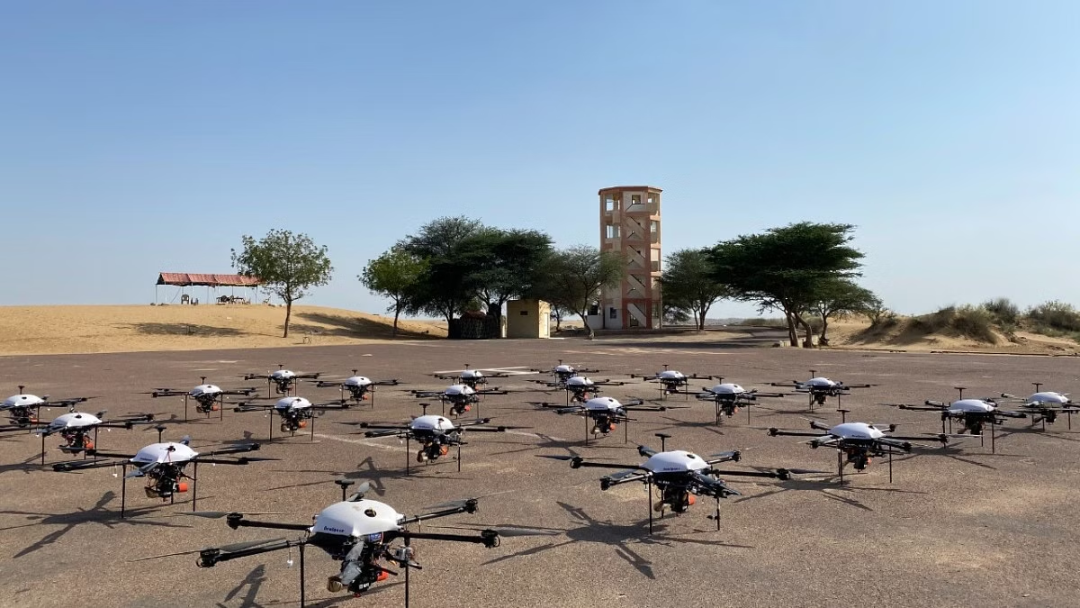 In recent years, drones have evolved from novelty toys to essential tools across various industries. However, the game-changer is the concept of swarm drones—multiple drones working collaboratively, much like a swarm of bees. This revolutionary technology will transform sectors such as agriculture, disaster response, military operations, and entertainment.This article will explore what swarm drones are, how they work, and their potential to reshape our world.
What Are Swarm Drones?

Swarm drones refer to a group of autonomous drones that achieve common goals through collaboration. Unlike a single drone operating alone, swarm drones can communicate with each other, share data, and act as a collective. They are designed to operate independently without human intervention, using algorithms and artificial intelligence to manage flight paths, avoid obstacles, and complete complex tasks collaboratively.
Main Features of Swarm Drones
- Autonomous Collaboration: Swarm drones are equipped with artificial intelligence that enables them to communicate and collaborate. They can make collective decisions without direct human control, adjusting their actions based on the overall goals of the swarm.
- Scalability: Whether a small swarm consisting of 10 drones or a large-scale deployment of hundreds or thousands of drones, the swarm can scale according to the tasks at hand. Each drone acts as a ‘node’ in a larger system, meaning the swarm can expand or contract as needed.
- Distributed Control: The movements of swarm drones are not controlled by a central controller but operate in a distributed manner. Each drone can make local decisions based on its surroundings and data from other drones.
- Real-Time Data Sharing: Drones continuously share real-time data with each other, ensuring that the swarm can adapt to changing environments, avoid collisions, and complete tasks efficiently.
- Versatility: Swarm drones can be equipped with various sensors and tools as needed for tasks, making them suitable for a wide range of applications, from monitoring to delivering medical supplies.
Applications of Swarm Drones
Swarm drones have immense potential across multiple industries, enhancing efficiency, scalability, and problem-solving capabilities.
- Disaster Response and Search and Rescue: In disaster areas, swarm drones can be quickly deployed to scan large areas, locate survivors, and assess damage. They can cover vast areas in a short time, making them indispensable tools for emergency services. For instance, they can be used to search for people trapped under rubble or monitor the spread of wildfires.
- Agriculture: Swarm drones can monitor crop health, fertilize, and detect pests over large agricultural fields, revolutionizing precision agriculture. They can simultaneously collect data from different areas of the farm, making agricultural production more efficient and data-driven.
- Military Operations: One of the most discussed applications of swarm drones is in the military sector. Swarm drones can be deployed for reconnaissance missions, target tracking, and even offensive operations. Distributed control makes them harder to disable, and scalability ensures that even if some drones are lost, the mission can continue.
- Entertainment and Art: Swarm drones are also used to create stunning visual effects. Light shows featuring hundreds of drones flying in intricate patterns are becoming increasingly popular at large events and celebrations. These drone swarms create 3D visual effects in the sky, providing a unique dynamic experience that pushes the boundaries of art.
- Environmental Monitoring: Swarm drones can be used to monitor wildlife, study environmental changes, or track illegal logging and poaching activities in remote areas. They can fly into hazardous environments like volcanic areas or deep forests where human presence is difficult or dangerous.
Challenges Facing Swarm Drones
Despite the immense potential of swarm drones, they still face several technical and ethical challenges:
- Coordination and Communication: Ensuring that each drone in the swarm can communicate without delays or data loss is a significant challenge. Signal loss or latency issues can lead to collisions or mission failures.
- Energy Efficiency: Battery life is a limiting factor for drones. Coordinating a swarm over long distances or extended periods requires innovations in energy management and drone charging solutions.
- Ethical Issues: Swarm drones may be used for military and surveillance purposes, raising concerns about privacy and ethical implications of autonomous systems in warfare.
- Security Concerns: Large autonomous drone swarms can be vulnerable to hacking or interference, leading to security breaches or malicious use. Ensuring that drone swarms are protected from cyberattacks is crucial, especially for high-risk applications like military or disaster response.
The Future of Swarm Drones
Swarm drones technology is still in a relatively early stage, but its development is exponential. Researchers are working to enhance its AI-driven autonomy, improve communication systems, and expand its range of applications. We can foresee that in the coming years, swarm drones will become essential tools across various industries.In the near future, we may see:
- Fully Automated Agriculture: Swarm drones autonomously monitoring, watering, and even harvesting crops.
- Swarm Delivery Networks: Logistics handled by swarms for large-scale delivery operations, especially in congested urban environments.
- Advanced Military Tactics: Drones autonomously operating in combat zones, providing greater protection for human soldiers and improving operational efficiency while reducing risks.
Conclusion
Swarm drones represent the new frontier of technology, bringing the power of collective intelligence to the skies. Capable of collaborating to accomplish complex tasks with minimal human intervention, they are versatile and transformative tools. From improving disaster response to enhancing military capabilities, the applications of swarm drones are vast. As technology advances, swarm drones will undoubtedly become an integral part of our technological future.
Reprint Statement
This article is sourced from publicly available information or has been authorized for reprint through a whitelist from the original public account, with copyright belonging to the original author. The content of the article does not represent the views of this platform, nor does it take responsibility for its authenticity. The purpose of reprinting is to convey information and for online sharing. If there are copyright issues, please contact us promptly, and we will delete it as soon as possible.