Authors: Kexin Li, Yanan Jiang, Ang Li, Xiangzhe Tian, Jiatong Lu, Tingting Wei, Jiangfeng Xiangli, Xifeng Huang, Yongmin Li, Shikun Sun
Link: https://doi.org/10.1016/j.agsy.2025.104567
01. Abstract
Background: The imbalance between crop water demand and supply often negatively impacts local agricultural development under extreme weather conditions in climate-sensitive areas. Optimizing irrigation strategies is crucial for alleviating irrigation water resource shortages and promoting sustainable agriculture.Objective: The main goal of this study is to propose an Integrated Meteorological Adaptive Simulation-Optimization (IMASO) framework for crop irrigation strategies, achieving real-time optimization of irrigation strategies within the season and enhancing irrigation guidance using perfect weather forecasts to maximize Irrigation Water Productivity (IWP).Method: The IMASO framework combines short-term (5-day) and medium-term (15-day) perfect weather forecasts for the first time, along with the Dynamic Time Warping (DTW) algorithm, AquaCrop-OSPy model, and NSGA-III multi-objective optimization algorithm (population size of 200, 150 generations). This work focuses on winter wheat, with the crop model calibrated and validated using experimental data. Four different maximum single irrigation amounts were considered, and an optimal fixed irrigation strategy was developed as a baseline scenario by optimizing maximum average yield, minimum irrigation water use, and multi-year maximum water yield. The IMASO framework was applied during a typical growing season to assess real-time optimization performance.Results and Conclusion: The results show that incorporating short-term perfect weather forecasts can delay or reduce irrigation events. Considering medium-term perfect weather forecasts for real-time dynamic optimization of irrigation strategies helps better adapt to current seasonal conditions. The IMASO framework significantly reduced irrigation water use (by 26%–57%) while maintaining crop yield. The improvement in IWP for different maximum single irrigation amounts ranged from 0.19 to 0.66 kg/m³.Significance: The IMASO framework achieves real-time optimization of irrigation strategies dynamically adapting to weather changes, ensuring efficient water use while maintaining agricultural productivity.
02. Research Objectives
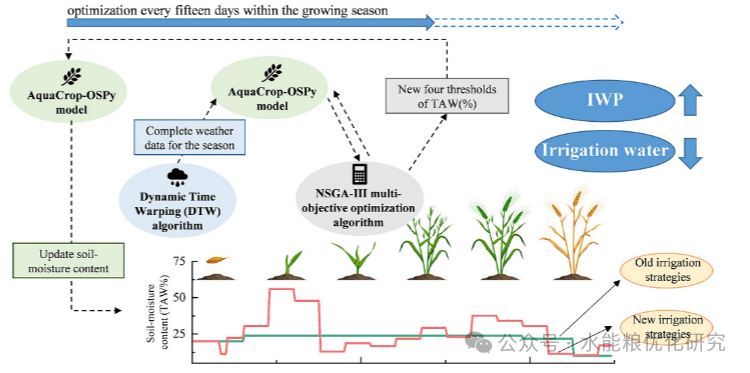
This study developed an IMASO framework based on the AquaCrop-OSPy model, utilizing real-time multi-objective optimization with soil moisture thresholds and perfect weather forecasts (simulating later perfect forecasts using historical meteorological data) to dynamically optimize irrigation strategies in real-time. A case study of irrigated wheat production in the Guanzhong Plain indicates an urgent need to improve water productivity due to continuous groundwater depletion. This study aims to demonstrate the benefits of complex optimization algorithms in adapting seasonal irrigation strategies and supporting real-time irrigation optimization. Therefore, the main objectives are: (1) to optimize irrigation strategies over the past 30 growing seasons, aiming to maximize the average benefits of all indicators and derive a baseline fixed irrigation strategy applicable to all growing seasons; (2) to establish the IMASO framework based on the AquaCrop-OSPy model, DTW algorithm, and NSGA-III algorithm, incorporating perfect weather forecasts into the IRRI irrigation decision-making process; (3) to assess the impact of short-term perfect weather forecasts on irrigation decisions under different irrigation scenarios, as well as the impact of medium-term perfect weather forecasts on irrigation strategy optimization, including the individual and collective effects on crop seasonal yield, irrigation water use, and other related indicators.
03. Materials and Methods
This study constructed an Integrated Meteorological Adaptive Simulation Optimization (IMASO) framework for real-time irrigation scheduling of winter wheat. Methodologically, it coupled the AquaCrop-OSPy crop model, NSGA-III multi-objective optimization algorithm, and Dynamic Time Warping (DTW) algorithm, introducing short-term (5-day) and medium-term (15-day) perfect weather forecasts. First, a fixed irrigation strategy was optimized based on 30 years of historical data as a baseline; subsequently, during a typical growing season, historical meteorological data was matched every 15 days using DTW to complete future meteorological sequences, combined with NSGA-III to optimize soil moisture thresholds in real-time, and the optimal solution was selected using the TOPSIS method. The study set different maximum single irrigation amounts (5–50 mm) and various scenarios to evaluate the framework’s effectiveness in water conservation, yield increase, and improvement of water productivity.
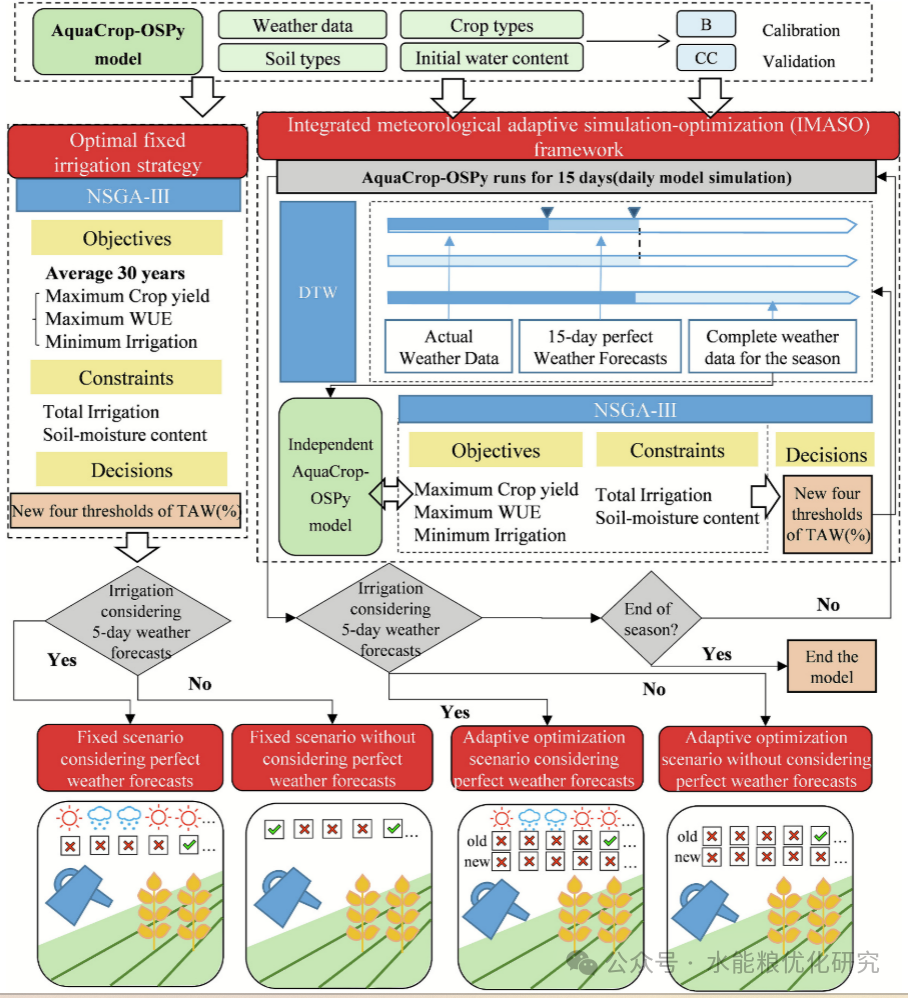
Figure 1. Comparison of fixed irrigation strategies and the Integrated Meteorological Adaptive Simulation Optimization (IMASO) framework.
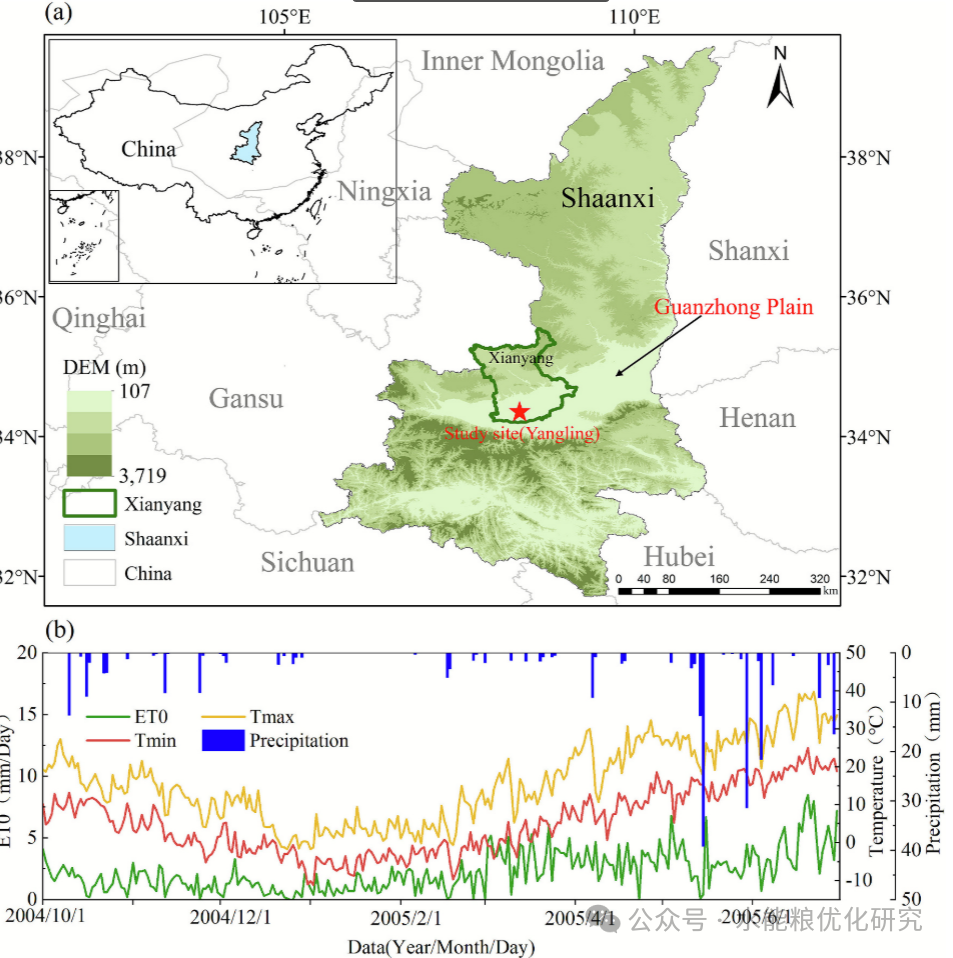
Figure 2. Map of the crop experimental research area.
04. Results Analysis
4.1. Incorporating Weather Forecasts Significantly Optimizes Irrigation Decisions and Effectively Saves Irrigation Water
The research results indicate that incorporating short-term perfect weather forecasts into irrigation decisions (first-level optimization) can delay or reduce irrigation events. During a typical growing season, compared to fixed irrigation strategies, considering short-term weather forecasts reduced irrigation by 3 times, 1 time, and 1 time under irrigation quotas of 5mm, 15mm, and 25mm, respectively. This is because the system can predict future rainfall, thus avoiding unnecessary irrigation before rain. This forecast-based real-time adjustment directly reduces the total irrigation water use throughout the growing season without sacrificing crop yield, highlighting the critical value of meteorological information in enhancing irrigation precision.
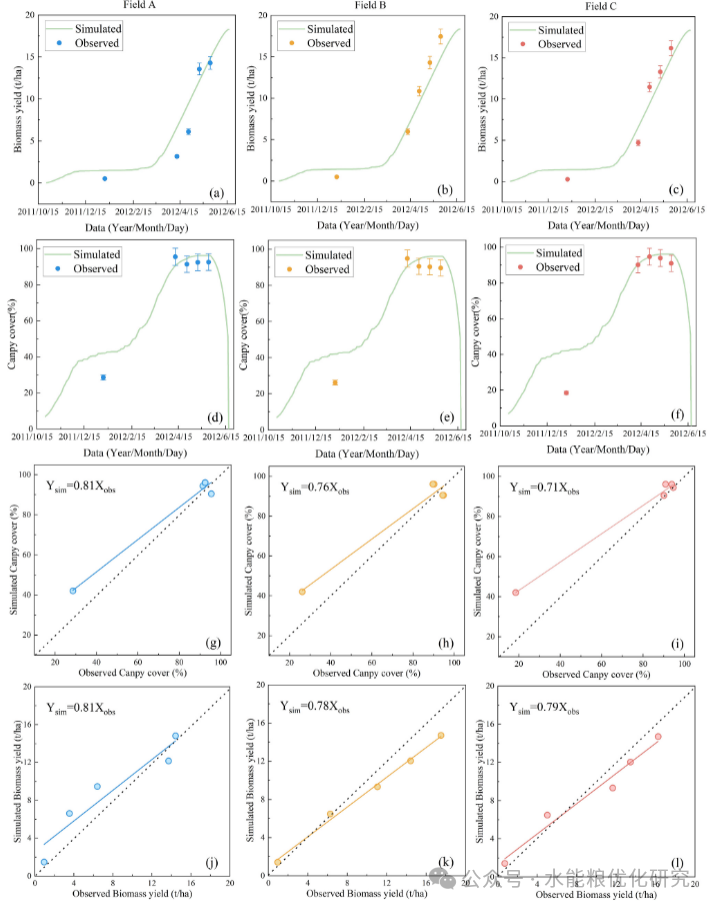
Figure 3. Calibration and validation results of the AquaCrop-OSPy model based on canopy cover (CC) and above-ground biomass (B) during the 2011 growing season: (A), (D), (G), and (J) show simulated and observed values in experimental area A; (B), (E), (H), and (K) show simulated and observed values in experimental area B; (C), (F), (I), and (L) show simulated and observed values in experimental area C. The legend of the linear regression equation is shown in the upper left corner of (g-L).
4.2. The Meteorological Adaptive Optimization Framework (IMASO) Significantly Enhances Irrigation Water Productivity
After applying the complete IMASO framework (which includes both levels of optimization), irrigation water productivity was significantly improved. Under different maximum single irrigation amount scenarios (15mm, 25mm, 50mm), the improvement rate of IWP exceeded 50%, with the highest improvement rate reaching 109.1% under the 15mm scenario. This indicates that by dynamically adjusting soil moisture thresholds to adapt to real-time weather and crop growth conditions, the system can finely balance the relationship between yield and water consumption, achieving a significant reduction in irrigation water use while maintaining yield, providing strong technical support for the efficient use of agricultural water resources in core water-scarce areas.
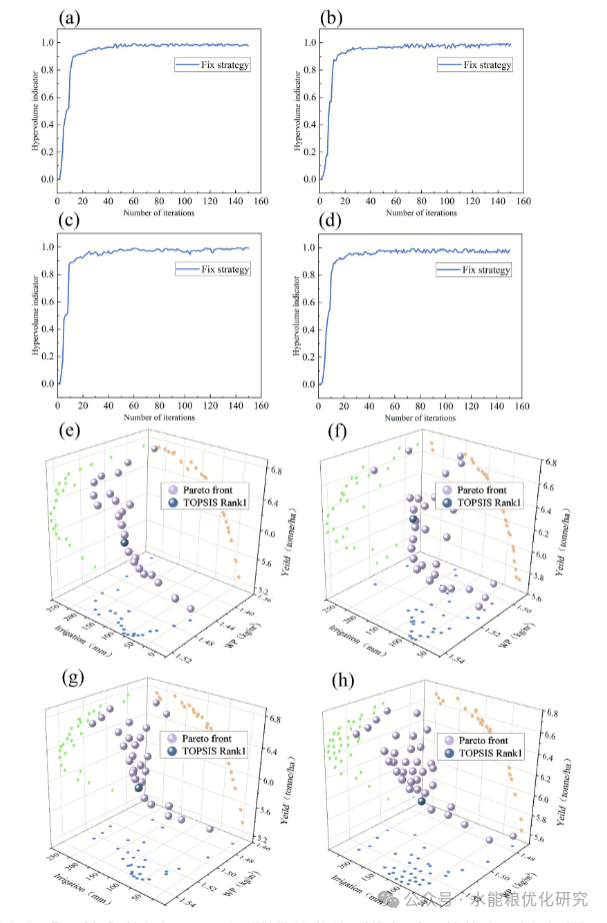
Figure 4. Optimization effects of fixed irrigation strategies using NSGA-III: (A), (B), (C), and (D) show multi-objective optimization HVI curves under maximum single irrigation amount scenarios of 5 mm, 15 mm, 25 mm, and 50 mm during the 2004-05 growing season; (E), (F), (G), and (H) depict multi-objective optimization Pareto curves under the same maximum single irrigation amount scenarios during the 2004-05 growing season.
4.3. Multi-Objective Optimization Provides Diverse Strategies to Meet Different Decision-Maker Needs
The study obtained a Pareto front characterizing the trade-offs between yield, irrigation water use, and water productivity through the NSGA-III algorithm. In addition to the comprehensive optimal solution based on TOPSIS, specialized plans biased towards maximizing yield, minimizing irrigation water use, and maximizing water productivity were also selected. The results show that strategies prioritizing yield indeed achieved the highest yield, but also had the highest irrigation water use; while strategies aimed at water conservation had limited water-saving effects in some scenarios and even led to reduced yield. This demonstrates the flexibility of the IMASO framework, which can provide diverse, scientifically tailored irrigation strategy options for decision-makers with different focuses (such as farmers and water resource managers).
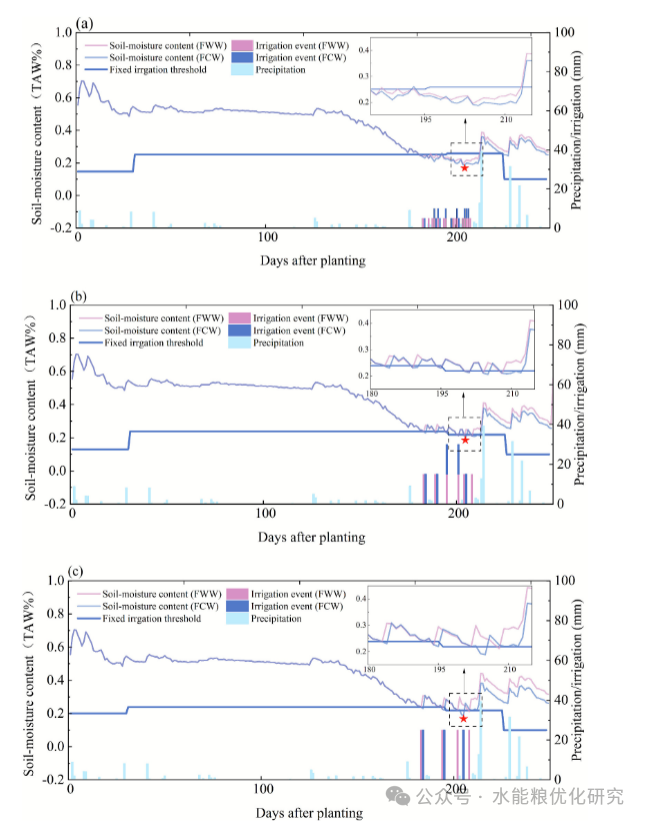
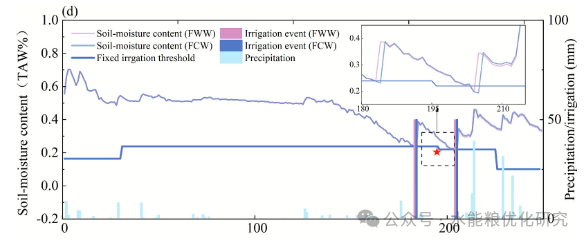
Figure 5. Impact of perfect weather forecasts on irrigation events during the 2004-05 growing season: (A) each irrigation event 5 mm; (B) each irrigation event 15 mm; (C) each irrigation event 25 mm; (D) each irrigation event 50 mm. Irrigation is triggered when soil moisture falls below the irrigation threshold.
4.4. Optimization Effects are Influenced by Irrigation Technical Parameters, and the IMASO Framework Demonstrates Wide Adaptability
The study found that the technical parameter of maximum single irrigation amount significantly affects optimization outcomes. Under smaller irrigation quotas (such as 5mm), the overall improvement brought by optimization is relatively limited, possibly due to frequent irrigation and small adjustment space. However, under larger quotas (such as 50mm), the effects of single-level optimization are not obvious, but the dual-level optimization of the IMASO framework can overcome this limitation, achieving a significant improvement in IWP exceeding 84%. This indicates that the IMASO framework has good adaptability to different irrigation methods (such as drip irrigation and flood irrigation), effectively achieving the goals of water conservation and yield increase based on the characteristics and constraints of different irrigation technologies.
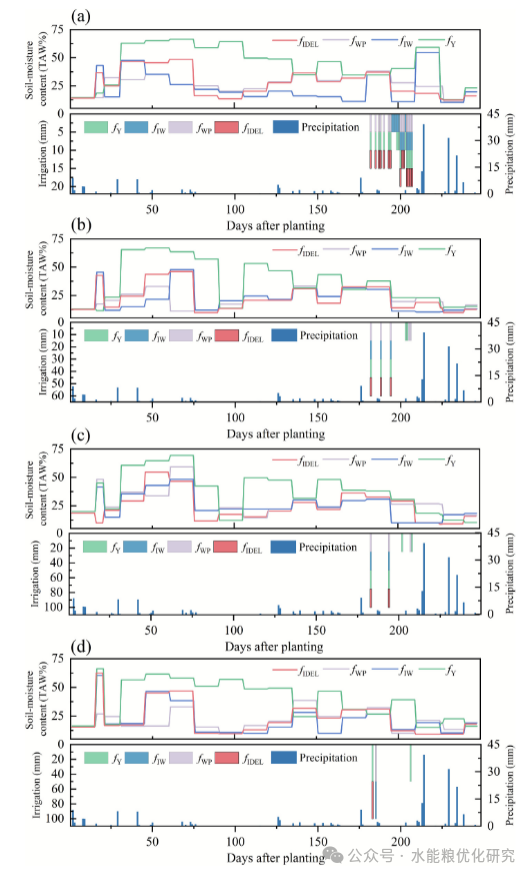
Figure 6. Soil moisture irrigation thresholds and irrigation events during the 2004-05 growing season: (A) each irrigation 5 mm; (B) each irrigation 15 mm; (C) each irrigation 25 mm; (D) each irrigation 50 mm. Irrigation is triggered when soil moisture falls below the irrigation threshold.
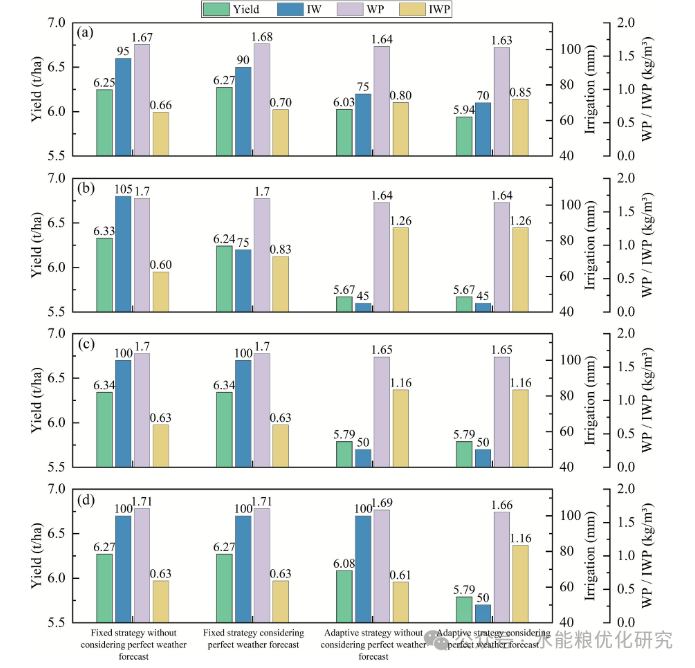
Figure 7. Results of yield, irrigation water use (IW), water productivity (WP), and irrigation water productivity (IWP) under three irrigation schemes: (A) each irrigation 5 mm; (B) each irrigation 15 mm; (C) each irrigation 25 mm; (D) each irrigation 50 mm.
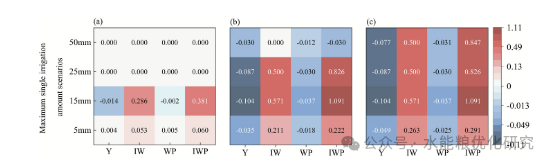
Figure 8. Improvement rates of various indicators compared to the baseline scenario under four maximum single irrigation amount schemes: (A) comparison of FCW and FWW schemes; (B) comparison of AWW scheme and FWW scheme; (C) comparison of ACW scheme and FWW scheme.
05. Conclusion
The IMASO framework proposed in this study, by coupling the AquaCrop-OSPy model, DTW algorithm, and NSGA-III optimizer, and incorporating short- and medium-term perfect weather forecasts, achieved real-time dynamic optimization of irrigation strategies during the winter wheat growing season. The results indicate that this framework can significantly reduce irrigation water use (by 26%–57%) while maintaining crop yield, with irrigation water productivity improving by 0.19–0.66 kg/m³. By dynamically adjusting soil moisture thresholds and responding to weather changes, IMASO effectively enhances the precision and adaptability of irrigation, providing a reliable technical pathway for achieving climate-smart agriculture and sustainable water resource management in water-scarce regions.