Embedded systems are widely used across numerous industries, facilitating transformation in areas ranging from consumer technology to medical devices and the automotive industry. Today, these systems perform complex functions that impact safety, operational efficiency, and user confidence.
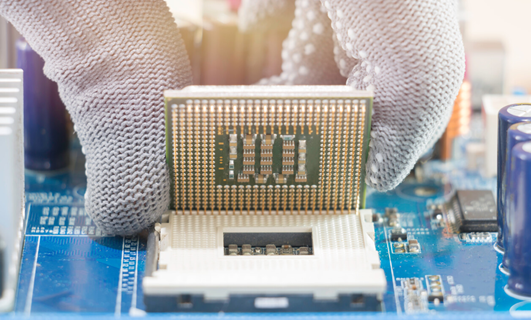
While enhanced functionality has brought breakthrough advancements to many industries, it has also expanded the attack surface, making embedded AI devices more susceptible to cyberattacks. Cybercriminals target these devices to steal intellectual property or implant malicious code to manipulate system operations.
Secure boot for embedded systems provides a foundational guarantee for the underlying firmware and software. If there are flaws in key management, it poses a significant threat to the secure boot process—attackers may bypass the secure boot mechanism to implant unauthorized firmware. The use of static long-term keys creates predictable vulnerabilities, the dangers of which extend beyond data breaches and may jeopardize device security and reliability.
Manufacturers must assess the specific risks posed by inadequate key management and develop effective strategies to mitigate these vulnerabilities.
The Risks of Weak Key Management in Secure Boot
Boot key management is a critical step in creating cryptographic keys to ensure the authenticity and integrity of software during the system boot process, serving to prevent system compromise before startup. If implemented correctly, this mechanism becomes the first line of defense against various attacks. Once the keys are compromised or leaked, attackers can bypass the secure boot mechanism to implant malicious firmware.
Malware specifically designed to infect system bootloaders or boot processes, known as “bootkits,” can pose a lethal threat to systems. By compromising early system components, such malware can run with the highest privileges and evade traditional security protections. Google’s Threat Intelligence Group has noted that bootkits are becoming an unpredictable threat in current security trends.Recent reports have disclosed that millions of Windows 11 users are at risk due to secure boot vulnerabilities, allowing malicious actors to completely disable the secure boot feature.
If the cryptographic key management that maintains the secure boot process is improperly managed, cybercriminals can exploit vulnerabilities to bypass protective mechanisms. Static long-term keys provide attackers with predictable targets, significantly increasing the risk of system-level security vulnerabilities. Static keys are generated only once but are reused throughout the product lifecycle, providing cybercriminals with a predictable attack path.
In security-critical environments, tampering with embedded systems can lead to the complete paralysis of critical infrastructure organizations. The U.S. Cybersecurity and Infrastructure Security Agency recommends that critical infrastructure organizations audit early configurations that may be loaded during system boot to ensure that vulnerable code is not loaded during the boot phase. Such audits help identify weaknesses in key configurations or firmware verification processes that may jeopardize device integrity.
Best Practices for Embedded System Manufacturers
The primary defense measure is to implement a hardware root of trust. Depending on the architecture, this can be achieved through secure elements or Trusted Platform Modules (TPM) specific to certain platforms. TPM can be used for key management and secure boot in x86 architecture systems, while other system-on-chip (SoC) solutions, such as those from NVIDIA, may come with integrated secure boot infrastructure.
The key challenge is preventing key leakage. Cryptographic keys may be exposed to unauthorized users due to software flaws, poor key management, or even physical access. Manufacturers can prevent key leakage through Hardware Security Modules (HSM). Such HSM devices are designed with tamper-resistant features and enhanced protection capabilities to secure the cryptographic process, safely generating, storing, and managing keys throughout their lifecycle.
Security configurations during the manufacturing process are another vulnerable link. If keys are tampered with at this stage, attackers may gain access before the device is deployed. Manufacturers should implement secure key injection, authenticate supply chain channels, and access control processes to ensure that unauthorized individuals cannot obtain keys. This measure is particularly critical when the supply chain involves multiple vendors.
To minimize exposure risks, manufacturers should adopt secure lifecycle key rotation strategies to update cryptographic keys. Although hardware limitations prevent frequent rotation of secure boot keys, they should be updated promptly when reasonable opportunities arise.
Manufacturers can deploy automated systems to rotate keys at set intervals and use key derivation functions to generate new keys, avoiding exposing base keys to external environments. This can reduce the risks associated with long-term key usage.
Even with comprehensive security measures in place, systems may still be compromised, and in some cases, key revocation mechanisms need to be enabled. Some SoC’s trusted boot keys are fused during manufacturing and cannot be replaced except through physical access. However, manufacturers can design devices that support key revocation lists (KRL), which will act as a blocklist when key trust is lost. Another solution is to build secondary verification chains that disable compromised keys without requiring hardware modification.
Building Secure Embedded Systems
The secure boot process and robust key management form the foundation of a trusted supply chain. Manufacturers that prioritize security measures can enhance product reliability, safety, and user trust. As cybercriminal tactics become increasingly sophisticated, malicious actors are attempting to manipulate or infiltrate systems through various means, and adhering to strict security practices will create a significant competitive advantage.
Regulatory pressure may continue to increase, making robust key management not only a best practice but a compliance necessity. Manufacturers investing in secure boot processes can protect devices and ensure that products meet all regulatory requirements. (Translated from Embedded Computing Design)
Author: Pete Popov CEO of Konsulko Group
Siemens and NEC Join Forces to Accelerate Smart Factory Innovation
Siemens and NEC are driving the digital transformation of manufacturing through automated robot teaching.
Siemens Digital Industries Software recently signed a technology partnership agreement with NEC to expand global solutions in the field of robot 3D simulation. The two parties will jointly develop an automated robot teaching solution that combines NEC’s “Robot Task Planning” digital twin service with Siemens’ Tecnomatix® product portfolio’s Process Simulate software, helping manufacturing enterprises optimize on-site operations, improve production efficiency, and transition to data-driven management models.
Kunihiko Horita, Vice President of Siemens Digital Industries Software and General Manager for Japan, stated: “We are pleased to help NEC solidify its leading position in robotics through the power of digital twins and artificial intelligence. By integrating NEC’s leading robot task planning solution with Siemens’ Process Simulate software, we can significantly accelerate robot teaching speed, shorten equipment commissioning time, and unlock more production potential. This collaboration exemplifies Siemens’ commitment to digital transformation and intelligent automation—we are helping customers and partners, including NEC , provide smarter, more efficient, and more resilient manufacturing solutions to global customers.”
Kosuke Hidashima, General Manager of NEC’s Technical Services Software Division, stated: “Through this collaboration, we will integrate NEC’s ‘Robot Task Planning’ digital twin technology, which optimizes on-site operations through AI-driven digitalization, analytics, and simulation, with Siemens’ Process Simulate software, injecting innovative vitality into modern manufacturing. We will continue to work with Siemens to create value and help customers enhance production efficiency and market competitiveness.”
As an important part of the NEC BluStellar program, NEC’s “Robot Task Planning” software is equipped with proprietary algorithms that optimize multi-robot collaborative operations and automatically generate robot motion planning through AI.
In the past, multi-robot motion planning had to be manually completed by skilled engineers through a “teaching” process. This process is extremely complex, requiring significant costs to design robot motion planning for a single product in a manufacturing site. This has also led to frequent delays in the production phase for many production lines using multiple robots.
Under this collaboration framework, NEC’s “Robot Task Planning” function has been seamlessly integrated into the user interface of Siemens’ Process Simulate software. Users can generate robot motion planning with a single click, significantly reducing the workload of the teaching phase. This function complements the existing automated path planning and robot programming tools in Process Simulate software, not only shortening the commissioning cycle of production lines, optimizing production rhythm, and achieving data-driven management but also helping to share and pass on operational knowledge and skills that previously relied on individual experience.
Disclaimer
This article is an observational or commentary piece published by a third-party media author, and all text and image copyrights belong to the author. It is shared for use only; if there are copyright issues, please contact for resolution or deletion.
About Us
The “Industrial AI” website (www.aim-mag.com) and public account (ACT Industrial AI) are produced by Yashi International Business News, focusing on the technical applications of AI in the industrial field, aiming to provide Chinese process and manufacturing engineers, managers, and executives with timely access to the latest news and technical information regarding the integration of artificial intelligence into manufacturing. Industrial AI is also committed to building an industry-leading comprehensive media and value platform, providing practical communication opportunities for the implementation of AI in the industrial field.