✅ Author Profile: A Matlab simulation developer passionate about research, skilled in data processing, modeling simulation, program design, obtaining complete code, reproducing papers, and scientific simulation.
🍎 Previous reviews, follow the personal homepage: Matlab Research Studio
🍊 Personal motto: Investigate things to gain knowledge, complete Matlab code and simulation consultation content via private message.
🔥 Content Introduction
1. Core Concepts and Technical Advantages of Palm Texture Recognition
Palm texture recognition is an important branch of biometric recognition, representing a typical application of image recognition technology in biometric feature extraction and matching. It captures texture images of the human palm surface (including the main lines of the palm, wrinkles, fine lines, and sweat pore distribution), and utilizes image processing and pattern recognition algorithms to extract, analyze, and match these unique texture information, thereby achieving precise identification of individual identities.
Compared to mainstream biometric technologies such as fingerprint recognition and facial recognition, palm texture recognition has significant advantages:
- Richness of Features: Palm textures contain multiple features such as main lines (like heart line, brain line, life line), secondary wrinkles, fine lines, and sweat pores. The differences in texture direction, density, and intersection distribution among different individuals are vast, allowing for a much greater number of extractable feature dimensions compared to fingerprints (which rely solely on minutiae features), resulting in higher recognition accuracy.
- Convenience of Collection: The palm area is much larger than a fingerprint, and strict alignment is not required during collection. Users only need to naturally open their palms and place them on the collection device to complete image acquisition, making it easy to operate, especially suitable for the elderly, children, or individuals with severely worn fingerprints (such as manual laborers).
- Strong Anti-Interference Ability: Palm textures are located deeper on the palm surface, less affected by external environments (such as dryness, humidity, or slight stains), and are not easily altered by daily wear, making them more stable compared to facial recognition, which is easily influenced by makeup and lighting.
- Privacy and Security: Palm textures are unique biometric features that cannot be easily impersonated through copying or forgery (such as fake fingerprint films), and the collection process does not require obtaining sensitive appearance information like the user’s face, making it more friendly to privacy protection.
2. Key Technical Foundations of Palm Texture Recognition
The implementation of palm texture recognition relies on the integration of multiple disciplines, with core technologies including image acquisition technology, preprocessing technology, feature extraction technology, and matching algorithms. Each link is closely connected and collectively determines recognition performance.
(1) Image Acquisition Technology
Image acquisition is the foundation of palm texture recognition, and its quality directly affects the accuracy of subsequent feature extraction and matching. Currently, mainstream acquisition technologies are divided into two categories:
- Optical Acquisition Technology: Captures images of the palm surface using high-resolution cameras (usually with a resolution ≥ 500 dpi) combined with specialized light sources (such as near-infrared light, polarized light). Near-infrared light can penetrate the stratum corneum of the palm surface, clearly presenting deep textures and sweat pore distributions, avoiding obstructions from surface stains and reflections; polarized light can suppress the diffuse reflection on the palm skin surface, enhancing texture contrast. This technology is mature and stable, making it the mainstream choice for commercial devices (such as access control and attendance machines).
- Capacitive Acquisition Technology: Utilizes the capacitive differences between the palm skin and the acquisition panel to create images. The raised parts of the palm texture are closer to the panel, resulting in a higher capacitance value; the recessed parts are farther away, resulting in a lower capacitance value. By detecting the differences in capacitance distribution, a grayscale image of the palm texture is generated. This technology has a fast acquisition speed (≤ 0.5 seconds) and does not require external light sources, making it suitable for integration into embedded devices (such as smartphones and tablets), but it has weaker adaptability to wet palms.
(2) Image Preprocessing Technology
Due to the susceptibility of the palm’s placement angle, uneven lighting, and noise (such as device sensor noise and palm stains) during acquisition, the original palm image needs to undergo preprocessing optimization to lay the foundation for subsequent feature extraction. The core preprocessing steps include:
- Palm Region Segmentation: Separating the palm area from the acquired raw image, removing background interference (such as the acquisition panel and desktop). Common methods include:
- Skin Color Detection: Utilizing the palm’s skin color (which has a specific range in RGB or HSV color space) and the color difference from the background, extracting the palm contour through threshold segmentation (such as Otsu’s adaptive threshold);
- Contour Detection: Combining edge detection algorithms (such as the Canny algorithm) to extract closed contours in the image, and then filtering out the true palm area based on geometric features of the palm (such as aspect ratio, contour smoothness), excluding abnormal situations like fingers being extended separately or parts of the palm being obscured.
- Geometric Correction: Since users may place their palms at an angle, rotate, or scale, geometric transformations are needed to correct the palm posture, standardizing it to a standard posture (such as palm facing up, fingertips pointing up). Specific steps include:
- Key Point Localization: Identifying the key feature points of the palm (such as fingertips, palm base, and finger gaps), calculating the tilt angle and scaling ratio of the palm based on the coordinates of these key points;
- ** Affine Transformation **: Based on the calculated parameters, performing rotation, scaling, and translation on the segmented palm area to ensure that the palm images of different users maintain consistency in geometric size and posture.
- Image Enhancement and Denoising:
- Denoising Processing: Using Gaussian filtering (to suppress high-frequency noise), median filtering (to remove salt-and-pepper noise, such as small stains on the palm surface), etc., to smooth image noise while preserving texture details;
- Contrast Enhancement: Enhancing the brightness contrast of palm textures through histogram equalization (global enhancement) or adaptive histogram equalization (CLAHE, local enhancement), making fine lines (such as secondary wrinkles) more visible.
3. Core Process of Palm Texture Recognition
The complete process of palm texture recognition is divided into the “Registration Phase” and the “Recognition Phase”. Both phases share the preprocessing and feature extraction logic, with the core difference being that the registration phase requires storing user feature templates, while the recognition phase involves feature matching and identity determination.
(1) Registration Phase: Establishing User Feature Templates
The registration phase is the process of creating a unique biometric feature template for the user, as follows:
- Multi-frame Image Acquisition: Acquiring 3-5 frames of palm images from the user (to avoid quality issues caused by random factors in a single frame), selecting the one with the best quality (such as clear texture, unobstructed) as the reference image.
- Preprocessing Optimization: Executing the preprocessing flow of “Region Segmentation → Geometric Correction → Enhancement and Denoising” on the reference image to obtain a standardized palm texture image.
- Feature Extraction: Extracting unique and stable texture features from the standardized image, with common feature extraction methods including:
- Texture Feature Extraction:
- Gabor Filtering: Gabor filters have multi-scale and multi-directional properties, effectively capturing the direction (such as the main line direction) and frequency (such as line density) features of palm textures. By convolving the texture image with Gabor kernels set at different scales (such as 3-5 scales) and directions (such as 8 directions, spaced at 22.5°), multi-channel feature maps are generated, which are then reduced in dimension (such as through Principal Component Analysis PCA) to obtain low-dimensional texture feature vectors.
- LBP (Local Binary Pattern): Dividing the palm texture image into multiple local blocks of 8×8 or 16×16, for each block, using the center pixel as a threshold, classifying surrounding pixels as “greater than the threshold (1)” or “less than the threshold (0)”, generating 8-bit or 16-bit binary codes (i.e., LBP codes), and counting the histogram of all blocks’ LBP codes as the local texture features of the palm. This method has low computational complexity and strong adaptability to lighting changes.
- Sweat Pore Feature Extraction: Sweat pores are important microscopic features of palm textures, with each individual’s sweat pore distribution (location, density, shape) being unique. By using high-resolution images (≥1000 dpi), employing threshold segmentation (such as grayscale-based binarization) and morphological operations (such as dilation and erosion), the central coordinates of sweat pores are located, and a spatial distribution network of sweat pores (such as distances and angles between adjacent sweat pores) is constructed as supplementary microscopic features.
- Feature Template Storage: Merging the extracted texture features with sweat pore features to generate the user’s “palm feature template”, associating it with user identity information (such as name, ID number), and securely storing it in a database (such as local device storage or cloud encrypted database) to prevent feature template leakage.
(2) Recognition Phase: Identity Matching and Determination
The recognition phase is the process of confirming user identity by matching the palm image captured in real-time with the feature templates in the database, as follows:
- Real-time Image Acquisition and Preprocessing: Real-time acquisition of the user’s palm image, repeating the preprocessing flow from the registration phase to obtain a standardized palm texture image and extract the corresponding real-time feature vector.
- Feature Matching: Calculating the similarity between the real-time feature vector and all user feature templates in the database, with common matching algorithms including:
- Euclidean Distance Matching: Suitable for low-dimensional feature vectors (such as features reduced by Gabor filtering), measuring the matching degree by calculating the Euclidean distance between two feature vectors (the smaller the distance, the higher the similarity);
- Cosine Similarity Matching: Suitable for high-dimensional feature vectors (such as LBP histogram features), measuring similarity by calculating the cosine value of the angle between two vectors (the closer the cosine value is to 1, the higher the similarity), reducing the impact of dimensionality disaster on matching;
- Spatial Matching Based on Sweat Pores: For the real-time extracted sweat pore coordinates and the template’s sweat pore coordinates, using the “Iterative Closest Point (ICP)” algorithm to find the optimal correspondence between the two sets of sweat pores. If the matching ratio of sweat pores is ≥70%, it is determined as a preliminary match.
- Identity Determination: Setting a similarity threshold (such as Euclidean distance threshold ≤5, cosine similarity threshold ≥0.9), if the similarity of the real-time feature exceeds the threshold with the highest similarity in the database, it is determined as “recognition successful”, outputting the corresponding user identity information; if all templates’ similarities are below the threshold, or if there are multiple templates with similarities close to the threshold (such as a difference ≤0.05), it is determined as “recognition failed”, prompting the user to re-acquire the palm image.
4. Performance Optimization Strategies for Palm Texture Recognition
In practical applications, palm texture recognition may face issues such as slow recognition speed and low accuracy in complex scenarios (such as palm deformities or severe stains), requiring technical optimizations to enhance performance.
(1) Recognition Speed Optimization
- Feature Dimensionality Reduction Optimization: Using dimensionality reduction algorithms such as Principal Component Analysis (PCA) and Linear Discriminant Analysis (LDA) to reduce high-dimensional feature vectors (such as original LBP histogram feature dimensions ≥1000) to low dimensions (such as 50-100 dimensions), reducing the computational load during the matching process and improving recognition speed by 3-5 times.
- Hierarchical Matching Strategy: Dividing the matching process into two steps: “Coarse Matching → Fine Matching”: In the coarse matching phase, only low-dimensional global features (such as the direction and length of the palm’s main lines) are used to quickly filter the database, excluding over 90% of non-matching templates; in the fine matching phase, high-dimensional local features (such as sweat pore distribution and fine lines) are used for precise matching with the few filtered templates, significantly shortening the overall matching time, suitable for large-scale databases with user counts ≥1000.
- Hardware Acceleration: Integrating GPU or FPGA chips in embedded devices (such as access control terminals) to accelerate feature extraction (such as convolution operations of Gabor filtering) and matching processes, reducing single-user recognition time from 1-2 seconds to 0.3-0.5 seconds, meeting real-time interaction requirements.
(2) Complex Scenario Adaptability Optimization
- Multi-modal Fusion Recognition: For scenarios where palm deformities (such as multiple fingers or missing fingers) or severe stains lead to texture loss, combining finger vein recognition technology (which captures the vascular distribution features of finger veins using near-infrared light) for multi-modal fusion. When palm texture features are insufficient, vein features can supplement matching, increasing recognition accuracy in complex scenarios from 85% to over 98%.
- Adaptive Feature Weight Adjustment: Dynamically adjusting feature weights based on the quality of real-time images: if the palm texture is clear (such as no stains, uniform lighting), the weight of texture features is increased (accounting for 70%); if the texture is blurred but sweat pores are clear, the weight of sweat pore features is increased (accounting for 60%); if both texture and sweat pores are interfered with, backup features (such as palm geometric dimensions like palm width and length) are used to assist matching, ensuring recognition stability in different scenarios.
- Sample Augmentation Training: During the algorithm model training phase, generating a large number of diverse palm texture samples through data augmentation techniques (such as rotation, scaling, adding noise, simulating stains) to train the feature extraction and matching model’s anti-interference ability. For example, after training with simulated images of palms with oil stains, the model’s recognition accuracy for oily palms can improve by 15%-20%.
5. Typical Application Scenarios of Palm Texture Recognition
As the technology matures, palm texture recognition has transitioned from the laboratory to commercial use, widely applied in identity verification, security control, and convenient services, with specific scenarios including:
(1) Public Safety and Access Control
- Park / Building Access Control: Integrating palm texture recognition devices into access control systems in corporate parks, office buildings, and residential communities, allowing users to open doors without carrying access cards, simply by verifying their palms. Compared to traditional access cards, this avoids risks of card loss and impersonation, and supports simultaneous registration for multiple users (such as corporate employees and visitors), with administrators able to manage user permissions in real-time through the backend (such as granting temporary access rights for visitors for 24 hours).
- Airport / Station Security Checks: In airport security check channels, quickly verifying passenger identities through palm texture recognition linked to ID information, replacing traditional manual checks, reducing security check times (average check time per person reduced from 30 seconds to 10 seconds), while preventing impersonation situations where the ID does not match the individual, enhancing security check efficiency and safety.
(2) Financial and Government Services
- Bank Counter Services: When handling sensitive transactions such as account opening, transfers, and loss reporting at bank counters, users verify their identities through palm texture recognition, replacing traditional password or ID verification, avoiding risks of password leakage and ID forgery. For example, a state-owned bank launched the “Palm Print Card” service in 2024, allowing users to complete savings account openings without carrying ID, reducing transaction times by 50%.
- Self-Service in Government Halls: Integrating palm texture recognition into self-service terminals in government service halls (such as social security inquiries, provident fund withdrawal terminals), allowing users to directly access personal government information after palm verification, without needing to input ID numbers or social security card numbers, making operations more convenient while ensuring that personal information is only accessible by the individual, protecting government data security.
(3) Consumption and Life Services
- Unmanned Supermarket Payments: Setting up palm texture recognition devices at the checkout counters of unmanned supermarkets, allowing users to bind payment accounts during registration, and completing automatic deductions after shopping through palm verification, eliminating the need to carry phones or cash, achieving “palm payment” and enhancing shopping checkout efficiency (single user checkout time ≤2 seconds).
- Medical Service Scenarios: In hospitals, during registration, medication collection, and inpatient registration, quickly confirming patient identities through palm texture recognition, avoiding delays in processes due to patients forgetting their medical cards or IDs, while ensuring that medical records, examination reports, and other medical data are accurately matched with patients, preventing medical information confusion. For example, a tertiary hospital launched the “Palm Print Medical” system in 2025, reducing the average registration time for patients from 15 minutes to 3 minutes.
6. Development Trends of Palm Texture Recognition
With the advancement of artificial intelligence and image processing technologies, palm texture recognition will develop towards being more intelligent, convenient, and secure, with core trends including:
(1) Lightweight and Mobile Integration
Currently, palm texture recognition devices are mostly dedicated terminals (such as access control machines), and will develop towards lightweight solutions in the future, achieving integration into mobile devices such as smartphones and smartwatches through algorithm optimization (such as model compression and lightweight feature extraction). For example, using the rear camera of a smartphone (with a near-infrared fill light) to complete palm texture acquisition and recognition, allowing users to perform identity verification anytime and anywhere (such as unlocking phones or mobile payments) without needing to purchase dedicated devices.
(2) End-to-End Recognition Driven by Deep Learning
Traditional palm texture recognition processes for preprocessing, feature extraction, and matching are independent, easily affected by errors in any one link, impacting overall performance. In the future, end-to-end recognition models (such as those based on Convolutional Neural Networks CNN or Transformers) will be constructed, directly inputting raw palm images and outputting identity matching results. The model can automatically learn optimal feature representations through training on massive samples, eliminating the need for manually designed feature extraction algorithms, while also possessing stronger generalization capabilities (such as adapting to palm textures of different skin colors and ages), with recognition accuracy expected to exceed 99.5%.
(3) Privacy Protection Combined with Federated Learning
With the strict implementation of data privacy regulations (such as the Personal Information Protection Law), palm textures, as sensitive biometric features, must avoid the risks of leakage caused by centralized storage. In the future, federated learning technology will be adopted, distributing model training across multiple recognition devices (such as access control machines from different companies): each device will only upload local model parameters without transmitting users’ original palm texture data, optimizing the global model through parameter aggregation, ensuring model performance while achieving “data remains stationary while the model moves”, fundamentally protecting user privacy.
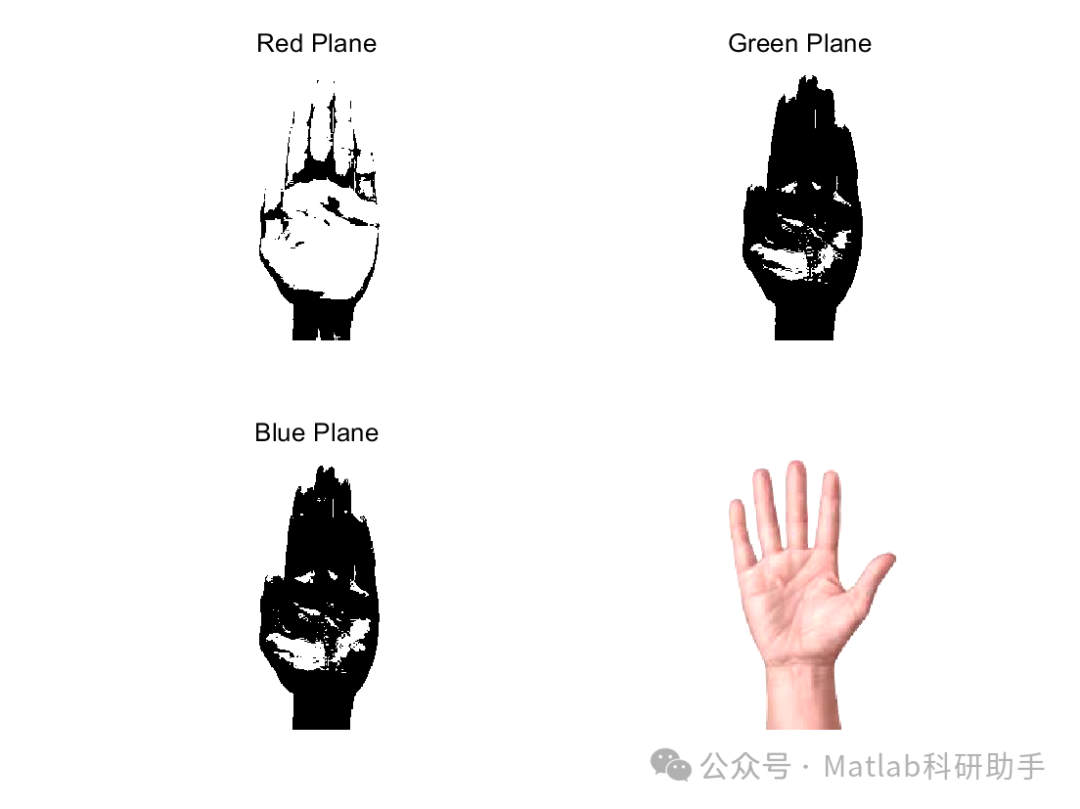
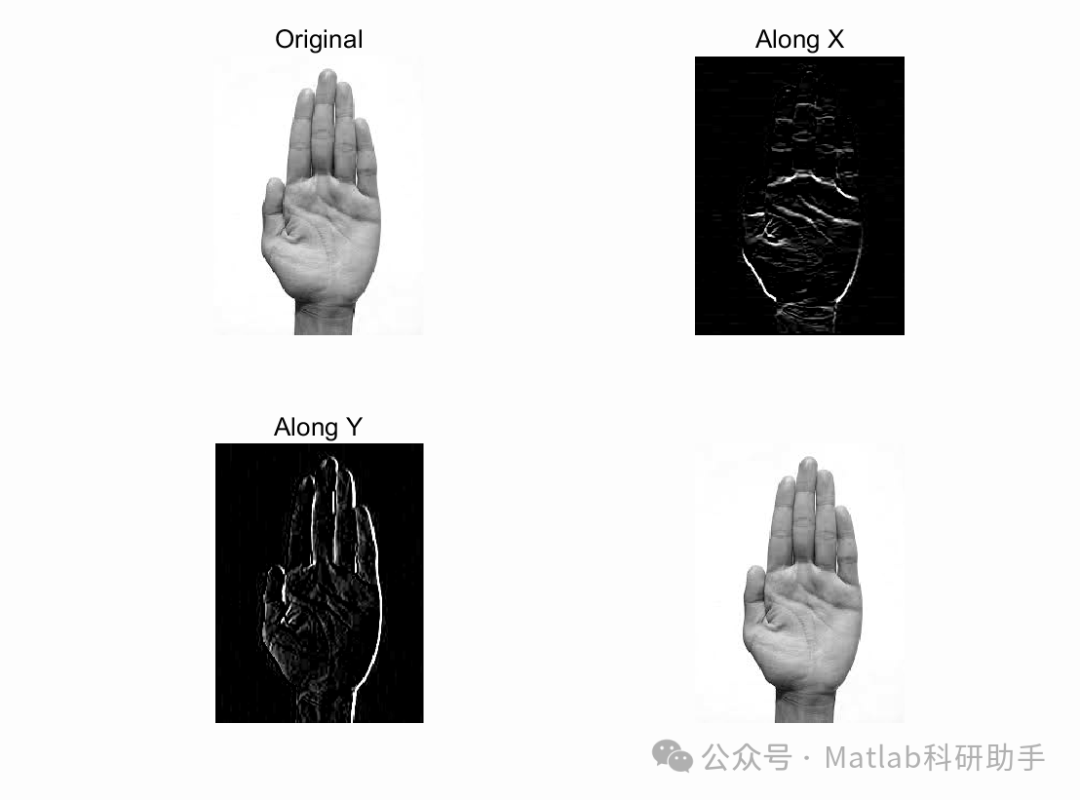
⛳️ Operation Results
🔗 References
[1] Ai Shiyi, Wang Yuecun, Liu Di. Online Detection of Foreign Fibers in Raw Cotton Based on MATLAB Image Recognition Technology [J]. Journal of Tianjin University of Technology, 2004, 23(2):4. DOI:10.3969/j.issn.1671-024X.2004.02.021.
[2] Xia Yinhui. Research on Measurement and Recognition Methods of Facial Skin Texture [J]. Yanshan University [2025-11-23].
📣 Some Code
🎈 Some theoretical references from online literature, please contact the author for deletion if there is any infringement
👇 Follow me to receive a wealth of Matlab e-books and mathematical modeling materials
🏆 The team specializes in guiding customized MATLAB simulations in various research fields, helping to realize research dreams:
🌈 Various intelligent optimization algorithm improvements and applications
Production scheduling, economic scheduling, assembly line scheduling, charging optimization, workshop scheduling, departure optimization, reservoir scheduling, 3D packing, logistics site selection, cargo location optimization, bus scheduling optimization, charging pile layout optimization, workshop layout optimization, container ship loading optimization, pump combination optimization, medical resource allocation optimization, facility layout optimization, visual domain base station and drone site selection optimization, knapsack problem, wind farm layout, time slot allocation optimization, optimal distribution of distributed generation units, multi-stage pipeline maintenance, factory-center-demand point three-level site selection problem, emergency life material distribution center site selection, base station site selection, road lamp post arrangement, hub node deployment, transmission line typhoon monitoring devices, container scheduling, unit optimization, investment optimization portfolio, cloud server combination optimization, antenna linear array distribution optimization, CVRP problem, VRPPD problem, multi-center VRP problem, multi-layer network VRP problem, multi-center multi-vehicle VRP problem, dynamic VRP problem, two-layer vehicle routing planning (2E-VRP), electric vehicle routing planning (EVRP), hybrid vehicle routing planning, mixed flow workshop problem, order splitting scheduling problem, bus scheduling optimization problem, flight shuttle vehicle scheduling problem, site selection path planning problem, port scheduling, port shore bridge scheduling, parking space allocation, airport flight scheduling, leak source localization
🌈 Machine learning and deep learning time series, regression, classification, clustering, and dimensionality reduction
2.1 BP time series, regression prediction, and classification
2.2 ENS voice neural network time series, regression prediction, and classification
2.3 SVM/CNN-SVM/LSSVM/RVM support vector machine series time series, regression prediction, and classification
2.4 CNN|TCN|GCN convolutional neural network series time series, regression prediction, and classification
2.5 ELM/KELM/RELM/DELM extreme learning machine series time series, regression prediction, and classification
2.6 GRU/Bi-GRU/CNN-GRU/CNN-BiGRU gated neural network time series, regression prediction, and classification
2.7 Elman recurrent neural network time series, regression prediction, and classification
2.8 LSTM/BiLSTM/CNN-LSTM/CNN-BiLSTM long short-term memory neural network series time series, regression prediction, and classification
2.9 RBF radial basis function neural network time series, regression prediction, and classification
2.10 DBN deep belief network time series, regression prediction, and classification
2.11 FNN fuzzy neural network time series, regression prediction
2.12 RF random forest time series, regression prediction, and classification
2.13 BLS broad learning time series, regression prediction, and classification
2.14 PNN pulse neural network classification
2.15 Fuzzy wavelet neural network prediction and classification
2.16 Time series, regression prediction, and classification
2.17 Time series, regression prediction, and classification
2.18 XGBOOST ensemble learning time series, regression prediction, and classification
2.19 Transform various combinations time series, regression prediction, and classification
Covering wind power prediction, photovoltaic prediction, battery life prediction, radiation source identification, traffic flow prediction, load prediction, stock price prediction, PM2.5 concentration prediction, battery health status prediction, electricity consumption prediction, water body optical parameter inversion, NLOS signal identification, precise prediction of subway stops, transformer fault diagnosis
🌈 In image processing
Image recognition, image segmentation, image detection, image hiding, image registration, image stitching, image fusion, image enhancement, image compressed sensing
🌈 In path planning
Traveling salesman problem (TSP), vehicle routing problem (VRP, MVRP, CVRP, VRPTW, etc.), drone 3D path planning, drone collaboration, drone formation, robot path planning, grid map path planning, multimodal transport problems, electric vehicle routing planning (EVRP), two-layer vehicle routing planning (2E-VRP), hybrid vehicle routing planning, ship trajectory planning, full path planning, warehouse patrol
🌈 In drone applications
Drone path planning, drone control, drone formation, drone collaboration, drone task allocation, online optimization of drone safe communication trajectories, vehicle collaborative drone path planning
🌈 In communication
Sensor deployment optimization, communication protocol optimization, routing optimization, target localization optimization, Dv-Hop localization optimization, Leach protocol optimization, WSN coverage optimization, multicast optimization, RSSI localization optimization, underwater communication, communication upload and download allocation
🌈 In signal processing
Signal recognition, signal encryption, signal denoising, signal enhancement, radar signal processing, signal watermark embedding and extraction, electromyography signals, electroencephalography signals, signal timing optimization, electrocardiogram signals, DOA estimation, encoding and decoding, variational mode decomposition, pipeline leakage, filters, digital signal processing + transmission + analysis + denoising, digital signal modulation, bit error rate, signal estimation, DTMF, signal detection
🌈 In power systems
Microgrid optimization, reactive power optimization, distribution network reconstruction, energy storage configuration, orderly charging, MPPT optimization, household electricity
🌈 In cellular automata
Traffic flow, crowd evacuation, virus spread, crystal growth, metal corrosion
🌈 In radar
Kalman filter tracking, trajectory association, trajectory fusion, SOC estimation, array optimization, NLOS identification
🌈 In workshop scheduling
Zero-wait flow shop scheduling problem NWFSP, Permutation flow shop scheduling problem PFSP, Hybrid flow shop scheduling problem HFSP, zero idle flow shop scheduling problem NIFSP, distributed permutation flow shop scheduling problem DPFSP, blocking flow shop scheduling problem BFSP
👇