💥💥💞💞Welcome to this blog❤️❤️💥💥
🏆Author’s Advantages:🌞🌞🌞The blog content aims to be logically coherent and clear for the convenience of readers.
⛳️ Motto: Those who travel a hundred miles are halfway at ninety.
📋📋📋Content of this article is as follows:🎁🎁🎁
⛳️Gift to Readers
👨💻Conducting research involves a profound system of thought, requiring researchers to be logically rigorous and diligent. However, effort alone is not enough; often leveraging resources is more important than hard work. Additionally, one should have innovative and inspiring ideas. Readers are advised to browse in order to avoid suddenly falling into a dark maze without finding their way back. This article may not reveal all the answers to your questions, but if it can clarify the doubts rising in your mind, it may create a beautiful sunset of colors. If it brings you a storm in your spiritual world, then take the opportunity to brush off the dust that has been lying there.
Perhaps, after the rain, the sky will be clearer…….🔎🔎🔎
💥1 Overview
Research on the Design of Modular Multilevel Converter Reactors
Abstract
The Modular Multilevel Converter (MMC) is an efficient and flexible power electronic device widely used in high-voltage direct current transmission and large motor drives. Reactors, as a key component of the MMC, significantly impact the system’s performance. This article aims to explore the design methods for MMC reactors by establishing a detailed MMC model, analyzing the effects of different reactor parameters on system performance, and proposing an efficient and reliable design scheme for MMC reactors in conjunction with optimization algorithms.
1. Introduction
With the increasing demand for high-voltage, high-power converters in power electronics technology and power systems, the MMC has become an ideal choice due to its modularity, scalability, and ease of maintenance. Each sub-module (Sub-Module, SM) of the MMC consists of a switching device and a capacitor, with multiple SMs connected in series to form an arm, and multiple arms constituting the entire converter. However, the complex topology of the MMC makes reactor design a challenging task. Traditional reactor design methods often rely on empirical formulas and simplified models, making it difficult to accurately predict the impact of reactors on system performance. Therefore, this article proposes a reactor design method based on the Simulink platform to achieve more precise and efficient reactor design.
2. Role and Demand Analysis of MMC Reactors
2.1 Role of Reactors
In the MMC, reactors (especially arm reactors) play the following important roles:
- Suppressing Circulating Currents: The three-phase arms are connected in parallel on the DC bus, and energy imbalance between the arms can cause voltage differences, leading to circulating currents. Reactors can effectively suppress these currents, keeping them at a low level.
- Limiting Fault Currents: When a fault occurs in the system (e.g., DC side short circuit), reactors can limit the rate of current rise, preventing overcurrent damage to devices.
- Filtering Effect: Reactors, together with capacitors, form filters that can suppress output current harmonics and improve power quality.
2.2 Demand Analysis
When designing MMC reactors, the following demands must be clarified:
- Harmonic Suppression: Reactors should effectively suppress harmonic components in the output current to meet the power grid’s quality requirements.
- Filtering Current Ripple: Reduce current ripple to minimize interference with the power grid and other devices.
- Balancing Voltage Distribution: In a multilevel structure, reactors help balance the capacitor voltages of each sub-module, enhancing system stability.
- Providing Reactive Support: When needed, reactors can provide a certain amount of reactive power support to improve the system’s power factor.
3. MMC System Model and Simulink Simulation
3.1 MMC System Model
The Simulink model of the MMC system must accurately reflect its topology and control strategy. This article adopts a method combining average models with switching models to balance simulation efficiency and accuracy. The specific models include:
- Sub-Module Model (SM Model): Each sub-module consists of a switching device (IGBT or MOSFET), a capacitor, and related control circuits. Parameters such as the conduction voltage drop of the switching device and the equivalent series resistance (ESR) of the capacitor must be considered.
- Arm Model: Multiple sub-modules connected in series form an arm, and the arm model must consider the voltage and current of each sub-module, as well as the role of the arm reactor.
- Control System Model: The control system of the MMC typically employs space vector pulse width modulation (SVPWM) or other advanced control strategies. The control algorithm must be accurately modeled and integrated with the MMC model.
- Inductor Model: The inductor model must consider parameters such as inductance, resistance, and saturation characteristics. This article will compare linear and nonlinear inductance models to determine the appropriate model accuracy.
- Load Model: Select an appropriate load model based on the actual application scenario, such as constant impedance load, RL load, etc.
3.2 Simulink Simulation
A complete MMC system model is built in Simulink, and various simulation experiments are conducted, such as system responses under different load conditions and performance comparisons under different control strategies. The focus during simulation is to analyze the impact of reactor parameters on system performance.
4. Analysis and Optimization of Reactor Parameters
4.1 Impact of Reactor Parameters on System Performance
The parameters of the reactor (especially inductance and resistance) significantly impact the performance of the MMC system:
- Inductance: Too small inductance can lead to excessive current ripple, affecting system stability; too large inductance increases system cost and size.
- Resistance: Excessively high resistance increases energy loss, reducing system efficiency; too low resistance may not effectively suppress harmonics and circulating currents.
4.2 Optimization Objectives
The optimization objectives of this article include:
- Minimizing Total Harmonic Distortion (THD): Reduce harmonic components in the output current to improve power quality.
- Minimizing Current Ripple: Reduce current ripple to lower interference with the power grid and other devices.
- Maximizing Efficiency: Reduce energy loss in the reactor to improve overall system efficiency.
4.3 Optimization Algorithms
Using optimization algorithms such as Particle Swarm Optimization (PSO) or Genetic Algorithms (GA), the reactor parameters are optimized. Through numerous simulation experiments, the relationship curves between reactor parameters and system performance are obtained, and the optimal parameter combinations are determined.
5. Design Example and Simulation Verification
5.1 Design Example
Taking a three-phase 7-level MMC as an example, reactor design is conducted. The specific parameters are as follows:
- Rated Power: 10 MVA
- DC Side Voltage: ±10 kV
- AC Side Voltage: 10 kV
- Switching Frequency: 1 kHz
5.2 Simulation Verification
The above MMC system model is built in the Simulink environment, and the optimized reactor parameters are used for simulation verification. The simulation results indicate:
- Output Voltage Waveform Quality: The optimized reactor parameters significantly reduced the total harmonic distortion (THD) of the output voltage, improving waveform quality.
- Current Ripple: Current ripple is effectively suppressed, meeting system design requirements.
- Energy Efficiency: The system’s energy efficiency is improved, reducing energy loss.
6. Conclusion and Outlook
6.1 Conclusion
This article proposes a reactor design method for MMC based on the Simulink platform. By establishing a detailed MMC model and analyzing the impact of different reactor parameters on system performance, combined with optimization algorithms, an efficient and reliable design of MMC reactors is achieved. Simulation results show that this method can significantly enhance the performance of MMC systems, providing technical support for high-voltage, high-power converter applications.
6.2 Outlook
Future research could further consider the following factors:
- Nonlinear Characteristics of Reactors: Consider the nonlinear characteristics of reactors, such as magnetic saturation, to improve model accuracy.
- Temperature Effects: Analyze the performance changes of reactors at different temperatures and optimize heat dissipation design.
- More Advanced Optimization Algorithms: Explore more advanced optimization algorithms, such as deep learning optimization algorithms, to achieve more precise and efficient reactor design.
📚2 Operating Results
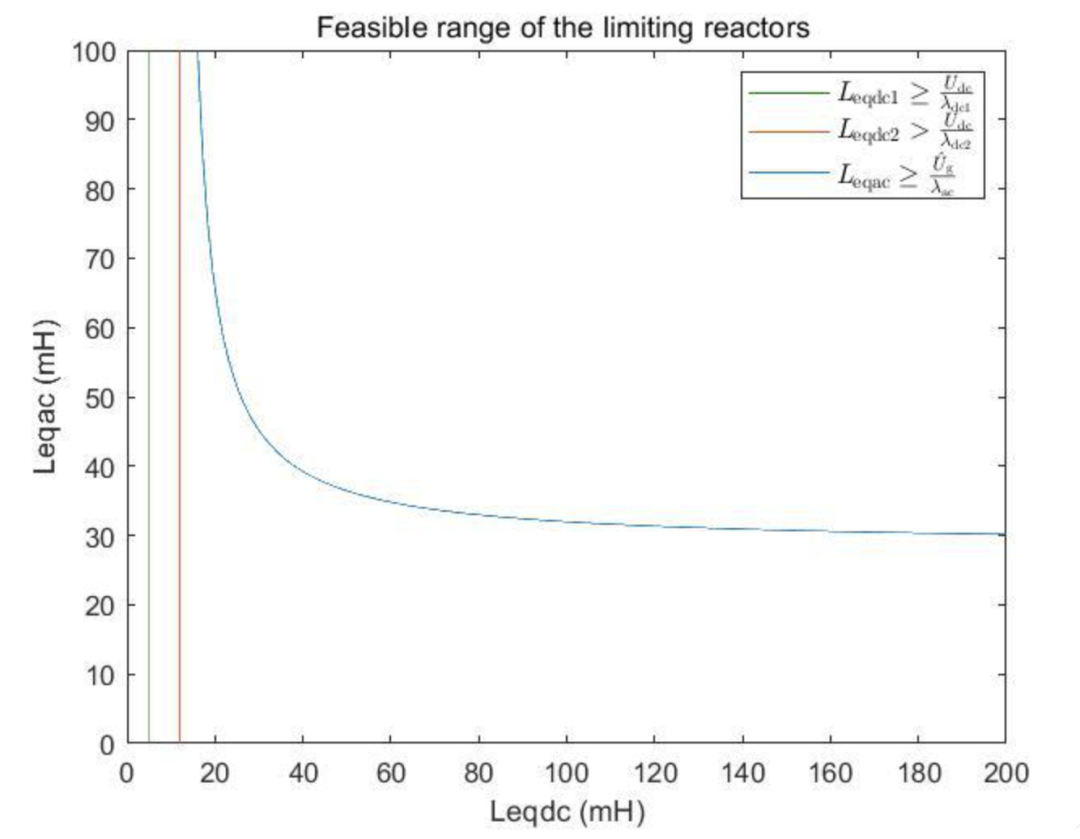
🎉3 References
Some content in this article is sourced from the internet, and references will be noted. If there are any inaccuracies, please feel free to contact for removal. (The content of the article is for reference only; specific effects are subject to the operating results)
[1] Zhao Chengyong, Hu Jing, Zhai Xiaomeng, et al. Design Method for Bridge Arm Reactor Parameters of Modular Multilevel Converter [J]. Automation of Electric Power Systems, 2013. DOI: CNKI:SUN:DLXT.0.2013-15-016.
[2] Zhao Chengyong, Hu Jing, Zhai Xiaomeng, et al. Design Method for Bridge Arm Reactor Parameters of Modular Multilevel Converter [J]. Automation of Electric Power Systems, 2013, 37(15):6. DOI: 10.7500/AEPS201212088.
🌈4 Matlab Code Implementation
For more resources and benefits for fans, MATLAB|Simulink|Python resources are available.