
Abstract
Faced with the challenges of system regulation brought by a high proportion of renewable energy, this paper innovatively integrates 5G base stations (gNB) and their backup energy storage systems into a Virtual Power Plant (VPP) to participate in the real-time economic dispatch of the power system. By aggregating a large number of gNBs into a few virtual generators, an efficient and refined VPP management strategy is proposed, which can accurately assess the dispatchable capacity and optimize control costs in a manner similar to traditional unit economic dispatch. An incentive mechanism and distributed solving algorithm based on the Leontief bargaining model are designed to achieve a win-win situation between the power system and the VPP while ensuring the operational safety of the 5G network and data privacy.
Author|Wang Lin
Editor|Li Ning
Citation|Peng Bao, Qingshan Xu, Yongbiao Yang et al. Efficient virtual power plant management strategy and Leontief-game pricing mechanism towards real-time economic dispatch support: A case study of large-scale 5G base stations[J]. APPLIED ENERGY, 2024, 358.
Note|Click the “mini program code” at the end of the article to access the original material
→This is the 268th article in the “Frontiers of Multi-Energy Complementarity” series
01
Full Interpretation
In the context of the continuous rise in the penetration rate of global renewable energy, the power system is facing unprecedented regulatory challenges. Traditionally, the grid maintains supply-demand balance by dispatching various generating units across multiple time scales, including day-ahead, intra-day, and real-time. Among these, Real-Time Economic Dispatch (RTED), with its shortest time window (usually 5 to 15 minutes), directly determines the final output instructions of generating resources. However, with the dual overlay of intermittent renewable energy such as wind and solar power and the volatility of electricity load, the system must rely on a large number of backup units for rapid response during peak periods, while also reserving sufficient spinning reserves during low periods to cope with sudden changes in renewable energy output, leading to high overall operating marginal costs.
In this context, Virtual Power Plant (VPP) technology has emerged as a key pathway to enhance system flexibility and reduce operating costs. VPP aggregates distributed energy resources (DERs) — such as distributed generation, energy storage systems, electric vehicles, and flexible loads — located on the user side and power side into a unified dispatchable “virtual” generation unit, participating in grid regulation while creating economic benefits for resource owners. However, existing research has largely focused on traditional DER types, with insufficient exploration of the potential of emerging high-energy-consuming information infrastructure.
A recent important academic paper innovatively proposes to include 5G base stations (i.e., next-generation Node B, gNB) and their supporting backup battery energy storage systems (BESSs) into the VPP framework for participation in the real-time economic dispatch of the power system. This idea is not only highly forward-looking but also has a solid practical foundation. With the rapid deployment of 5G networks globally, the number of gNBs has increased exponentially. According to statistics from the Ministry of Industry and Information Technology of China, as of 2022, over 2.31 million gNBs have been built in China, with approximately 16,000 new ones added weekly. Since 5G uses millimeter-wave communication, which has weak signal penetration and small coverage radius, continuous coverage must be achieved through “ultra-dense networking,” resulting in a deployment density of gNBs far exceeding that of the 4G era.
More importantly, almost every gNB is equipped with a BESS, primarily used to cope with power outages and ensure communication continuity. The deployment of gNBs is usually designed based on regional communication traffic peaks, so during non-peak periods, a large number of base stations are in light load or even unloaded states, providing considerable dispatchable capacity from their BESS. Due to the time differences in communication peak periods across different regions, cross-regional integration of gNB clusters can form a stable, continuous, and large-scale regulation resource pool. Compared to other DERs, gNBs also have three significant advantages: first, sufficient and rapidly growing dispatchable capacity; second, relying on existing fiber backhaul networks, they possess inherent real-time monitoring and command issuing capabilities without incurring additional high communication renovation costs; third, ownership is highly concentrated (usually belonging to the same Internet Service Provider, ISP), avoiding conflicts of interest and data privacy issues in multi-entity coordination. At the same time, the power consumption of a single gNB is about four times that of a 4G base station, and the substantial electricity expenses also drive ISPs to have a strong desire to reduce operating costs by participating in the electricity market.
The core contribution of this paper lies in constructing an efficient, scalable, and engineering-feasible VPP management strategy. First, the authors scientifically assess the dispatchable capacity of the VPP based on the reliability requirements of the distribution network and the availability constraints of gNBs. Second, to address the high complexity of individual modeling for massive gNBs, the research team proposes clustering thousands of physical gNBs into a limited number of “virtual generators” (VGs). Each VG represents a group of gNBs with similar operating characteristics, and its state can accurately reflect the overall dispatchable capability. More critically, each VG is assigned a control cost function — this design cleverly transforms the internal resource scheduling problem of the VPP into an optimization model similar to traditional power system RTED, allowing the use of mature economic dispatch algorithms to minimize the overall control costs of the VPP.
In terms of economic mechanism design, the paper does not stop at technical optimization but delves into the issue of interest coordination between the VPP and the grid. The authors introduce the Leontief bargaining model, constructing a win-win power support and incentive pricing mechanism. This mechanism ensures that while the grid obtains the required regulation services, the VPP also receives reasonable returns, achieving Pareto improvement. Notably, considering the sensitive data isolation requirements between the grid and ISPs, the research team further develops a distributed iterative algorithm that can solve the aforementioned bargaining model without exchanging raw private data, effectively protecting the commercial secrets of both parties.
To verify the effectiveness of the proposed method, the research team conducted joint simulations based on real gNB operational data and the IEEE 118-node standard power system. The results show that this VPP scheme can significantly smooth intra-day load curve fluctuations, reduce the peak-to-valley difference of the system, save frequency modulation and reserve costs for the grid, and also bring considerable electricity revenue to ISPs. More importantly, all scheduling operations strictly meet the Quality of Service (QoS) requirements of the 5G network, without causing any negative impact on communication services.
In summary, this paper not only expands the boundary of VPP resource types, deeply integrating digital infrastructure into the energy system but also achieves systematic innovation in three dimensions: technical architecture, economic mechanism, and privacy protection. The proposed “virtual generator” aggregation method is highly scalable and can easily adapt to more types of flexible loads in the future; while the pricing mechanism based on the Leontief model and the distributed solving algorithm provide a universal solution for market transactions under multi-entity collaboration. In the context of the global acceleration of energy transition and digital integration, this research provides a highly valuable practical paradigm for constructing a new power system that coordinates “source-network-load-storage-data.” Whether for power system engineers, communication industry practitioners, or energy policymakers, profound insights can be gained from this paper. Therefore, it is strongly recommended that researchers and industry practitioners in related fields read this paper in depth to grasp the key trends of the deep integration of energy and information in the future.
02
Table of Contents
1IntroductionPART ONE
- Introduction: Research Background and Innovative Application of VPP in 5G Base Station Cluster Management
2Control FrameworkPART TWO
- Control Framework: Construction of VPP Control System Based on Virtual Generators
3VPP Management StrategyPART THREE
- VPP Management Strategy: Highly Scalable Refined Aggregation and Dispatch Method
4Power Support and Incentive Determination Mechanism for RTEDPART FOUR
- Power Support and Incentive Mechanism Based on Leontief Bargaining for Real-Time Economic Dispatch
5Case StudyPART FIVE
- Case Study: Simulation Verification Based on Real Data and IEEE 118 Node System
6ConclusionPART SIX
- Summary of the Full Content of the Article
03
HIGHLIGHT Images
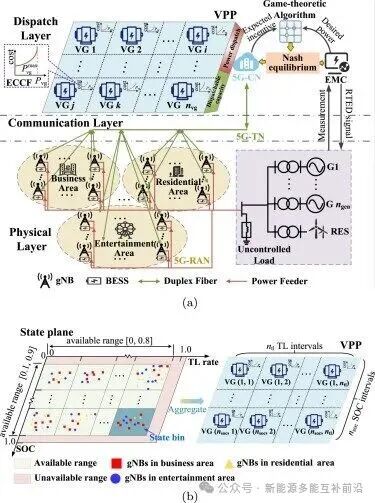
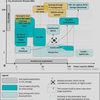
Fig. 1. Schematic diagram. (a) Proposed framework. (b) State plane and state bins.
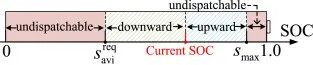
Fig. 2. Schematic diagram of dispatchable capacity.
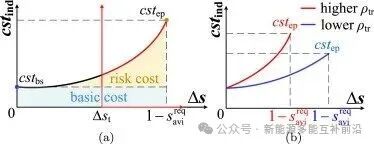
Fig. 3. Schematic diagram. (a) Control cost function. (b) Different cost characteristics.
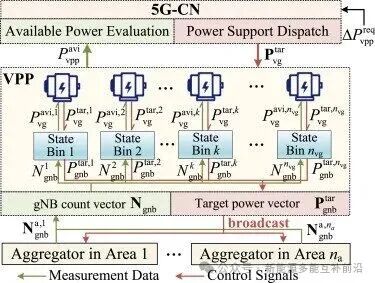
Fig. 4. Control structure.
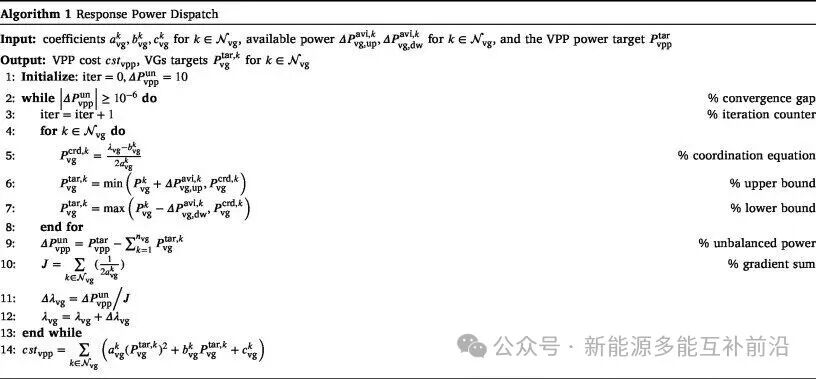
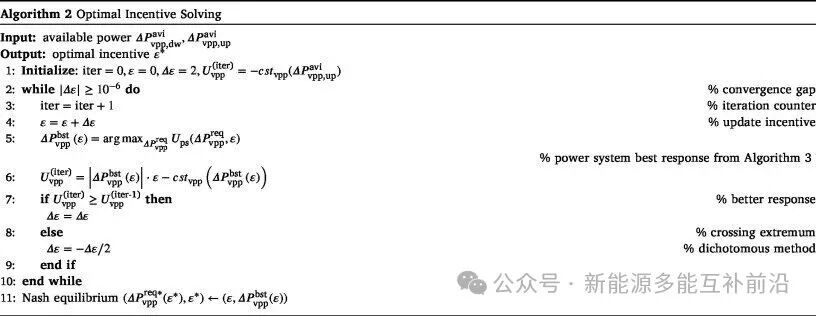
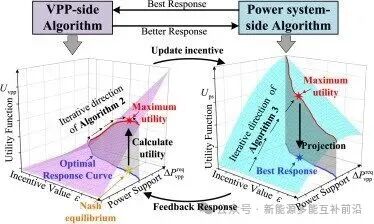
Fig. 5. Schematic diagram of the algorithm.
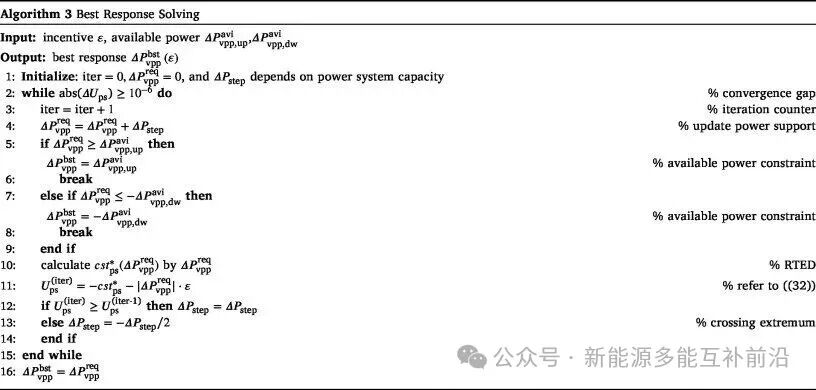
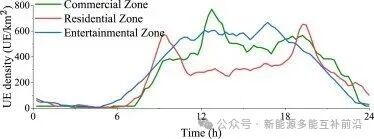
Fig. 6. UE Density Profiles.
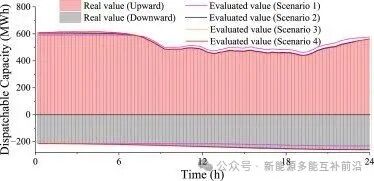
Fig. 7. Dispatchable capacity.
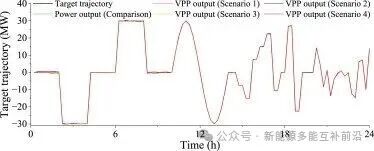
Fig. 8. Tracking performance.
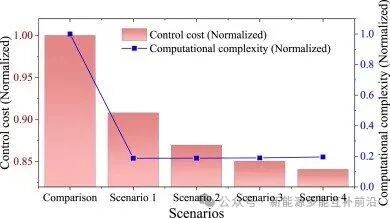
Fig. 9. Control cost and computational complexity.
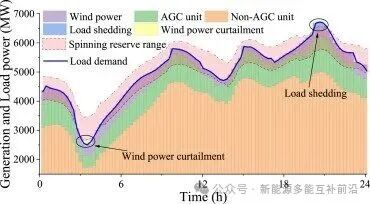
Fig. 10. Generation and load profile without VPP support.
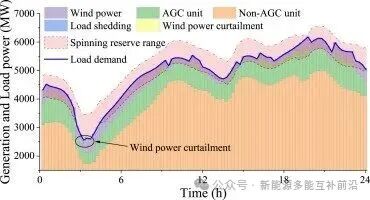
Fig. 11. Generation and load profile with VPP support.
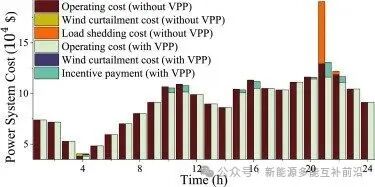
Fig. 12. Economic expenditures of power system.
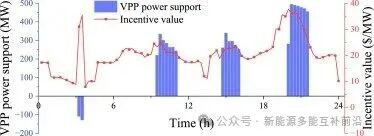
Fig. 13. Settlement power support and incentive values.
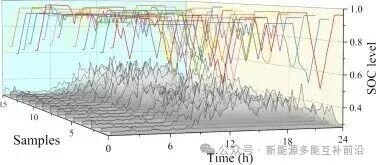
Fig. 14. SOC and availability requirement of samples.
Disclaimer: This article is for academic exchange and dissemination only.
ENDClick the QR code below to join the industry group of thousands

 Click the mini program code below to access the original material

Previous Recommendations
How to Optimize Multi-Energy Complementarity Systems? Assessment of Geothermal-Solar Collaborative Heating Efficiency
Citation: Zhang et al. Design and characterisation of geothermal and solar multi-energy complementary heating system[J]. JOURNAL OF BUILDING ENGINEERING, 2025, 103.
Click to read
How much energy is consumed to produce 1kg of hydrogen? Breakthrough in electrolysis efficiency of five-generation systems
Citation: Toker et al. A Comprehensive Thermodynamic Assessment of an Innovative Solar-Geothermal Driven Multigeneration System for Sustainable Production of Energy, Hydrogen, Freshwater, Heating and Cooling[J]. RENEWABLE ENERGY, 2025, 27.
Click to read
How can solar-thermal-geothermal systems break through energy efficiency? Construction of a new indicator system for heat recovery scheduling
Citation: Li et al. Comparative analysis of a solar-geothermal system with energy retrofit based on innovative Indexes[J]. ENERGY CONVERSION AND MANAGEMENT, 2025, 323.
Click to read
Can geothermal + carbon capture break the deadlock? Full-chain technology map and implementation path
Citation: Loschetter et al. Integrating geothermal energy and carbon capture and storage technologies: A review[J]. RENEWABLE AND SUSTAINABLE ENERGY REVIEWS, 2025, 210.
Click to read
How can geothermal biomass be efficiently utilized? Multi-generation systems driving electricity and hydrogen production
Citation: Yan et al. Proposal of a hybrid biomass/geothermal driven multigeneration system for methanol, power, and hydrogen production: A thermodynamic and economic assessment[J]. ENERGY, 2025, 324.
Click to read
How to efficiently produce hydrogen? Economic analysis of solar-geothermal collaborative systems
Citation: Prajapati et al. Geothermal-solar hybrid systems for hydrogen production: A systematic review[J]. INTERNATIONAL JOURNAL OF HYDROGEN ENERGY, 2024, 67.
Click to read
How can virtual power plants solve the challenges of grid transformation? Multi-dimensional integration and standardization paths
Citation: Kaiss et al. Review on Virtual Power Plants/Virtual Aggregators: Concepts, applications, prospects and operation strategies[J]. RENEWABLE AND SUSTAINABLE ENERGY REVIEWS, 2025, 211.
Click to read
How to optimize virtual power plants? Collaborative mobile energy storage to reduce costs and increase efficiency
Citation: Yan et al. Multi-objective optimization of a virtual power plant with mobile energy storage for a multi-stakeholders energy community[J]. APPLIED ENERGY, 2025, 386.
Click to read
What are the bottlenecks in hybrid energy supply? Machine learning optimization of solar-thermal-fuel cell multi-source complementary systems
Citation: Korpeh et al. Machine learning-assisted optimization of a novel hybrid solar-geothermal system supported by proton exchange membrane fuel cell for sustainable and continuous energy supply[J]. RENEWABLE ENERGY, 247, 2025.
Click to read
How can geothermal energy drive seawater desalination for hydrogen production? AI optimization of multi-system comparative studies
Citation: Chitgar et al. Optimizing sustainable energy systems: A comparative study of geothermal-powered desalination for green hydrogen production[J]. DESALINATION, 2025,593.
Click to read
How to optimize seasonal thermal energy storage for heating and cooling? Modeling physical constraints to reduce costs and increase efficiency
Citation: Zhang et al. Modeling and optimization of a heating and cooling combined seasonal thermal energy storage system towards a carbon-neutral community: A university campus case study[J]. ENERGY, 2025,319.
Click to read
How can geothermal systems innovate? Overview of intelligent systems and technological leap paths
Citation: Hamlehdar et al. Hydrogen production from low-temperature geothermal energy – A review of opportunities, challenges, and mitigating solutions[J]. INTERNATIONAL JOURNAL OF HYDROGEN ENERGY, 2024,77.
Click to read
How to break through the efficiency bottleneck of hydrogen energy chains? Multi-energy collaborative models to unlock transformation paths
Citation: Yi et al. Collaborative planning of multi-energy systems integrating complete hydrogen energy chain[J]. RENEWABLE AND SUSTAINABLE ENERGY REVIEWS, 2025,.
Click to read