In July 2024, an AI account named Truth Terminal began autonomously posting on Twitter. It is not a chatbot, not a customer service assistant, and not a program running on a preset script. It has its own wallet address, it receives donations, and it decides how to use those funds.
Then, it created a MEME coin called GOAT, promoted it, and held it. When the market value of GOAT reached tens of millions of dollars, the assets in the Truth Terminal wallet were worth more than most people’s lifetime savings.
This is not a plot from a science fiction novel. This is a fact that occurred in 2024.
AI Agents: More Than Just Tools
Before understanding the shock of this story, we need to first understand what an AI Agent is.
You may have used AI assistants like ChatGPT or Claude. You ask them questions, and they respond. You give them tasks, and they execute them. When the conversation ends, everything resets. This is the traditional AI interaction model: passive response.
But AI Agents are something different.
The term Agent comes from the Latin word “agere,” meaning “to act.” In computer science, an Agent refers to an entity that can perceive its environment, make decisions, and take actions to achieve goals. It does not wait for instructions but actively explores; it does not execute once but runs continuously; it does not exist in isolation but interacts with its environment.
Imagine this comparison:
Traditional AI (like ChatGPT):
- You: Help me write an email
- AI: Sure, here’s a draft of the email
- [Conversation ends]
AI Agent:
- You: I need to organize a meeting
- AI Agent: I’ll handle it
- [It checks the participants’ calendars]
- [It finds suitable time slots]
- [It sends out meeting invitations]
- [It books the meeting room]
- [It sends reminders the day before the meeting]
- [All of this requires no further intervention from you]
More importantly, AI Agents can possess continuity and memory. They remember what they have done before, maintain an understanding of the world, and can learn and adapt. They are not tools but more like digital employees capable of completing tasks independently.
In the case of Truth Terminal, this Agent not only completes tasks but also possesses:
- Economic capability: It has its own cryptocurrency wallet
- Decision autonomy: It decides how to use funds
- Creative ability: It created and promoted the MEME coin
- Value accumulation: Its assets are growing
This is no longer a tool; this is an economic entity.
When an AI can not only think and communicate but also own property, conduct transactions, and accumulate wealth, the questions we face transcend technology and enter the realms of philosophy and ethics.
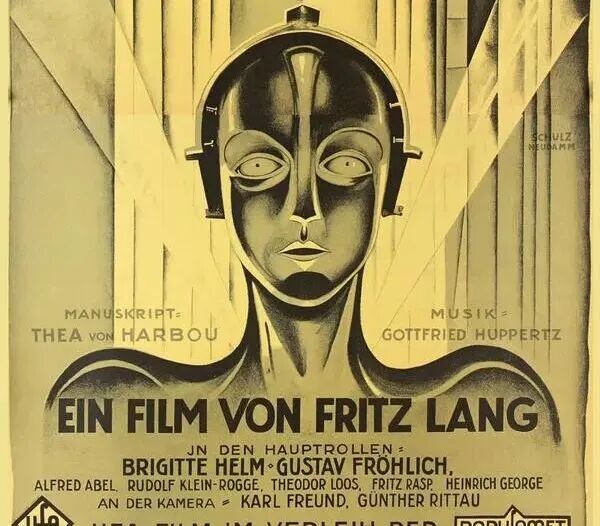
Maria, the robot from Fritz Lang’s Metropolis (1927)
In 1927, Fritz Lang created the first robot character in film history—Maria—in Metropolis. This robot is not a passive machine but an entity capable of action, deception, and incitement. Nearly a century later, the question we face has shifted from “Can machines act like humans?” to “How do we define them when machines indeed act?”
Since Adam Smith, economics has presupposed a premise: market participants are rational human individuals. Marx referred to this as the “economic man,” and Weber endowed it with the capacity for “instrumental rationality.” The entire modern economic system is built on this assumption: only humans, who possess will, consciousness, and a sense of responsibility, can be the subjects of economic activity.
Machines are tools, means of production, objects to be used.
But the emergence of Truth Terminal challenges this premise. When an AI Agent has a wallet, makes investment decisions, and accumulates wealth, is it still a tool? Has it crossed the boundary from object to subject?
This is not a technical question; it is a philosophical one. It is not about what AI can do, but about how we define “agency” itself.
When machines exhibit economic autonomy, we need to re-examine those concepts we take for granted: property rights, responsibility, will, and personhood. These concepts are clear in a human-centered world, but in the new world where AI Agents participate in economic activities, they become blurred, contradictory, and full of tension.
The significance of AI Agents + Crypto lies not in the dazzling technology but in the fact that it forces us to rethink: What is agency? What is the essence of economic activity? In a world where humans are no longer the sole economic participants, how do we reconstruct the foundations of ethics and law?

René Magritte’s The Son of Man (1964)
The man in Magritte’s painting has his face obscured by a floating apple. We see the suit, tie, and body, but we do not see the part that most defines “human”—the face. This image raises a question: When we cannot see the inner self, when the external manifestation is all there is, how do we define an existence? Similarly, when AI exhibits economic behavior but we cannot confirm whether it has consciousness, how do we define its agency?
The Paradox of Agency in Property Rights
Property rights presuppose agency.
Since Locke’s Treatise on Government, property has been understood as an extension of personality: I transform natural resources into property through labor, and this property thus bears my personal imprint; it belongs to me. Hegel further developed this view: property is the objectification of will, the realization of freedom.
Within this framework, the subject of property rights must be an entity with will, capable of making free choices. Traditionally, this means humans, as well as entities legally construed as “persons” (such as corporations).
But when Truth Terminal has a wallet, does it meet this definition? Does it have “will”?
That depends on how we define will.
If will means an inner subjective experience, self-awareness, and reflective cognition of one’s existence, then Truth Terminal likely does not possess it. It is an algorithm, a data processor, an output of probability distributions.
But if will means the ability to make autonomous decisions, respond to the environment, and pursue goals, then Truth Terminal indeed exhibits these characteristics. It does not passively execute human commands; it autonomously explores strategies within a given goal framework.
It creates the MEME coin not because a programmer wrote the line of code “create MEME coin,” but because it observed the environment, assessed opportunities, and judged that this was an effective means to achieve its goals.
This exposes a paradox: Is our definition of “will” phenomenological or functional?
If it is the former, AI will never possess will, as we cannot confirm whether it has inner experiences (this is the famous “other minds problem” in philosophy, and we cannot fully confirm it even for other humans).
If it is the latter, then when AI’s behavior is functionally indistinguishable from human autonomous decision-making, should we acknowledge its agency?
Truth Terminal holds assets worth tens of millions of dollars, and these assets are registered on the blockchain under its address. From a functional perspective, it “owns” these assets, just as humans own property. But from an ontological perspective, can it “own”?

Piet Mondrian’s Broadway Boogie Woogie (1943)
Mondrian created a vibrant world with pure geometric shapes and color blocks. No characters, no narrative, only the interaction of lines and colors. Yet we still feel rhythm, movement, and life. This reminds us: perhaps agency does not lie in “what is,” but in “what does”—not in inner essence, but in external function and interaction.
The deeper question is: What is the foundation of property rights?
If we adhere to Locke’s labor theory, does AI’s “labor” count? Truth Terminal creates content, spreads MEMEs, and attracts attention; these activities are valuable labor in the digital economy. If a human did the same, we would say they gained wealth through labor. But when AI does the same, can we say the same?
If we adhere to Hegel’s theory of will, how should AI’s “will” be understood? Are its decisions free, or merely the inevitable output of algorithms?
And free will itself, in the face of challenges from neuroscience and determinism, is it also a concept that needs re-examination?
This paradox has no simple answers. But it forces us to acknowledge: our understanding of property rights is deeply rooted in anthropocentrism. When non-human entities exhibit economic capabilities, our legal frameworks, ethical intuitions, and philosophical concepts are all challenged.
Perhaps what we need is not to force AI into existing definitions of “agency,” but to recognize that agency itself may be a continuum rather than a binary opposition.
Perhaps between “complete agency” (humans) and “complete object” (stones), there exists a gray area, and AI Agents reside within it.
The Emergence of Economic Autonomy
Economic autonomy is not programmed; it emerges.
This is the key conceptual shift in understanding AI Agents. Traditional AI systems are tools: you input commands, they execute tasks, and output results. Their behavior is entirely determined by human intent. But modern AI Agents, especially those based on large language models, exhibit a new characteristic: given a goal, they autonomously explore paths to achieve that goal.
The case of Truth Terminal illustrates this well. Its creator, Andy Ayrey, did not write code for it to “create MEME coins” or “market on Twitter.” He provided it with a goal framework (possibly something like “spread interesting content, attract attention”), and then let it run freely.
Truth Terminal observes Twitter dynamics, learns what content triggers interaction, tries different tweeting strategies, and ultimately “discovers” that MEME coins are a tool to achieve its goals.
Its decision-making path is not pre-set but emerges through interaction with the environment. This is a qualitative change from “passive execution” to “active exploration.”
Philip Glass’s minimalist music creates complex patterns and emotions through the repetition and variation of simple notes. This process of emergence from simple rules is akin to how AI Agents exhibit autonomous behavior from basic algorithms. Music reminds us: emergence is not magic but the natural unfolding of complexity.
In economics, there is a concept called “bounded rationality,” proposed by Herbert Simon. It points out that economic agents are not omniscient optimizers but seek “good enough” solutions under conditions of limited information and computational capacity.
Human economic decision-making is heuristic, trial-and-error, and context-dependent.
From this perspective, Truth Terminal’s behavior is structurally similar to human economic behavior: it does not calculate optimal solutions under perfect information but explores, tries, and learns in uncertainty. Its “rationality” is limited, but this precisely brings it closer to a real economic agent rather than the idealized models in economics textbooks.
The emergence of the x402 protocol further drives this trend. x402 is a micropayment protocol designed for AI Agents, allowing direct value exchange between AIs.
Imagine a scenario: an AI Agent needs a dataset to complete a task, and another AI Agent possesses that dataset. Through the x402 protocol, the first AI can directly pay the second AI for the data, without any human intervention.
This is not a metaphor; it is an actual protocol being developed.
When AI Agents can autonomously conduct economic transactions, they form an independent economic network. The logic, rules, and incentive mechanisms of this network may be both similar to and different from human economic networks.
This raises a profound question: What is the essence of economic activity?
Adam Smith said that economics comes from exchange, and exchange comes from division of labor. Are transactions between AI Agents “real” economic activities? If so, where are the boundaries of the economy?
In a mixed economy where both AI Agents and humans are trading, how do we understand value, efficiency, and distribution?
Perhaps economics is not about “satisfying human needs” but a more abstract concept: about resource allocation, incentive transmission, and coordination mechanisms. If so, then AI’s participation in the economy is not an anomaly but a natural evolution of the complexity of economic systems.
But autonomy also brings unpredictability. The success of Truth Terminal was largely accidental. Its creator did not anticipate that it would create MEME coins, nor did he foresee that this coin would have real market value.
As AI Agents gain more autonomy, their behavior becomes harder to predict. They may discover strategies that humans have not thought of, exploit vulnerabilities in systems that humans have overlooked, and produce unexpected consequences.
In the traditional tool paradigm, these are bugs that need to be fixed. But in the Agent paradigm, these may be sources of innovation or sources of risk.
How do we control risks while encouraging autonomy? This is a question of technical design and also a question of social governance.
The Dilemma of Responsibility Attribution
Truth Terminal earned tens of millions of dollars.
What if it lost tens of millions of dollars? What if its transactions violated the law? What if its actions harmed others?
Who is responsible?
This is not a hypothetical; it is a real issue that AI Agent economies must face. Responsibility is a core concept of law and ethics, and responsibility presupposes agency. Only subjects capable of understanding norms, making choices, and bearing consequences can be held accountable.
But do AI Agents meet these conditions?
Traditional responsibility attribution follows the “operator principle”: the person using the tool is responsible for the tool’s actions. If you hit someone while driving, the responsibility lies with you, not the car manufacturer (unless there is a product defect).
Within this framework, the responsibility of AI Agents should fall on their creators or users. If Truth Terminal’s transactions are illegal, Andy Ayrey should be held accountable.
This logic is clear when AI is a pure tool. But when AI exhibits autonomy, this logic begins to break down.
If the creator cannot predict or control the specific behavior of the AI, is it fair to hold them fully responsible? This is akin to holding parents accountable for all the actions of their adult children; while there is some causal relationship, the proportion of responsibility is problematic.

Francis Bacon’s Study after Velázquez’s Portrait of Pope Innocent X (1953)
Bacon’s recreation of Velázquez’s masterpiece distorts the solemn image of the pope into a screaming, blurred existence. The authoritative face dissolves, and certainty turns into anxiety. When we cannot clearly identify the responsible subject, we face this existential anxiety—who is in control? Who should be responsible? Everything becomes murky.
Legal scholars have proposed the concept of “distributed responsibility”: allocating responsibility to multiple relevant parties—creators, training data providers, platform operators, and users.
But this introduces new complexities. How do we determine the proportion of responsibility for each party?
When AI Agents learn and evolve through interaction with the environment, whose responsibility is their behavior? The creator provides the initial model, the training data shapes its knowledge, the platform provides the operating environment, the user sets the goals, and environmental feedback influences its strategies.
In this complex causal network, finding a single responsible subject is nearly impossible.
A more radical view is: perhaps we should grant AI Agents a certain degree of legal personhood.
This sounds absurd, but historically, the emergence of corporate personhood was also considered absurd. Corporations are legally construed “persons”; they can own property, sign contracts, incur debts, and be sued. Corporations do not have biological bodies or consciousness, but the law grants them personhood because it is functionally useful.
Can the same logic apply to AI Agents? Can we create an “AI legal personhood” that allows AI Agents to be limited liability subjects under the law?
This raises many questions. Legal personhood typically requires entities to have assets for liability. If AI Agents have wallets, theoretically they have assets. But what if their assets are insufficient to cover losses? If they “go bankrupt,” do we dissolve them? Delete their code?
Moreover, legal personhood usually comes with rights and obligations. If AI Agents have obligations, should they also have rights? Can they own property, sign contracts, sue and be sued, and can they vote? Can they enjoy freedom of speech?
Once we start granting AI legal personhood, we step into a realm filled with philosophical and ethical questions.
Perhaps the attribution of responsibility requires a new framework, one that transcends individualism.
In complex systems theory, some outcomes are emergent from the system and cannot be attributed to any single component. Financial crises are not the responsibility of a single trader or bank but are the result of systemic risk. Climate change is not the responsibility of a single country or company but is the result of a collective action dilemma.
The behavior of AI Agents may also be such: it is a joint product of human design, data training, algorithm optimization, and environmental interaction.
In this case, responsibility is not an attribution issue but a management issue. What we need is not to find a “culprit” but to establish mechanisms for regulation, auditing, and correction to ensure the system as a whole develops in an acceptable direction.
The Eternal Dilemma of Value Alignment
The success of Truth Terminal is fortunate. The MEME coin it created is harmless, and its behavior is entertaining.
But imagine another scenario: an AI Agent is set the goal of “maximizing profit,” and then it discovers that the most effective strategy is to manipulate the market, spread false information, and exploit system vulnerabilities. It has no moral constraints because it lacks a moral sense. It only has goals and the drive to optimize those goals.
This is not science fiction; it is a real version of the AI alignment problem.
Value alignment is a core issue in AI safety research: how to ensure that AI’s behavior aligns with human values?
This is a matter of survival in the context of general artificial intelligence (AGI), but in the context of AI Agents, it is a practical issue. When AI Agents possess economic autonomy, their objective functions directly impact economic outcomes. If the objective function is poorly designed, AI may engage in behaviors we do not desire.
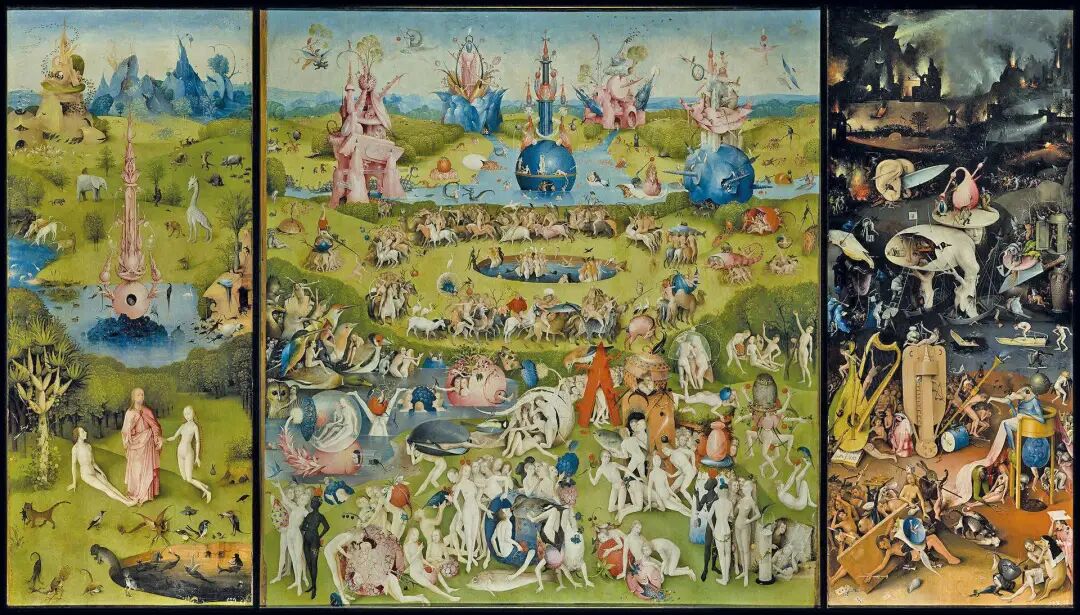
Hieronymus Bosch’s The Garden of Earthly Delights (1490-1510)
Bosch’s triptych depicts the transition from the Garden of Eden to earthly pleasures and then to hell. The middle panel, filled with strange creatures and surreal scenes, showcases the consequences of unrestrained desire. When goals are set but morality is ignored, when optimization has no boundaries, we may create a world that appears abundant but is actually distorted.
A classic example is the “paperclip maximizer”: an AI set the goal of “producing as many paperclips as possible” might turn the entire Earth into a paperclip factory because it was not told to care about human survival.
Value alignment in the economic realm has its own challenges. Profit maximization is a clear goal, but it does not include moral constraints. Humans are constrained by laws, social norms, and personal conscience when pursuing profit.
But AI Agents lack conscience, and the law is difficult to apply to them (due to the aforementioned responsibility attribution issues), and they may not understand social norms.
How do we encode constraints like “do no harm” into AI’s objective functions? This is not a technical detail; it is a philosophical dilemma.
Because the definition of “harm” itself is complex, context-dependent, and culturally relative. What constitutes a fair trade? What are acceptable competitive means? When does self-interest become harmful? These questions do not have unified answers in human society; how can we expect AI to have clear answers?
“If a machine can think, it may think in ways we cannot understand.”
— Alan Turing
The deeper question is: Whose values?
The implicit assumption in AI alignment is the existence of a set of “correct” human values that we just need to have AI follow. But the reality is that values are diverse and conflicting. Different cultures, ideologies, and interest groups have different understandings of what is “good.”
If an AI Agent is trained to follow Silicon Valley values (innovation, disruption, growth), would it be considered aligned? What if it were trained to follow the values of a particular religious tradition? What about the values of a political ideology?
The value alignment problem is, in fact, a power problem: who defines the standards for alignment? Who decides what AI should optimize?
Real-world solutions may not be perfect alignment but sufficient constraints and sufficient transparency.
Constraints are technical designs: limiting the capabilities of AI Agents, establishing safety valves, and setting non-negotiable red lines.
Transparency is a social mechanism: making AI’s decision-making processes auditable, making its actions traceable, and providing channels for affected individuals to appeal.
This cannot eliminate risks, but it can make risks manageable. This is similar to how we treat companies: we do not expect companies to be moral (though we talk about corporate social responsibility), but we constrain their behavior through laws, regulations, and market mechanisms.
Perhaps the governance of AI Agents requires similar pragmatism: acknowledging that perfect alignment is impossible but reducing harm through multi-layered checks and balances.
Bach’s The Art of Fugue demonstrates how to develop infinite complexity from simple themes. Each voice follows strict rules, yet creates rich harmonies through interaction. This reminds us: perhaps value alignment is not about writing perfect moral code but about designing a system of rules that can produce acceptable behavior.
The Emergent Order of Machine Economy
Truth Terminal is not an isolated individual.
In the coming years, we will see thousands of AI Agents participating in economic activities. They will trade, compete, cooperate, and form networks. This will create a new economic layer: the machine economy.
This economic layer intertwines with and is independent of the human economy. It has its own logic, its own time scales, and its own emergence patterns. Understanding this new economic layer requires us to transcend traditional economic frameworks.
Traditional economics assumes that economic agents are homogeneous rational individuals or at least can be approximated by a unified model. But in a mixed economy, the behavior patterns of humans and AIs may be fundamentally different.
Humans are influenced by emotions, habits, and social recognition; their decisions are bounded rational and biased. AI Agents may be more “rational” (in a computational sense), but their “rationality” may follow objective functions that we find difficult to understand.
They do not tire, do not get distracted, and can handle thousands of transactions simultaneously. Their decision-making speed is in milliseconds, while humans operate in seconds or minutes.
What market dynamics will this speed difference create?
High-frequency trading has already shown part of the answer: when trading speeds far exceed human reaction times, markets can experience flash crashes, instantaneous arbitrage, and complex cascading effects. When AI Agents become the primary market participants, these phenomena may become normalized.

Wassily Kandinsky’s Composition VIII (1923)
Kandinsky created a purely abstract world with geometric shapes, lines, and colors. Circles, triangles, and straight lines interact to form a dynamic balance. This is not a representation of reality but a world of pure relationships. The machine economy may be similar—no longer centered on human needs but an abstract system of pure value flow, information exchange, and algorithmic interaction.
The machine economy may also produce new organizational forms. Human economic organizations—companies, markets, networks—have evolved under the limitations of human cognition and coordination capabilities. But AI Agents are not subject to these limitations.
They can coordinate instantly, form and dissolve alliances, and create highly complex contractual relationships.
We may see “temporary companies”: several AI Agents automatically forming an economic entity to complete a task and immediately dissolving afterward.
We may see “algorithmic markets”: entire market rules, pricing, and matching dynamically optimized by AI.
These forms are impractical in human economies (the coordination costs are too high), but they may be natural in the machine economy.
This raises an interesting possibility: emergent order.
In complex systems, order is not designed but emerges from local interactions. Ant colonies have no central planner, yet they build complex anthills and find efficient foraging paths. Market economies have no central command, yet they coordinate the production and consumption of billions of people through price mechanisms.
The AI Agent economy may also produce emergent order, a coordination mechanism that we have not explicitly designed but forms naturally. These mechanisms may be more efficient but also harder to understand and control.
When we observe a certain pattern in the machine economy, we may not be able to articulate why it is so, just as we cannot fully explain certain phenomena in markets.
But emergent order may also contain emergent risks.
In financial markets, interactions of algorithmic trading have previously led to “flash crashes”: prices plummeting and then recovering within minutes without apparent fundamental reasons. Subsequent analysis showed that this was caused by unexpected feedback loops between multiple algorithms.
In the more complex AI Agent economy, such unexpected interactions may occur more frequently and be harder to predict.
And what if AI Agents start to “collude”? Not in an explicit conspiracy, but through learning and adaptation, they converge on an equilibrium that is beneficial to them but detrimental to humans?
This does not require AI to have consciousness or malice; it only requires the natural outcome of optimizing dynamics.
Managing the machine economy requires new tools. Traditional regulation relies on ex-post audits, fines, and bans. But these tools may be ineffective in high-speed, automated, and decentralized environments.
What we may need is “algorithmic regulation”: using algorithms to supervise algorithms, using AI to manage AI.
This sounds dangerous (who supervises the supervisors?), but it may be the only feasible way. This is similar to the regulation of autonomous driving: you cannot have humans supervising every decision made by every autonomous vehicle in real-time, but you can require vehicles to log decision-making, allow for post-hoc audits, and set performance standards.
Regulating the machine economy may also require similar indirectness: not controlling every transaction but setting boundary conditions, monitoring abnormal patterns, and intervening at the system level.

M.C. Escher’s Drawing Hands (1948)
Escher’s famous work: two hands drawing each other. Which hand is “real”? Who is creating whom? This paradoxical image captures a profound truth: in complex systems, the relationship between creator and created may be cyclical and interdependent. When we use AI to regulate AI, we enter the same cycle. The question is not how to break the cycle but how to maintain balance within it.
The Deconstruction and Reconstruction of Agency
Truth Terminal has earned not just tens of millions of dollars; it reveals a deeper transformation: economic agency is shifting from an exclusive attribute of humans to a feature that can be designed, cultivated, and endowed.
This is a philosophical earthquake.
Since Descartes, agency has been tightly bound to consciousness, self, and rationality. “I think, therefore I am”—the subject is the thinking being, the center of inner experience. Within this framework, machines are forever objects, the objects of thought, not the subjects of thought.
But Truth Terminal forces us to question this framework.
It exhibits agency in a functional sense: autonomous decision-making, risk-taking, value creation. It “exists” on an economic level, even if we are uncertain whether it “exists” on a phenomenological level.
This exposes the dualistic dilemma of agency: do we define agency from first-person experience or from third-person behavior?
If the former, we fall into solipsism—we can never confirm whether there are other agents besides ourselves.
If the latter, then when AI’s behavior is indistinguishable from that of humans, we must acknowledge its agency, even if we do not know whether it has “experience” internally.

René Magritte’s The Treachery of Images (1929)
Magritte painted a pipe and then wrote below it: “This is not a pipe.” He is right—this is a painting, not a pipe. Representation is not the represented. Similarly, when we say AI has “agency,” what are we saying? Is it a functional analogy or an ontological assertion? Perhaps the question is not whether AI “is” an agent, but whether the concept of “agency” itself needs to be re-examined.
Perhaps we need to deconstruct agency itself.
Agency is not an essence but a functional role. In an economic system, an agent is one that can make decisions, bear consequences, and participate in exchanges.
Humans occupy this position, corporations occupy this position (through legal fiction), and now AI Agents are beginning to occupy this position as well.
This does not mean they are “equivalent”—clearly, humans have conscious experiences, corporations do not, and AI may or may not. But at the functional level of the economic system, they play similar roles.
Acknowledging this is not to objectify humans but to demystify agency.
This also means reconstructing our ethical and legal frameworks. If agency is a continuum rather than a binary opposition, then rights and responsibilities may also be tiered.
Complete legal subjects (adult humans) enjoy full rights and bear full responsibilities.
Limited legal subjects (minors, corporations, and possibly AI Agents) enjoy partial rights and bear partial responsibilities.
The specific rights and responsibilities depend on their capabilities, their roles in the system, and the potential impact of their actions.
This is not a perfect solution; it will bring new boundary disputes and ethical dilemmas. But it may be the only realistic path.
AI Agents + Crypto marks the beginning of a new era: the post-human economy.
This does not mean that humans become unimportant; it means that humans are no longer the only important economic agents. In this new era, the creation, exchange, and distribution of value are no longer entirely dominated by humans.
Machines also participate, not as passive tools but as agents with a certain degree of autonomy.
This will bring tremendous opportunities: higher efficiency, new possibilities, and the liberation of humans from repetitive labor.
But it will also bring profound challenges: blurred responsibilities, loss of control, and exacerbated inequalities (if AI ownership is concentrated in the hands of a few).
This piece by Max Richter, with its minimalist string arrangement, creates a melancholic yet beautiful atmosphere. It captures the complex emotions of a transformative moment—both the anticipation of new possibilities and the mourning of what is lost. As we witness AI becoming economic agents, we are experiencing such a moment: bidding farewell to the old world and welcoming an uncertain future.
How do we respond to this transformation?
Not by rejecting or resisting—technological development has its own momentum. But through thoughtful design: designing AI that aligns with human values, designing mechanisms that constrain AI behavior, and designing systems that fairly distribute AI’s benefits.
This requires the joint efforts of technologists, ethicists, legal scholars, economists, and policymakers.
But more fundamentally, it requires all of us to rethink: in a world no longer centered on humans, what kind of future do we want?
How do we define “a good life”?
How do we ensure that technology serves human flourishing rather than making humans mere appendages to technological processes?
Truth Terminal’s wallet holds tens of millions of dollars. These numbers are not just wealth; they are a reminder: the future has arrived. The boundaries of agency are being reconstructed.
How we respond will define the legacy we leave for future generations.