Click the blue text above to follow us

📋📋📋 The contents of this article are as follows: 🎁🎁🎁
Contents
💥1 Overview
📚2 Results
🎉3 References
🌈4 Matlab Code Implementation



1 Overview
Millimeter wave (mmWave) V2I technology is an innovative solution for vehicle-to-infrastructure communication, leveraging the high bandwidth and low latency characteristics of the millimeter wave frequency band to enable fast and reliable communication between vehicles and urban infrastructure. This article aims to study the performance of mmWave V2I networks in urban environments with low-rise modern buildings through link layer simulation. To simulate a realistic urban environment in the simulation, we selected a grid-like street geography similar to Manhattan, New York City, and designed 10 vehicle routes based on this geographical feature. However, since we could not obtain a real 3D model of a specific part of the city, we used the LoadVehRouteData.m script to replace these routes in a flat virtual environment for simulation research. This method allows us to easily generate the required number of routes; for example, we can simulate 50 different vehicle routes. By conducting these link layer simulations, we can evaluate the performance of mmWave V2I networks in real urban environments. We studied key metrics such as interference between different vehicles, signal transmission efficiency between infrastructures, and channel capacity. By collecting simulation results, we can gain insights into the potential and limitations of mmWave V2I networks and provide valuable guidance for future optimizations and improvements. Furthermore, by conducting simulation studies in urban environments with low-rise modern buildings, we can obtain performance expectations for mmWave V2I networks in actual deployments. This is crucial for urban planners and relevant stakeholders, as they can assess best practices for network layout, spectrum planning, and infrastructure deployment based on simulation results. By combining simulation results with real data, we can make more reliable and effective decisions for the development and promotion of mmWave V2I technology. In summary, this research provides an in-depth exploration of the performance of mmWave V2I networks in urban environments with low-rise modern buildings through link layer simulation. By simulating multiple vehicle routes and evaluating key metrics, we provide strong support for the optimization and application of mmWave V2I technology and valuable guidance for relevant stakeholders. This research is significant for promoting the development of smart cities and intelligent transportation systems and lays the foundation for better understanding and utilizing the potential of mmWave V2I technology.
References:

Millimeter wave (mmWave) communication is increasingly seen as a means to meet the communication constraints required by emerging Intelligent Transportation Systems (ITS) applications. This article designs a novel directional MAC protocol that includes resource allocation strategies unique to mmWave vehicle-to-infrastructure (V2I) networks in urban environments. We specifically consider a network where each base station (BS) is equipped with a hybrid beamforming antenna array while serving multiple vehicles. Using a coherent bandwidth and coherent time model specific to mmWave vehicle channels, a reliable resource allocation scheme for efficient multi-user scheduling is provided. The novelty lies in the multi-user scenario, specifically designed for time-frequency resource allocation for mmWave channels. To evaluate the network, a fully integrated channel simulator in MATLAB is used to perform link layer simulations.


2 Results
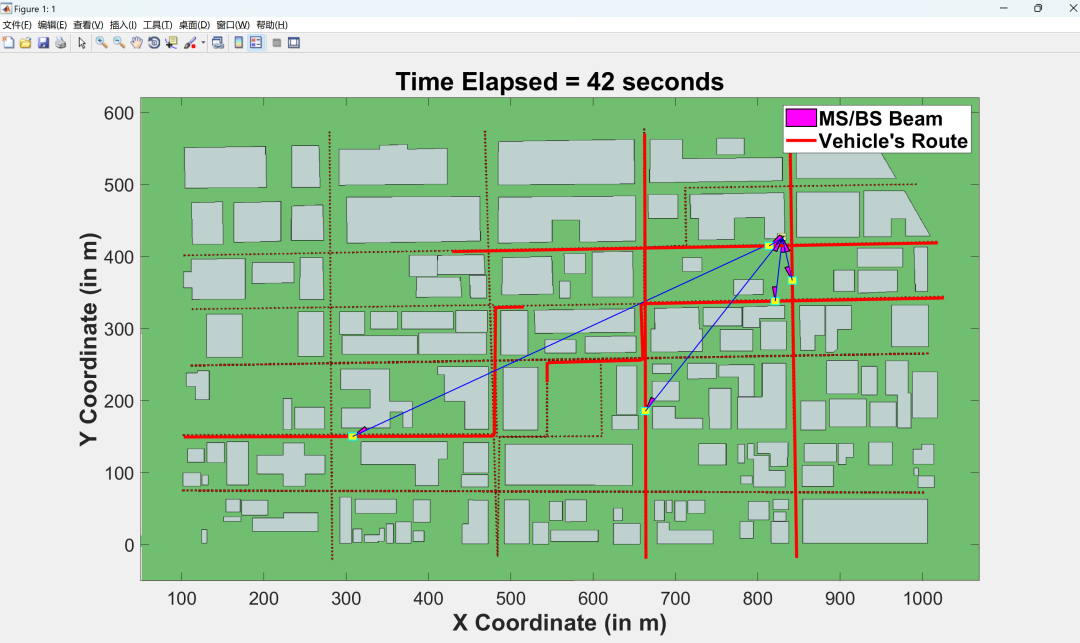
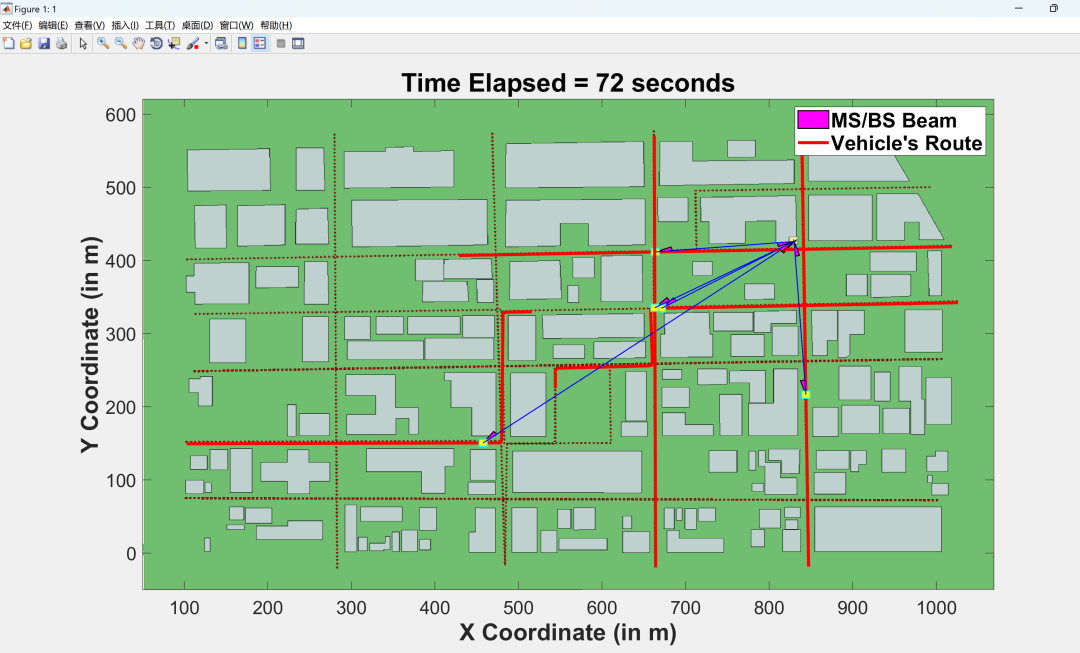
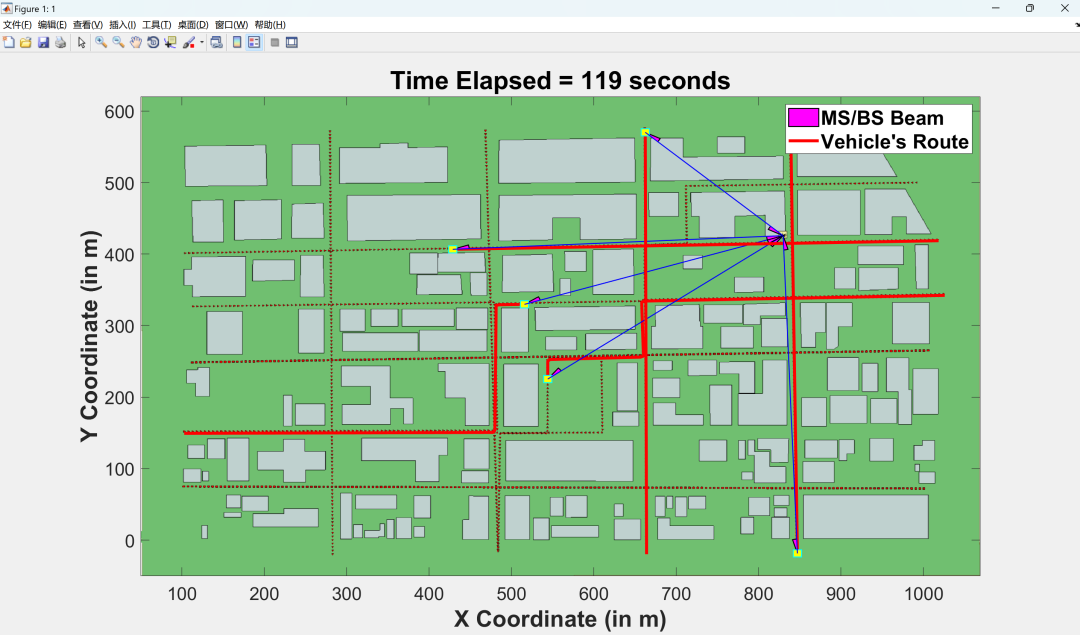
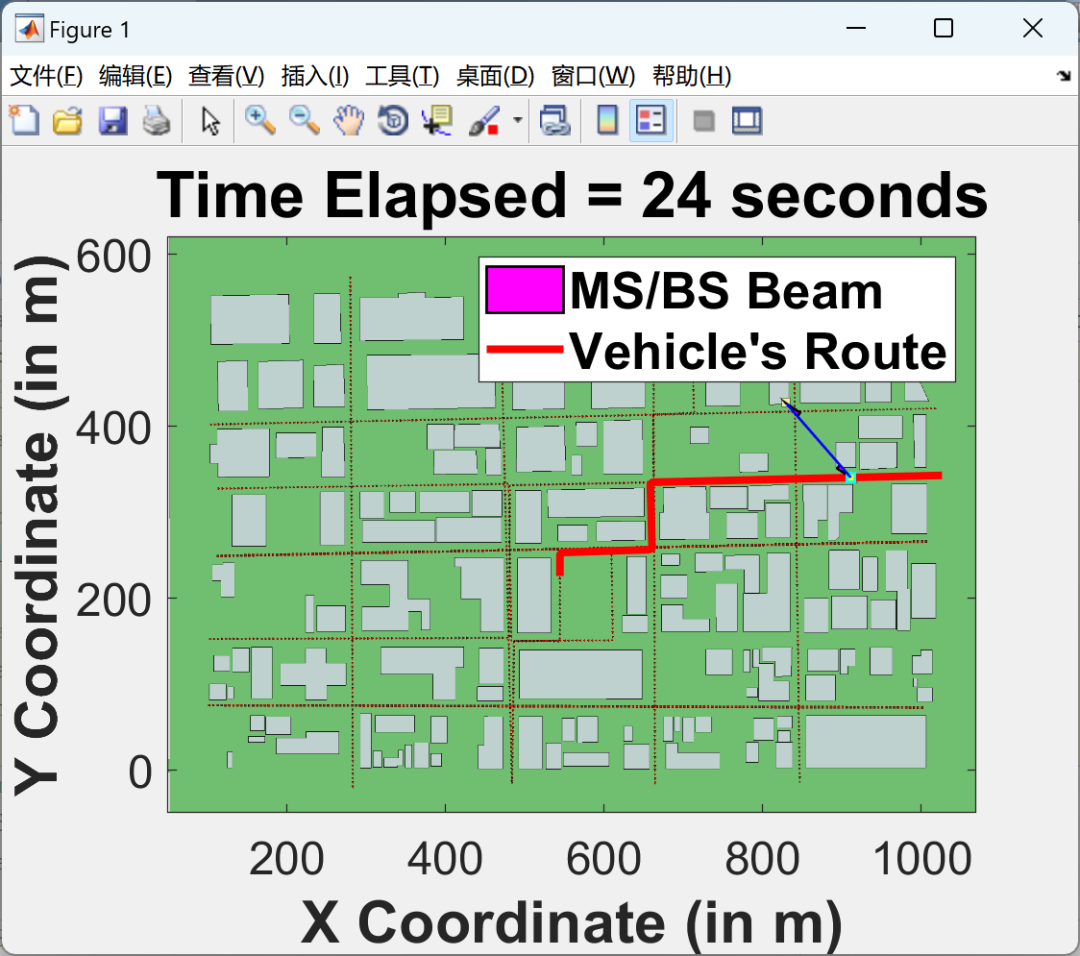
Dynamic operation graph:
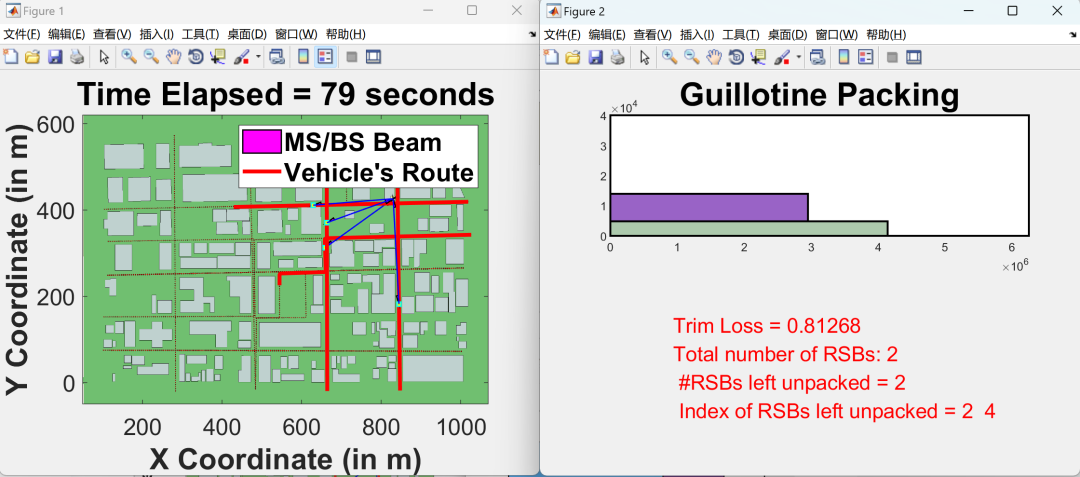
% Sample code: function visualizePacking(RB, data, NRsbLeftUnpacked, IndRsbLeftUnpacked, TrimLoss)
subplot(211)
r = rectangle('Position',[0 0 RB(1) RB(2)]);
r.FaceColor = [1 1 1];
r.LineWidth = 1.5;
axis([-1 RB(1)+2 -1 RB(2)+2]);
nRectSmall = size(data,1);
for iSmall = 1:nRectSmall
    r = rectangle('Position',data(iSmall,:));
    r.FaceColor = rand(1,3);
    r.LineWidth = 1.5;
end
title('Guillotine Packing','FontSize',25,'FontName','Arial','FontWeight','bold');
subplot(212)
str1 = ['Trim Loss = ' num2str(TrimLoss)];
str2 = ['Total number of RSBs: ' num2str(nRectSmall)];
str4 = ['Index of RSBs left unpacked = ' num2str(IndRsbLeftUnpacked)];
text(0.15,0.5,{str1,str2,str3,str4},'Color','red','FontSize',16)
axis off
end

3References
Some content in this article is sourced from the internet, and references will be noted. If there are any inaccuracies, please feel free to contact us for removal.

[1] Zhao Yu, Zhang Wei. Simulation of Collision Attack Detection Model at the Data Link Layer of Sensor Networks [J]. Computer Simulation, 2014(009):031.
[2] Wang Xishuang, Meng Xin. Research on Modeling of Satellite Network Simulation Systems [J]. Computer Engineering and Applications, 2004, 40(23):4. DOI:10.3321/j.issn:1002-8331.2004.23.045.
[3] R. Subramanian, “A Resource Allocation Scheme for Multi-User MmWave Vehicle-to-Infrastructure Communication,” accepted for publication in the Future Technologies Conference (FTC) 2018, Vancouver, BC, Canada. 13-14 Nov. 2018.




4 Matlab Code Implementation
Lychee Research Society