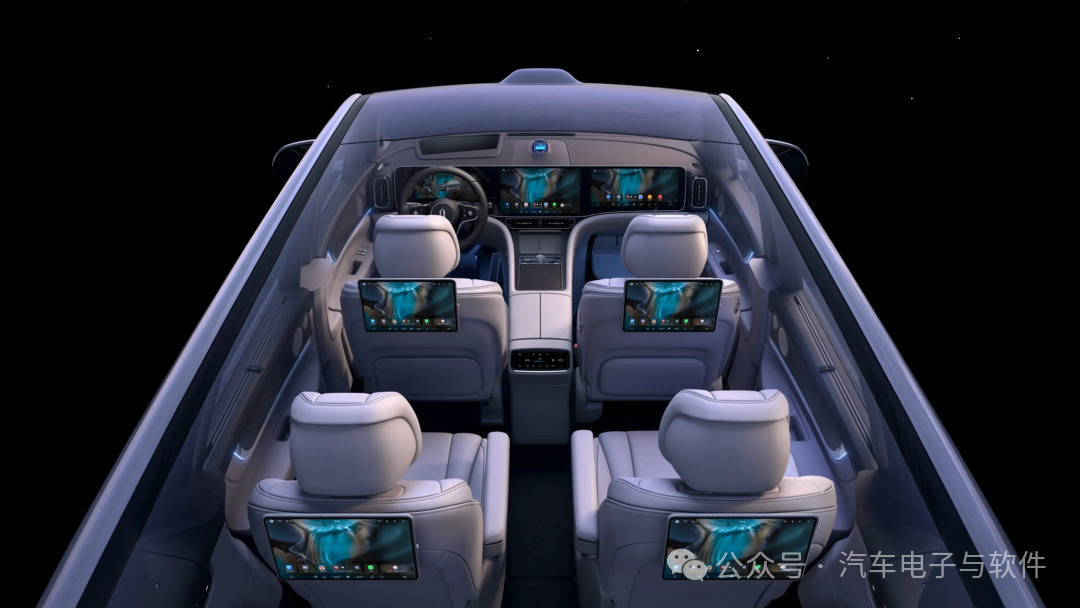
 This article is approximately 8,200 words,recommended for collection and readingAuthor | Intuitive Explanation
Produced by| Automotive Electronics and Software
Table of Contents
1. The Difference Between Large Language Models and AI Agents
2. How AI Agents Encapsulate and Call Large Language Models
3. How AI Agents Are Implemented in Smart Cockpits
4. Conclusion
Smart cockpits are evolving from traditional “function collections” to “intelligent partners,” with AI Agents as the core vehicle of this transformation. By integrating perception, decision-making, execution, and memory capabilities, they achieve a leap from “passive response” to “proactive service.” This article systematically outlines the implementation path of AI Agents in smart cockpits, first analyzing the essential differences between large language models (LLM) and AI Agents, then explaining the technical mechanisms of how AI Agents encapsulate and call LLMs, and presenting the entire process from architectural design to practical application as completely as possible, in conjunction with the scenario characteristics of smart cockpits.
1. The Difference Between Large Language Models and AI Agents
Although these two concepts are often confused, large language models (LLM) and AI Agents are two related yet distinctly different concepts in the field of artificial intelligence, with significant differences in core positioning, capability scope, and autonomy.
(1) Core Definition Differences
Large Language Models (LLM): LLMs are AI models focused on natural language processing (NLP), with the core capability of understanding and generating human language. They learn from vast amounts of text data to master the grammar, semantics, and contextual relationships of language, enabling them to perform tasks such as text generation, translation, summarization, and question answering. For example, models like GPT-4 and Tongyi Qianwen are essentially “language processing tools,” relying on user input to provide corresponding language output.
AI Agents: AI Agents are intelligent entities with “autonomous perception – decision-making – execution – feedback” capabilities, able to independently complete complex tasks in specific environments. They use LLMs as their logical core but integrate multiple components such as perception modules, task planners, memory networks, and tool interfaces. They can not only handle language interactions but also interface with external devices and services to achieve end-to-end task completion. For example, an AI Agent in a smart cockpit can automatically adjust the air conditioning temperature based on the user saying, “I’m a bit cold,” without requiring the user to specify the temperature, which the user may not even know precisely.
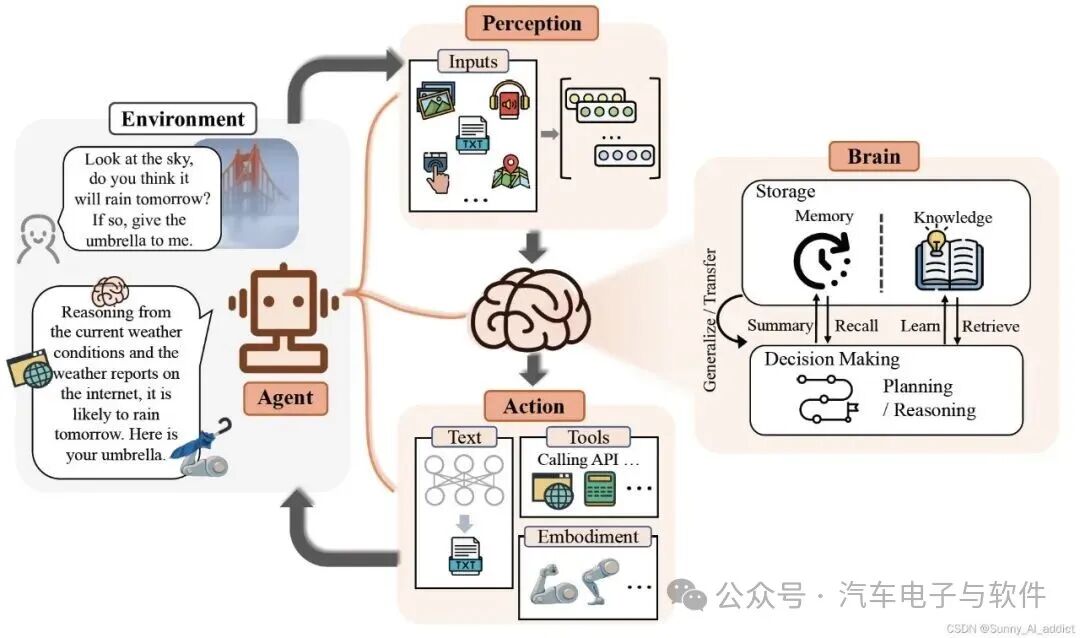
Figure: The overall working diagram of AI agents, sourced from the internet, where the brain can be understood as LLM
(2) Key Distinction Dimensions
|
Comparison Dimension |
Large Language Models (LLM) |
AI Agent |
|
Core Capability |
Language understanding and generation |
Autonomous task execution (perception – decision-making – execution – feedback) |
|
Autonomy |
Passive response to input, no proactive behavior |
Proactively initiates interactions, plans tasks, adjusts strategies |
|
Capability Scope |
Focuses solely on language |
Covers multi-modal perception, task planning, tool invocation, etc. |
|
Application Goal |
Solves the question of “how to say” (e.g., explanation functions, text generation) |
Solves the question of “how to do” (e.g., controlling devices, completing services) |
|
Module Composition |
Single model component |
System-level architecture (LLM + perception + planning + memory + tools) |
|
Dependency Environment |
Requires only a text input environment |
Needs to interact with physical or virtual environments (e.g., vehicles, service APIs) |
(3) Relationship: LLM is the core component of AI Agents.
LLM serves as the “brain” of AI Agents, responsible for processing language interactions and logical reasoning, but the capabilities of AI Agents far exceed those of LLMs alone. For example, when a user says, “Navigate to the nearest gas station,” the role of LLM is to understand the intent of this sentence and extract key information ( “nearest gas station”), while the AI Agent needs to call the map API to search for gas stations, plan the route, control the vehicle’s navigation system, and even combine vehicle battery data to determine whether to remind the user to charge. This series of coordinated actions relies on the complete architecture of the AI Agent.
To understand it simply, one can think of an agent as a closed-loop workflow plus LLM.
2. How AI Agents Encapsulate and Call Large Language Models
Encapsulation and invocation of LLMs by AI Agents is key to achieving their autonomous capabilities, focusing on transforming the language capabilities of LLMs into task execution capabilities. This is achieved through standardized interfaces and control logic, allowing LLMs to become the core engine for task planning and decision-making.
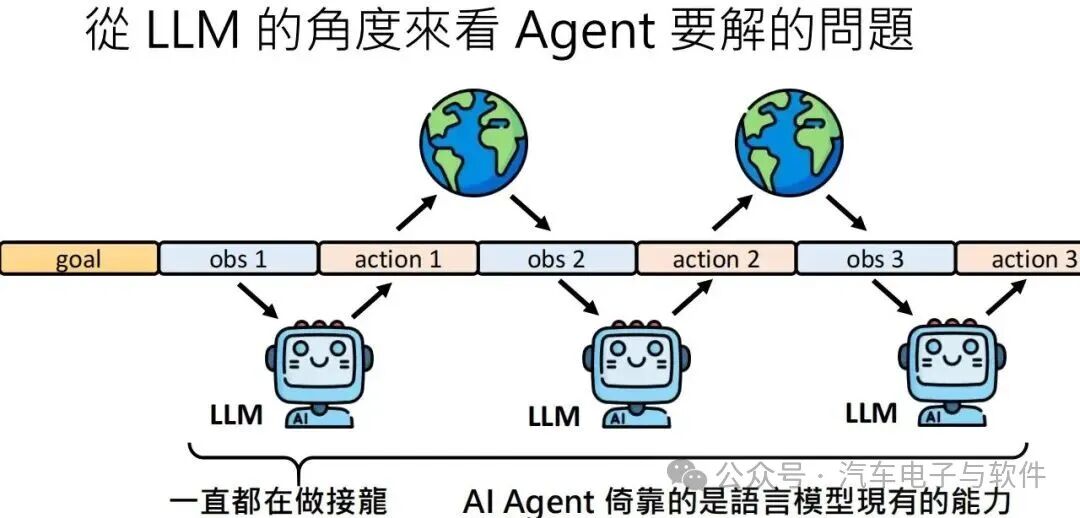
Figure: This diagram vividly illustrates the working mode of an agent calling LLM, sourced from the internet.
(1) Encapsulation: Building a “Task Execution Framework” for LLMs
AI Agents encapsulate LLMs in the following ways to adapt to task execution needs:
1. Define Prompt Templates: Through
Prompt Engineering (prompt engineering), structured input templates are designed for LLMs, clarifying task objectives, contextual information, and output formats. For example, in a smart cockpit, Prompt templates may include the user’s current instructions, vehicle status (such as speed, temperature), historical interaction records, etc., guiding LLM to generate outputs that meet task requirements (e.g., “Adjust the air conditioning to 24°C”).
2. Output Parsing and Standardization: The output of LLMs is usually natural language text, and AI Agents need to parse it into structured data (such as JSON format), extracting key instructions and parameters. For example, if LLM outputs, “Help me set the air conditioning to 24 degrees,” AI Agents will parse the intent as “Adjust the air conditioning” and the parameter as “Temperature: 24°C”, to call the vehicle control API to execute the operation.
3. Context Management: AI Agents store user interaction history and scene information through short-term memory (such as Redis cache) and long-term memory (such as vector databases), automatically injecting context when calling LLM, ensuring that LLM can generate accurate responses based on complete information. For example, if a user first asks, “Are there any coffee shops nearby?” and then asks, “What are its business hours?”, AI Agents will pass the information from the previous question, “coffee shop,” as context to LLM, avoiding ambiguity.
(2) Invocation: Achieving Collaboration Between LLM and External Tools
AI Agents enable LLMs to trigger operations of external devices or services through a tool invocation mechanism, with the specific process as follows:
1. Tool Registration and Description: AI Agents register vehicle control APIs (such as adjusting air conditioning, controlling windows), third-party service APIs (such as maps, weather), and other tools, generating detailed descriptions for each tool (such as functions, parameters, return values), stored in a tool library.
2. LLM Generates Tool Invocation Instructions: When LLM determines that it needs to call external tools, it generates standardized invocation instructions based on the tool descriptions (such as a JSON format function call request). For example, if a user says,
“Navigate to the company,” LLM will generate instructions to call the map API, including parameters such as the destination “company” and current location.
3. Tool Execution and Result Return: The execution layer of AI Agents receives the invocation instructions generated by LLM, parses them, and calls the corresponding tool API to execute specific operations (such as planning a route), returning the execution results (such as route information) to LLM.
4. LLM Organizes Results and Feedback: LLM receives the results returned by the tool, organizes them into natural language text (such as “I have planned the route to the company, expected to arrive in 20 minutes,” and feeds it back to the user through voice or screen.
(3) Optimization: Enhancing the Accuracy and Efficiency of Invocations
To ensure the accuracy and efficiency of LLM’s tool invocations, AI Agents typically adopt the following optimization strategies:
1. Retrieval-Augmented Generation (RAG): Knowledge stored in knowledge bases, such as tool API documentation and vehicle manuals, is retrieved when LLM needs to call tools (such as tool parameter requirements), generating invocation instructions to avoid errors caused by LLM’s “forgetting” or “hallucination.”
2. Function Calling Optimization: By fine-tuning LLMs, they can more accurately identify scenarios that require tool invocation and generate correctly formatted invocation instructions. For example, training LLMs to automatically generate tool invocation requests when encountering keywords like “navigate” or “query.”
3. Multi-turn Interaction and Error Correction: When tool invocations fail or results do not meet expectations, AI Agents will use multi-turn interactions to allow LLM to correct invocation instructions. For example, if a call to the map API fails due to parameter errors, LLM will adjust the parameters based on the error information and regenerate the invocation instructions.
3. How AI Agents Are Implemented in Smart Cockpits
The implementation of AI Agents in smart cockpits is a systematic engineering project that needs to combine the characteristics of vehicle scenarios (such as real-time performance, automotive-grade safety, and multi-modal interaction) to construct a complete closed loop of “perception – cognition – decision-making – execution – feedback.”
(1) Core Architecture Design
The architecture of AI Agents in smart cockpits is typically divided into five layers, with each layer working together to achieve autonomous services:
User Layer → Interaction Layer → Core Capability Layer → Service Layer → Hardware Layer
1. User Layer
Interaction Entry: Multi-modal inputs such as voice (mainly), touch, gestures, eye movements, and facial expressions. For example, a user can say “Open the air conditioning,” or wave their hand to adjust the volume.
Output Forms: Multi-modal outputs such as speech synthesis (TTS), screen display, light feedback, and seat vibration. For example, AI Agents can respond with voice, “The air conditioning has been turned on,” while also displaying the temperature adjustment interface on the central control screen.
User Profiles: Store user preferences (such as air conditioning temperature 24°C, classical music style), driving habits (such as common routes, refueling every Friday), and historical interaction records for personalized services.
2. Interaction Layer
Speech Recognition (ASR): Converts user speech into text, supporting dialects (such as Sichuan dialect, Cantonese), noisy environments (such as high-speed wind noise, music), and continuous conversations. Lightweight ASR models (such as Baidu Paddle Speech, iFLYTEK Starfire) are deployed on the edge to ensure normal operation even in offline states, combined with cloud-based large models to improve the accuracy of complex instruction recognition.
Natural Language Understanding (NLU): Parses user intent (such as “Navigate to the company,” “Play music,” etc.), extracting key parameters (such as destination, song name). Based onBERT, GPT, and other pre-trained models, fine-tuning is performed, combined with user profiles and scene context to disambiguate (for example, “Go to Peking University” defaults to navigating to the user’s frequently visited Peking University).
Multi-modal Fusion: Combines voice, vision (such as driver fatigue detection), and sensor data (such as speed, temperature) to understand the scene. For example, if a user says “It’s too cold,” while the camera detects the user rubbing their hands, AI Agents will prioritize adjusting the air conditioning temperature rather than just responding, “Okay.”
Dialogue Management (DM): Maintains context, supports multi-turn dialogue and intent clarification. Reinforcement learning (RL) is used to optimize dialogue strategies. For example, if a user says “First go to the gas station, then to the company,” follow-up questions can be asked, “How long do you need to stay at the gas station?”
Speech Synthesis (TTS): Converts text into natural speech, supporting emotional speech (such as using a serious tone for reminders) and personalized voice (such as user-defined voices). Lightweight TTS models are deployed on the edge to ensure real-time response, while cloud models provide richer voice effects.
3. Core Capability Layer
Task Planning: Breaks down complex requirements into sub-tasks. For example, “Go to the company and refuel,” is broken down into “Call the map API to search for gas stations” → “Plan the route to the gas station” → “Navigate to the gas station” → “Plan the route from the gas station to the company” → “Continue navigation.” This uses hierarchical task networks (HTN) or LLM generative planning (such as chain-of-thought) to ensure the rationality of task decomposition.
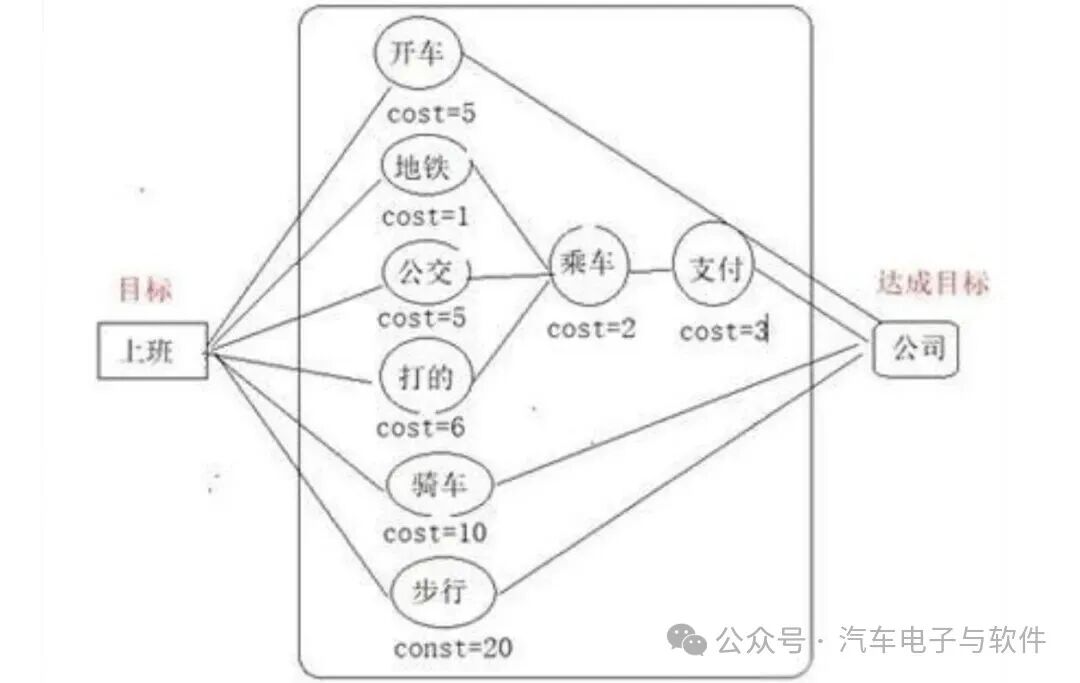
Figure: A simple and intuitive representation of HTN, sourced from the internet.
Memory Mechanism:
-
Short-term Memory: Uses Redis and other in-memory databases to cache the current session context (such as the last 10 rounds of dialogue), supporting quick queries and updates to ensure coherence in multi-turn dialogues.
-
Long-term Memory: Uses vector databases (such as Milvus, FAISS) to store user preferences, historical behaviors, and vehicle settings, generating vectors through LLM for semantic retrieval. For example, if a user says, “I like listening to Jay Chou’s songs,” the long-term memory stores this preference and actively recommends new songs by Jay Chou later.
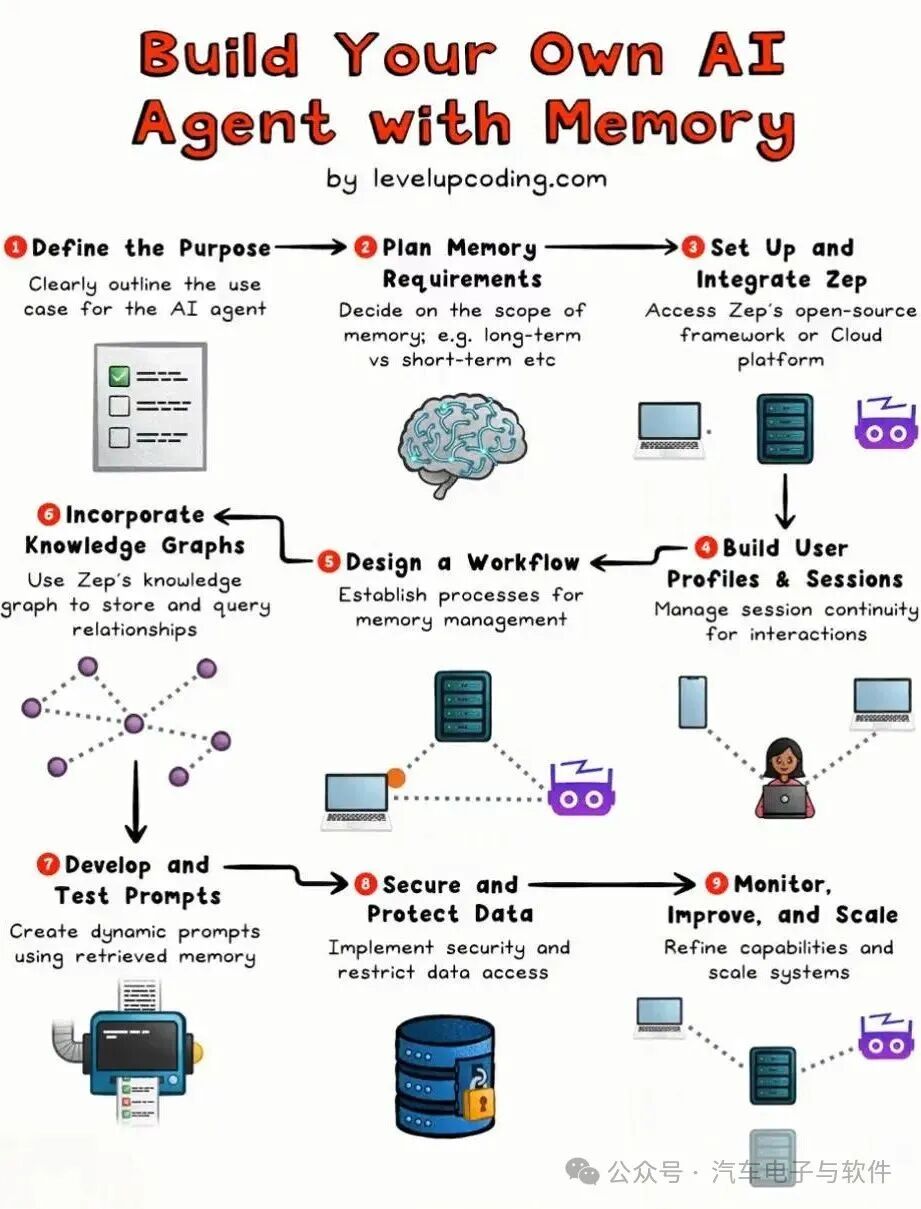
Figure: Having memory is one of the basic paradigms of agents, sourced from the internet.
Intent Understanding and Disambiguation: Eliminates ambiguous intents based on user profiles and scene context. For example, if a user says “Open it,” combined with the previous statement, “The air conditioning is a bit cold,” it determines that this refers to “Increase the air conditioning temperature.” If combined with the previous statement, “The music is not good,” it determines that this refers to “Switch songs.”
Autonomous Decision-Making: Proactively provides services without explicit user instructions. For example, if it detects that the vehicle’s battery is below 20%, it proactively asks, “Battery low, would you like to navigate to the nearest charging station?” If it detects driver fatigue, it proactively plays refreshing music and reminds the driver to rest.
4. Service Layer
Vehicle Control Services: Control vehicle hardware through in-vehicle APIs (such as AIDL/Binder, CAN bus) to control devices like air conditioning, windows, seats, lights, and wipers. For example, calling the air conditioning API to set the temperature to 24°C, calling the seat API to adjust seat heating.
Navigation Services: Integrate Gaode and Baidu Maps SDKs to provide route planning, real-time traffic, POI search, voice navigation, and other functions. For example, based on the user’s instruction “Navigate to the company,” it calls the map API to plan the optimal route and guides the driver through voice prompts.
Entertainment Services: Integrate music apps (such as QQ Music, NetEase Cloud), video platforms (such as iQIYI in-car version), and radio stations, supporting voice song requests and program switching. For example, if a user says “Play “Seven Mile Fragrance,” it calls the music API to search and play the song.
Life Services: Integrate third-party services APIs for weather, news, flight/train queries, takeout, and charging station searches. For example, if a user says “Check tomorrow’s weather,” it calls the weather API to get information and feedback; if a user says “Are there charging stations nearby?”, it calls the charging station search API to recommend the nearest charging station.
Vehicle Status Services: Retrieve vehicle data such as speed, battery level, fuel consumption, and fault codes for contextual recommendations. For example, based on speed, it determines whether the vehicle is driving at high speed, and when a user says “Open the window,” it reminds, “Driving at high speed may cause significant wind noise, do you confirm opening the window?”
5. Hardware Layer
Computing Platform: In-vehicle computing units (such as Qualcomm Snapdragon cockpit platforms SA8155P/SA8295P, NVIDIA DRIVE AGX Orin) provide AI computing power support for ASR, NLU, TTS, and other model inference. For example, the NPU computing power of SA8295P reaches 30TOPS, meeting the real-time inference needs of large models on the edge.
We have made some attempts to deploy on TBOX, but the computing power is clearly insufficient; it still requires computing power comparable to that of autonomous driving domain controllers or integrated cockpit domain controllers.
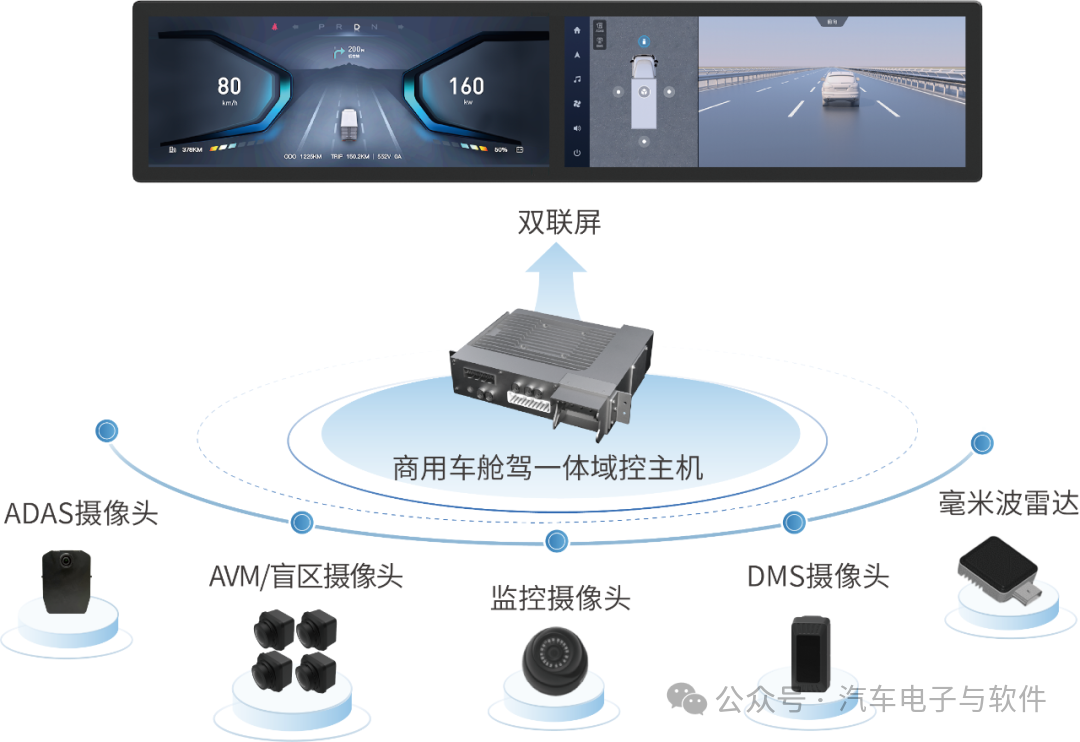
Figure: The powerful computing capabilities of integrated cockpit domain controllers, sourced from the internet.
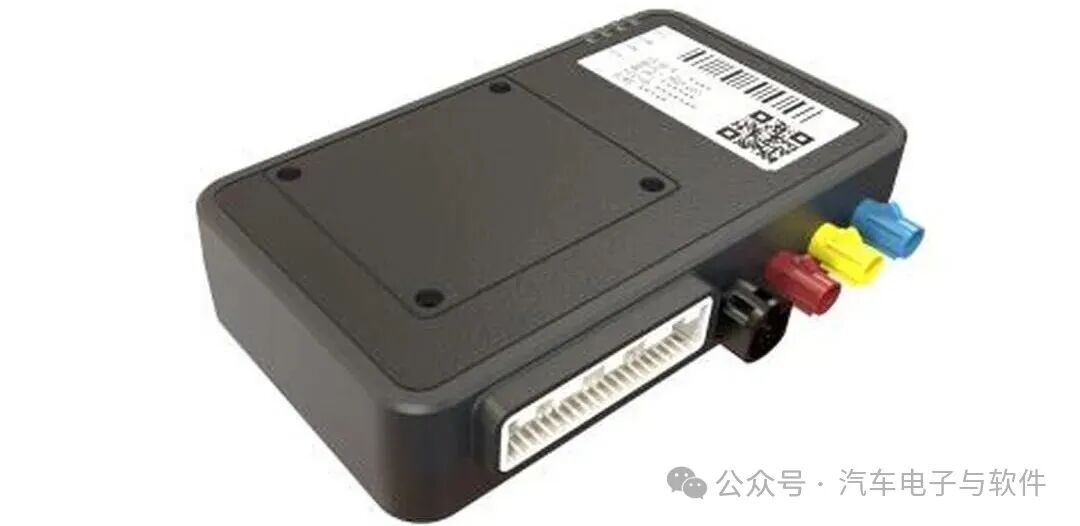
Figure: The computing power of in-vehicle TBOX is still much inferior, sourced from the internet.
Sensors: Microphones (supporting far-field pickup, multi-channel noise reduction), cameras (driver monitoring, gesture recognition), in-vehicle temperature/humidity sensors, speed sensors, GPS, etc. For example, a multi-channel microphone array can accurately locate the direction of the user’s voice, improving speech recognition accuracy; driver monitoring cameras can identify fatigue, distraction, and other states.
Actuators: Speakers (for TTS output, music playback), displays (central control screen, instrument panel, HUD), lights (ambient lights, indicator lights), seat/air conditioning controllers, etc. For example, the central control screen displays navigation routes and vehicle status, while the HUD projects key information onto the windshield for easy viewing by the driver.

Figure: Today’s smart cockpit screens are indeed a bit too many, sourced from the internet.
(2) Key Technical Implementations
1. Multi-modal Interaction Technology
Voice Interaction:
-
Wake Word Recognition: Uses lightweight wake models (such as NVIDIA Riva, Alibaba DAMO Academy wake engine), supporting custom wake words (such as “Hey, Xiao P,” “NIO NOMI”), ensuring low power consumption and high wake rates (targeting >95%).
-
Offline Speech Recognition: Deploys quantized ASR models on the edge (such as INT8 quantized PaddleSpeech), supporting recognition of common commands (such as “Open the air conditioning,” “Navigate home,” etc.) in environments without a network, with a delay controlled within 200ms.
-
Emotional Speech Synthesis: Based on emotional computing technology, TTS models generate corresponding speech tones based on user emotions and scenarios. For example, when the user is happy, a cheerful tone is used, and when reminding about safety, a serious tone is used.
Visual Interaction:
-
Driver Monitoring System (DMS): Uses CNN+LSTM models to recognize the driver’s facial expressions (fatigue, anger, happiness) and eye states (blinking frequency, gaze direction) to assess the driver’s condition. For example, if the blinking frequency is too low, it is determined to be fatigue driving, prompting a reminder to rest.
-
Gesture Recognition: Supports simple gestures (such as waving to adjust volume, clenching a fist to pause music, OK gestures for confirmation), using YOLO object detection models to recognize gesture areas, and then classifying gesture actions through CNN models, aiming for an accuracy rate of >90%.
Multi-modal Fusion:
Uses Transformer architectures (such as CLIP and BLIP) to fuse voice, text, and image features, generating unified semantic representations. For example, if a user says “It’s too cold” (voice) + rubbing hands (image) + in-vehicle temperature 20°C (sensor), the fusion determines the user’s need to be “Increase the air conditioning temperature,” with an accuracy improvement of over 10% compared to single-modal.
2. Natural Language Processing (NLP) Technology
Intent Recognition and Slot Filling:
-
Based on BERT, GPT-4, and other pre-trained models, fine-tuning is performed (the original version is not designed for cockpit use), optimizing for smart cockpit scenarios (such as navigation, vehicle control, entertainment) to improve intent recognition accuracy.
-
Using BiLSTM-CRF models for slot filling, extracting key parameters (such as destination, temperature, song name), which can significantly improve recognition rates.
-
For ambiguous intents, disambiguation is performed based on user profiles and historical data. For example, if a user says “Go to the Oriental Pearl,” if the user frequently visits the Oriental Pearl in Shanghai, it defaults to navigating to that location; if the user is in another city, it searches for related locations of the Oriental Pearl.
Dialogue Management:
-
Using reinforcement learning (RL) to optimize dialogue strategies, adjusting dialogue paths through user feedback (such as “Correct,” “Incorrect,” etc.), enhancing the fluency of multi-turn dialogues.
-
Based on retrieval-augmented generation (RAG) technology, binding in-vehicle knowledge bases (such as vehicle manuals, service API documentation), when LLM answers vehicle function questions, it retrieves accurate information from the knowledge base to avoid “hallucinations.” For example, if a user asks, “What is the vehicle’s range?”, RAG retrieves specific data from the vehicle manual (such as in PDF format) to ensure accurate answers.
3. Task Planning and Execution
Task Decomposition:
-
Complex tasks (such as “Planning a trip to the beach for the weekend and booking a hotel”) are decomposed into sub-tasks using HTN algorithms: “Query beach attractions” → “Filter popular attractions” → “Plan travel routes” → “Query nearby hotels” → “Compare hotel prices” → “Book hotel” → “Generate itinerary.” This is known as chain-of-thought reasoning.
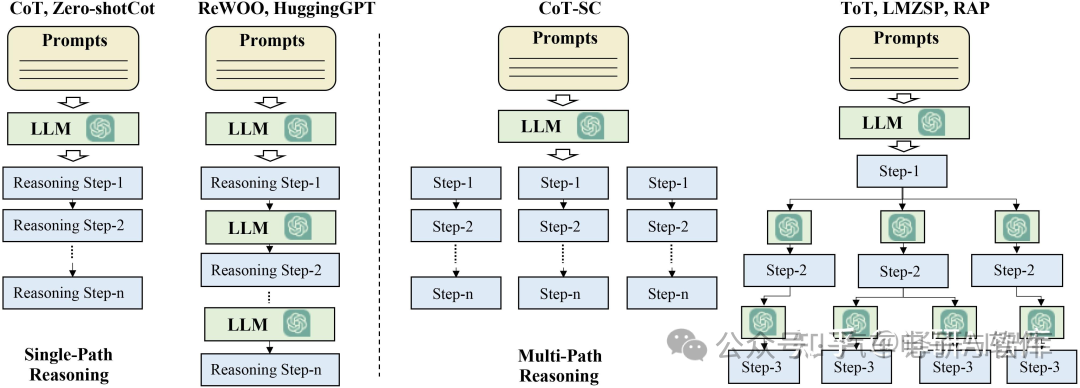
Figure: Various task decomposition methods, sourced from the internet.
-
Simple tasks (such as “Open the air conditioning”) are directly mapped to atomic service calls without decomposition.
Service Invocation:
-
Encapsulate standardized API interfaces, supporting synchronous/asynchronous calls. For example, calling the map API to plan a route is a synchronous task that requires real-time results; calling the hotel booking API is an asynchronous task that can be processed in the background and notified later.
-
Using function calling mechanisms, LLM generates structured invocation instructions, which the execution layer parses and calls the corresponding API. For example, LLM generates “{“name”:”search_hotel”,”parameters”:{“location”:” beach“,”check_in_date”:”2024-06-01″,”check_out_date”:”2024-06-03″}}”, and the execution layer calls the hotel search API.
Execution Monitoring and Feedback:
-
Real-time monitoring of task execution status, detecting service availability through heartbeat mechanisms. For example, if the call to the map API times out without returning, it triggers a retry mechanism, retrying up to 3 times, and if it still fails, it prompts the user, “The current network is busy, unable to plan the route, please try again later.”
-
After task execution is completed, the results are returned to LLM, which organizes them into natural language feedback for the user. For example, after successfully booking a hotel, it feeds back, “I have booked a hotel by the beach, check-in time is 2024-06-01, check-out time is 2024-06-03, order number is XXX.”
4. Memory Mechanism Implementation
Short-term Memory:
-
Uses Redis to cache the context information of the current session, such as the last 10 rounds of dialogue, vehicle current status (temperature, speed), and ongoing tasks. The cache validity period is set to 5 minutes after the session ends to avoid excessive memory usage.
-
Supports context-related queries, for example, if a user says “What are its business hours?”, the short-term memory retrieves the previous statement, “Are there any coffee shops nearby?”, determining that “it” refers to the coffee shop and calls the map API to check the business hours of that coffee shop.
Long-term Memory:
-
Uses vector databases (such as Milvus) to store user preferences, historical behaviors, and vehicle settings. For example, user preferences such as “Air conditioning temperature 24°C,” “Listening to Jay Chou’s songs every Friday,” “Common navigation route is from home to company,” are stored by generating vectors through LLM and storing them in Milvus.
-
Regularly updates long-term memory using user feedback and behavior data. For example, if a user frequently manually adjusts the air conditioning temperature from 24°C to 26°C, long-term memory automatically updates to “User prefers air conditioning temperature 26°C.”
-
Supports semantic retrieval. For example, if a user says “I like listening to soothing music,” long-term memory retrieves the classical and light music the user has previously listened to and actively recommends related songs.
5. Automotive-grade Safety and Real-time Optimization
Real-time Assurance:
-
Model Lightweighting: Quantizes ASR, NLU, TTS, and other models (such as FP32→INT8), pruning to reduce model parameters and computational load, ensuring that edge inference latency meets requirements. For example, the inference speed of the INT8 quantized ASR model is more than three times faster than that of FP32.
-
Pipelining Design: Overlaps the computation processes of ASR recognition and NLU understanding. For example, when ASR recognizes “Open,” NLU predicts possible intents (such as “Open air conditioning,” “Open window”), preloading related tool APIs to shorten overall response time.
-
Priority Scheduling: Sets the highest priority for critical tasks (such as emergency braking reminders, driver fatigue warnings) to ensure they are executed first, unaffected by other tasks.
Safety and Privacy:
-
Safety Domain Isolation: Deploys the core logic of AI Agents (such as task planning, safety decision-making) in automotive-grade safety domains (such as safety islands of AUTOSAR), isolating them from non-safety tasks (such as entertainment services) to ensure that safety functions are not disturbed.
-
Trusted Execution Environment (TEE): Sensitive operations (such as payments, vehicle control) are executed through TEE encryption to prevent malicious attacks and data leaks. For example, when a user pays for parking through AI Agents, the payment information is processed in TEE, not disclosed to third parties.
-
Data Privacy Protection: User voice recordings and interaction data are stored locally by default, not uploaded to the cloud. Users can manually authorize data for model optimization, and after authorization, the data is anonymized (such as removing personal identification information).
Robustness Testing:
-
Extreme Scenario Coverage: Through simulation testing, cover extreme scenarios such as noise, network interruptions, and sensor failures. For example, testing speech recognition accuracy in a 90dB noise environment (our test vehicle can reach or exceed this) and testing service invocation stability under 1s network latency.
-
Real Vehicle Road Testing: Conduct real vehicle road tests in different cities and road conditions (highways, urban areas, rural areas) to collect real scene data, optimizing models and algorithms. For example, testing the perception capabilities of visual sensors in heavy rain and adjusting multi-modal fusion strategies.
(3) Implementation Steps
1. Requirement Definition and Scenario Sorting
Clearly define core functions: such as navigation, vehicle control, entertainment, life services, vehicle status queries, etc. Some advanced functions are not needed in lower configurations.
Sort high-frequency scenarios: commuting (navigation + music + air conditioning adjustment), parking (automatic parking + parking space search), long-distance driving (fatigue reminders + service area recommendations), weekend trips (itinerary planning + hotel booking), etc. Targeted fine-tuning and optimization of models.
Define user experience metrics: wake rate, intent recognition accuracy, dialogue fluency, task completion rate, response delay, etc.
2. Technology Selection
Hardware: Choose in-vehicle computing platforms that support AI acceleration (such as Qualcomm SA8295P, NVIDIA Orin), paired with high-sensitivity microphones, high-definition cameras, and multi-modal sensors. The computing power requirements are high, which is why integrated cockpit domain controllers have emerged.
Software Framework:
-
Edge AI Framework: TensorRT (model inference optimization), OpenCV (visual processing), PaddleSpeech (speech processing).
-
NLP Framework: Hugging Face Transformers (pre-trained models), Rasa (dialogue management), LangChain (LLM invocation and memory management).
-
In-vehicle Operating System: QNX (safety level), Android Automotive OS (AAOS, rich ecosystem).
-
Third-party Services: Maps (Gaode, Baidu), Music (QQ Music, NetEase Cloud), Weather (Moji Weather), Payments (Alipay, WeChat Pay), etc.
3. Prototype Development and Testing
-
Build a Minimum Viable Product (MVP): Implement core voice interactions (such as “Open the air conditioning,” “Navigate to the company,” simple task planning (such as “Go to the gas station,” and basic memory functions (such as storing user preference temperature).
-
Conduct user testing: Invite target users (such as car owners, passengers) to experience MVP, collect feedback (such as low wake rates, intent recognition errors, dialogue fluency issues), and optimize models and interaction designs.
-
Performance Testing: Test response delays, accuracy, stability, and other metrics to ensure compliance with automotive-grade requirements. For example, speech recognition delay must be <200ms (our actual project requirement is 50ms, including network communication time, which is a very high requirement), intent recognition accuracy must be >90%.
4. Large-scale Deployment and Iteration
-
Mass Production Implementation: Integrate the optimized AI Agent into the in-vehicle system, pushing it to users via OTA (over-the-air download technology). Ensure compatibility with vehicle hardware and third-party services, and pass automotive-grade certification (such as ISO 26262).
-
Data-driven Optimization: Collect user interaction data (anonymized), including voice commands, feedback, usage scenarios, etc., and periodically fine-tune models (such as ASR, NLU), optimizing task planning strategies and memory mechanisms. For example, through user feedback “The navigation route is unreasonable,” adjust the route planning parameters of the map API.
-
Function Expansion: Continuously expand the functions of AI Agents based on user needs and technological developments, such as adding emotional interactions, cross-device linkage (synchronization with smart homes, mobile phones), and advanced autonomous driving collaboration (such as voice commands for “Automatic lane change”).
4. Conclusion
The implementation of AI Agents in smart cockpits is a systematic engineering project that integrates multi-disciplinary technologies and is a major trend. Its core lies in using large language models as the logical core to build a “perception – cognition – decision-making – execution – feedback” autonomous closed loop. Through multi-modal interaction technologies, AI Agents can accurately understand user needs; through task planning and tool invocation, they can independently complete complex tasks; through memory mechanisms, they can provide personalized services; and through automotive-grade safety designs, they can ensure reliability during driving.
Currently, the implementation of AI Agents in smart cockpits still faces many challenges: the contradiction between limited edge computing power and the demands of large models, the accuracy of multi-modal fusion, the strict requirements of automotive-grade safety, and user privacy protection. In the future, with the improvement of in-vehicle computing power (such as the application of Blackwell architecture chips), the development of lightweight technologies for large models (such as MoE architecture, model compression), and the optimization of multi-modal fusion algorithms, AI Agents in smart cockpits will possess more powerful autonomous capabilities, more natural interaction experiences, and broader scenario coverage.
Ultimately, AI Agents in smart cockpits will evolve from being “intelligent assistants” to “travel partners,” capable of not only meeting users’ basic needs but also proactively predicting needs, providing emotional support, and collaboratively handling complex travel tasks, fundamentally changing the way humans interact with vehicles and pushing smart cockpits into the era of “proactive service.”
As a joke, perhaps in the future, there will be extreme cases of people falling in love with their cars. Moreover, not only should data be kept confidential, but in the future, the agents themselves will also be protected by regulations, as the user-tuned models are highly private.
/ END /