
According to 3D Printing Technology Reference, a joint team from the University of Tennessee’s Department of Mechanical, Aerospace, and Biomedical Engineering and the University of Waterloo’s Department of Mechanical and Mechatronics Engineering has manufactured AlSi10Mg aluminum alloy with a highly hydrophobic structure and fully hydrophobic 4340 steel using the Laser Powder Bed Fusion (LPBF) 3D printing process.
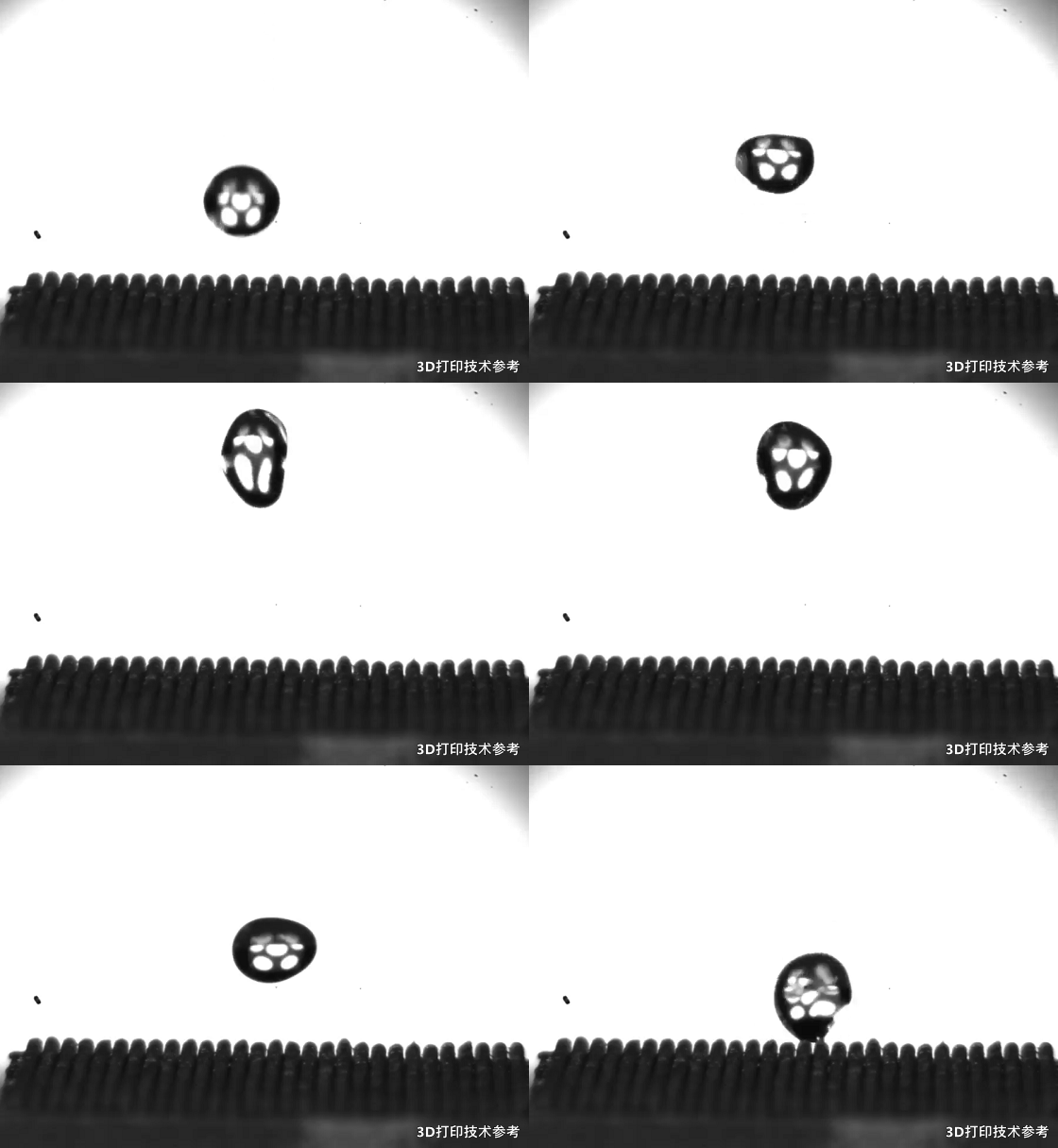
What is a hydrophobic structure and what is its value?
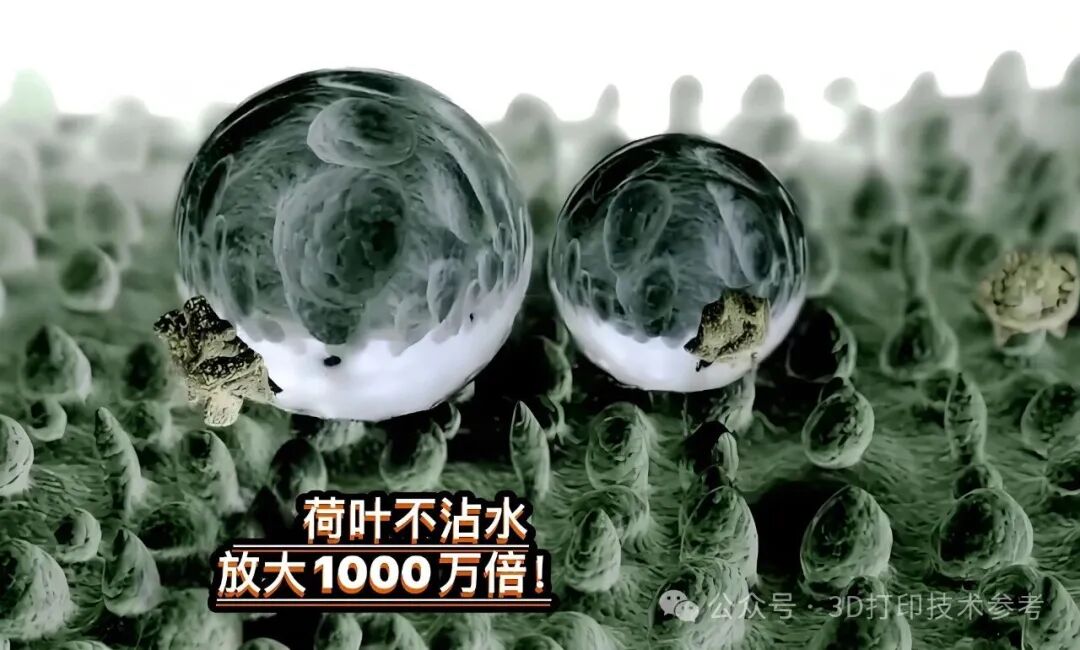
A hydrophobic structure refers to a microstructure on the surface of a material that makes it difficult for water molecules to adhere. These structures are typically composed of tiny particles or uneven surfaces that reduce the contact area of water molecules when they come into contact with the surface, allowing them to slide off quickly.
Hydrophobic structures have a wide range of applications, including lubrication, waterproofing, oil resistance, and antibacterial properties. In the future, these structures could also be applied in emerging fields such as flexible electronics and medical devices. For example, hydrophobic structures can be used to create technologies with super waterproof capabilities, making electronic devices more durable and reliable.
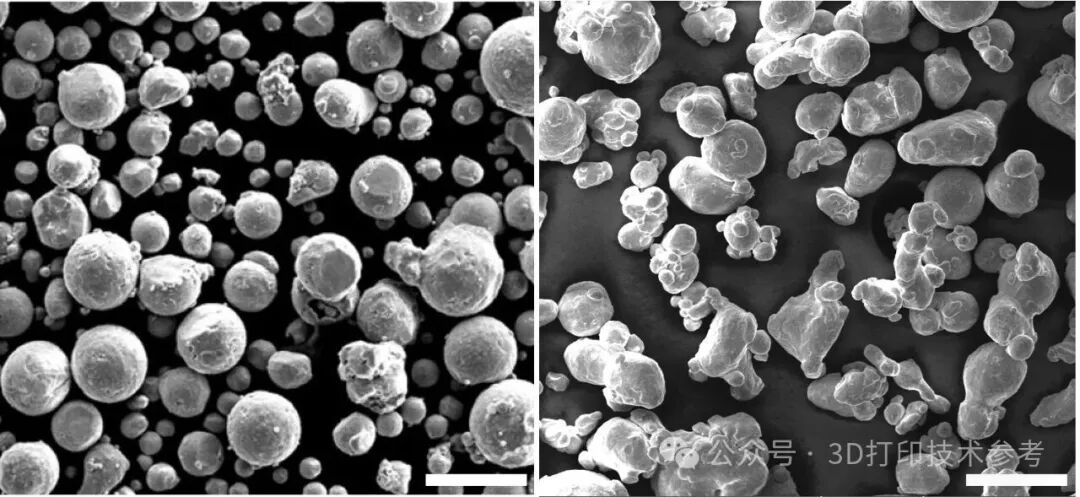
 Material SelectionResearchers used metal 3D printing technology to create surfaces with hydrophobic structures, utilizing gas-atomized AlSi10Mg (diameter 20–63 µm, median particle size approximately 44 µm) and water-atomized 4340 steel (size range 27–63 µm, median particle size approximately 46 µm). The sphericity of the two powders shows significant differences.
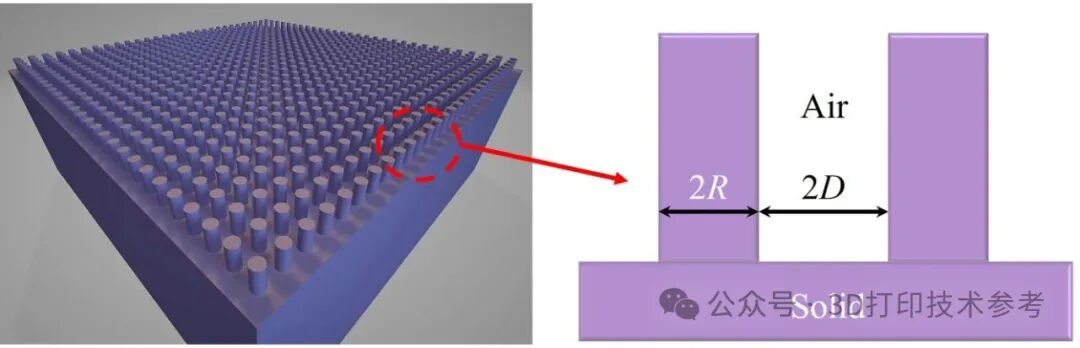
 Surface Texture Structure DesignIn terms of structural design, a micro-column array with different column sizes and spacing was designed using CAD software. The laser scanning path was carefully configured using slicing software to ensure that only two-point exposures occurred at the cross-section of each column, thereby forming adjacent melt pools and subsequently creating micro-columns.
 Surface Morphology Treatment
The 3D printed metal surface was cleaned by sequential ultrasonic cleaning in ethanol and deionized water. The surface was then rinsed with deionized water and dried with compressed air. Subsequently, the cleaned samples were exposed to oxygen plasma for 10 minutes. The plasma-treated samples underwent vapor silanization at 110°C for 1 hour, imparting low solid surface energy.
Morphology of 3D Printed Metal Surfaces
Micro-column arrays of aluminum and steel with different column sizes and spacing were manufactured using L-PBF technology.
The surface texture of the 3D printed aluminum alloy micro-columns is relatively smooth, while the steel surface texture micro-columns exhibit small granular features, in other words, they have a layered structure.
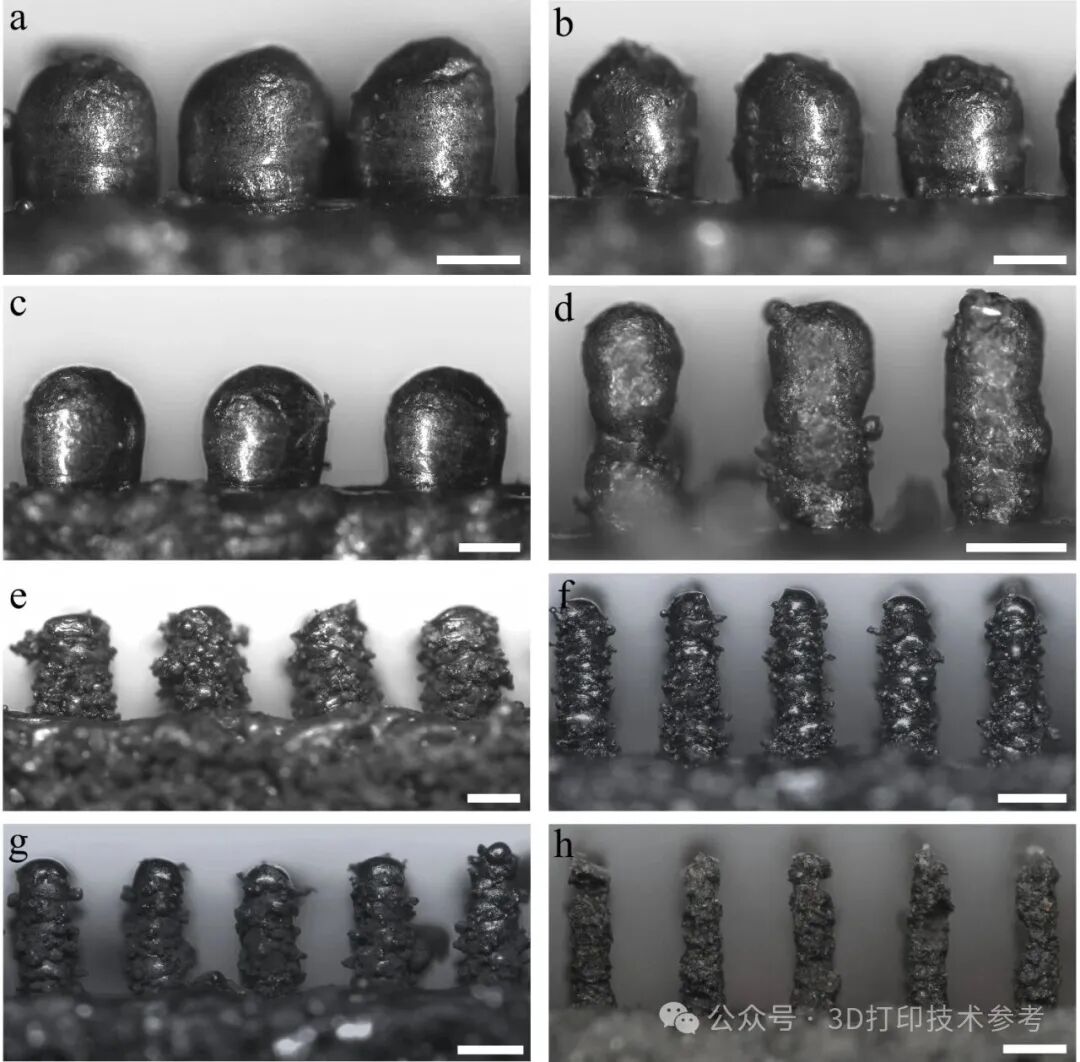
a-d, aluminum alloy micro-columns; e-h, steel alloy micro-columns
Liquid Repellency Testing
After fluorosilane treatment, the aluminum alloy surface showed a high contact angle for water droplets, increasing from approximately 138° to about 151°, indicating strong hydrophobicity.
There is an air cavity between the water droplet and the aluminum alloy surface, further enhancing the surface’s hydrophobicity. This state is formed due to the synergistic effect of the micro-column structure and low surface energy materials. Moreover, water droplets can roll on the textured aluminum alloy surface without remaining stationary. However, hexadecane droplets exhibit some wettability on the aluminum alloy texture. In contrast, the steel alloy surface, due to its hierarchical structure, shows complete repellency to both water and oil. On the other hand, the size ratio of the micro-columns also affects the wettability of liquids.
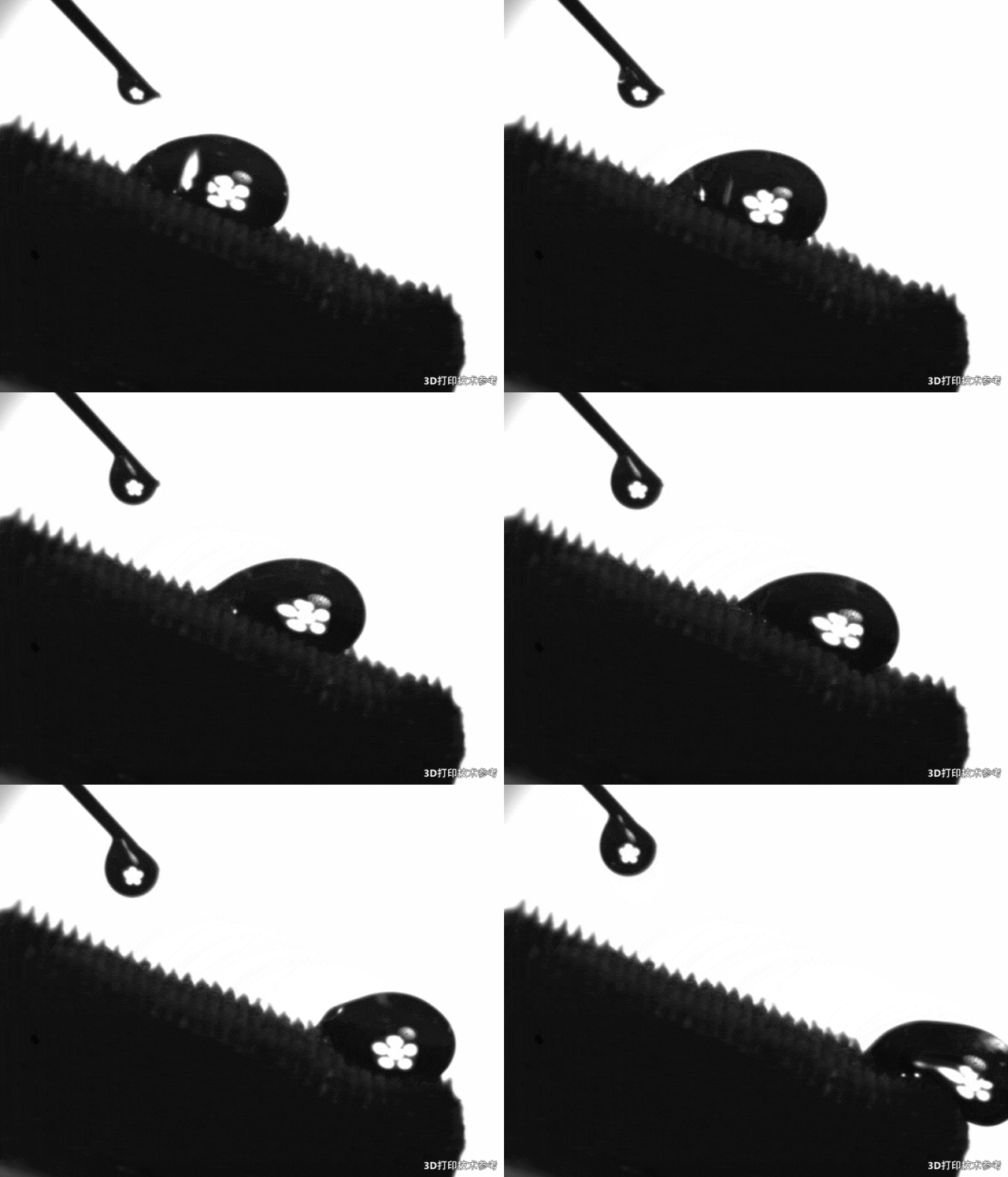
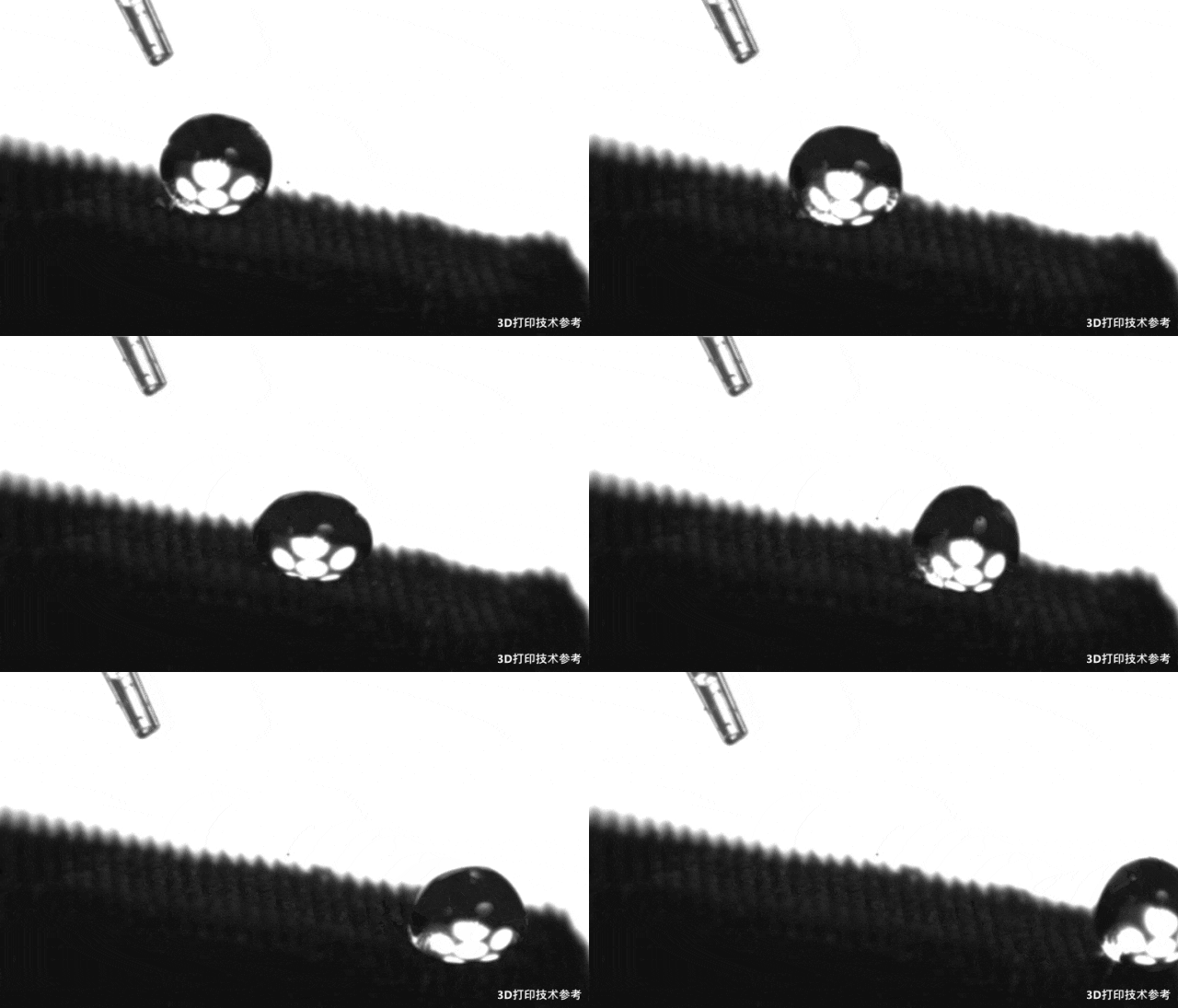
Researchers also treated the metal surface texture through various methods such as tape peel tests, ultrasonic cleaning tests, and sandpaper abrasion, finding that these treatments had little impact on the material’s hydrophobicity (coarser sandpaper abrasion may cause changes), demonstrating the potential of the textured structure from metal 3D printing in durable applications.
This is the first academic research to manufacture metal structures with functional surfaces using 3D printing technology, proving that this technology can indeed be realized, and may achieve application progress in related fields in the future.#AdditiveManufacturing #3DPrinting
Note:This article is created by 3D Printing Technology Reference and is not authorized for reproduction without contact.。Welcome to share
Industry expert communication groupQ group:248112776
Further Reading:
1. BYD Reveals: First to Play the “3D Printing Technology Card”!
2. This complete solution for ceramic 3D printing research and production is hard to refuse!
3. Apple officially incorporates 3D printing technology into its supply chain; which companies are likely to get the “golden key” in the 3C industry?
4. 3D printing raw material suppliers: “The overall sales structure of the company has changed, and the 3D printing field is growing rapidly!”