A column-type sensor is a type of measuring element. Using simulation and experimental methods, this article explores the percentage error of the direct output value of different height column-type strain force sensors under various eccentric and inclined loading conditions, as well as the percentage error after strain data fusion using neural networks.
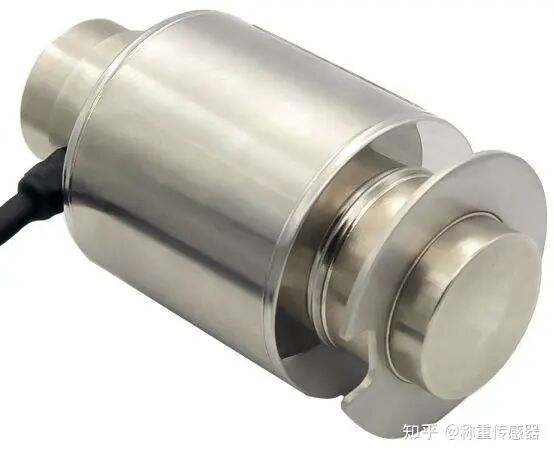
Working Principle of Column-Type Sensors:
Advantages: Compact structure, strong overload capacity, high inherent frequency, fast dynamic response, convenient installation, and low manufacturing cost.
Disadvantages: Poor lateral and off-axis load capacity (better with a dual diaphragm structure), poorer inherent linearity, and difficulty in fixing the weighing sensor which can easily rotate.
The Ningbo Chenbang column-type weighing sensor, due to its many advantages, is currently widely used in truck scales, but its disadvantages cannot be overlooked. To address the poor lateral and off-axis load capacity of column-type weighing sensors, some product samples from various companies specifically recommend off-axis angles that do not affect measurement performance. According to these materials, a weighing sensor with a height of 230mm allows a displacement of 20mm under an off-axis load of 5, and 12mm under an off-axis load of 3.
In practical applications, since the load cells are composed of multiple segments, the changes in the load cell may not be as significant, but this at least provides designers with a reference for the length dimensions of the load cell to consider during design. Temperature changes should not cause the load cell length to exceed the allowable displacement given by the weighing sensor device, thereby affecting the product’s measurement performance.
Another situation that arises is that the Ningbo Chenbang weighing sensor may continuously rotate slightly during use, even causing the cable to break. Why does the column-type weighing sensor installed on truck scales exhibit rotation? The automatic rail scales have a longer history of use, yet rotation is rarely observed on installation sites. This is because the load cell of the automatic rail scales generally has a length of only 3.7m to 4m, and the limit is achieved through a tension structure, ensuring that the load cell remains relatively stationary in a horizontal state while not affecting the vertical force. In contrast, the truck scale’s load cell is longer, and the limit device allows for some displacement in a horizontal state, which may cause the weighing sensor to sway. It is this continuous swaying that causes the cable to become entangled around the weighing sensor until it breaks.
The third issue is the problem of off-axis force. Why does the truck scale using the Ningbo Chenbang column-type weighing sensor exhibit a larger segment difference (i.e., off-axis error)? This is certainly related to the boundary conditions caused by the processing of the load cell, but from a theoretical perspective, the thermal expansion and contraction cause the column-type weighing sensors at both ends of the load cell to tilt, resulting in off-axis forces. The larger the measured weight, the greater the off-axis error. Additionally, this force is also related to the height of the weighing sensor; taller weighing sensors are relatively less affected, while shorter ones are more affected.
Structure of Column-Type Sensors:
During measurement, gravity acts on the elastic body, causing deformation. This strain (positive or negative) is converted into an electronic signal by the strain gauge attached to the elastic body. In addition to the essential strain gauge and elastic body, the sensor typically includes a protective shell for the strain gauge, sealing elements, etc.
The cross-section of the elastic body of the Ningbo Chenbang column-type sensor can withstand tensile and compressive loads through a threaded rod connected to it. At the location where the strain gauge is attached, the cross-section of the column is reduced, resulting in sufficient strain to obtain accurate results. The overall deformation of the elastic body is minimal.
What is a Column-Type Tension Sensor?:
The column-type tension sensor is an *ancient structural form. In recent years, it has been considered to have inherent non-linearity, leading to limited research. However, in recent years, it has gained significant attention due to numerous applications proving that column-type tension sensors have the following advantages in application and processing:
1: Simple and compact structure, small size, lightweight, and durable, making it incomparable to other structural sensors, resulting in minimal material and labor consumption.
2: The geometric shape of the elastic body is simple, making design calculations, mechanical processing, and surface treatment very straightforward.
3: The sensor has good rigidity, high inherent frequency, and good dynamic response, which is beneficial for dynamic measurements.
4: Insensitive to vibrations, generally allowing for 3g of swing under clear usage conditions; overload and impact resistance are superior to any other structural sensors.
5: The measurement axis of the column-type sensor coincides with the load direction, eliminating the influence and constraints of fixed boundary conditions. Therefore, column-type sensors have much smaller repeatability and hysteresis errors compared to any other structural sensors.
6: After adopting single or double diaphragm welding sealing technology, excellent resistance to lateral and torsional forces can be achieved. Consequently, its orientation error can be made smaller than that of any other structural sensor.
Application Range of Column-Type Weighing Sensors:
Column-type weighing sensors are widely used in various truck scales, rail scales, axle weight scales, and material tank scales, among other electronic weighing devices. In practical use, the elastic body is prone to rotation, and after a period of use, it often requires calibration to ensure weighing accuracy. Additionally, the elastic body is also susceptible to rotation under vibration or lateral forces, leading to unstable weighing performance and reduced accuracy.