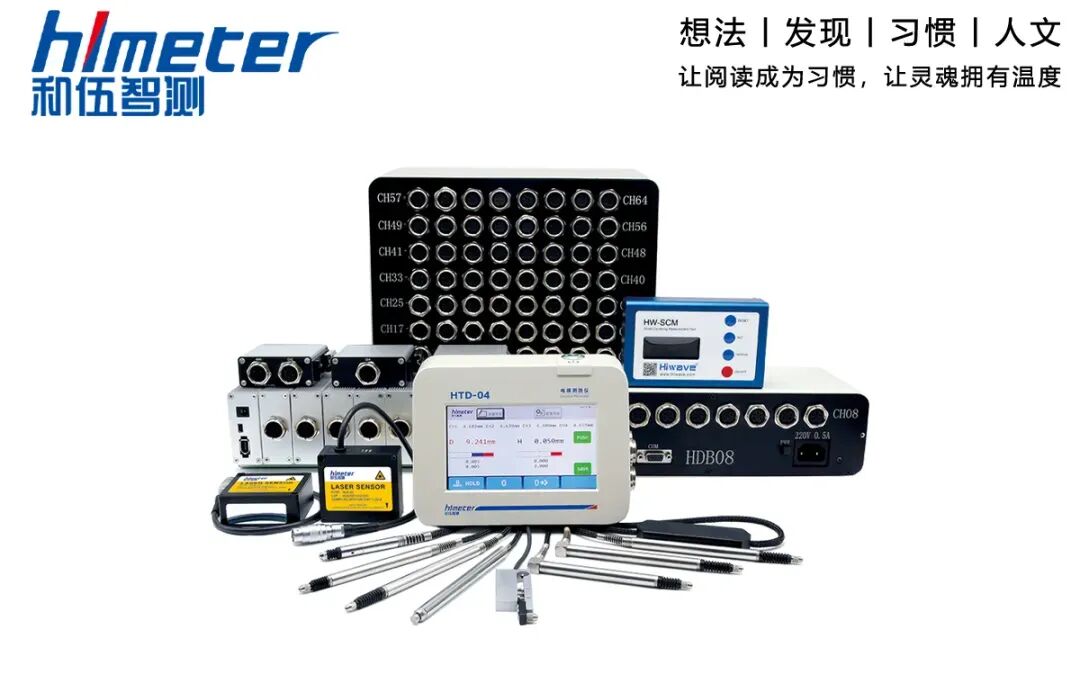
In the wave of smart manufacturing, high-precision measurement technology has become an indispensable core element of modern manufacturing. The pen-type inductive LVDT (Linear Variable Differential Transformer) displacement sensor is playing an increasingly important role in various industrial fields due to its high precision, high repeatability, and compact structure.
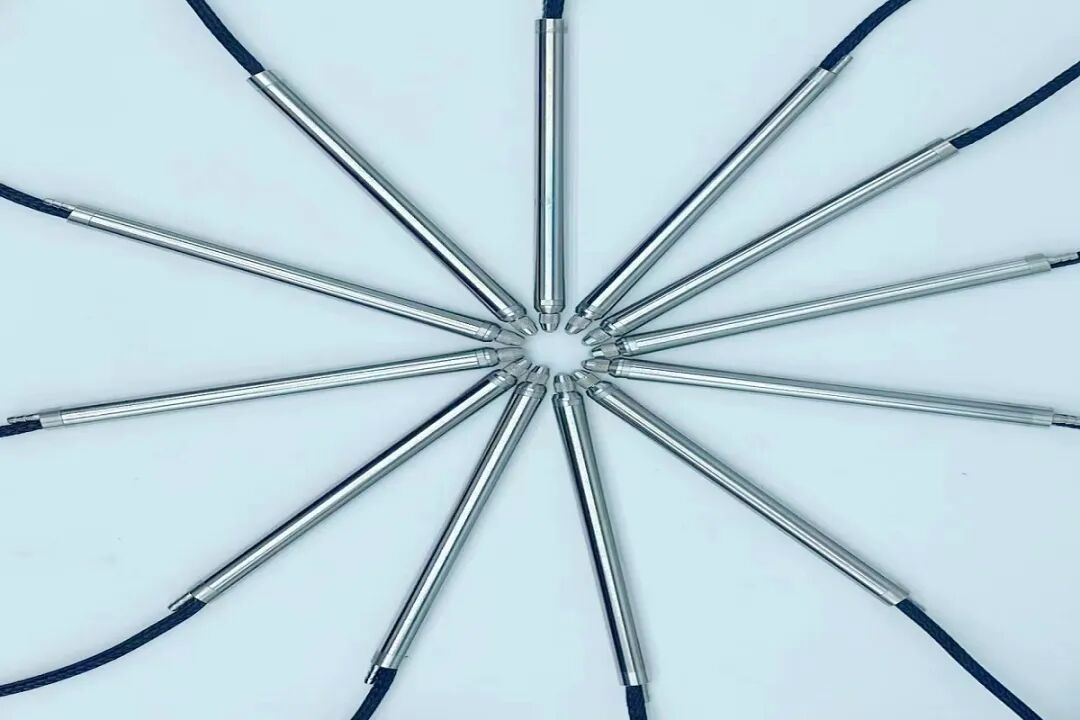
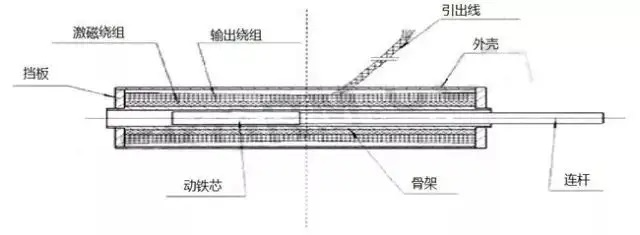
The pen-type inductive LVDT displacement sensor is a type of inductive displacement sensor, named “pen-type” due to its slender shape resembling a pen. It operates based on the LVDT principle, containing a primary coil and two secondary coils, which change the electromagnetic coupling through the movement of a core to achieve precise measurement of small displacements.
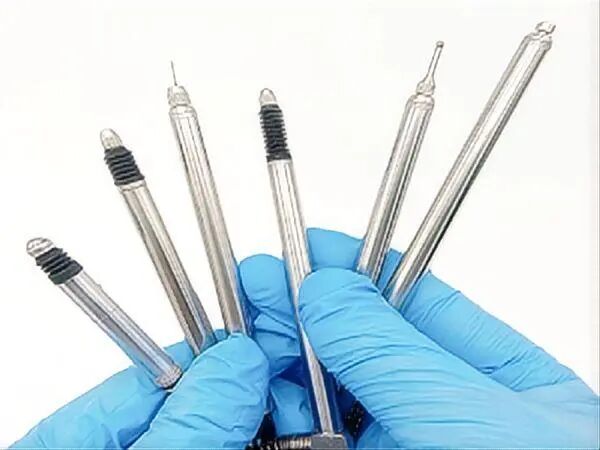
The pen-type inductive LVDT displacement sensor has several excellent characteristics, with a minimum diameter of 8mm, compact structure, and durability, making it an ideal choice for precision measurement.
For example, with the HSS series, the measurement accuracy can reach up to 0.1 micrometers (μm), with a repeatability of 0.01% FS, capable of detecting extremely small dimensional changes. It offers various output signal options, including 0-5V, 0-10V voltage signals, 4-20mA current signals, and digital RS485 output, facilitating connection with various data acquisition and control systems. The operating temperature range is wide, from -10℃ to +80℃, making it suitable for most industrial environments. The sensor features a probe made of high-hardness, wear-resistant materials, and uses precision guide rails internally to ensure long-term stability and reliability.
3C Field
In the mobile phone manufacturing process, the pen-type LVDT sensor is used to detect the flatness and thickness of the casing. In mass production, products with inconsistent dimensions can affect assembly quality and product appearance. Using LVDT sensors for online detection can timely eliminate defective products, ensuring product quality.
Automotive Manufacturing
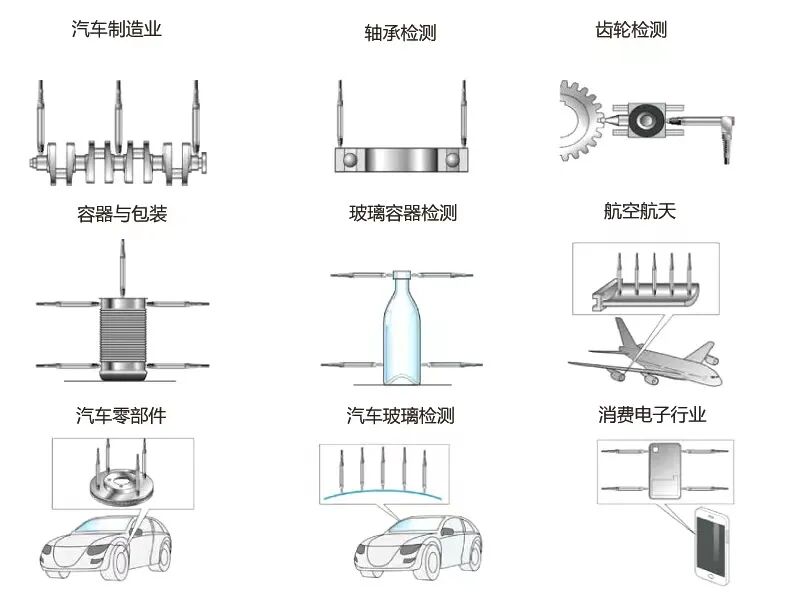
With the rise of the new energy vehicle manufacturing industry, the demand for dimensional measurement of automotive components is continuously increasing. Pen-type LVDT sensors are widely used in precision measurement of automotive glass gauges, headlight gauges, door gauges, and other components.
Automation and Robotics
In the field of automation control, pen-type LVDT sensors are an ideal choice for precise displacement measurement in robotics. They can monitor the position of robotic arms in real-time, achieving efficient and accurate automation control.
Aerospace and Research
Pen-type LVDT sensors can be widely applied in aerospace, machinery, construction, textiles, railways, coal, metallurgy, plastics, chemicals, and research institutions across various sectors of the national economy to measure elongation, vibration, thickness, expansion, etc.
Mobile Phone Casing Thickness Detection
The mobile phone casing and battery are important components of the phone, and the uniformity of their thickness directly affects product appearance and quality. The pen-type LVDT sensor can monitor casing thickness changes in real-time through online detection, promptly identifying and eliminating non-conforming products, significantly improving production efficiency and product quality.
Online Detection of Automotive Parts
In the automotive manufacturing process, pen-type LVDT sensors can be used for online detection of parts and measurement of automotive parts’ positions. By continuously monitoring critical dimensions, it ensures that parts meet design specifications, reducing assembly issues and product failure rates.
Precision Displacement Measurement
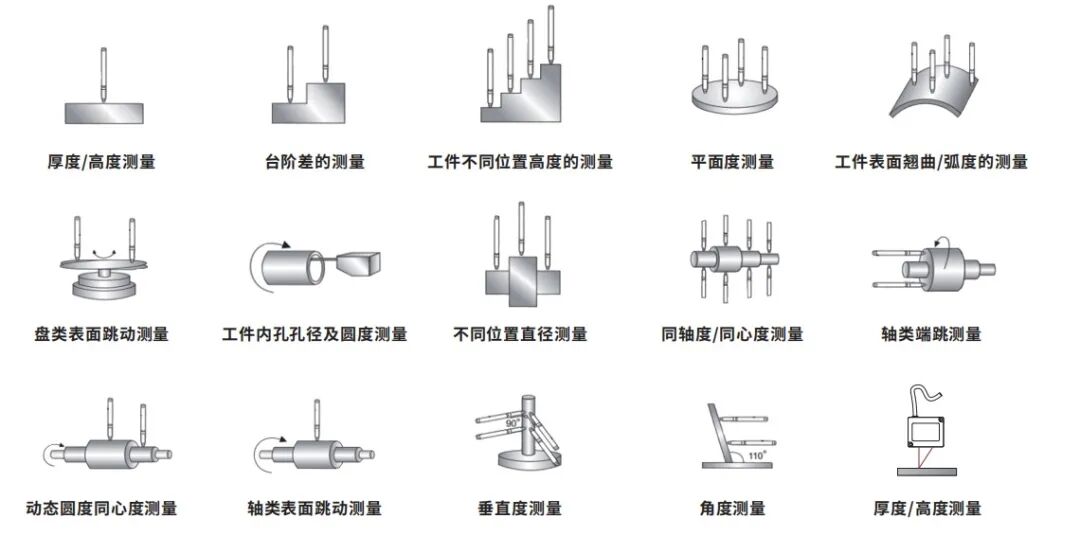
Pen-type LVDT sensors can quickly measure small dimensional changes, such as thickness, vibration, length, inner diameter, outer diameter, as well as form and position tolerances like parallelism, perpendicularity, and roundness. This makes them an indispensable tool in precision manufacturing and quality control.
When selecting a pen-type inductive LVDT displacement sensor, multiple factors need to be considered. Choose the appropriate range based on measurement needs, with common ranges of 2mm, 5mm, 8mm, and 10mm.
It is divided into rebound type and pneumatic push type. The rebound type relies on external pressure to extend and retract the probe, while the pneumatic push type uses air pressure to push the probe out to contact the measured object, suitable for automated measurement.
The sensor installation requires the use of non-metallic fixtures with a low thermal expansion coefficient for fixation. Using metallic blocks for installation may affect product performance. The sensor probe can be freely replaced, such as round heads, flat heads, nylon heads, and conical heads, selecting the most suitable probe based on measurement needs.
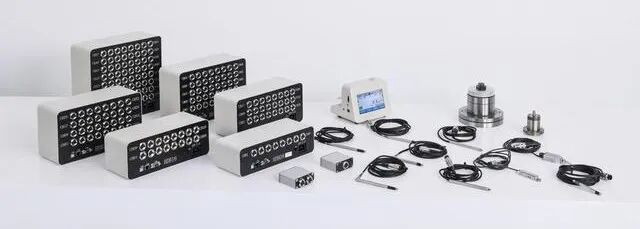
With the development of Industry 4.0 and digitalization, inductive displacement sensors will continue to deepen their industrial applications, providing a solid foundation for higher levels of smart manufacturing. With their high precision, high reliability, environmental adaptability, and flexible installation characteristics, they play an important role as the “industrial eye” in multiple key links of smart manufacturing.
Shanghai HeWu Smart Measurement, as a professional manufacturer of precision measurement sensors, is committed to providing high-performance, high-reliability displacement measurement solutions for the straightening industry, helping enterprises improve product quality and production efficiency. We welcome you to follow our products and technologies to jointly promote the high-quality development of China’s manufacturing industry.
Previous Recommendations
Inductive or Laser, How to Choose Different Displacement Sensors?
Is the curvature measurement of automotive-grade IGBT heat dissipation copper substrate important?

Are old straightening machines being eliminated? Displacement sensors have become key to modern straightening machines!!

HeWu Smart Measurement
WeChat ID: ihiiot
Scan to follow and learn more