☞ This is the 14970th article published by Metal Processing (mw1950pub).

Editor’s Note
With the advent of Industry 4.0 and corresponding national policies, the fourth industrial revolution, led by intelligent manufacturing, is approaching. At the same time, the rapid development of artificial intelligence (AI) further promotes the automation, intelligence, and widespread application of industrial control. Industrial motion control, as an important branch of industrial control, holds a significant position in the national economy.
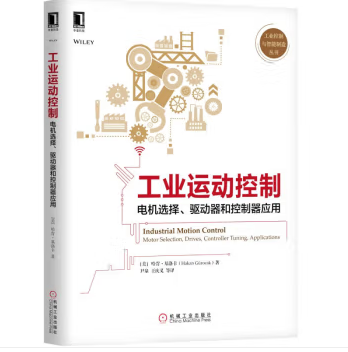
How to solve practical application problems based on actual application needs, utilizing relevant principles and combining knowledge from various disciplines such as control, detection, dynamics, circuit simulation and design, mechanical design, and programming, is a complex proposition. Today, we recommend this book “Industrial Motion Control: Motor Selection, Drivers, and Controller Applications” to help break down this complex proposition into individual modular knowledge points.
 Click the image to purchase
Book Features
“Industrial Motion Control: Motor Selection, Drivers, and Controller Applications” has the most prominent feature of closely integrating theory and practice, conducting relevant theoretical analysis and calculations through numerous engineering examples, providing detailed materials for the design and application of industrial motion control. Even more valuable is the combination of product data selection concepts and design process steps, allowing for industrial motion control design of a new object through simple extensions of examples, achieving the goal of “Knowing the why and how”.
Content Summary
“Industrial Motion Control: Motor Selection, Drivers, and Controller Applications” integrates theory, industrial mechanical design examples, industrial motion control products, and practical guides into one, aiming to establish a bridge between control concepts and principles, theory and practice, enabling engineers to design and apply complete motion control integrated systems. The content of this book is derived from the author’s teaching experiences in undergraduate mechatronics and automation courses, as well as discussions with engineers in the industrial motion control industry.
Author’s Biography
Dr. Hakan Gürocak, Dean of the College of Engineering and Computer Science at Washington State University, is a researcher in the fields of fuzzy logic, robotic precision assembly, and virtual reality haptic interfaces. He has developed specialized mechatronics hardware/software courses funded by the National Science Foundation (NSF) and the Society of Manufacturing Engineers, which can be taught remotely online in real-time. He has received the Washington State University Faculty Research Excellence Award and Best Paper Award at the American Society for Engineering Education (ASEE) conference, as well as the Mechatronics Engineering Education Award, and is a member of the American Engineering Technology Review Committee.Drag the right scrollbar to view the full directory▼Directory
Translator’s PrefacePrefaceChapter 1 Introduction1.1 Components of Motion Control Systems1.1.1 Human-Machine Interface1.1.2 Motion Controller1.1.3 Driver1.1.4 Actuator1.1.5 Transmission Mechanism1.1.6 FeedbackReferencesChapter 2 Motion Curves2.1 Basic Concepts of Kinematics2.2 Common Motion Curves2.2.1 Trapezoidal Velocity Curve2.2.2 S-Curve Velocity Curve2.3 Multi-Axis Motion2.3.1 Swing Motion2.3.2 Interpolation MotionExercisesReferencesChapter 3 Drive Chain Design3.1 Inertia and Torque Conversion3.1.1 Gear Ratio3.1.2 Inertia Conversion3.1.3 Torque Conversion3.1.4 Efficiency3.1.5 Total Inertia3.2 Inertia Ratio3.3 Transmission Mechanism3.3.1 Torque and Inertia Conversion of Transmission Mechanisms3.3.2 Pulleys3.3.3 Lead Screws3.3.4 Rack and Pinion Drive3.3.5 Belt Drive in Linear Motion3.3.6 Conveyors3.4 Calculation of Motion Torque3.4.1 Acceleration (Maximum) Torque3.4.2 Running Torque3.4.3 Deceleration Torque3.4.4 Continuous (Effective Value) Torque3.5 Mechanical Characteristics of Motors3.5.1 Mechanical Characteristic Curves of AC Servo Motors3.5.2 Mechanical Characteristic Curves of AC Induction Motors3.6 Motor Selection3.7 Direct Drive Motor Selection3.8 Motor and Transmission Mechanism Selection3.9 Gearbox3.9.1 Planetary Servo Reducers3.9.2 Worm Reducers3.10 Selection of Servo Motors and Gear Reducers3.11 Selection of AC Induction Motors and Gearboxes3.12 Selection of Motors, Gearboxes, and Transmission MechanismsExercisesReferencesChapter 4 Motors4.1 Basic Concepts4.1.1 Electrical Cycle and Mechanical Cycle4.1.2 Three-Phase Windings4.2 Rotating Magnetic Fields4.2.1 Hall Sensors4.2.2 Six-Step Commutation Method4.3 AC Servo Motors4.3.1 Rotor4.3.2 Stator4.3.3 Sine Wave Commutation4.3.4 Torque Calculation for Sine Wave Commutation4.3.5 Six-Step Commutation Method for AC Servo Motors4.3.6 Motor Phase Positioning Using Encoders and Hall Sensors4.4 AC Induction Motors4.4.1 Stator4.4.2 Rotor4.4.3 Operation of the Motor4.4.4 Direct Grid Constant Speed Operation4.4.5 Variable Speed Operation with Frequency Drives4.5 Mathematical Models4.5.1 AC Servo Motor Model4.5.2 AC Induction Motor ModelExercisesReferencesChapter 5 Sensors and Control Devices5.1 Photoelectric Encoders5.1.1 Incremental Encoders5.1.2 Sine and Cosine Encoders5.1.3 Absolute Encoders5.1.4 Encoder Serial Communication5.1.5 Speed Estimation5.2 Detection Sensors5.2.1 Limit Switches5.2.2 Proximity Sensors5.2.3 Photoelectric Sensors5.2.4 Ultrasonic Sensors5.2.5 Concepts of Fan-In and Fan-Out5.2.6 Three-Wire Sensors5.3 Main Control Devices5.3.1 Buttons5.3.2 Selector Switches5.3.3 Indicator Lights5.4 Control Devices for AC Induction MotorsExercisesReferencesChapter 6 AC Drives6.1 Driver Circuits6.1.1 Rectifiers and DC Links6.1.2 Inverters6.2 Basic Control Structures6.2.1 Cascaded Speed and Position Loops6.2.2 Single Loop PID Position Control6.2.3 Cascaded Closed-Loop with Feedforward Control6.3 Inner Loops6.3.1 Inner Loop for AC Induction Motors6.3.2 Inner Loop for AC Servo Motors6.4 Simulation Models of Controllers6.4.1 Simulation Model for Vector Control of AC Induction Motors6.4.2 Simulation Model for Vector Control of AC Servo Motors6.5 Parameter Tuning6.5.1 Parameter Tuning for PI Controllers6.5.2 Parameter Tuning for PID Position Controllers6.5.3 Parameter Tuning for Cascaded Speed/Position Controllers with Feedforward GainExercisesReferencesChapter 7 Motion Controller Programming and Applications7.1 Motion Modes7.1.1 Linear Motion7.1.2 Arc Motion7.1.3 Profile Motion7.2 Programming7.2.1 Motion Programs7.2.2 PLC Functions7.3 Single Axis Motion7.3.1 Jogging7.3.2 Homing7.4 Multi-Axis Motion7.4.1 Multi-Motor Single Axis Drive7.4.2 Two-Axis or Multi-Axis Coordination7.4.3 Master-Slave Synchronous Tracking7.4.4 Tension Control7.4.5 KinematicsExercisesReferencesAppendix Overview of Control TheoryUnit Conversion Table
Source: Jinfen Mall