
The above is an advertisement
“ Edge computing can help equipment manufacturers integrate existing applications such as monitoring and control software into a single platform, while allowing other critical applications to run on the same platform. This makes it easier to develop intelligent Industrial Internet of Things (IIoT) machines and devices, and future applications that support customers in developing Industry 4.0 and smart manufacturing needs can be easily added.”Currently, the global manufacturing industry is moving towards smart factories!Building a smart factory requires smarter machines and equipment as a foundation. These machines are equipped with sensors, smart controllers, and HMI/SCADA systems with IoT capabilities, fully leveraging the innovative advantages of digital technology. To fully realize the benefits of these technologies while ensuring they operate safely and reliably, an edge computing platform is needed.
Smart factories need smarter devices
Just as the automation of machines using PLCs and PACs revolutionized the design of previous generations of equipment, smart factories and smart manufacturing are again driving development in the industrial sector. The application of digital transformation concepts enables enterprises to utilize the data collected from control systems and sensors for optimal performance. This approach provides operators with usable real-time analytics, inputs that help improve Overall Equipment Efficiency (OEE), and data that can be collected and analyzed locally. Data can also be sent to the cloud for deeper analysis across various applications. These applications can include optimized maintenance, flexible supply chains, and increased output from multiple factories engaged in similar production.Machines and OEM equipment are fundamental elements of production. Smart factories and smart manufacturing can only be achieved through smart machines designed by OEMs or specified by end users. By adopting digital transformation, machine and equipment manufacturers can enhance designs and support the development of new services around equipment performance and maintenance. An important question is, what is the best way to develop a new generation of smart devices or to make existing designs and deployments meet customer needs? The answer is edge computing. Edge computing is a method that can address many critical design requirements.
What is Edge Computing?
Edge computing takes many forms, and its broad definition encompasses any computing that occurs outside of data centers. Given the broadness of this definition, it is not surprising that many confusing definitions have emerged in the IT industry and the automation and control sectors, collectively referred to as Operational Technology (OT).Large analytics firm Gartner has published a simple topology to help everyone understand what type of edge computing might be useful for them. This topology illustrates the infrastructure technology stack, which shows the types of servers, devices, or platforms that can be described as edge computing, along with their physical endpoint locations at the “edge” of data sources. It indicates the types of computing power available outside of actual data centers, as well as the types of data collection, analysis, and movement. The edge provides significant benefits for equipment manufacturers and their customers.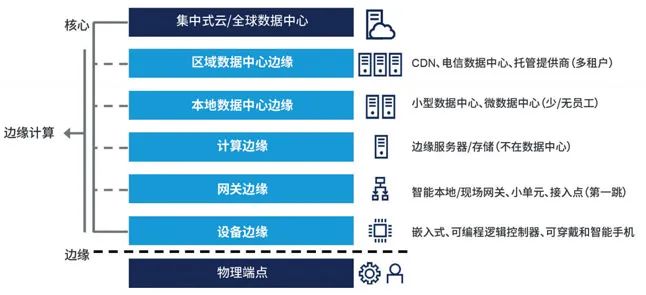
Why Intelligent Machines Need Edge Computing Platforms
According to the topology mentioned above, it is easy to see that edge computing devices are applicable to machine and equipment manufacturers. In fact, all machines and equipment today involve devices at the edge with PLCs, some of which also have gateway edge devices. In some ways, the industrial PCs (IPCs) and tablets used by machines or equipment belong to this gateway category. They may be the first “contact point” for device edge PLCs.However, IPCs have limited computing and analytical capabilities or face common reliability and availability issues similar to typical PCs or servers not specifically designed for harsh environments. Therefore, other types of dedicated edge computing platforms are needed to meet customer demands.When it comes to modernizing machine control and automation systems, the computing edge should be a focus for equipment manufacturers. Edge computing provides all the necessary features and functionalities for machine and equipment manufacturers to enhance their current designs and transition to providing smarter devices.
Application Architecture of Edge Computing Platforms
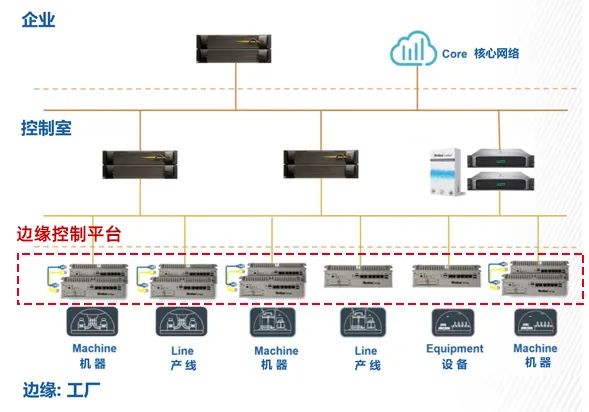
Four Basic Functions of Edge Computing Platforms
Edge computing platforms offer equipment and machine manufacturers the possibility of new revenue services and help reduce costs and improve total ownership costs; “machine as a service” or “device as a service” will become possible. Edge computing platforms have the following four basic functions.
1
Support existing automation and control applications
Capable of running existing control and automation applications in a modular manner without requiring extensive re-architecture.
2
Modify and upgrade existing control applications
Allows for greater flexibility in the operation and monitoring of machines and equipment.
3
Add new analytics and digital transformation applications
New virtual machines can be created on the platform, making it easier to add new applications without affecting existing ones.
4
Support OT/IT convergence
Can simultaneously meet OT and IT requirements, ensuring that the platform supporting various operational applications is easy to deploy and maintain, and manageable by both OT and IT professionals.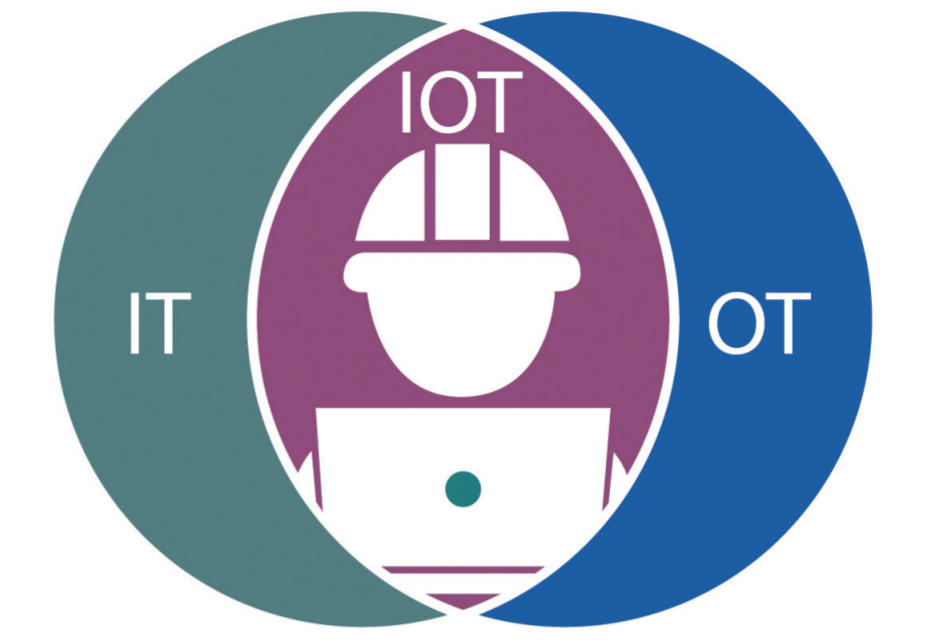
Six Features of Edge Computing Platforms Different from IPCs and IT Servers
There are various computing platforms available for machine and equipment manufacturers, such as IPCs or traditional IT servers, but dedicated edge computing platforms undoubtedly outperform both. IPCs are suitable for industrial grade but do not provide any redundancy, meaning manual intervention in your machines and customers’ operations must occur regularly. Traditional IT servers are not suitable for industrial grade and need to be placed in environmentally controlled locations, such as server rooms or data centers, which is not conducive to smart manufacturing. Edge computing platforms must possess the following six characteristics: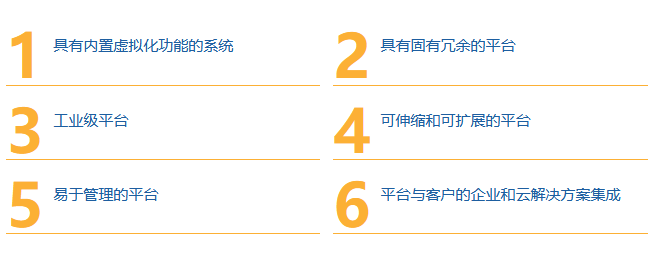 – END –
Popular Articles

Linear Motors for Fifteen Years
Popular Science Comic: How Sand Becomes Chips?
Highlights of Shenzhou Twelve Technology
Incremental and Absolute Rotary Encoders
Industrial Robots Grew by 50.1% in May