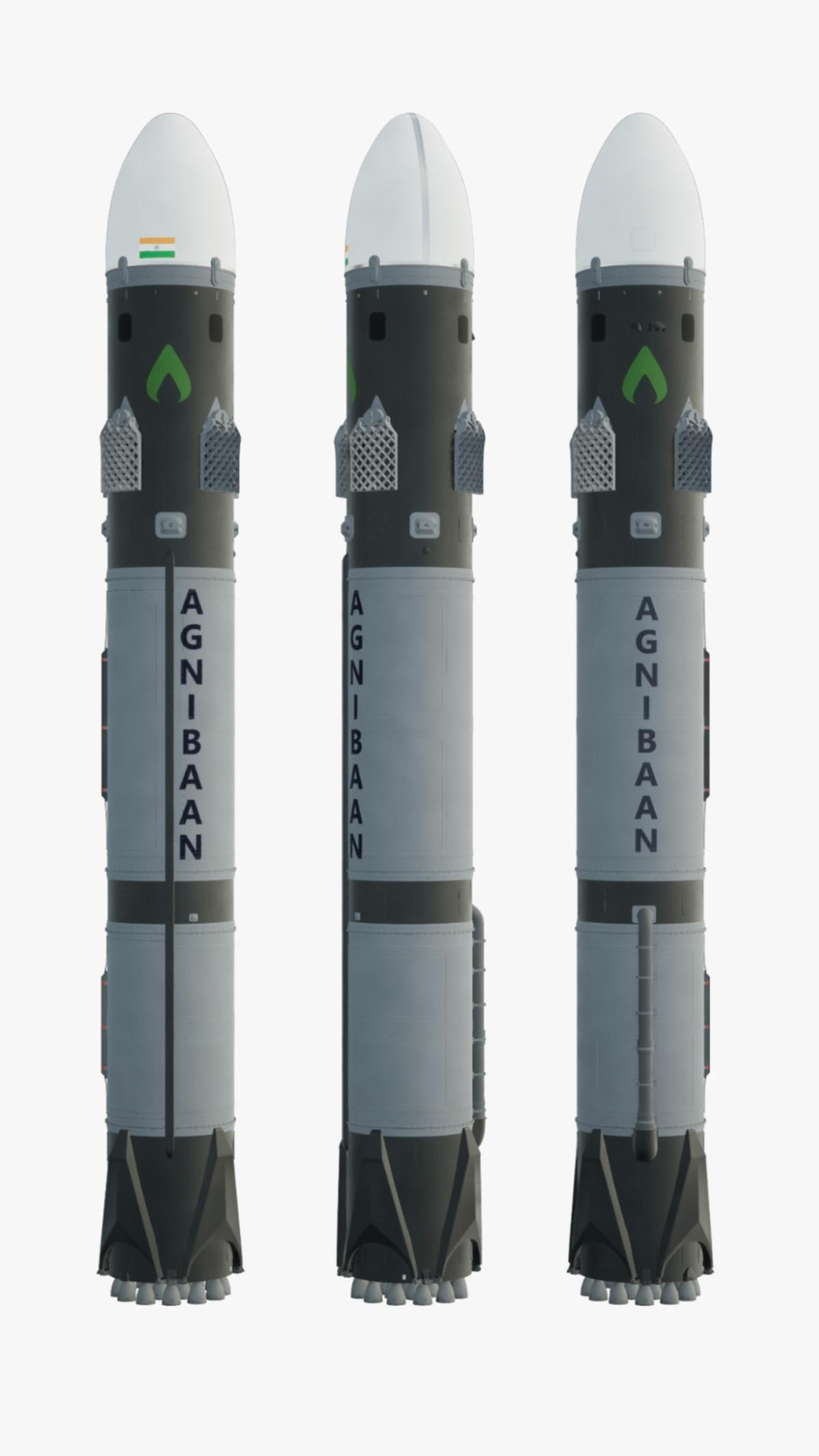
New developments have emerged in India’s aerospace sector. Chennai-based rocket startup Agnikul Cosmos recently announced the completion of a new funding round of approximately $17 million (around 120 million RMB). Following this round, the company’s valuation has risen to $500 million (approximately 3.5 billion RMB), making it a notable new player in India’s commercial space industry.
This funding round attracted participation from institutions including Advenza Global Limited, HDFC Bank, and family offices such as Artha Select Fund. The influx of capital signifies market recognition of its unique technological approach.
Agnikul Cosmos’s core advantage lies in its bold choice of “integrated 3D printing” as a technological breakthrough. They are committed to manufacturing a fully integrated 3D printed engine for the entire rocket, with their unique “Agnilet” engine being the world’s first single-piece 3D printed nickel alloy engine, measuring approximately 1 meter in length. This process eliminates the assembly constraints of hundreds of components in traditional rocket engines, simplifying the supply chain and enabling rapid iteration and low-cost manufacturing.
Regarding the use of these funds, CEO Srinath Ravichandran stated that the focus will be on expanding the production scale of rocket components and advancing their reusable rocket recovery plan. He specifically mentioned, “With the support of the Indian Space Research Organisation (ISRO), we have successfully completed controlled ascent launches, validating all patented technologies. Next, we will focus on the development of lower stage recovery and upper stage lifespan extension technologies, which will be key to significantly enhancing launch economic efficiency.”
In addition to technological advancements, Agnikul is actively building localized manufacturing capabilities. In September of this year, their large metal additive manufacturing facility officially commenced operations, with the core equipment being a German EOS metal 3D printer capable of printing large components up to 1 meter. This facility will not only serve as a production base for rocket engines but will also undertake the manufacturing of other aerospace subsystems, aiming to create an efficient and innovative 3D printing supply chain for India’s aerospace sector from the ground up.
Currently, Agnikul’s business reach has extended to markets in India, West Asia, and Australia to meet the growing global demand for small satellite launches. With funding secured and manufacturing capabilities enhanced, this company, incubated from the Indian Institute of Technology, is attempting to use 3D printing as a key to unlock new doors for low-cost space transportation, helping India position itself at the forefront of the global aerospace technology race.
 @ 3D Printing Insights
I am Xu Fanglei, a design professional with a PhD and a Fellow of the Royal Society of Arts in the UK, focusing on industrial design, additive manufacturing, and business models. Here, I will use my expertise and experience to take you deep into the world of 3D printing, sharing the latest industry trends, interpreting cutting-edge technologies, and discussing commercial applications.
 END
END




 Welcome to add the editor’s WeChatto learn about the latest developments in the 3D printing industry
 About 3D Printing Technology
We integrate insights, technological trends, application scenarios, competitive strategies, and in-depth dynamics from the US and global industry for professionals in 3D printing and artificial intelligence, providing high-value information. We are passionate about 3D printing and welcome contributors from around the world.The English website3DPTimes is also launched, focusing on the 3D printing field, producing a wealth of high-quality cutting-edge information and technical content.
Disclaimer:3D Printing Technology has no commercial cooperation, sponsorship, employment, or other interests with the companies mentioned in this article.3D Printing TechnologyImages and videos are sourced from the internet and are for auxiliary reading purposes only, with no commercial intent.All rights belong to the original authors. If there are any infringement issues, please contact the rights holders promptly, and we will delete the content immediately. The copyright of the images in this article belongs to the copyright holders,3D Printing Technologywatermarks are automatically added for auxiliary reading and do not represent ownership of the images. For image usage, please consult the relevant copyright holders.3D Printing TechnologyThe article does not constitute any investment advice,3D Printing Technologyis not responsible for any direct or indirect losses caused by the use of the information in this article.For more exciting content, please follow us