Comparison of MIPI Physical Layer Protocols
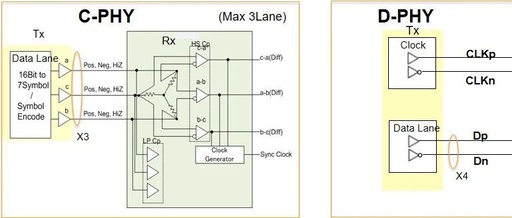
Comparison of MIPI Physical Layer Protocols

Comparison of MIPI Physical Layer Protocols D-PHY & C-PHY (3-phase) The parallel bus uses slow edge signals at low bit rates to reduce EMI (the edge rate and EMI compliance need to be verified in ATE testing). The 3-phase encoding of C-PHY requires testing for inter-symbol interference (ISI) and eye diagram symmetry. The protocol specification … Read more
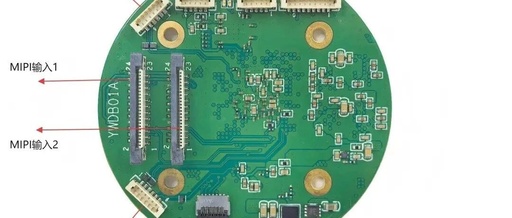
Dual MIPI Digital Video Interface AI Image Processing Board Viztra-LE048 Launched

Dual MIPI Digital Video Interface AI Image Processing Board Viztra-LE048 Launched

The MIPI video interface features high data transmission rates, capable of meeting the demands of high-resolution and high-refresh-rate displays. Its transmission speed can reach several Gbps, ensuring that image and video data can be transmitted and processed quickly and accurately, allowing for efficient and compatible data transfer with cameras in the field of image processing. … Read more

World’s First! MIPI A-PHY + HSMT 12.8G Dual-Mode SerDes Unveiled

World's First! MIPI A-PHY + HSMT 12.8G Dual-Mode SerDes Unveiled

According to a report by Electronic Enthusiasts (Author: Liang Haobin), at the recent Qualcomm Automotive Technology and Collaboration Summit, Shouchuan Microelectronics launched the world’s first high-bandwidth 12.8Gbps PAM4 dual-mode SerDes compatible with both MIPI A-PHY and HSMT dual protocols, model VL7722X. Source: Electronic Enthusiasts Shouchuan Microelectronics stated that this solution has been successfully validated on … Read more

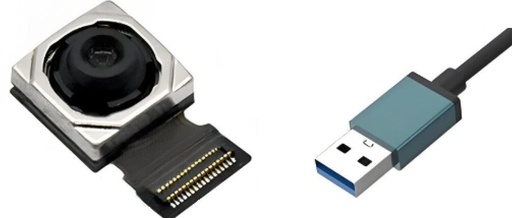
Why Do Cameras Use MIPI Interfaces Instead of Convenient USB? A Detailed Explanation of the Differences Between MIPI and USB Interfaces

Why Do Cameras Use MIPI Interfaces Instead of Convenient USB? A Detailed Explanation of the Differences Between MIPI and USB Interfaces

The USB interface, with its plug-and-play versatility and strong compatibility, has almost become the connection bridge for all electronic devices, from keyboards and mice to external hard drives and webcams. However, almost all high-resolution cameras use the MIPI interface instead of the convenient USB. Wouldn’t it be easier to connect all peripherals through a HUB … Read more

Topic 5: Serializer/Deserializer Chips for Surround View Camera Parking Controller Applications

Topic 5: Serializer/Deserializer Chips for Surround View Camera Parking Controller Applications

Based on the provided technical parameters and industry background, the MIPI-A-PHY v1.1.1 serializer/deserializer chips that match the description are most likely from Texas Instruments (TI) or Renesas Electronics. The following is a detailed analysis: 1. Texas Instruments (TI) TI’s DS90UB96x series (such as DS90UB963Q-Q1 and DS90UB964Q-Q1) is an automotive-grade SerDes solution designed for MIPI-A-PHY, supporting … Read more

Considerations for MIPI Signal PCB Design

Considerations for MIPI Signal PCB Design

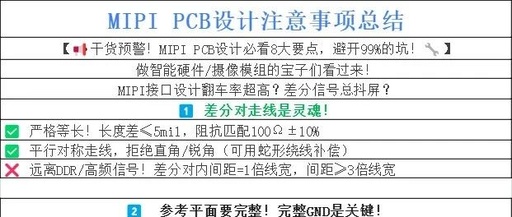
MIPI (Mobile Industry Processor Interface) is a core transmission standard for devices such as smartphones, tablets, and automotive systems, which includesD-PHY (used for CSI cameras/DSI displays) andC-PHY (higher bandwidth, no independent clock) physical layer protocols. Its characteristics include: Differential Signals: D-PHY includes 1 pair of clock + 1~4 pairs of data lines; C-PHY transmits embedded … Read more

Differences and Connections between MIPI-DPHY, MIPI-CPHY, MIPI DSI, and MIPI CSI-2

Differences and Connections between MIPI-DPHY, MIPI-CPHY, MIPI DSI, and MIPI CSI-2

In mobile devices and embedded systems, the MIPI protocol is a key technology for achieving high-speed data transmission. Today, we will delve into the four important concepts of MIPI-DPHY, MIPI-CPHY, MIPI DSI, and MIPI CSI-2, examining their differences and connections. 1. Layered Architecture of the MIPI Protocol The MIPI protocol adopts a layered architecture, mainly … Read more

Detailed Requirements for High-Speed Signal PCB Routing: eMMC/USB/MIPI/LVDS/RGMII

Detailed Requirements for High-Speed Signal PCB Routing: eMMC/USB/MIPI/LVDS/RGMII

01 eMMC Signal Impedance and Routing It is recommended to use ground wrapping for CLK and STRB signals, with a ground via every ≤500 mil. During overall layout,eMMC should be placed as close to the SOC as possible to minimize routing length. The reference layer for all eMMC signals must be a complete ground plane … Read more

Introduction to Camera Video Interfaces (Reprint)

Introduction to Camera Video Interfaces (Reprint)

Introduction: Recently, I have come into contact with the interfaces of small cameras, and I am reprinting this article. This article introduces the “camera” interfaces, while some industrial camera interfaces such as CameraLink and CoaXPress are not covered. I will organize them when I have time. Original link: https://www.liuwenhao.me/?p=5125 Table of Contents 1. Analog Cameras … Read more

Calculating DSI Clock and Distinguishing Common Concepts in MIPI

Calculating DSI Clock and Distinguishing Common Concepts in MIPI

Table of ContentsOverviewClock CalculationBasics of LCDClock ConceptsDSI Clock CalculationDistinction of DSI’s “Mode” ConceptDistinction of LCD Screen ModesCOMMAND Mode and VIDEO ModeThree Modes of VIDEO Screen Data TransmissionHS MODE and LP MODESummary OverviewAfter the explanation of the DSI protocol in the previous article, many people may still feel confused, as there are too many concepts and … Read more