Embedded Development in C: Low Power Design

Embedded Development in C: Low Power Design

Embedded Development in C: Low Power Design In embedded systems, low power design is a crucial topic. With the proliferation of Internet of Things (IoT) devices, how to reduce energy consumption while ensuring performance has become a challenge that developers must face. This article will introduce some basic principles of low power design and demonstrate … Read more


Fundamentals of Low Power Design: A Detailed Explanation of Power Gating

Fundamentals of Low Power Design: A Detailed Explanation of Power Gating

This article was originally published in the Zhihu column [The Path of Digital IC Backend Engineers]. In the field of low power design, the most effective way to reduce power consumption is through power shutdown. This is because no matter how low the voltage, how small the current, how slow the speed, or how minimal … Read more

Low Power Design – Power Switch (2) Adding Switch to the Top Level Block

Low Power Design - Power Switch (2) Adding Switch to the Top Level Block

Classification and application of power switches: Low Power Design – Power Switch In a recent project, with tight deadlines, we ran two versions, differing in whether to use UPF. The block is implemented normally, and the switch is added at the top level. ​1. UPF First, let’s analyze the UPF content related to the power … Read more

Low Power Design of MCUs (Part 3) Products

Low Power Design of MCUs (Part 3) Products

Author:RimeLink Source: http://blog.csdn.net/jiangjunjie_2005/article/details/47700597 Introduction: Power consumption is a significant issue for battery-powered products; once the energy is depleted, the device will “stop working.” In “Low Power Design of MCUs (Part 1) Theory,” we introduced the principles of energy saving; in “Low Power Design of MCUs (Part 2) Practice,” we measured the low power consumption values … Read more

A Simple Written Test Question on Low Power Design

A Simple Written Test Question on Low Power Design

1. Concept Composition of Power Consumption: Three main sources of power consumption: surge, static power, and dynamic power; Surge Current: Refers to the maximum instantaneous input current generated when the device is powered on, known as the inrush current; The surge current is device-dependent; Surge power is not our primary concern, so it is only … Read more

Low Power Design Handbook – Introduction

Low Power Design Handbook - Introduction

1.1 Overview Over the past two decades, the design of complex chips has undergone a series of transformations. In the 1980s, language-based circuit design and synthesis emerged. In the 1990s, design reuse and IP became mainstream design practices. In recent years, low power design has begun to change the way designers handle complex SoC designs … Read more

Low Power Design Techniques: Data Gating and Operand Isolation

Low Power Design Techniques: Data Gating and Operand Isolation

Low Power Design Techniques: Data Gating (Data Gating) and Operand Isolation (Operand Isolation) Previously, we discussed Clock Gating (Clock Gating), which is a well-known low power design technique. It can be easily applied during the logic synthesis stage without requiring changes to the RTL, making it one of the more straightforward methods for achieving low … Read more

Chapter 5: Low Power Design

Chapter 5: Low Power Design

Low Power Design 5.1 Power Consumption Sources Surge、Static Power Consumption and Dynamic Power Consumption are the three main sources of power consumption. • Surge current refers to the maximum instantaneous input current generated when the device is powered on, and is also known as startup current in applications. • Standby current refers to the current … Read more

Low Power Design in C++ Embedded Development

Low Power Design in C++ Embedded Development

Low Power Design in C++ Embedded Development In modern embedded systems, low power design is a crucial topic. With the proliferation of IoT devices and wearables, effectively managing power consumption has become a challenge that developers must face. This article will introduce some low power design strategies in C++ embedded development and provide corresponding code … Read more

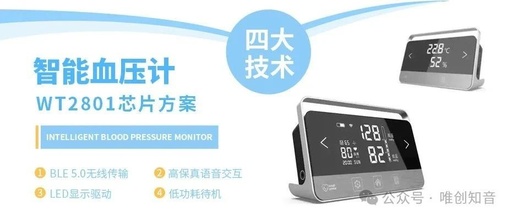
WT2801 Smart Blood Pressure Monitor Chip Solution – BLE 5.0 Wireless Transmission / High-Fidelity Voice Interaction / LED Display Driver / Low Power Standby – Four Key Technologies Empowering

WT2801 Smart Blood Pressure Monitor Chip Solution - BLE 5.0 Wireless Transmission / High-Fidelity Voice Interaction / LED Display Driver / Low Power Standby - Four Key Technologies Empowering

In today’s rapidly developing smart health device market, blood pressure monitors are no longer just simple “measuring tools”; they have become the “smart steward” of family health. However, a truly reliable, user-friendly, and feature-rich blood pressure monitor relies on a powerful “core chip”. Today, we unveil the hardcore capabilities of the medical-grade chip WT2801 – … Read more