Can Diamond Really Become the Fourth Generation Semiconductor Material?

Can Diamond Really Become the Fourth Generation Semiconductor Material?

Since the 21st century, third-generation semiconductor materials represented by Gallium Nitride (GaN), Silicon Carbide (SiC), and Zinc Oxide (ZnO) have begun to emerge.However, with the continuous increase in demand for high-load computing power from 6G communication, AI smart chips, and CPUs/GPUs, complex and expensive data center cooling systems are required to maintain performance and prevent … Read more
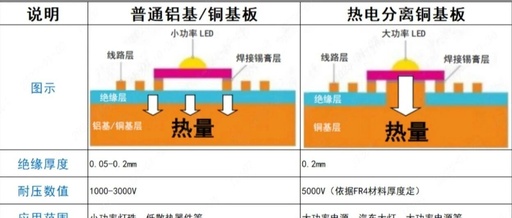
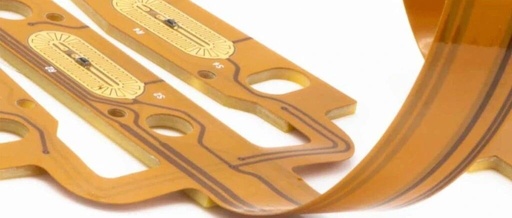
Essential Knowledge Points of Circuit Board Materials You Must Pay Attention To

Essential Knowledge Points of Circuit Board Materials You Must Pay Attention To

Circuit board materials are mainly divided into FPC flexible boards, FR-4, aluminum substrates, copper substrates (further divided into standard copper substrates and thermoelectric separation copper substrates), and ceramic substrates. This article aims to analyze the design considerations of each type of board material from the perspective of power design, summarized into the following three points: … Read more

Introduction to Common PCB Materials

Introduction to Common PCB Materials

1. Basic ConceptsPCB materials, also known as Copper Clad Laminate (CCL), are composite materials made up of an insulating substrate and copper foil covering it. The insulating substrate provides mechanical support and electrical insulation, while the copper foil is used to form circuit patterns.As of now, the maximum number of layers for commercially mass-produced PCBs … Read more

In-Depth Analysis of PCB Equivalent Thermal Conductivity Calculation Methods in FLOEDA Bridge

PCBs are composed of high thermal conductivity copper and low thermal conductivity dielectric materials stacked alternately, exhibiting significant anisotropy. Simcenter FLOEDA Bridge simplifies complex layered structures into homogeneous blocks with equivalent thermal conductivity, greatly enhancing the efficiency of system-level thermal analysis. This article will delve into the two core methods used by FLOEDA for calculating … Read more

Wald Research Feedback: Diamond Heat Dissipation + PCB Diamond Micro Drill

Wald Research Feedback: Diamond Heat Dissipation + PCB Diamond Micro Drill #Diamond Micro Drill: Diamond micro drills can be divided into coated and pure diamond micro drills. The company is focusing on pure diamond micro drills, which currently cover diameters from 0.08 to 3.00 mm. For example, with single crystal silicon, each micro drill can … Read more

Thermal Solutions for High-Power Chips: Diamond Microchannel Substrates

Thermal Solutions for High-Power Chips: Diamond Microchannel Substrates

With the surge in 5G communication, artificial intelligence acceleration, and high-performance computing (HPC) loads, the integration and power density of power devices continue to increase, leading to a significant rise in the heat flux density per unit area of chips. Traditional copper-based cooling, heat pipes, and air cooling systems are gradually approaching their limits when … Read more

Why Does 37°C Bath Water Feel Cool While 37°C Weather Feels Hot?

Why Does 37°C Bath Water Feel Cool While 37°C Weather Feels Hot?

The normal human body temperature is usually between 36°C and 37°C and is quite sensitive to changes in external temperature But why does 37°C water feel cool while at 37°C air temperature people feel unbearably hot? Brief Summary Qian Guanyu Department of Dermatology, Third People’s Hospital, Jiangsu University The human body primarily dissipates heat through … Read more

Significant Advances in Domestic Fourth-Generation Gallium Oxide Technology

Significant Advances in Domestic Fourth-Generation Gallium Oxide Technology

Gallium oxide, as a highly promising #fourth-generation semiconductor material, can withstand ultra-high voltages and is cost-effective. It is widely used in systems such as electric vehicles, rail transit, 5G/6G base stations, smart grids, and aerospace, earning the title of the “star material” for the next generation of high-power electronic devices. However, as an emerging material, … Read more

Understanding Beryllium Oxide (BeO) Ceramic PCBs

Understanding Beryllium Oxide (BeO) Ceramic PCBs

△Advertisement Not related to the content With the continuous emergence of cutting-edge technologies, the demand for excellent signal transmission performance in circuit boards is increasing, especially in high-frequency environments where sensitivity to electromagnetic interference is a critical issue. To effectively address this challenge, the focus has shifted to substrate materials, and ceramic PCBs have become … Read more

How Silicone Thermal Potting Adhesives Ensure the Safe Operation of Tire Pressure Sensors

How Silicone Thermal Potting Adhesives Ensure the Safe Operation of Tire Pressure Sensors

Click the blue text to follow us The tire pressure sensor is a crucial component of the vehicle safety system, and its performance stability, measurement accuracy, and durability are vital. Potting adhesives serve as a key barrier to protect the internal components of the sensor from environmental damage. Therefore, selecting the appropriate potting adhesive is … Read more