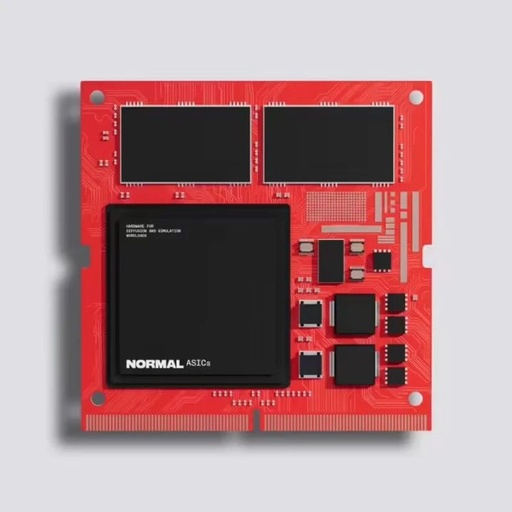
Exciting CXL Technology in the Era of Large Memory

Exciting CXL Technology in the Era of Large Memory

Source: Global Semiconductor Observation Author: Wang Kaiqi The increasing cost of storage, along with the more pressing challenges of computational and bandwidth imbalances, have rendered Intel’s PCI-e (PCI Express) technology, introduced two decades ago, increasingly inadequate. We are eagerly anticipating a transformative new technology centered around memory, and the CXL technology based on the PCI-e … Read more

Understanding the Differences Between GPU and FPGA

Understanding the Differences Between GPU and FPGA

(Source: techspot) Graphics Processing Units (GPUs) and Field Programmable Gate Arrays (FPGAs) are two of the three main types of processors used for imaging and other heavy computations. The Central Processing Unit (CPU) is the third type. Let’s delve into the main differences between GPUs and FPGAs, their advantages, common use cases, and when to … Read more

Future Military High-Performance Embedded Computing

Future Military High-Performance Embedded Computing

The Yuanwang Think Tank Open Source Intelligence Center, Yun Juan Yun Shu, compiled this article. Advanced processors, high-speed networking, and open system standards are converging, making military applications in target detection and tracking possible and giving artificial intelligence a new role. State-of-the-art processors, rapid networking, data sharing, innovations in cooling and thermal management, and new … Read more

Introduction to ARM Architecture: A Comprehensive Guide

ARM (Advanced RISC Machine) is a 32-bit and 64-bit RISC (Reduced Instruction Set Computing) processor architecture designed by Arm Ltd. The ARM architecture is widely used in various devices due to its efficiency, flexibility, and low power consumption, ranging from embedded systems to high-performance computers. This article will detail the characteristics, advantages, application scenarios, and … Read more