As NVIDIA chips dominate the high-end robotics market, a Chinese chip company has opened a new competitive field with its unique technological route and strategic layout, using a RISC-V chip that costs only one-third of its competitors. This not only breaks free from bottlenecks but also firmly integrates into the Yushu supply chain with the robust performance of its robotics chips, with one in every four domestic vacuum cleaners equipped with its chips.
Even more impressive is that its server-grade chip, developed based on Alibaba’s Xuantie, is driving the domestic push for high-performance computing. This company is Allwinner Technology!
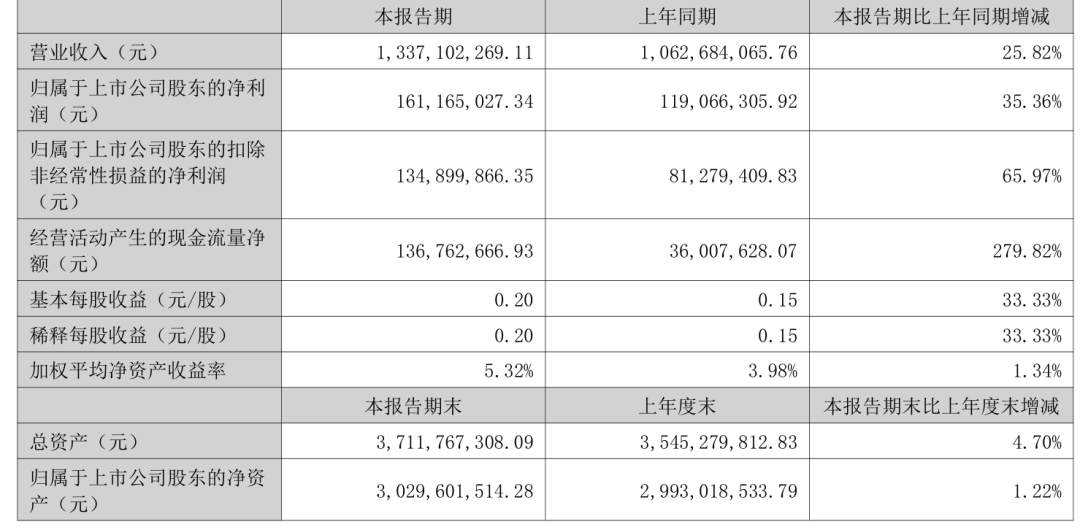
The latest semi-annual report shows that Allwinner Technology’s revenue reached 1.337 billion yuan, a year-on-year increase of 25.82%, with a net profit of 161 million yuan, a year-on-year increase of 35.36%. The profit growth rate far exceeds revenue growth, mainly due to the strong growth of emerging businesses such as smart automotive electronics and robotics.
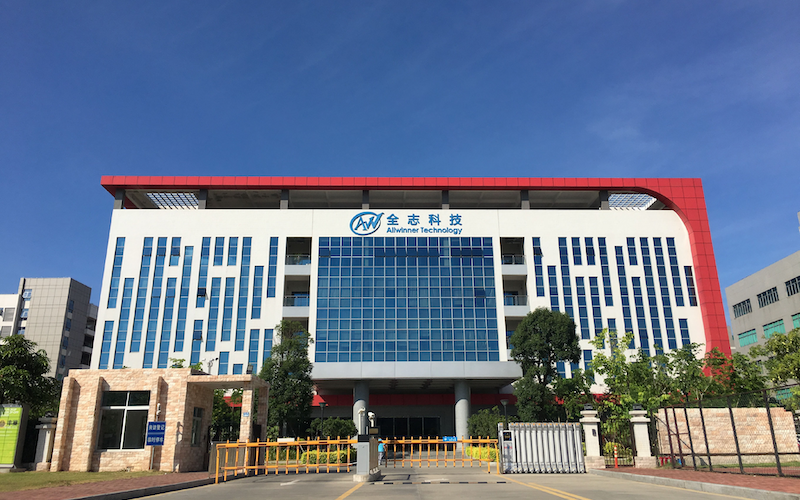
Today, let us delve into the rise of this chip dark horse from Zhuhai, exploring its transformation from a tablet chip leader to an AIoT player across all scenarios over the past 18 years and the development path of its high-margin businesses.
01
From Tablet Dominance to Strategic Transformation:
Finding Opportunities in Crisis, Rebirth through Breakthroughs
In 2007, amidst the humid sea breeze of Zhuhai, the core team of the former Zhuhai Jieli, led by Zhang Jianhui, keenly captured the opportunity for the rise of the Android tablet market just before the MP3 chip market peaked.
In 2011, the Allwinner A10 processor, with its quad-core architecture and full-format decoding capabilities, made a significant impact in the tablet market dominated by the iPad. By 2012, the A31 chip topped the global Android tablet chip rankings with a shipment of 22 million units, marking the first time a Chinese chip dominated the consumer electronics field.
However, the tablet market frenzy came to an abrupt halt in 2014, with Allwinner’s tablet chip revenue plummeting from 1.045 billion yuan to 437 million yuan. At this critical juncture, this iron army quickly adjusted its strategy.
After going public on the Growth Enterprise Market in 2015, the company decisively cut 30% of its tablet product line and concentrated resources on emerging fields such as automotive, industrial, and AIoT. On one hand, it optimized existing technologies and improved product performance to maintain a residual market share in tablets;
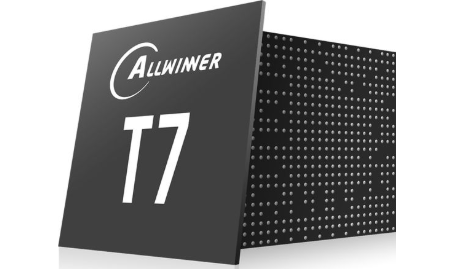
On the other hand, it formed specialized teams to conduct in-depth research on market demands in automotive, AIoT, and other fields. In 2018, the T7 chip passed the AEC-Q100 automotive certification, successfully opening the door to the pre-installed automotive market, marking the official start of Allwinner’s transformation from consumer electronics to all-scenario applications.
02
Multi-Field Breakthroughs in All-Scenario Transformation:
Expanding All-Scenario Applications
1
RISC-V Ecosystem Breakthrough: Architectural Innovation, Breaking the Blockade
While the industry wavers between ARM and x86 architectures, Allwinner has partnered with Alibaba’s Pingtouge to build the RISC-V ecosystem. Previously, the world’s first RISC-V architecture D1 chip was mass-produced, utilizing the Xuantie 906 64-bit processor, with power consumption reduced by 40% compared to ARM architecture.
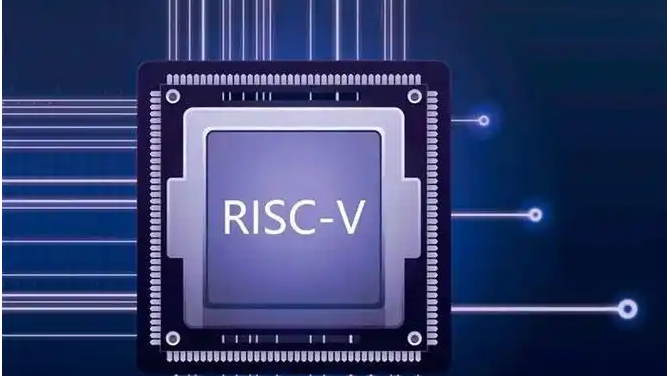
The technical team overcame challenges related to RISC-V instruction set extensions and heterogeneous computing architectures, enhancing data transmission efficiency through self-developed NSI bus technology, achieving domestic substitution in smart speakers, vacuum robots, and other fields.
Currently, RISC-V architecture chips are gradually increasing in proportion within Allwinner’s business, with clients such as Ecovacs and Roborock becoming important partners. Although the revenue share of traditional consumer electronics has changed, the implementation of RISC-V architecture chips has maintained relative stability in revenue, providing foundational support for Allwinner’s breakthrough at the architectural level.
2
Progress in Automotive-Grade Chips: Exploring Functional Safety and Intelligent Driving
The automotive field is a key focus of Allwinner’s transformation. After the T7 chip passed automotive certification in 2018, Allwinner has continued to increase R&D investment.

Currently, its automotive-grade chips are continuously exploring functional safety and intelligent driving, with the R&D team overcoming multiple technical challenges related to automotive-grade packaging and electromagnetic compatibility. Relevant chips have entered the supply chains of several automotive manufacturers for testing and validation.
The revenue share of smart automotive electronics is gradually increasing, and the penetration rate in the pre-installed automotive market is also continuously breaking through, with major clients including BYD and Changan Automobile.
3
Robotics Market Layout: Pursuing Low Latency and High Reliability
The explosion of the robotics market has brought new growth opportunities for Allwinner. Allwinner is actively laying out the development of robotics chips, aiming to create a low-latency and highly reliable motion control center for robots.

Its related chips integrate multi-core processors and NPUs, utilizing self-developed NSI bus technology to enhance data transmission efficiency, gaining a certain market share in the quadruped robot field, with Xiaomi’s “Iron Egg” and other star products adopting its solutions. The revenue share of the robotics business is gradually increasing.
4
AI Vision Enhancement Exploration: Attempts at Black Light Imaging and Intelligent Encoding
In the field of intelligent vision, Allwinner has developed the “Allwinner Smart Vision” engine with the V853 series chips. This chip achieves full-color imaging in extremely dark environments and forms certain advantages in smart door locks, dash cams, and other fields through AI-ISP noise reduction algorithms and H.265 intelligent encoding technology.

Currently, the shipment volume of the V853 series is gradually increasing, with orders from clients such as Hikvision and Dahua increasing in proportion.
The revenue share of intelligent vision and AIoT businesses is gradually increasing, and the smart projection chip supports AI super-resolution algorithms, also showing certain revenue growth.
5
Development of Heterogeneous Computing Platforms: Power Integration and Image Quality Enhancement
In the smart projection field, Allwinner’s heterogeneous computing platform demonstrates the power of technological integration.
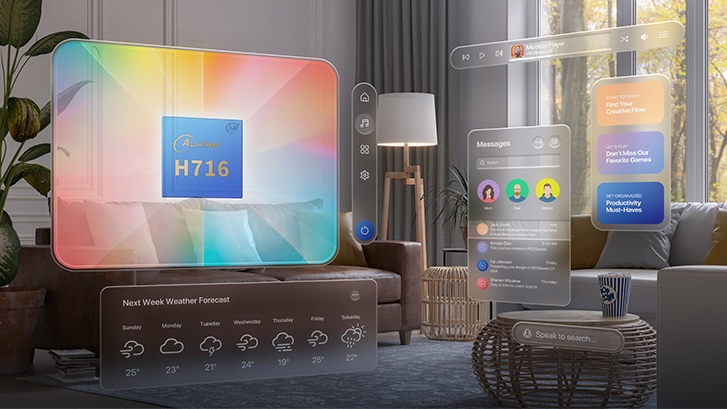
The H713 chip supports the collaborative work of CPU + GPU + NPU + RISC-V co-processors, enhancing 720P source material to 4K quality through AI super-resolution algorithms, becoming the main control chip supplier for brands like XGIMI and JmGO.
In recent years, the revenue of the smart projection business has continued to grow, maintaining a certain level of gross margin.
03
Core Growth Logic:
Multi-Factor Drivers, Supporting Takeoff
· Increased Proportion of High-Margin Products
As Allwinner Technology deepens its layout in emerging fields such as smart automotive electronics, intelligent vision, and robotics, the proportion of high-margin products in these areas continues to increase. Automotive-grade chips, robotics chips, and intelligent vision chips have significantly higher gross margins than traditional consumer electronics businesses, driving overall gross margin improvement.
· Emerging Businesses Scaling Up
Revenue shares of smart automotive electronics, robotics, and intelligent vision businesses are gradually increasing, becoming core engines of growth. These emerging businesses have achieved rapid growth through technological innovation and alignment with market demand, injecting new momentum into the company’s performance growth.
· Transformation of R&D Investment into Results
The company continues to increase R&D investment, gathering numerous engineers at its three major R&D centers in Zhuhai, Xi’an, and Shanghai. It focuses on technologies such as RISC-V architecture and heterogeneous computing platforms, supporting high-end product iterations. R&D investment is transformed into actual product competitiveness, driving the company to achieve technological breakthroughs and market recognition in multiple fields.
04
Customer Structure and Ecological Binding:
Strategic Synergy, Deepening the Moat
Strategic Customers
RECRUIT
BYD has become an important customer for automotive chips, with the cooperation between the two parties deepening.
Yushu Technology and Allwinner Technology have formed a dual synergy of technology and capital, securing the supply of quadruped/humanoid robot chips, providing strong support for Allwinner’s development in the robotics field.
Ecological Cooperation
RECRUIT
Allwinner collaborates with Alibaba’s Pingtouge to build the RISC-V ecosystem, jointly launching related plans to attract numerous developers to incubate innovative applications.
On the production side, it adopts a Fabless model, establishing deep cooperation with SMIC, Hua Hong Group, and others to ensure chip production and manufacturing. It participates in the promotion of relevant policies from the Ministry of Industry and Information Technology, achieving application deployment in multiple fields.
05
Future Outlook:
Bright Prospects, Continuing to Write Glory
Allwinner Technology, with its three core advantages of high performance, low power consumption, and strong ecological binding, occupies a certain share in the vacuum cleaner chip market and actively participates in the competition of RISC-V architecture.
Its market share in the consumer-grade robotics field is gradually increasing, and through technological iteration and ecological expansion, it is accelerating penetration into high-end markets such as advanced humanoid robots and industrial automation. With the deepening trend of AIoT and domestic substitution, Allwinner is expected to further consolidate its industry position.
With its full-stack capabilities of “chip + algorithm + ecosystem,” Allwinner Technology’s future development is worth looking forward to.
As RISC-V chips reconstruct the rules of the smart terminal industry with powerful computing power, and automotive-grade AI chips enable stable operation of intelligent driving in complex environments, this chip company from Zhuhai is redefining the boundaries of Chinese manufacturing with hardcore technology, writing a new chapter in the Chinese chip industry.