|
“The Performance Evaluation of Typical Server Application Scenarios” has been launched! – To standardize the construction of a full-stack standard system, promote product technology iteration and upgrades, better showcase the advantages of the full architecture and computing power, and support excellent product and solution brands in enhancing their market expansion through official authoritative certification. The “Performance Evaluation of Typical Server Application Scenarios” (referred to as the evaluation action) initiated by the Green Computing Industry Alliance has officially started. This evaluation action includes Big Data, Distributed Storage, Web Applications, High-Performance Computing, Centralized Relational Database Management Systems, ARM Native Cloud Phones, and Virtualization as seven typical server application scenarios. |
This issue features a series of product evaluations –
“Kunpeng High-Performance Computing (HPC) Solutions”
The “Kunpeng High-Performance Computing (HPC) Solutions” submitted by Huawei Technologies Co., Ltd. has undergone authoritative evaluation by the China Electronics Technology Standardization Institute as a national authoritative testing agency and the professional evaluation team of the Green Computing Industry Alliance, and has successfully passed the evaluation of the “Performance Testing Method for Server Application Scenarios in High-Performance Computing” standard.
Test Methods and Configuration Review
This test selected two Arm servers and two X86 servers for comparative testing. The operating system used on the tested Arm servers is CentOS 7.6, while CentOS 7.7 is used on the X86 servers. Both sides use the same open-source software and dependency libraries.
The detailed hardware configuration information is shown in the table below:
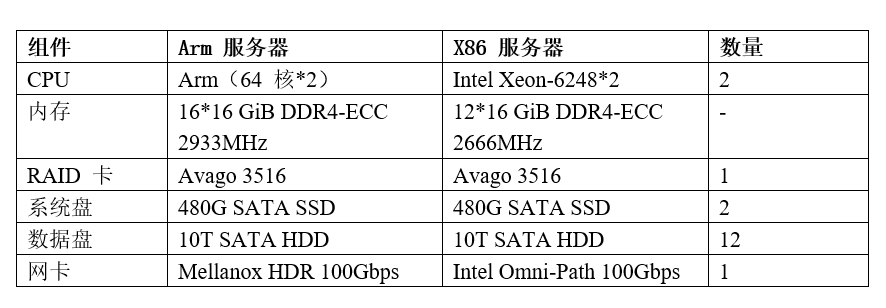
Hardware Configuration Table
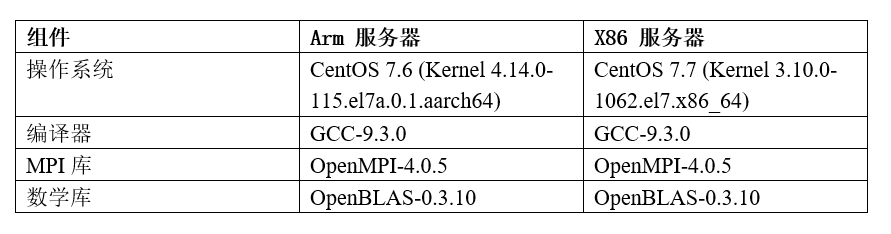
Software and Dependency Library Information Table
Evaluation Results
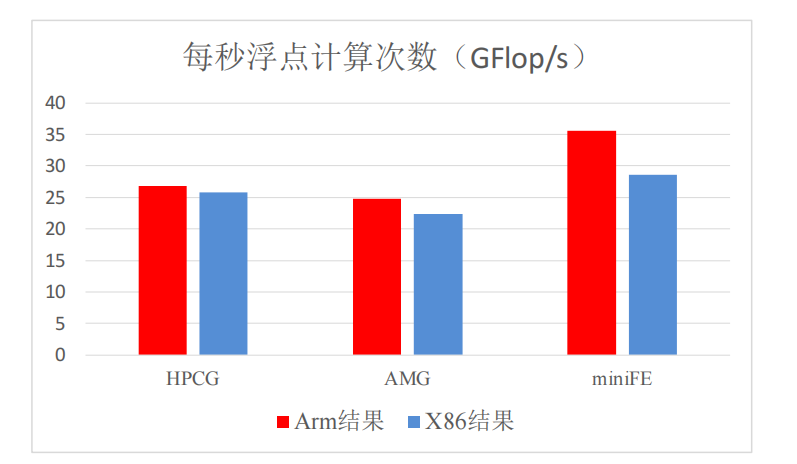
The general test case HPCG is a supplement to the High-Performance LINPACK (HPL) benchmark, which is currently used to rank the TOP500 computing systems. The test results indicate that the differences between the Arm platform and the X86 platform in this case test are minor, with the Arm servers showing a slight performance advantage. In the manufacturing industry test items, the results of the two miniAPP case studies used indicate that the Arm platform has a significant advantage over the X86 platform, with an average performance improvement of 17.5%.
From the above test results, it can be seen that Arm servers have good application prospects in both the general industry and the manufacturing industry, with their excellent computing performance fully capable of handling typical applications in the aforementioned industries.
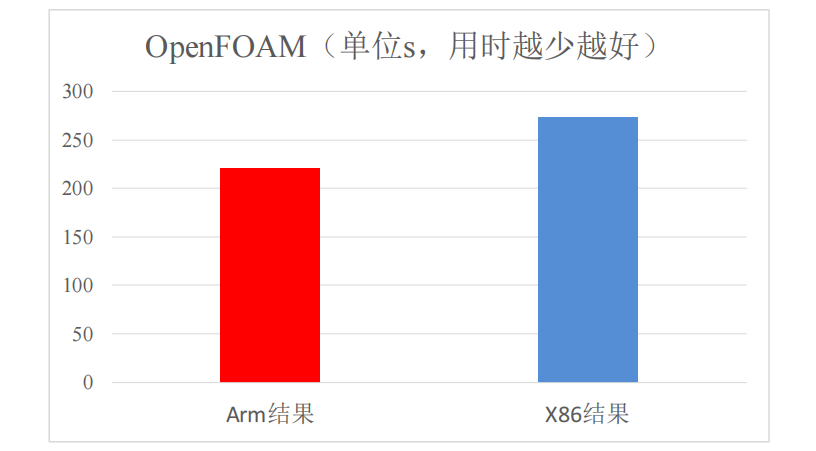
In the OpenFOAM open-source software test case, the specific case used is the Motorbike case provided by the software. The Motorbike case itself is relatively small, so this test increased the computational intensity by encrypting the grid and increasing the number of grids in the case model (1 million grids) to fully unleash the computational capacity of the cluster. The shorter the test result time, the better the outcome.
As can be seen from the figure, the Arm platform reduced the time by 52 seconds compared to the X86 platform, achieving a performance improvement of 23.5%. The results indicate that Arm architecture servers possess excellent computational acceleration capabilities in the field of computational fluid dynamics, significantly reducing computation time and improving resource utilization, making them suitable for solving complex engineering and scientific problems under large-scale grid numbers.
In summary, Arm architecture processors can fully leverage their strong multi-core computing capabilities, high memory bandwidth, high IO throughput, and high energy efficiency advantages in typical HPC scenarios, achieving better performance than traditional architectures. Practice has also shown that high-performance computing users can build high-performance, low-power new computing platforms based on Arm servers.
Product Features and Advantages
The Kunpeng HPC solutions focus on key challenges such as low resource scheduling efficiency and difficulty in application performance optimization, constructing a full-stack high-performance computing infrastructure through full-stack architectural innovation, self-developed software and hardware, basic software optimization, and industry application performance tuning, helping customers unleash platform computing power, shorten product time-to-market, and enhance product competitiveness.
The overall architecture of the HPC solution consists of infrastructure, hardware platform, basic software, cluster management and scheduling software, and industry applications. In terms of industry applications, the current supported and applicable industries include meteorology, manufacturing, EDA, government HPC, education and research, and life sciences; for open-source industry applications, the Kunpeng code migration tool can accelerate software migration efficiency, while the Kunpeng performance analysis tool can analyze HPC performance metrics and identify bottlenecks. At the cluster management and scheduling level, a unified and efficient cluster computing suite (Dunau management platform and Dunau scheduler) is provided. At the basic software level, communication libraries (Hyper MPI), the Biheng compiler, Kunpeng KML mathematical library, openEuler/other operating systems are provided or compatible.
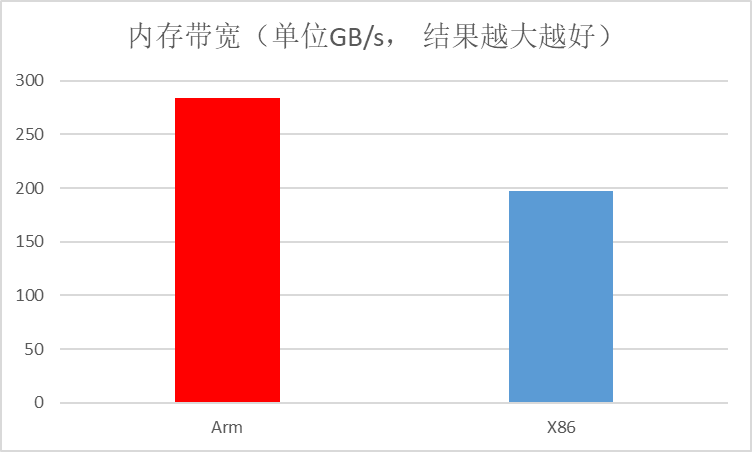
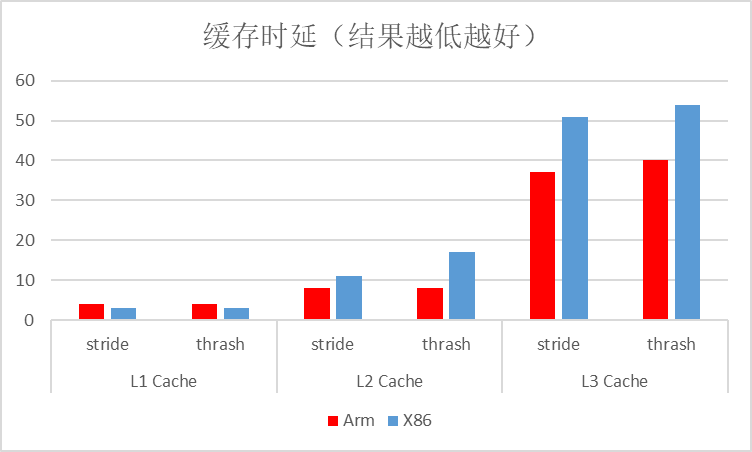
At the hardware platform level, a diverse range of computing resources, high-performance storage, and mainstream high-speed networks are provided. Among them, the Kunpeng processor’s high-performance multi-core computing power, high memory bandwidth, low cache latency, and high bandwidth IO throughput are more suitable for HPC scenarios with high computing power, high memory bandwidth requirements, and high network communication demands. It can reach up to 64 cores, with a maximum frequency of 3.0GHz, and a single node can reach up to 256 cores, several times that of traditional architectures, better meeting the high concurrency demands in HPC scenarios. The Kunpeng processor supports up to 8-channel DDR4 memory, with a memory bandwidth of up to 284 GB/S, leading traditional architectures by 40%, while also matching or even outperforming traditional architectures in cache and memory latency, making it more optimal for the majority of memory-intensive HPC applications on Kunpeng processors.
The Kunpeng processor has a built-in 100GE network interface that supports RoCE, and also integrates a PCIe4.0 controller, better meeting the high IO expansion and communication bandwidth requirements of large-scale HPC clusters. For scenarios with security requirements, the built-in encryption and decryption accelerator of the Arm processor can also meet the needs for high-performance encryption and decryption, offloading CPU computing power to HPC business processing.
*Thanks to Huawei Technologies Co., Ltd. for providing material support for this article
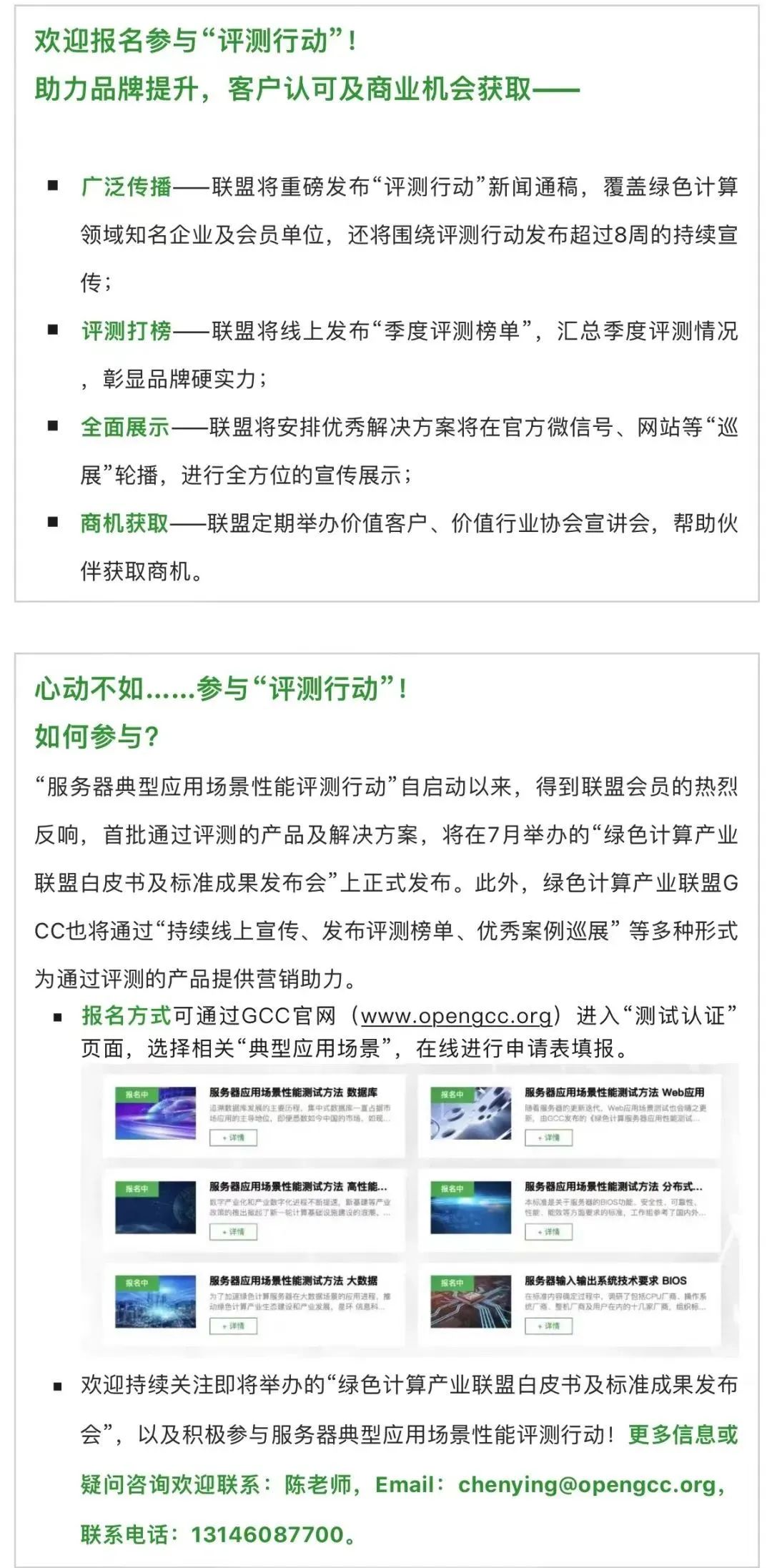
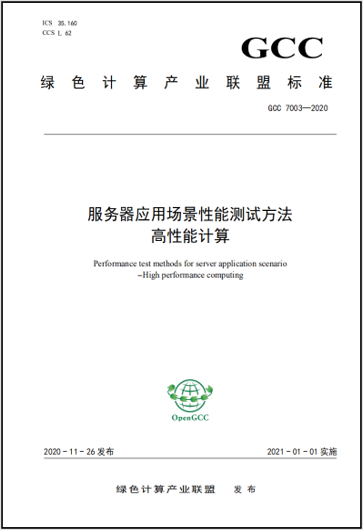
Click below “Read Original” to visit the alliance’s official website and download/view the standard original text of “GCC7003-2020- Performance Testing Method for Server Application Scenarios in High-Performance Computing“.

Thank you for your long-term attention and support for the Green Computing Industry Alliance GCC! The alliance values your ideas and feelings, and welcomes you to scan the QR code above to enter the alliance survey questionnaire, providing valuable opinions and suggestions for our work, and working together with the alliance to build a new development in the green computing industry! (The deadline for this questionnaire is August 10, 2022; after it ends, the alliance will draw lucky winners to receive exquisite gifts! Come and scan the code to participate!)
——— End of Full Text ———
About the Green Computing Industry Alliance Since its establishment in 2016, the Green Computing Industry Alliance aims to collaboratively build a green, open, independent, and shared ecological system, dedicated to promoting the development of the green computing industry, and establishing a platform for industrial exchange and cooperation to enhance enterprises in areas such as PC, servers, storage, operating systems, and databases, and promote win-win cooperation in the computing field. It has now become a global alliance with the most complete Arm infrastructure server chip partners, including Kunpeng, Feiteng, Ampere, Marvell, etc.