SylixOS Officially Supports Heterogeneous Computing (Big.LITTLE) Processors, Becoming the First Commercial Real-Time Operating System to Support Big.LITTLE Scheduling

SylixOS Officially Supports Heterogeneous Computing (Big.LITTLE) Processors, Becoming the First Commercial Real-Time Operating System to Support Big.LITTLE Scheduling

Heterogeneous Computing (Big.LITTLE) Processors During Intel’s 2021 Architecture Day event, the new generation of processors was first announced to utilize a heterogeneous core design (referred to as P-Core and E-Core by Intel) on the PC platform, similar to the ARM platform’s Big.LITTLE heterogeneous core mechanism. Intel named the “small core” as the Efficient-Core and the … Read more

Mailbox in SoC: Key Technology for Autonomous Driving Chips

Mailbox in SoC: Key Technology for Autonomous Driving Chips

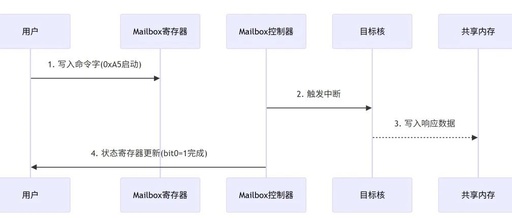
Table of Contents 1. Can chips send emails? What is Mailbox? 2. Technical principles and implementation of Mailbox in chips 3. Role in autonomous driving 4. Conclusion Figure: A typical Mailbox, sourced from the internet 1. Can chips send emails? What is Mailbox? Modules within a chip do not actually send letters to each other. … Read more

Unity ECS + Ascend NPU: New Approaches to Performance Optimization

Unity ECS + Ascend NPU: New Approaches to Performance Optimization

1. Introduction In the field of game development, Unity has always been a favorite among many developers. With the continuous advancement of technology, developers are beginning to explore how to combine Unity with cutting-edge computing technologies to further tap into the potential of game performance. The emergence of the Unity ECS (Entity Component System) architecture … Read more

Celebrating 40 Years of FPGA: AMD Focuses on Edge Intelligence and Heterogeneous Computing

Celebrating 40 Years of FPGA: AMD Focuses on Edge Intelligence and Heterogeneous Computing

According to a report from Electronic Enthusiasts (by Huang Jingjing)Xilinx launched its first FPGA chip, the XC2064, in June 1985, featuring 600 gates, 64 configurable logic blocks, and a clock frequency of 70 MHz.This field-programmable gate array (FPGA) enabled engineers to flexibly customize chip functions without waiting for chips to return from the foundry, significantly … Read more

Surge in Demand for Edge AI SoCs! From HiSilicon to Rockchip, Nine Flagship Chips Driving Intelligent Innovation

Surge in Demand for Edge AI SoCs! From HiSilicon to Rockchip, Nine Flagship Chips Driving Intelligent Innovation

Chinese-funded Artificial Intelligence Public Account By 2025, the global number of edge AI hardware devices is expected to reach 2.3 billion, with these chips becoming the invisible engines of the intelligent world. “No year in technological transformation is as exciting as 2025!” commented a senior engineer in the chip industry on the current market. With … Read more

In-Depth Analysis of DSP Chips

In-Depth Analysis of DSP Chips

Comparing DSPs to “mathematical prodigies”: while ordinary CPUs (like MCUs) excel at multitasking (the “liberal arts students”), DSPs specialize in quickly solving complex equations (the “science students”), achieving “mental calculation abilities” through hardware acceleration (such as MAC units), making them suitable for the “high-intensity mathematics competitions” of real-time signal processing. 1. Core Functions and Architectural … Read more

In the Era of Edge Large Models, How NPU Becomes the ‘Secret Weapon’ for AI Computing Acceleration?

In the Era of Edge Large Models, How NPU Becomes the 'Secret Weapon' for AI Computing Acceleration?

As AI accelerates from the cloud to the edge, a digital intelligence revolution is quietly unfolding across all scenarios: #AI smartphones turn casual photos into artistic masterpieces in seconds, AI PCs can automatically handle tedious document processing, robots can perceive their environment in real-time and move flexibly, and smart cars can perform real-time traffic analysis … Read more

How to Build a Soft-Hardware Collaborative ‘Core’ Base in the Era of Edge AI?

This article is reprinted from the Jishu Community Source:How to Build a Soft-Hardware Collaborative ‘Core’ Base in the Era of Edge AI? By 2025, with the emergence of AI applications such as DeepSeek, robots, AI agents, and multimodal generation like GPT-4o, concepts like “deep thinking,” “intelligent agents,” and “multimodal” have rapidly transitioned from specialized fields … Read more

The Rise of ARM Architecture in Data Centers

The Rise of ARM Architecture in Data Centers

11 1111 Join us now and sail into the technical blue ocean with global computing experts! With the rapid development of cloud computing and artificial intelligence, data centers require more flexible, efficient, and cost-effective processors to support diverse computing tasks. At the same time, governments around the world are vigorously promoting green computing and sustainable … Read more

In-Depth Analysis of Automotive SoC Chip Technology Architecture and Industry Ecosystem (2025 Edition)

In-Depth Analysis of Automotive SoC Chip Technology Architecture and Industry Ecosystem (2025 Edition)

1. Heterogeneous Computing Units: The Collaborative Logic of the Car’s “Brain” 1. What is Heterogeneous Computing? The “heterogeneous computing” in automotive SoC chips refers to the integration of multiple processing units (such as CPU, GPU, AI accelerators, etc.) within the same chip, collaborating to meet the diverse needs of vehicles—from real-time control (like braking) to … Read more