Design of Embedded Assessment and Evaluation Rubrics in Classroom Teaching by Fang Tao, Huazhong University of Science and Technology Education Research Institute
In today’s deepening classroom reform guided by core competencies, “integrated teaching and assessment” has transitioned from a conceptual consensus to a practical necessity. Among these, embedded assessment is the core approach and key practice to realize this concept. It is not merely an isolated measurement phase after teaching, but a design philosophy and teaching art that seamlessly weaves assessment activities throughout the entire teaching process. Its core purpose is to fundamentally change the function of assessment, transforming it from a singular role of identification and selection to an immediate diagnostic tool for learning conditions, a precise basis for teaching decisions, and a continuous engine for learning motivation, thereby truly achieving a virtuous cycle of “promoting learning through assessment and promoting teaching through assessment”.

In traditional classroom teaching, assessment is often the “final destination” of teaching. However, from the perspective of embedded assessment, assessment serves as a “navigator” and “refueling station” throughout the entire process. This is specifically manifested when students are immersed in a particular learning task—whether it is group collaborative inquiry, an experimental operation, a draft design, or a classroom debate—where the process of inquiry, the trajectory of thinking, the details of collaboration, and the final outcomes naturally become the basis for teachers to conduct formative assessments.
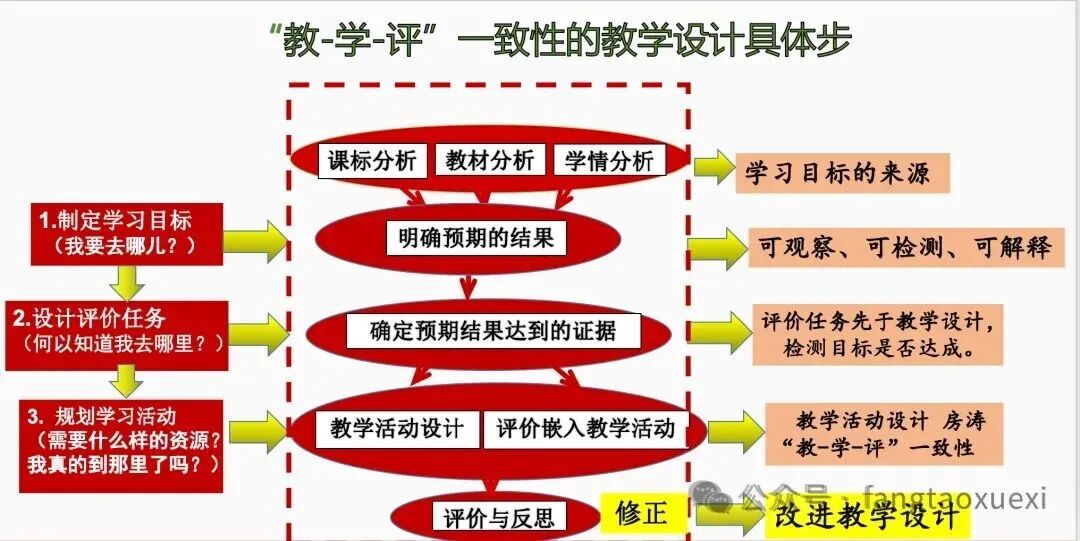
This design brings about three fundamental transformations: 1. The shift from static judgment to dynamic feedback. Assessment is no longer a conclusive score or grade, but a continuously flowing, descriptive stream of information. The immediate learning conditions captured through embedded assessment allow teachers to quickly adjust teaching pace and strategies, providing scaffolding that is “just within the zone of proximal development” for students, enabling teaching to truly respond to students’ learning needs. 2. The shift from knowledge reproduction to competency presentation. It transcends the examination of fragmented knowledge retention and directly points to students’ ability to comprehensively apply knowledge, skills, thinking methods, and values to solve problems in real, complex situations. This makes core competencies such as collaboration, critical thinking, and innovative spirit observable and assessable. 3. The shift from teacher-led to student-centered. Embedded assessment, through clear goals and rubrics, allows students to clarify from the beginning “where I want to go” (learning objectives), “what the standards of success are” (evaluation rubrics), and continuously reflect on “where I am now” during the learning process. This greatly stimulates students’ metacognitive abilities, prompting them to become active monitors, regulators, and owners of their learning process.

Evaluation rubrics make core competencies “visible, measurable, and learnable”. To ensure that embedded assessment is scientific, effective, and credible, it relies on a carefully designed evaluation rubric. The rubric is not only a tool for teachers’ assessment but also a roadmap for students’ learning. Designing a high-quality rubric is a professional and meticulous task that must adhere to the following core principles: 1. Goal-oriented and task-aligned. The “soul” of the rubric comes from the learning objectives. Its evaluation dimensions must directly correspond to the core competency learning objectives to be cultivated in this unit or lesson. At the same time, the rubric must be highly aligned with specific embedded assessment tasks. For example, if the task is “to create a public awareness plan to protect local endangered species”, then the dimensions of the rubric should revolve around “the scientific nature of the plan”, “the creativity and impact of the promotion”, and “the effectiveness of team collaboration”, ensuring that what we assess is precisely the competencies we expect students to achieve. 2. Refined dimensions and precise descriptions. The dimensions should focus on key elements that reflect core competencies, typically 3-5 is appropriate, avoiding a scattergun approach that lacks prioritization. The description of performance levels is the essence of rubric design. Clear, specific, and observable behavioral evidence or characteristics of outcomes must be used to depict each level from “excellent” to “beginning”. Avoid vague terms such as “deep understanding” or “good performance”. For example, the “proficient” level of “information integration ability” should be described as: “Able to filter key information from at least three different sources, effectively categorize and integrate it, logically support their core viewpoint, and properly cite the information sources.” Such descriptions provide a basis for assessment and a pathway for students to follow.

3. Promoting learning with approachable language. The ultimate goal of the rubric is to promote students’ learning and development. Therefore, its language must be understandable, comprehensible, and self-referential for students. From the outset of the design, teachers should examine the rubric from the students’ perspective and may even invite students to participate in the co-creation of the rubric. A good rubric should serve as a “success guide” in the hands of students, directing them at the beginning of their learning, used for self-check during the learning process, and for reflection after task completion. It makes learning standards transparent, greatly stimulating students’ autonomy and intrinsic motivation, truly realizing that “assessment is learning”.

The design of embedded assessment and its rubrics in the classroom prompts teachers to shift from “content deliverers” to “learning designers”, guiding students to grow from “passive receivers” to “active constructors”. When teaching, learning, and assessment are integrated around common goals and mutually promote each other, our classrooms can truly serve the comprehensive and personalized growth of every student. (Fang Tao, Learning and Sharing)