The Secret Weapon of RTOS Multitasking: A Detailed Explanation of Scheduling Mechanisms

The Secret Weapon of RTOS Multitasking: A Detailed Explanation of Scheduling Mechanisms

Introduction Have you ever wondered how your phone can play music, receive messages, and allow you to browse the web smoothly at the same time? One of the key contributors behind this is the multitasking operating system. In the embedded world, the Real-Time Operating System (RTOS) is the magician that enables this “simultaneous” processing of … Read more

Linux Cron Job (Crontab) Reference Guide

Linux Cron Job (Crontab) Reference Guide

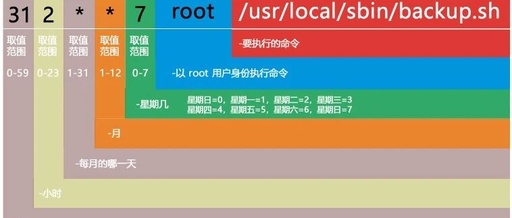
Whether you are a regular user or a Linux system administrator, there is often a need to automatically execute certain programs at regular intervals. For example, an administrator may need to monitor the system’s disk usage, in which case the <span>cron</span> job scheduler is a convenient tool to achieve this goal. Assuming the system administrator … Read more

Linux Process States (Zombie Processes, Orphan Processes), Priority and Scheduling Mechanisms

Linux Process States (Zombie Processes, Orphan Processes), Priority and Scheduling Mechanisms

1. Introduction Process state is an integer within <span>task_struct</span>; Running: the process is in the scheduling queue, and its state is <span>running</span>; Blocked: waiting for a device or resource to be ready. A process is a queue, and a device is also a queue. When we read from the disk or network card, if the … Read more

Application Case of SOC KT642 Softswitch Scheduling System in Coal Mining Companies

Application Case of SOC KT642 Softswitch Scheduling System in Coal Mining Companies

Background of the Solution 01 The newly established coal mining company has a complex production scenario, requiring efficient communication and scheduling support for underground mining, above-ground command, and equipment monitoring. Traditional scheduling systems face issues such as limited capacity, single access methods, and delayed scheduling functions, which gradually fail to meet production demands. The Nanjing … Read more

Semiconductor Practical Series II: How to Tackle the ‘Production Hell’ of Wafer Fab with Optimization Models?

Semiconductor Practical Series II: How to Tackle the 'Production Hell' of Wafer Fab with Optimization Models?

In the semiconductor supply chain, wafer fabs are referred to as the “Mount Everest of manufacturing.” The reason is simple: not only is there a vast number of processes, but the sequence, time requirements, and equipment dependencies for each process are also extremely strict. More challenging is that wafer production is not a “one-time linear … Read more

Principles of FreeRTOS Task Priority Configuration

Principles of FreeRTOS Task Priority Configuration

In the field of embedded development, FreeRTOS has become the preferred real-time operating system for many developers due to its lightweight and flexible characteristics. The configuration of task priorities is akin to assigning “priority levels” to various tasks within the system, directly determining the execution order of tasks and the overall scheduling efficiency of the … Read more

Embedded AI Engineer – Lesson 2 – kTransformer UnSloth Schedule

Embedded AI Engineer - Lesson 2 - kTransformer UnSloth Schedule

Next episode preview, a detailed introduction to the scheduling layer in frameworks like vllm and tgi.1. kTransformer proposed by Tsinghua University, flexibly loads expert models onto the CPU during model execution while loading MLA/KVCache onto the GPU.It can deploy the DeepSeek R1 Q4_K_M quantized model (similar to int4 quantization) on 480G memory + 13G video … Read more

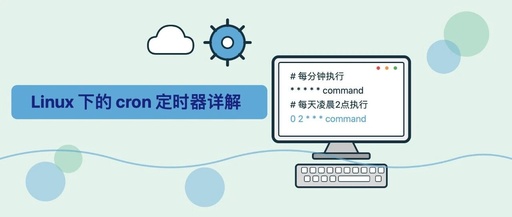
A Detailed Explanation of Cron Timers in Linux

A Detailed Explanation of Cron Timers in Linux

When I first started working, there was a night when I stayed late to modify some code. I thought the new features were fine, so I submitted the changes and went home. The next morning, as soon as I arrived at my desk and before I even turned on my computer, QA came to find … Read more

What to Consider When Using RTOS?

What to Consider When Using RTOS?

Follow “Embedded Miscellany” and select “Star the Official Account” to progress together! Source | CSDN For many embedded projects, system designers tend to choose a Real-Time Operating System (RTOS). But is an RTOS always necessary? The answer depends on the specific application, so understanding what goals we aim to achieve is key to determining whether … Read more

SylixOS Officially Supports Heterogeneous Computing (Big.LITTLE) Processors, Becoming the First Commercial Real-Time Operating System to Support Big.LITTLE Scheduling

SylixOS Officially Supports Heterogeneous Computing (Big.LITTLE) Processors, Becoming the First Commercial Real-Time Operating System to Support Big.LITTLE Scheduling

Heterogeneous Computing (Big.LITTLE) Processors During Intel’s 2021 Architecture Day event, the new generation of processors was first announced to utilize a heterogeneous core design (referred to as P-Core and E-Core by Intel) on the PC platform, similar to the ARM platform’s Big.LITTLE heterogeneous core mechanism. Intel named the “small core” as the Efficient-Core and the … Read more