9 Clinical Applications of C-Reactive Protein
9 Clinical Applications of C-Reactive Protein

C-Reactive Protein (CRP) is an acute-phase protein synthesized by hepatocytes, with very low expression levels in healthy human serum. Its expression significantly increases during trauma, infection, etc., mainly regulated by inflammatory factors such as tumor necrosis factor and interleukins. It is synthesized by the liver and is a non-specific acute-phase response protein. The expression of … Read more

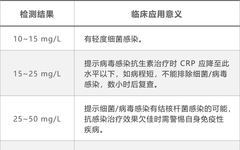
Decoding Blood Routine and C-Reactive Protein Results – Tabular Version

Blood Routine Blood routine is abbreviated as blood Rt. Rt stands for Routine Test. The history of blood routine testing is relatively short; in 1953, W.H. Coulter invented the world’s first automatic blood cell counter using the principle of electrical impedance. In 1962, the first blood cell counter in China was successfully developed in Shanghai, … Read more

8 Clinical Significances of Elevated C-Reactive Protein Beyond Bacterial Infection

8 Clinical Significances of Elevated C-Reactive Protein Beyond Bacterial Infection

C-reactive protein (CRP) is an acute-phase response protein induced by interleukin 6 (IL-6) produced in liver cells, with normal reference value < 5 mg/L. The advancement of testing technology has improved the sensitivity and accuracy of CRP detection. Existing testing instruments can detect extremely low concentrations of CRP in serum samples, known as high-sensitivity C-reactive … Read more

Understanding the Difference Between CRP and hsCRP

Understanding the Difference Between CRP and hsCRP

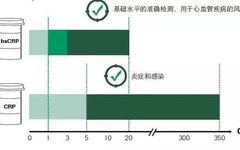
Are CRP and hsCRP testing the same thing? Some say they are the same, while others disagree. Many clinical doctors in hospitals also tend to confuse them. Why do we have two testing ranges for one substance? Today, I will briefly share with you these two familiar yet unfamiliar testing items. First, CRP and hsCRP … Read more

Differences Between C-Reactive Protein and High-Sensitivity C-Reactive Protein

Differences Between C-Reactive Protein and High-Sensitivity C-Reactive Protein

Click the blue text above to follow us C-reactive protein is abbreviated as CRP, and high-sensitivity C-reactive protein is abbreviated as hsCRP. So what are the differences between the C-reactive protein test and the high-sensitivity C-reactive protein test? Experts point out that there is no chemical difference between C-reactive protein and high-sensitivity C-reactive protein; they … Read more

Differences Between Procalcitonin and C-Reactive Protein in Clinical Applications

C-reactive protein (CRP) and procalcitonin (PCT) are the most commonly used infection markers in respiratory medicine, guiding the diagnosis and treatment of infectious diseases. The following will mainly introduce the clinical applications of these two infection markers in respiratory medicine.C-reactive Protein (CRP)CRP is an acute-phase inflammatory protein that was first discovered and named in 1930 … Read more

Difference Between C-Reactive Protein and High-Sensitivity C-Reactive Protein

Difference Between C-Reactive Protein and High-Sensitivity C-Reactive Protein

First People’s Hospital of Zhoukou City Medical Laboratory Department Zhao Kunpeng When children have a fever or a cold, doctors often recommend blood tests, mainly checking the blood routine and C-reactive protein. Many parents often ask: Doctor, what is the difference between C-Reactive Protein and High-Sensitivity C-Reactive Protein? First, let’s understand their specific definitions C-Reactive … Read more

Understanding Test Results | Clinical Interpretation of Elevated C-Reactive Protein

Click the blue text above to follow us C-Reactive Protein (CRP) is an acute-phase protein that sharply rises in plasma when the body is infected or when tissue is damaged. It plays a role in activating complement and enhancing the phagocytosis of macrophages.As an inflammatory marker, CRP has been widely used in clinical practice. Common … Read more

Detailed Interpretation of Common Infection Markers: CRP, PCT, and More

Detailed Interpretation of Common Infection Markers: CRP, PCT, and More

Currently, the commonly used infection markers in clinical practice mainly include C-reactive protein (CRP), procalcitonin (PCT), serum amyloid A (SAA), and interleukin 6 (IL-6). However, what are the similarities and differences among these four infection markers? What are their unique characteristics? What role do they play in clinical differential diagnosis? Today, we will take a … Read more

Understanding C-Reactive Protein in One Article

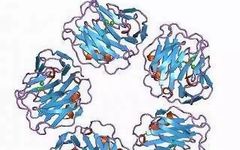
What does C-Reactive Protein look like? C-Reactive Protein (CRP) appears as a symmetrical, ring-shaped pentamer, with a molecular metabolic half-life of only 5-7 hours. ▼ How is C-Reactive Protein synthesized in the body? C-Reactive Protein is synthesized in response to inflammatory lymphokines (interleukin-6, interleukin-1, tumor necrosis factor TNF) that stimulate the liver and epithelial cells. … Read more