What does C-Reactive Protein look like?
C-Reactive Protein (CRP) appears as a symmetrical, ring-shaped pentamer, with a molecular metabolic half-life of only 5-7 hours.
▼
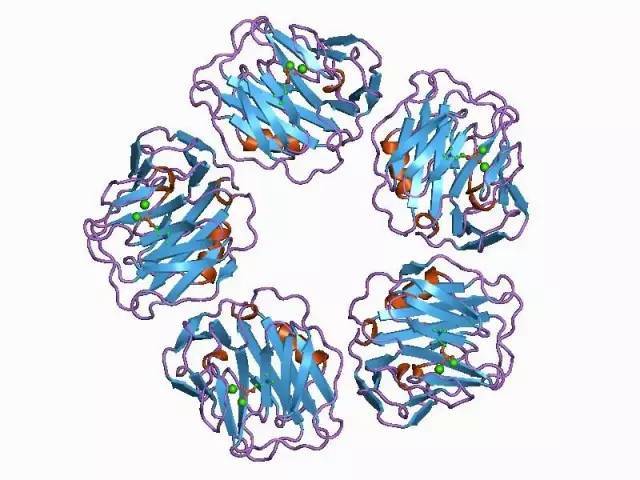
How is C-Reactive Protein synthesized in the body?
C-Reactive Protein is synthesized in response to inflammatory lymphokines (interleukin-6, interleukin-1, tumor necrosis factor TNF) that stimulate the liver and epithelial cells.
What role does C-Reactive Protein play?
CRP is widely used as an indicator of infection and inflammation. When we visit the hospital for a cold or fever, in addition to routine blood tests, many doctors prefer to check the CRP level, mainly to differentiate between viral and bacterial infections.
1 C-Reactive Protein and Erythrocyte Sedimentation Rate (ESR)
Before CRP was discovered, ESR was a commonly used non-specific inflammation indicator and is still used as a marker for chronic infections or malignant tumors in various organs.
CRP testing can and will replace ESR in many diagnostic fields because C-Reactive Protein can reflect changes in inflammation more quickly and is an internationally standardized immunoturbidimetric assay, providing reliable results.
The ESR is a complex phenomenon influenced by various factors. It is related not only to the inflammatory state but also to the number of red blood cells, plasma osmotic pressure, red blood cell morphology, and hemoglobin content; the reference range for ESR varies with gender and age, and pregnancy and obesity also affect it. As an inflammation indicator, CRP has incomparable advantages over ESR.
2 C-Reactive Protein and White Blood Cell Count (WBC)
In distinguishing between bacterial and viral infections, CRP is more accurate than WBC. WBC shows many inconsistencies when assessing the efficacy of antibiotics in bacterial infections.
CRP is effective for detecting acute bacterial infections and determining antibiotic efficacy, especially in cases of granulocyte deficiency or during immunosuppressive therapy.
So, is C-Reactive Protein only applicable in this context?
C-Reactive Protein is one of the most important and sensitive markers in the acute phase response of the human body. Besides being applicable in acute infections, its clinical significance goes far beyond that.

C-Reactive Protein is much more impressive than you think!
1 The “Compass” for Distinguishing Bacterial and Viral Infections
CRP has been demonstrated to be very useful in differentiating between bacterial and viral infections; CRP levels increase in bacterial infections, while they do not rise in viral infections, and the extent of the increase correlates with the severity of the bacterial infection. In cases of viral infections, CRP is normal or low, but adenoviruses and certain herpes viruses can cause significant tissue damage, leading to a slight increase in CRP.
C-Reactive Protein is one of the few diagnostic indicators that can reliably determine early in an infection whether it is bacterial or viral, thus deciding whether to initiate antibiotic treatment.
For many patients with viral infections, unnecessary antibiotic use can be avoided since antibiotics are ineffective against viral infections and can pose potential risks of bacterial resistance.
2 A “Effective Means” to Monitor Antibiotic Treatment
When a serious bacterial infection is suspected, the usual practice is to immediately start antibiotic treatment without considering whether C-Reactive Protein or other inflammatory indicators have not increased. The liver’s synthesis of C-Reactive Protein has a delay of 6-12 hours, so it is not advisable to use CRP to detect the presence of bacterial infection in the first few hours after infection occurs.
For newborns suspected of sepsis, dynamic monitoring of C-Reactive Protein within 24-48 hours can provide reliable evidence for whether to discontinue antibiotic treatment, while blood cultures require 48-72 hours of incubation time, and results cannot rule out sepsis before they are available.
Dynamic Monitoring of C-Reactive Protein
Dynamic monitoring of C-Reactive Protein during antibiotic treatment for bacterial infections is the most useful approach. The amount of C-Reactive Protein in the blood increases with the rise of inflammatory factors, with a delay of several hours; the lymphokines secreted by active lymphocytes soon return to normal. However, if treatment is ineffective, C-Reactive Protein may remain at high levels, and if the infection worsens, its concentration will increase further.
Dynamic monitoring of C-Reactive Protein provides earlier alerts for complications and assessments of treatment efficacy compared to clinical signs, and is more clinically significant in cases of granulocyte deficiency and immunosuppressive states.
Different Clinical States of C-Reactive Protein
1 The “Weather Vane” of Infection Severity
Severe Infections such as Sepsis, Endocarditis, Osteomyelitis
Many diseases have a bacteremia stage, such as pneumonia, bacterial meningitis, typhoid fever, and purulent arthritis, where symptoms are almost identical to those of viral infections. When inflammatory symptoms are not obvious, significantly elevated CRP (>100mg/L) indicates the presence of bacterial or fungal infection.
However, some patients may show only slightly elevated CRP or even remain below the threshold during bacterial infections, particularly within 6-12 hours after infection onset. Compared to ESR, CRP is more sensitive in diagnosing infectious meningitis, especially in the early stages of the disease (>12 hours). After the pathogen is eliminated, CRP levels decrease faster than ESR.
Significantly elevated CRP (>100mg/L) indicates the presence of a serious bacterial infection.
Meningitis
It has been confirmed that measuring CRP during meningitis is very useful, as it can distinguish between bacterial and viral meningitis, with a sensitivity of 96%, specificity of 93%, and negative predictive value of 99% in children over three months old; no other laboratory indicators can achieve this level.
Levels below 20mg/L suggest viral meningitis.
2 Tools for Distinguishing Pneumonia and Bronchitis
Pneumonia
Respiratory infections are challenging because many lower respiratory infections are mixed infections. Combining medical history and physical examination with CRP measurement helps in differential diagnosis.
For suspected pneumonia cases, CRP is considered the first-line screening method, with levels above approximately 60mg/L indicating bacterial pneumonia.
Bronchitis
Acute bronchitis is rarely caused by bacterial infection and rarely leads to significant CRP elevation. Therefore, measuring CRP can differentiate between pneumonia and bronchitis. Testing CRP can reduce unnecessary antibiotic treatment for acute bronchitis and upper respiratory infections without specific indications. CRP is recommended as a diagnostic tool for distinguishing pneumonia from bronchitis in lower respiratory infections.
3 Assessing the Severity of Acute Pancreatitis
CRP is used to evaluate the severity of acute pancreatitis. When CRP exceeds 250mg/L, it indicates extensive necrotizing pancreatitis.
4 Accurate Diagnosis and Treatment of Maxillary Sinusitis and Pharyngitis
Maxillary Sinusitis
Haemophilus influenzae is the most common cause of acute maxillary sinusitis, with CRP levels around 20mg/L. Higher CRP concentrations (>40mg/L) suggest possible infections by purulent streptococcus or pneumococcus; if not treated promptly, this may progress to a purulent sinus.
Elevated CRP can serve as an excellent standard for antibiotic treatment, far superior to clinical examination alone.
Bacterial Pharyngitis
Measuring CRP can improve the diagnostic accuracy for throat infections; compared to clinical examination alone, it significantly enhances diagnostic precision for appropriate treatment. Unnecessary or excessive use of antibiotics can lead to increased resistance, and measuring CRP can help reduce this occurrence. The CRP threshold for distinguishing between bacterial and non-bacterial pharyngitis is approximately 35mg/L.
5 Indicators for Distinguishing Urinary Tract Infections
CRP is a reliable laboratory indicator for distinguishing between general lower urinary tract infections (cystitis) and more severe upper urinary tract infections (pyelonephritis).
CRP levels above approximately 100-140mg/L suggest pyelonephritis.
6 Predicting the Risk of Cardiovascular Disease
Studies have found that high-sensitivity CRP levels are significant risk factors for cardiovascular morbidity and mortality.
High-sensitivity CRP is clinically used primarily to assess cardiovascular risk. This single statement may seem rather bland. Let’s approach it from another angle: when a patient has subtle cardiovascular lesions that have not yet manifested as cardiovascular disease, myocardial cells are damaged (this damage is subtle and undetectable), leading to a slight increase in high-sensitivity CRP levels.

Postoperative Infections and Trauma
Tissue Damage
Significant elevations in CRP occur with extensive burns; if there is no infection, levels will decrease after three days and continue to decline over a healing period of more than a month. If an infection occurs during this time, CRP will rise again, so CRP can be used to monitor the entire course of the disease.
Elevated CRP can alert to sepsis in burn patients for timely intervention.
Surgery
CRP increases within 6 hours post-surgery; if there are no complications, it should decrease within a few days to normal. If an infection occurs post-surgery, CRP levels will remain elevated for a long time.
Patients with elevated preoperative CRP have a significantly higher incidence of postoperative infections and longer hospital stays compared to those with normal preoperative CRP.
Appendicitis
Diagnosis of acute appendicitis is often based on clinical symptom examination by doctors, with a misdiagnosis rate of about 15%-25%.
In patients with perforated appendicitis, CRP often exceeds 100mg/L, while non-perforated cases show only mild elevation, above 20mg/L. If both WBC and CRP are normal, the likelihood of acute appendicitis is low.
Using CRP as an auxiliary diagnostic indicator for acute appendicitis helps reduce unnecessary surgeries. In cases with atypical presentations, clinical examination and CRP measurement are appropriate, and CRP is recommended as a routine test for suspected appendicitis.
CRP >100mg/L suggests possible perforation.
Significance of Bedside Testing for CRP (POCT)
Rapid Diagnosis
Timely treatment is crucial when ill.
CRP is valuable for diagnosis and treatment, and the speed of testing is very important for doctors, driving technological advancements. Nowadays, CRP tests can be performed not only in clinical laboratories but also at grassroots medical points, becoming one of the bedside testing items, with results available in just 5 minutes.
Children
Young children are prone to respiratory infections and often visit small clinics or grassroots hospitals for their first diagnosis; rapid CRP testing can help distinguish between viral and bacterial infections, reducing unnecessary antibiotic use.
Only a small sample is needed (just 5 microliters), which can be tested with capillary blood, making it very convenient (serum or plasma can also be used).
Older Adults
Older adults may have severe infections without fever or elevated white blood cell counts; measuring CRP can help detect bacterial infections.
Guiding Rational Use of Antibiotics
With the continuous increase in resistant strains, performing CRP tests on all suspected bacterial infections has become increasingly important to appropriately avoid antibiotic abuse, as antibiotics are ineffective against viral infections.
Treatment
Because CRP testing is easy to perform and provides rapid reports, patients can receive appropriate treatment plans during their first visit, with symptomatic medication leading to early recovery.
Source: Laboratory Knowledge
Previous Reviews
Spring: Seeking Medicine in the Green
“Huangdi Neijing” | The Culinary Secrets of Neijing (Part 7)
Life Tips | The Wonderful Use of Mugwort Ash
Fitness Qigong: Yi Jin Jing
Is the Dizziness Response a Sign of Recovery from Serious Illness?
Li Xin: A Traditional Chinese Medicine Perspective on “Depression”
Long press to recognize the QR code in the calendar to follow us, and click to read the original text for collaboration!~