How 3D Printing Solves the Cooling Dilemma: From Overheating Phones to AI Computing Centers
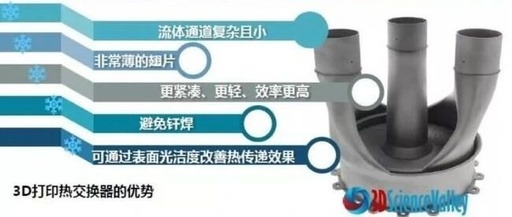
How 3D Printing Solves the Cooling Dilemma: From Overheating Phones to AI Computing Centers

During summer, experiencing sudden lag on your phone, laptops shutting down due to overheating, and the range of electric vehicles shrinking as temperatures rise… These everyday frustrations point to a common technical bottleneck – heat dissipation. As 5G, AI, and new energy technologies continue to increase device power density, traditional cooling methods have fallen into … Read more
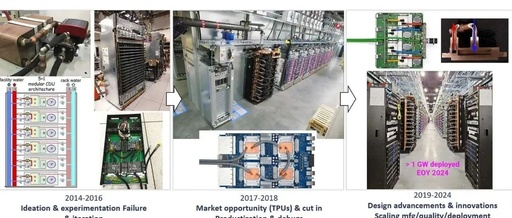
Google’s ASIC TPU Chip and Rack Liquid Cooling Solutions

Google's ASIC TPU Chip and Rack Liquid Cooling Solutions

As the AI wave sweeps across the globe, NVIDIA, as the dominant player in the chip market, currently holds an 80% market share in AI chips. However, its main competitors, such as AMD HW and other chip manufacturers, are rapidly rising and capturing NVIDIA’s AI chip market. In addition to these mainstream chip manufacturers competing … Read more

Essential! Summary of 14 PCB Routing Principles and Techniques

Essential! Summary of 14 PCB Routing Principles and Techniques

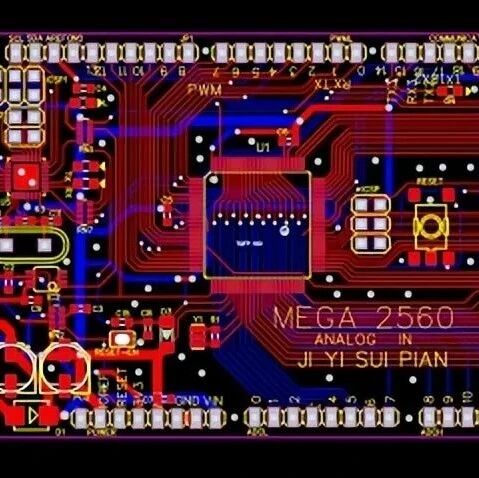
1. Manual Routing Whenever Possible Generally speaking, most PCB design software includes an auto-routing feature, but in reality, no auto-router can completely replace the skills, experience, and flexibility of a PCB Layout Engineer. (Kudos to manual PCB Layout Engineers) In some cases, you can use auto-routing: After placing all components, you can use auto-routing to … Read more

Revolutionary Applications of Infrared Thermal Imaging in Circuit Board Inspection

Revolutionary Applications of Infrared Thermal Imaging in Circuit Board Inspection

Non-contact · Panoramic Temperature Measurement · Intelligent Diagnosis — Infrared Technology Redefines Fault Prediction and Health Management of Electronic Devices Application in R&D Stage (1) Thermal Design Verification Real-time observation ofPCBboardthermal distribution uniformity, optimizing component layout (2) Heat Dissipation Scheme Evaluation Comparing the effects of different heat dissipation schemes (heat sinks/thermal grease/fans), quantifying temperature rise … Read more

Core of Power Layout for Multilayer PCBs: How Layered Design Solves Noise and Heat Issues

Core of Power Layout for Multilayer PCBs: How Layered Design Solves Noise and Heat Issues

When a prototype power board is powered on for the first time, the best-case scenario is that it not only works but also operates quietly and with low heat generation. However, this situation is rare. A common issue with switch-mode power supplies is the “unstable” switching waveform, where waveform jitter falls within the acoustic range, … Read more

The Evolution of PCBs: Development, Classification, and Core Functions

The Evolution of PCBs: Development, Classification, and Core Functions

1. History of PCB Development The history of PCB development is a chronicle of the continuous miniaturization, integration, and high performance of electronic technology. 1. Concept Origin (Early 20th Century): The idea of “printing” wires on a substrate was first proposed by Germans Albert Hansen and Americans Charles Ducas, laying the theoretical foundation for PCBs. … Read more

Equipping Chips with Super Heat Sinks | Technology Frontline

Equipping Chips with Super Heat Sinks | Technology Frontline

Today, the high integration and miniaturization of electronic products make chips prone to overheating, which has become an “invisible killer” for electronic devices. At the same time, chips face severe heat dissipation challenges: as the chip manufacturing process becomes more refined, the heat flux density increases, leading to higher thermal design power and more significant … Read more

9.82 W/mK! High Thermal Conductivity Phase Change Materials Empower Chip Cooling

9.82 W/mK! High Thermal Conductivity Phase Change Materials Empower Chip Cooling

Source | Journal of Energy Storage Link | https://doi.org/10.1016/j.est.2025.117895 01 Background Introduction The thermal conductivity (λ) of composite phase change materials determines their response rate to external heat, which is crucial for chip thermal management. Traditional methods, such as incorporating thermal fillers into phase change materials, have had limited success in improving λ, significantly restricting … Read more