Common Basic Integrated Logic Gates in Digital Circuit Simulation with Multisim

Common Basic Integrated Logic Gates in Digital Circuit Simulation with Multisim

It is well known that people have defined three basic logical relationships: AND, OR, NOT, which can be combined to form NAND, NOR, XOR, XNOR five logical relationships. All logical relationships in digital systems can be realized using the basic three logical relationships (similar to how decimal numbers can always be represented using 10 digits … Read more

Analysis of RS-232 and TTL Interface Connections: Voltage Conversion and Compatibility Issues

Analysis of RS-232 and TTL Interface Connections: Voltage Conversion and Compatibility Issues

1. The wiring between RS-232 and TTL mainly involves voltage conversion, as RS-232 uses negative logic levels (+3V to +15V represents logic low, -3V to -15V represents logic high), while TTL uses positive logic levels (0V represents logic low, 3.3V or5V represents logic high).When no data is transmitted on the serial data line, it is … Read more

TTL, RS232, and RS485 Voltage Standards

TTL, RS232, and RS485 Voltage Standards

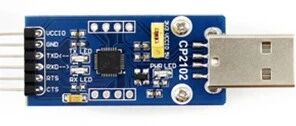
▼Click the card below to follow our official account▼ TTL, RS232, and RS485 are representations of logic levels, which are three different voltage standards for serial communication. TTL TTL: Full duplex (5V system, logic 1: 2.4V–5V, logic 0: 0V–0.5V). TTL refers to Transistor-Transistor Logic circuits. Many “USB to TTL” modules available on the market are … Read more

How Far Can TTL, RS232, and RS485 Transmission Distances Reach?

How Far Can TTL, RS232, and RS485 Transmission Distances Reach?

A few days ago, I saw a discussion in the group chat regarding the “transmission distances of TTL, RS232, and RS485“. Today, I took some time to share relevant content, hoping it will be helpful to everyone. Overview Many people may not be very familiar with TTL, RS232, and RS485, so let me briefly summarize … Read more

X86 Kernel Notes_2_Driver Development

X86 Kernel Notes_2_Driver Development

This article is a highlight from the Kanxue ForumAuthor from Kanxue ForumID: SSH Landscape Painting 1 Creating a Driver Project Creating the Project Reference article for WDK and VS installation: X86 Kernel Notes 0 Configuring Dual Machine Debugging Environment Open VS2017, create a new project, select Visual C++ -> Windows Drivers -> Legacy -> Empty … Read more

Understanding UART and TTL

Understanding UART and TTL

Click the blue text Follow us 1. First of all, UART and TTL are completely different concepts. UART stands for Universal Asynchronous Receiver/Transmitter, which is a serial asynchronous communication protocol. The TTL level signal specifies that +5V is equivalent to logic “1” and 0V is equivalent to logic “0” (when using binary to represent data). … Read more

Why Do Some Microcontrollers Operate at 3.3V While Others Use 5V? Can’t We Standardize?

Why Do Some Microcontrollers Operate at 3.3V While Others Use 5V? Can't We Standardize?

Some may have noticed that the voltage standards for microcontrollers vary; some operate at 3.3V while others use 5V. Why isn’t there a unified standard? Is this a historical legacy issue or an inevitable result of technological evolution? Today, we will explore this question. 1. The Aftermath of the TTL and CMOS ‘Cold War’ The … Read more