Mitsubishi CNC System PLC Switch Signal Address
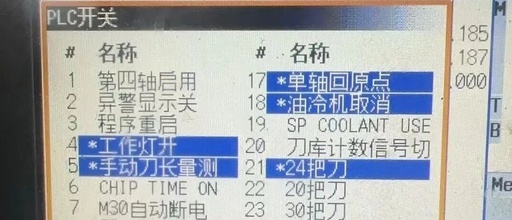
The programming content of PLC switches varies among different machine tool manufacturers, but the signal addresses are universal. The above examples are for reference only.
The programming content of PLC switches varies among different machine tool manufacturers, but the signal addresses are universal. The above examples are for reference only.
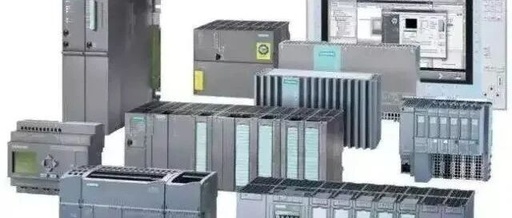
Choosing between a Programmable Logic Controller (PLC) and a Distributed Control System (DCS) requires a specific analysis based on the situation, as different applications have varying requirements for control systems. When communicating with clients, we can approach the discussion from the following aspects! PLC and DCSPLC 1. Development from switch control to sequential control, transport … Read more
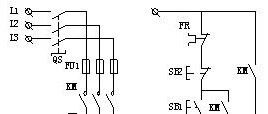
1. Wiring according to the diagram is the highest principle and cannot be overstated.First, before wiring, one must carefully read the drawings and fully understand the designer’s intentions, rather than relying on personal so-called rich experience. If any unclear or contradictory points are found, one should immediately contact the designer for confirmation before proceeding with … Read more
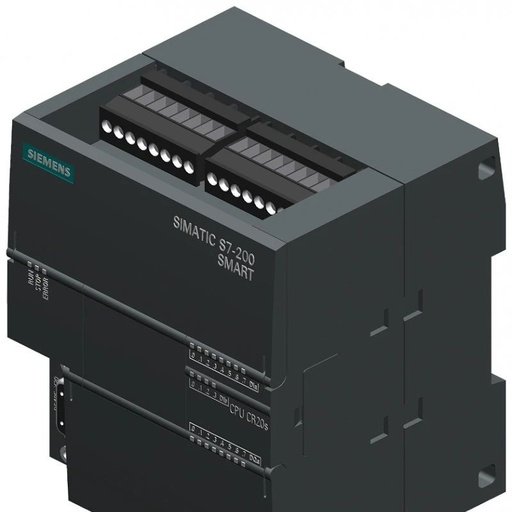
1. Core Functions and Technical Features High Performance and Flexibility Signal Board Design: Supports extended communication ports (RS232/RS485), digital and analog channels, without occupying additional control cabinet space, reducing costs. Processor and Calculation Speed: Equipped with Siemens’ dedicated high-speed processor, with a basic instruction execution time of 0.15μs, leading in performance among similar small PLCs, … Read more

In the fields of automation and Industrial Internet of Things (IIoT), Programmable Logic Controllers (PLCs) have played an indispensable role. With the development of network technology, real-time collection and management of PLC data has become a crucial demand for smart factories. MQTT, as a lightweight communication protocol, demonstrates its unique advantages in PLC data collection. … Read more
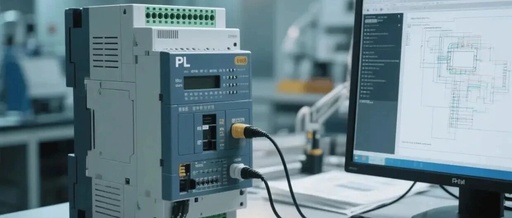
1. Input Circuit Wiring The input circuit is the port through which the PLC receives signals (for analog signals, it is generally a DC current of 0-40MA or a DC voltage signal of 0-10V). Input wiring refers to the external input devices (any passive contacts and NPN transistors with open collector) that connect to the … Read more

Entering a modern factory, we can see various devices operating automatically: robotic arms precisely grabbing items, conveyor belts orderly transporting parts, and indicator lights flashing status information. Behind all this efficient operation lies a core control device – the PLC. Many people find terms like “PLC” and “industrial automation” very complex, thinking they are advanced … Read more
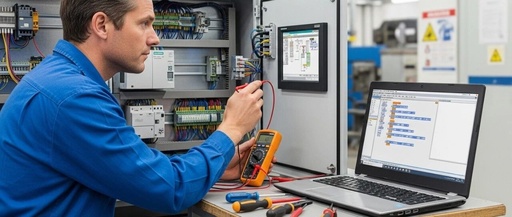
The final part of the introduction to troubleshooting is here. Friends who haven’t read the first two parts can check them out first: Introduction to PLC Troubleshooting: Basic Techniques and Advanced Strategies (Part 1) Introduction to PLC Troubleshooting: Basic Techniques and Advanced Strategies (Part 2) The main content is as follows: 2. Advanced Methods of … Read more
Description: This article explains the application of MODBUS. Currently, the communication protocol between industrial control upper and lower machines predominantly uses MODBUS, highlighting the importance of machine-to-machine communication. 1. MODBUS System Framework Diagram 2. Application of MODBUS The underlying communication of MODBUS uses RS485 signals connected via twisted pairs, allowing for long transmission distances of … Read more
Click the blue text to follow us When using Siemens touch screens, many engineers find that their response speed is noticeably slower compared to certain brands (such as MCGS). This is primarily because the default variable acquisition cycle for Siemens touch screens is set to 1 second. This delay is particularly evident in scenarios requiring … Read more