How to Operate the Control Cabinet of a Shaking Table? A Practical Guide with PLC and Touch Screen for Beginners!

How to Operate the Control Cabinet of a Shaking Table? A Practical Guide with PLC and Touch Screen for Beginners!

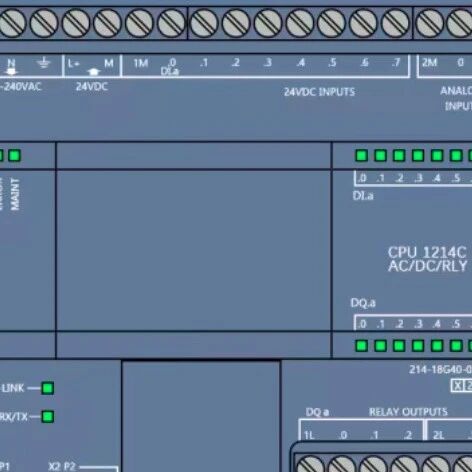
How to Operate the Control Cabinet of a Shaking Table? A Practical Guide with PLC and Touch Screen Easy to Understand for Beginners! In industries such as mineral processing and coal selection, the shaking table is the “main sorting force,” and its “brain”—the PLC and touch screen control cabinet—directly determines the sorting efficiency and product … Read more
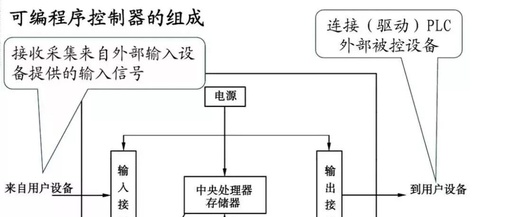
What is a PLC?

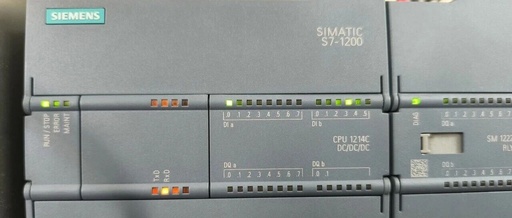
What is a PLC?

1. Introduction A PLC (Programmable Logic Controller) is a core device in modern industrial automation control, widely used in manufacturing, energy, transportation, and other fields. It achieves automated control of machinery through programming, offering high reliability, flexibility, and ease of maintenance. The core of a PLC lies in its logical control capabilities, which can perform … Read more

Introduction to PLC Programming and Relay Control

Introduction to PLC Programming and Relay Control

This article introduces the differences and connections between relay control, PLCs, and microcomputers, as well as wiring, programming languages, and control systems, allowing you to deepen your understanding of these three areas. This will help you confidently solve problems encountered in future PLC studies. In fact, whether you are a beginner or someone who has … Read more

Comprehensive Guide to PLC Input and Output Circuit Wiring: Essential Knowledge for Beginners!

Comprehensive Guide to PLC Input and Output Circuit Wiring: Essential Knowledge for Beginners!

1. Input Circuit Wiring The input circuit is the port through which the PLC receives signals (for analog signals, typically 0-40mA DC current or 0-10V DC voltage signals). Input wiring refers to the external input devices (any passive contacts and NPN transistors with open collector) that connect to the input circuit, closing the circuit and … Read more

Important Considerations for Using PLCs

Important Considerations for Using PLCs

PLC (Programmable Logic Controller) is the core of industrial automation, and its correct use and maintenance are key to ensuring stable, reliable, and long-lasting operation. The following are important considerations when using PLCs, covering safety, installation, programming, maintenance, and more.1. Safety Considerations (Top Priority!)1. Power Off Operations: Before wiring, disassembling modules, or connecting devices, be … Read more

Breaking Conventional PLC Timing Experiments: Cycle Time Counting vs Cycle Interrupts, Guess Which Method Has Higher Accuracy?

Breaking Conventional PLC Timing Experiments: Cycle Time Counting vs Cycle Interrupts, Guess Which Method Has Higher Accuracy?

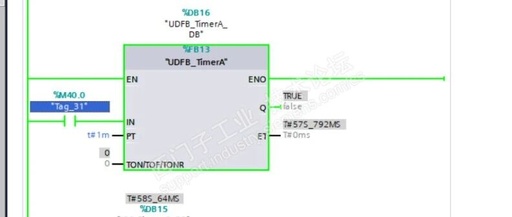
Introduction INTRODUCTION In industrial automation programming, timers are one of the most commonly used components in control logic. While standard timers like TON and TOF can meet most scenarios, are there more flexible implementations for situations that require special timing accuracy or want to break free from “relying on the system’s default timer”? A user … Read more

Introduction to PLC: Essential Guide for Beginners with Detailed Explanations of Two Basic PLC Control Programs

Introduction to PLC: Essential Guide for Beginners with Detailed Explanations of Two Basic PLC Control Programs

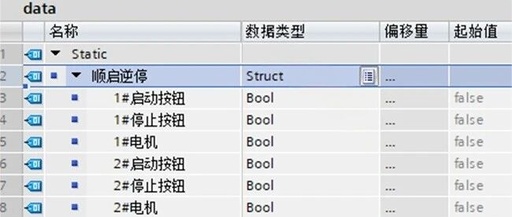
Hello everyone! Today, I bring you two PLC control cases that are very suitable for beginners in electrical automation, helping you quickly grasp basic programming logic. Remember to bookmark and share this with your classmates to progress together! 💡 01Sequential Start and Stop 📌 Application Scenario: In industrial ventilation systems, multiple fans often need to … Read more

The Development Journey from Microcontrollers to PLCs and Back to Microcontrollers/Embedded Systems in Industrial Automation Control

The Development Journey from Microcontrollers to PLCs and Back to Microcontrollers/Embedded Systems in Industrial Automation Control

The development journey from microcontrollers to PLCs and back to (more advanced) microcontrollers/embedded systems in automation control is driven by the balance and rebalancing of cost, reliability, usability, and performance at different historical periods. This journey can be clearly divided into three stages: — First Stage: Early Origins – The Pioneer Era of Microcontrollers (MCUs) … Read more

Discussion in the Boto Group: Exploring the Conversion Accuracy of Siemens Boto PLC Analog Signals

Discussion in the Boto Group: Exploring the Conversion Accuracy of Siemens Boto PLC Analog Signals

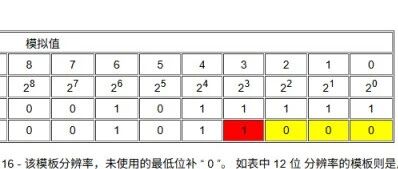
“The Path of an Excellent Engineer in Three Stages” 1. Basic Stage: Boto PLC Technology. 2. Intermediate Stage: Boto and C# Advanced Language Technology. 3. Advanced Stage: Standardized Programming Methods for PLCs. The Path of Standardization! A group member raised a question about the accuracy of analog signal conversion, which is universal, and shared it … Read more